Director of Research, School of Public Policy, University of Calgary; Associate Professor, Department of Community Health Sciences, Cumming School of Medicine, University of Calgary, Calgary, AB.
Research Associate, School of Public Policy, University of Calgary, Calgary, AB.
Healthc Policy. 2021 Nov;17(2):38-53. doi: 10.12927/hcpol.2021.26658.
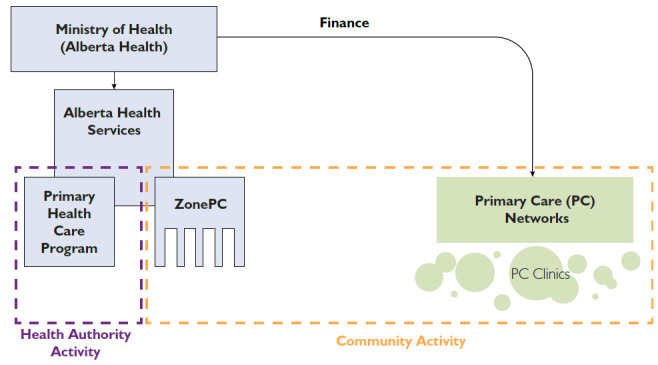
The COVID-19 pandemic exposed primary care (PC), and policies aimed at integrating it into provincial health systems, to a "shock test." This paper draws on documentary analysis and qualitative interviews with PC and health system stakeholders to examine shifts in Alberta's pre-pandemic PC integration model during the first nine months of the pandemic. We begin with an account of three elements of the province's pre-pandemic model: finance, health authority activity and community activity. We describe these elements as they shifted, focusing on two indicators of change: novel virtual care billing codes and personal protective equipment (PPE) distribution channels. We draw out policy planning lessons for improving PC integration under normal and future pandemic conditions, namely, by facilitating rapid updates of virtual care billing codes, analyses of the impact of care delivery and backstopping of PPE markets and supply chains for PC.
COVID-19 大流行使初级保健(PC)及其旨在将其纳入省级卫生系统的政策受到了“冲击测试”。本文通过对 PC 和卫生系统利益相关者的文献分析和定性访谈,考察了大流行前九个月艾伯塔省 PC 整合模式的转变。我们首先介绍了该省大流行前模式的三个要素:财务、卫生当局的活动和社区活动。我们描述了这些要素的变化,重点关注两个变化指标:新的虚拟护理计费代码和个人防护设备(PPE)分销渠道。我们为改善正常和未来大流行条件下的 PC 整合提出了政策规划经验教训,即通过促进虚拟护理计费代码的快速更新、分析护理提供的影响以及为 PC 的个人防护设备市场和供应链提供支持。