Key Laboratory of Xin'an Medicine, Ministry of Education, Anhui University of Chinese Medicine, Hefei 230038, China.
Department of Scientific Research, The Second Affiliation Hospital of Anhui University of Chinese Medicine, Hefei 230038, China.
Neural Plast. 2021 Dec 3;2021:2412220. doi: 10.1155/2021/2412220. eCollection 2021.
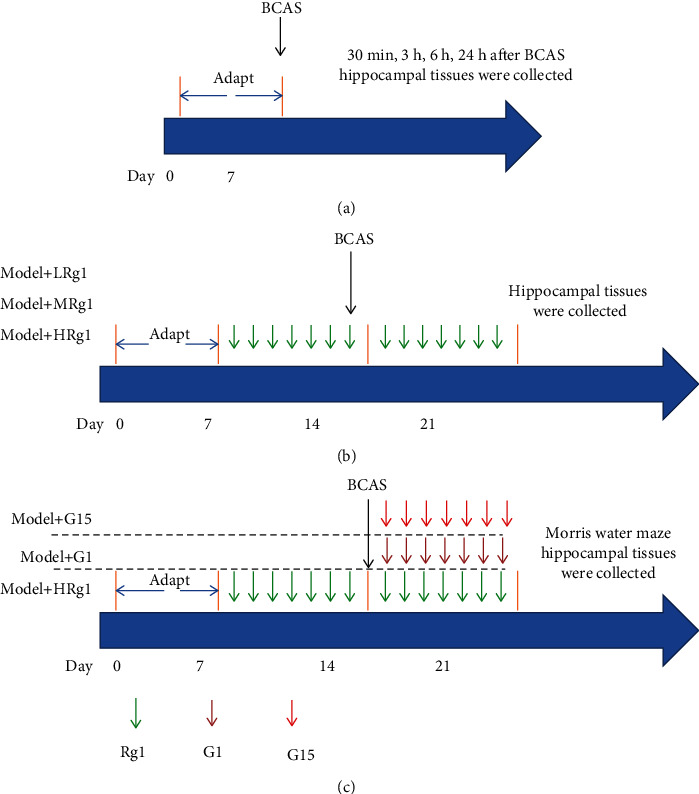
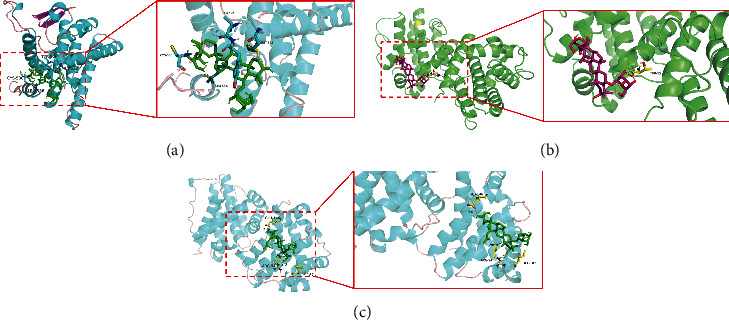
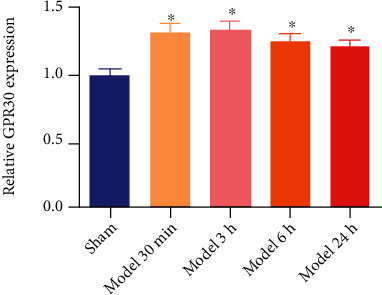
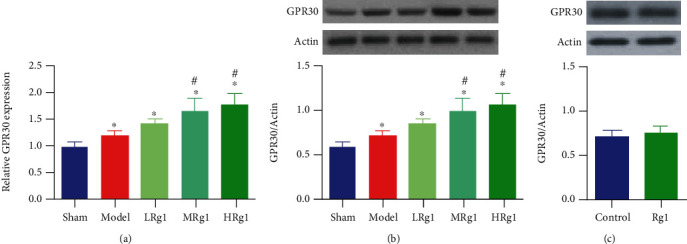
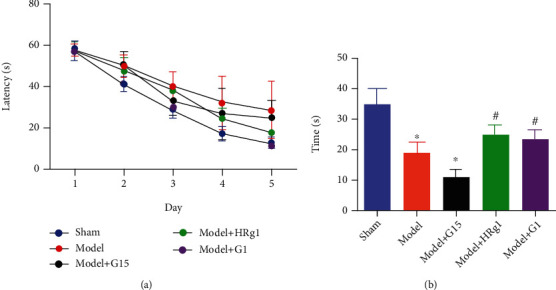
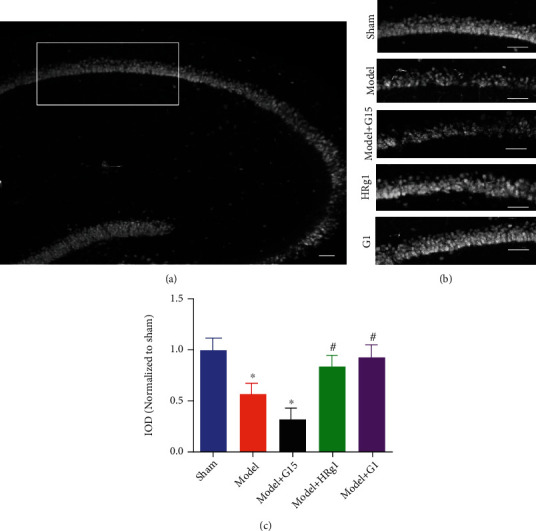
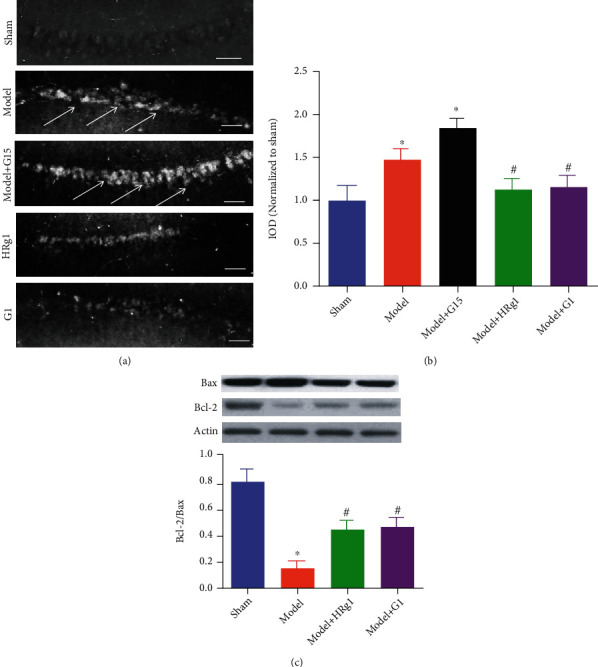
This study is aimed at investigating the potential roles of G protein-coupled estrogen receptor 1 (GPER, also known as GPR30) in the preventive effect of ginsenoside Rg1 against cognitive impairment and hippocampal cell apoptosis in experimental vascular dementia (VD) in mice. The effects of bilateral common carotid artery stenosis (BCAS) on GPR30 expression at mRNA level were evaluated. Thereafter, the BCAS mouse model was utilized to evaluate the protection of Rg1 (0.1, 1, 10 mg/kg, 14 days, ). Spatial memory was evaluated by water Morris Maze 7 days post BCAS. After behavioral tests, neuronal apoptosis was detected by terminal deoxynucleotidyl transferase-mediated dUTP nick end labeling assay, and potential mechanisms were determined using western blotting and quantitative real-time PCR. Our results showed that GPR30 expression in the hippocampal region at mRNA level was promoted 30 min, 3 h, 6 h, and 24 h following BCAS. Ginsenoside Rg1 (1 or 10 mg/kg, 14 days, ) promoted GPR30 expression in the hippocampus of model mice (after behavioral tests) but did not alter GPR30 expression in the hippocampus of control mice. Moreover, treatment of ginsenoside Rg1 (10 mg/kg) or G1 (5 g/kg), a GPR30 agonist, prevented BCAS-induced memory impairment and hippocampal neuronal loss and apoptosis and promoted the ratio of Bcl-2 to Bax expression in the hippocampus (after behavioral tests). On the contrary, G15 (185 g/kg), an antagonist of GPR30, aggravated BCAS-induced hippocampal neuronal loss and apoptosis. Finally, drug-target molecular docking pointed that Rg1 had a lower binding energy with GPR30 compared with Bax and Bcl-2. Together, our data implicate that ginsenoside Rg1 prevents cognitive impairment and hippocampal neuronal apoptosis in VD mice, likely through promoting GPR30 expression. These results would provide important implications for the application of Rg1 in the treatment of VD.
本研究旨在探讨 G 蛋白偶联雌激素受体 1(GPER,也称为 GPR30)在人参皂苷 Rg1 预防实验性血管性痴呆(VD)小鼠认知障碍和海马细胞凋亡中的潜在作用。评估了双侧颈总动脉狭窄(BCAS)对 GPR30 表达的影响。随后,利用 BCAS 小鼠模型评估 Rg1(0.1、1、10mg/kg,14 天)的保护作用。BCAS 后 7 天,通过水迷宫进行空间记忆评估。行为测试后,通过末端脱氧核苷酸转移酶介导的 dUTP 缺口末端标记法检测神经元凋亡,并通过 Western blot 和定量实时 PCR 确定潜在机制。结果表明,BCAS 后 30min、3h、6h 和 24h,海马区 GPR30 表达在 mRNA 水平上增加。人参皂苷 Rg1(1 或 10mg/kg,14 天)促进了模型小鼠海马区的 GPR30 表达(行为测试后),但未改变对照组小鼠海马区的 GPR30 表达。此外,人参皂苷 Rg1(10mg/kg)或 GPR30 激动剂 G1(5g/kg)治疗可预防 BCAS 引起的记忆障碍和海马神经元丢失和凋亡,并促进海马区 Bcl-2 与 Bax 表达的比值(行为测试后)。相反,GPR30 拮抗剂 G15(185g/kg)加重了 BCAS 引起的海马神经元丢失和凋亡。最后,药物-靶标分子对接表明,Rg1 与 GPR30 的结合能低于 Bax 和 Bcl-2。综上所述,人参皂苷 Rg1 可预防 VD 小鼠认知障碍和海马神经元凋亡,可能通过促进 GPR30 表达。这些结果为 Rg1 在 VD 治疗中的应用提供了重要依据。