Redell John B, Maynard Mark E, Hood Kimberly N, Moore Anthony N, Zhao Jing, Dash Pramod K
Department of Neurobiology and Anatomy, The University of Texas McGovern Medical School, Houston, Texas, USA.
Neurotrauma Rep. 2021 Oct 20;2(1):453-460. doi: 10.1089/neur.2021.0031. eCollection 2021.
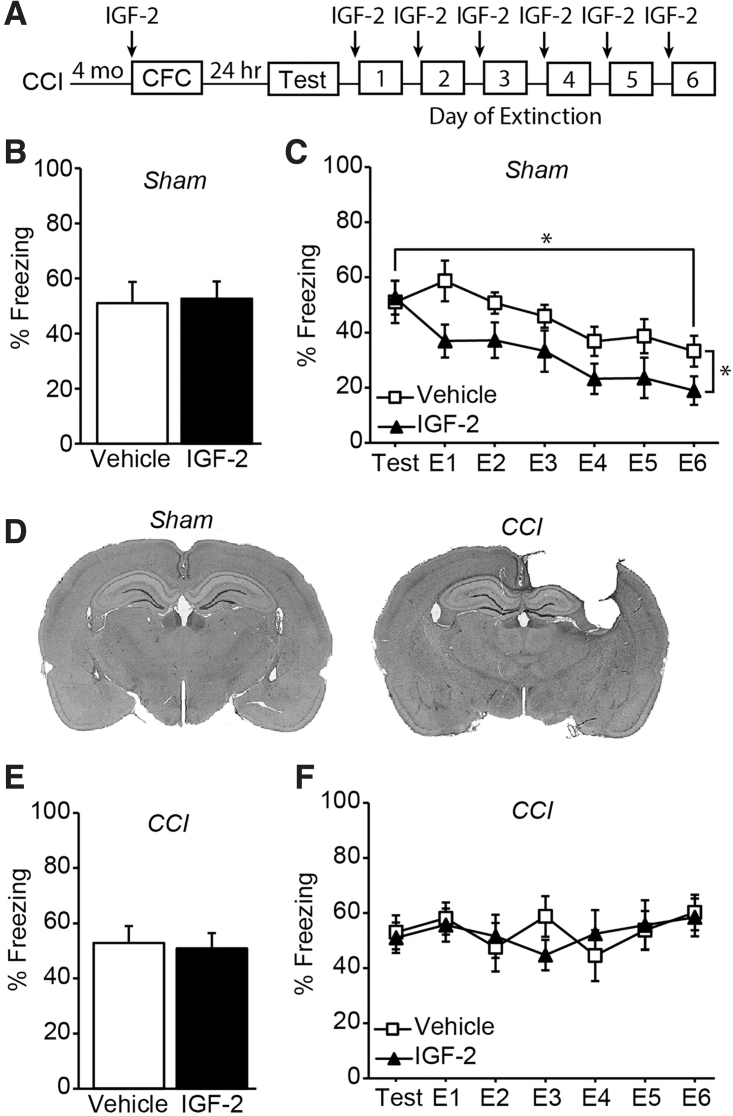
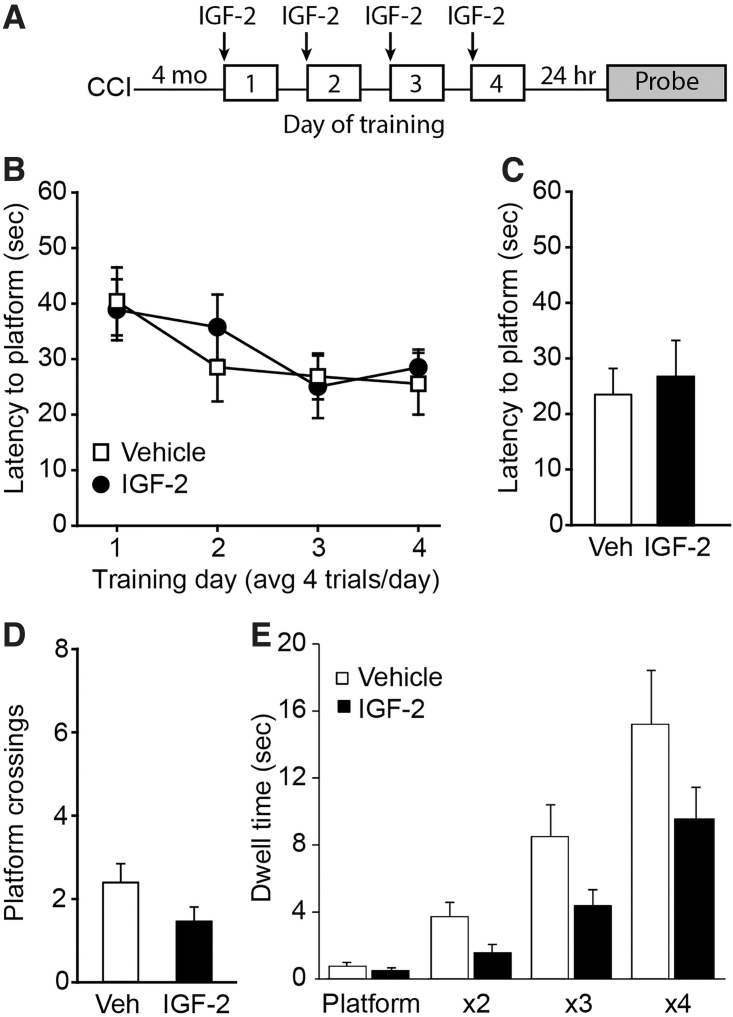
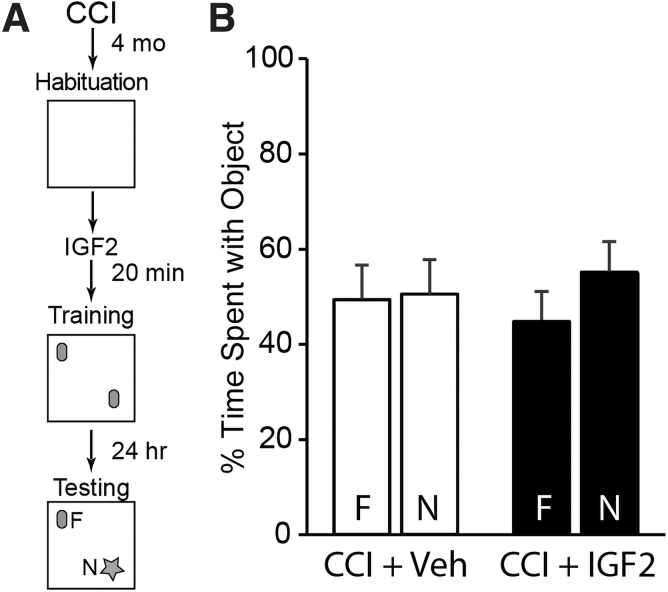
Persistent cognitive impairment(s) can be a significant consequence of traumatic brain injury (TBI) and can markedly compromise quality of life. Unfortunately, identifying effective treatments to alleviate memory impairments in the chronic stage of TBI has proven elusive. Several studies have demonstrated that insulin-like growth factor-2 (IGF-2) can enhance memory in both normal animals and in experimental models of disease. In this study, we questioned whether IGF-2, when administered before learning, could enhance memory performance in the chronic stage of TBI. Male C57BL/6 mice ( = 7 per group) were injured using an electronic cortical impact injury device. Four months later, mice were tested for their cognitive performance in the fear memory extinction, novel object recognition (NOR), and Morris water maze tasks. Twenty minutes before each day of training, mice received a subcutaneous injection of either 30 μg/kg of IGF-2 or an equal volume of vehicle. Memory testing was carried out 24 h after training in the absence of the drug. Uninjured sham animals treated with IGF-2 (or vehicle) were trained and tested in the fear memory extinction task as a positive control. Our data show that although IGF-2 (30 μg/kg) improved memory extinction in uninjured mice, it was ineffective at improving fear memory extinction in the chronic stage of TBI. Similarly, IGF-2 administration to chronically injured animals did not improve TBI-related deficits in either NOR or spatial memory. Our results indicate that IGF-2, administered in the chronic stage of injury, is ineffective at enhancing memory performance and therefore may not be a beneficial treatment option for lingering cognitive impairments after a TBI.
持续性认知障碍可能是创伤性脑损伤(TBI)的一个重要后果,会显著影响生活质量。不幸的是,在TBI慢性期找到有效治疗方法来缓解记忆障碍一直难以实现。多项研究表明,胰岛素样生长因子2(IGF-2)在正常动物和疾病实验模型中均可增强记忆。在本研究中,我们探讨了在学习前给予IGF-2是否能改善TBI慢性期的记忆表现。使用电子皮层撞击损伤装置对雄性C57BL/6小鼠(每组7只)造成损伤。四个月后,对小鼠进行恐惧记忆消退、新物体识别(NOR)和莫里斯水迷宫任务的认知能力测试。在每天训练前20分钟,小鼠皮下注射30μg/kg的IGF-2或等体积的溶剂。在无药物的情况下,于训练后24小时进行记忆测试。用IGF-2(或溶剂)处理的未受伤假手术动物作为阳性对照,进行恐惧记忆消退任务的训练和测试。我们的数据显示,尽管IGF-2(30μg/kg)可改善未受伤小鼠的记忆消退,但对改善TBI慢性期的恐惧记忆消退无效。同样,对慢性损伤动物给予IGF-2并不能改善NOR或空间记忆方面与TBI相关的缺陷。我们的结果表明,在损伤慢性期给予IGF-2对增强记忆表现无效,因此可能不是TBI后持续性认知障碍的有益治疗选择。