Department of Orthopedics, Taizhou Central Hospital (Affiliated Hospital To Taizhou College), Donghai Street, Taizhou, 317700, Zhejiang Province, People's Republic of China.
Department of Endocrinology, Baoji City Hospital of Traditional Chinese Medicine, Baoji, Shaanxi Province, People's Republic of China.
J Orthop Surg Res. 2021 Dec 14;16(1):716. doi: 10.1186/s13018-021-02877-6.
The aim of this study was to identify the risk factors associated with prolonged length of stay (LOS) in patients undergoing primary total hip arthroplasty (THA) managed with an enhanced recovery after surgery (ERAS) program and develop a prediction model for improving the perioperative management of THA.
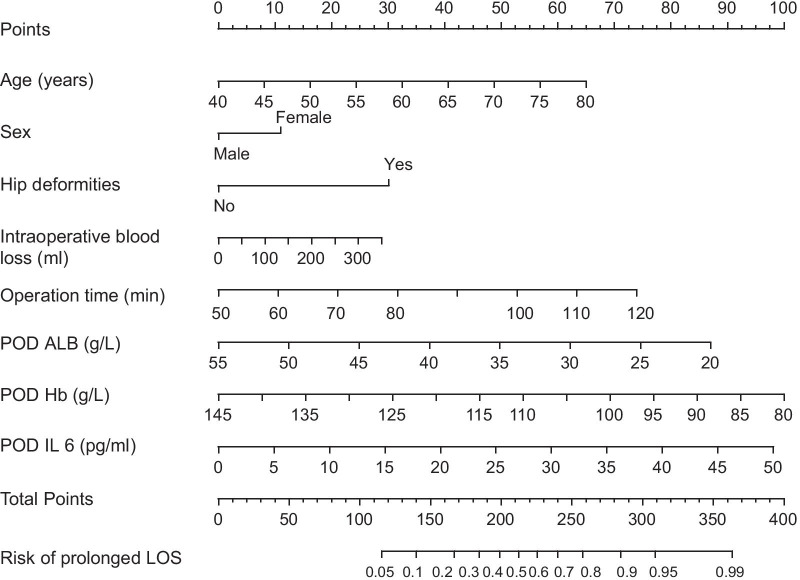
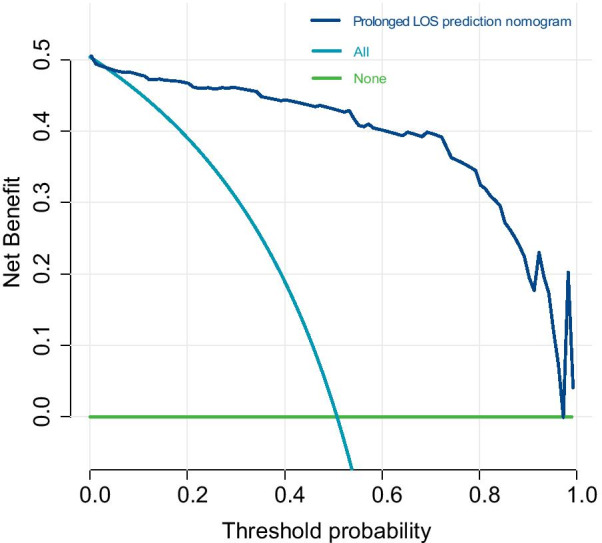
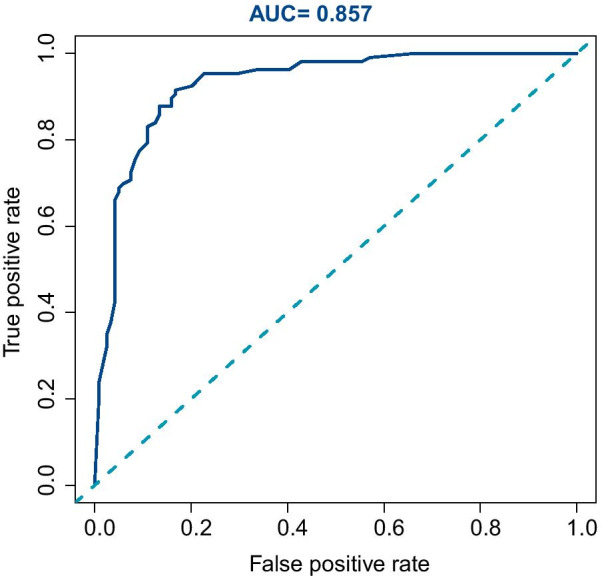
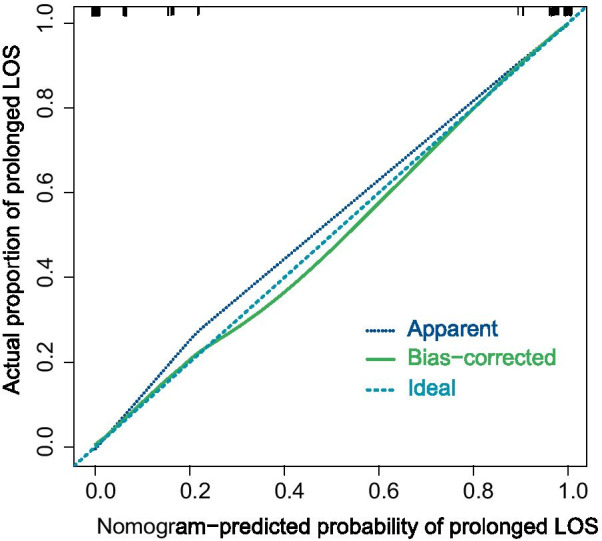
In this single-center retrospective study, patients who underwent primary THA in accordance with ERAS from May 2018 to December 2019 were enrolled in this study. The primary outcome was prolonged LOS (> 48 h) beyond the first postoperative day. We collected the clinical patient's clinical characteristics, surgery-related parameters, and laboratory tests. A logistic regression analysis explored the independent risk factors for prolonged LOS. According to published literature and clinical experience, a series of variables were selected to develop a nomogram prediction model to predict the risk of prolonged LOS following primary THA with an ERAS program. Evaluation indicators of the prediction model, including the concordance index (C-index), the receiver operating characteristic (ROC) curve, calibration curve, and decision curve analysis, were reported to assess the performance of the prediction model. The bootstrap method was conducted to validate the performance of the designed nomogram.
A total of 392 patients were included in the study, of whom 189 (48.21%) had prolonged LOS. The logistics regression analysis demonstrated that age, sex, hip deformities, intraoperative blood loss, operation time, postoperative Day 1 (POD) hemoglobin (Hb), POD albumin (ALB), and POD interleukin-6 (IL-6) were independent risk factors for prolonged LOS. The C-index was 0.863 (95% CI 0.808 to 0.918) and 0.845 in the bootstrapping validation, respectively. According to the results of the calibration, ROC curve, and decision curve analyses, we found that the nomogram showed satisfactory performance for prolonged LOS in this study.
We explored the risk factors for prolonged LOS following primary THA with an ERAS program and developed a prediction model. The designed nomogram was expected to be a precise and personalized tool for predicting the risk and prognosis for prolonged LOS following primary THA with an ERAS program.
本研究旨在确定与接受手术增强康复(ERAS)方案管理的初次全髋关节置换术(THA)患者住院时间延长(LOS)相关的风险因素,并开发预测模型以改善 THA 的围手术期管理。
在这项单中心回顾性研究中,我们纳入了 2018 年 5 月至 2019 年 12 月期间按照 ERAS 方案接受初次 THA 的患者。主要结局是术后第一天以外的 LOS 延长(>48 小时)。我们收集了患者的临床特征、手术相关参数和实验室检查。逻辑回归分析探讨了 LOS 延长的独立风险因素。根据已发表的文献和临床经验,选择了一系列变量来开发预测模型,以预测接受 ERAS 方案的初次 THA 后 LOS 延长的风险。报告了预测模型的评估指标,包括一致性指数(C 指数)、接收者操作特征(ROC)曲线、校准曲线和决策曲线分析,以评估预测模型的性能。采用自举法验证所设计的列线图的性能。
共纳入 392 例患者,其中 189 例(48.21%)发生 LOS 延长。逻辑回归分析表明,年龄、性别、髋关节畸形、术中出血量、手术时间、术后第 1 天(POD)血红蛋白(Hb)、POD 白蛋白(ALB)和 POD 白细胞介素-6(IL-6)是 LOS 延长的独立风险因素。C 指数分别为 0.863(95%CI 0.808 至 0.918)和 0.845(自举法验证)。根据校准、ROC 曲线和决策曲线分析的结果,我们发现该列线图在本研究中对 LOS 延长具有良好的性能。
我们探讨了 ERAS 方案治疗初次 THA 后 LOS 延长的风险因素,并开发了预测模型。所设计的列线图有望成为预测接受 ERAS 方案治疗的初次 THA 后 LOS 延长风险和预后的精准、个性化工具。