Department of Internal Medicine, Cleveland Clinic.
Department of Quantitative Health Sciences.
Eur J Gastroenterol Hepatol. 2022 Apr 1;34(4):449-456. doi: 10.1097/MEG.0000000000002322.
Portopulmonary hypertension (PoPH) is a rare complication of portal hypertension associated with poor survival. Scarce data is available on predictors of survival in PoPH with conflicting results. We sought to characterize the outcomes and variables associated with survival in a large cohort of patients with PoPH in an American population of patients.
We identified PoPH patients from the Cleveland Clinic Pulmonary Hypertension Registry between 1998 and 2019. We collected prespecified data, particularly focusing on hepatic and cardiopulmonary assessments and tested their effect on long-term survival.
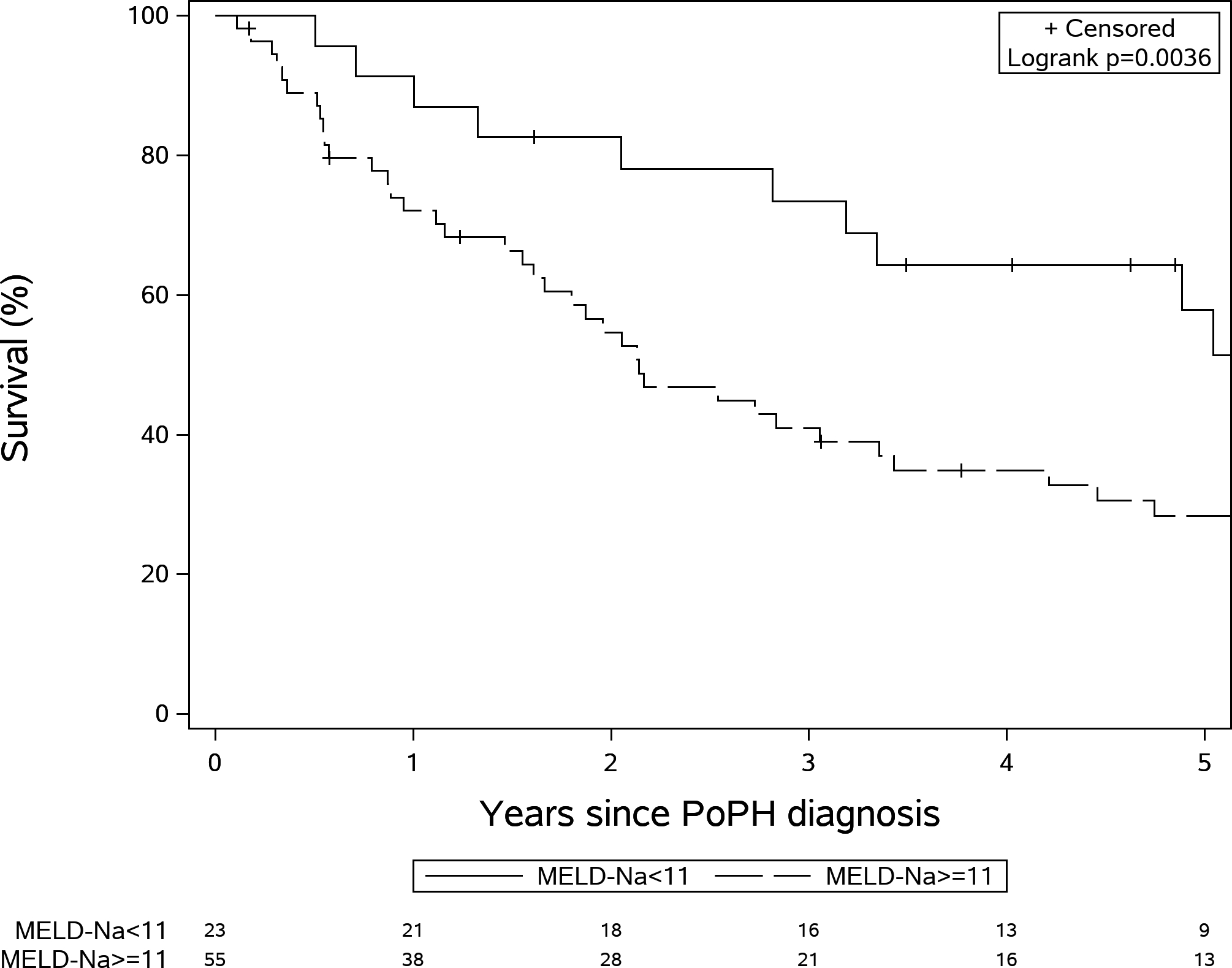
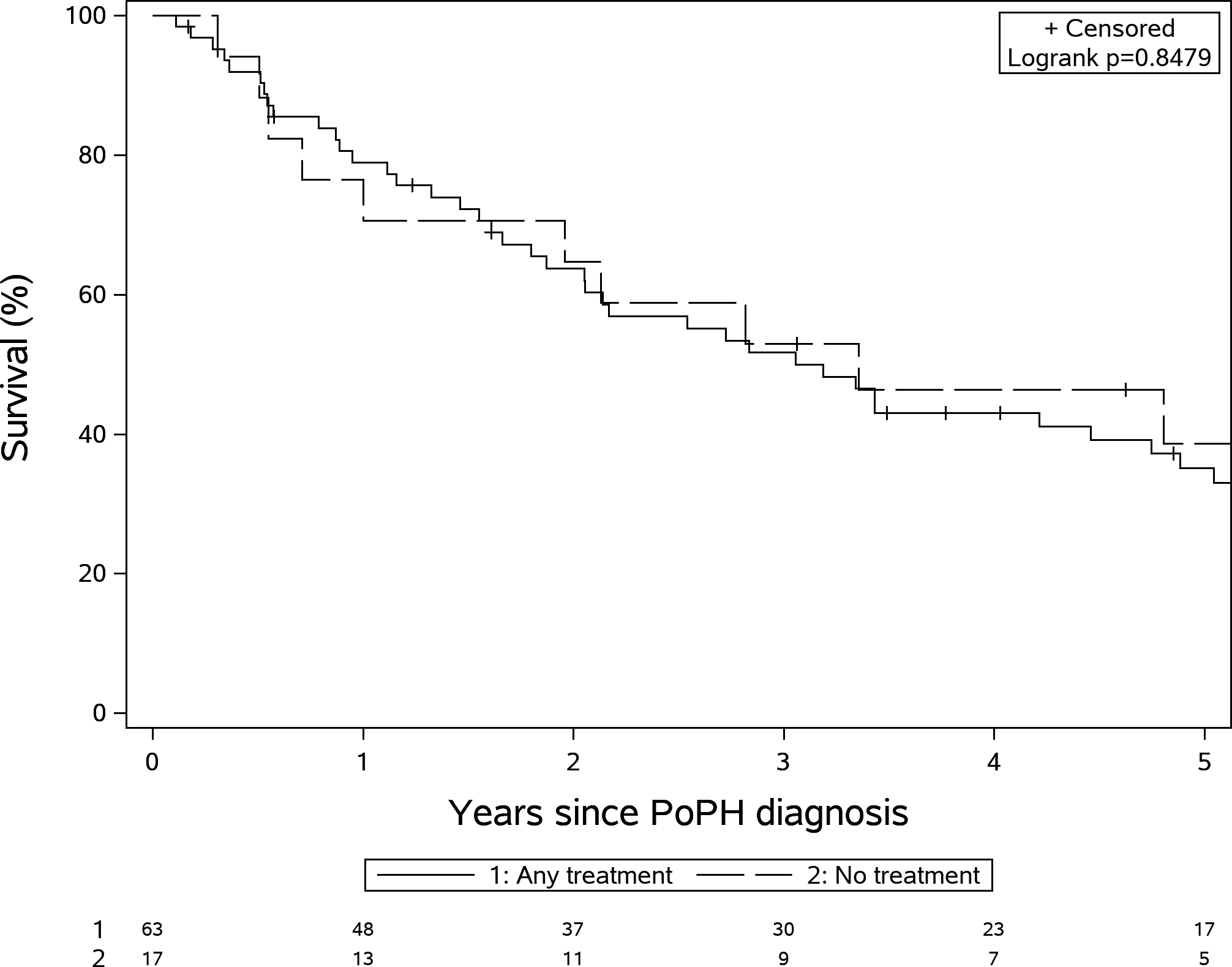
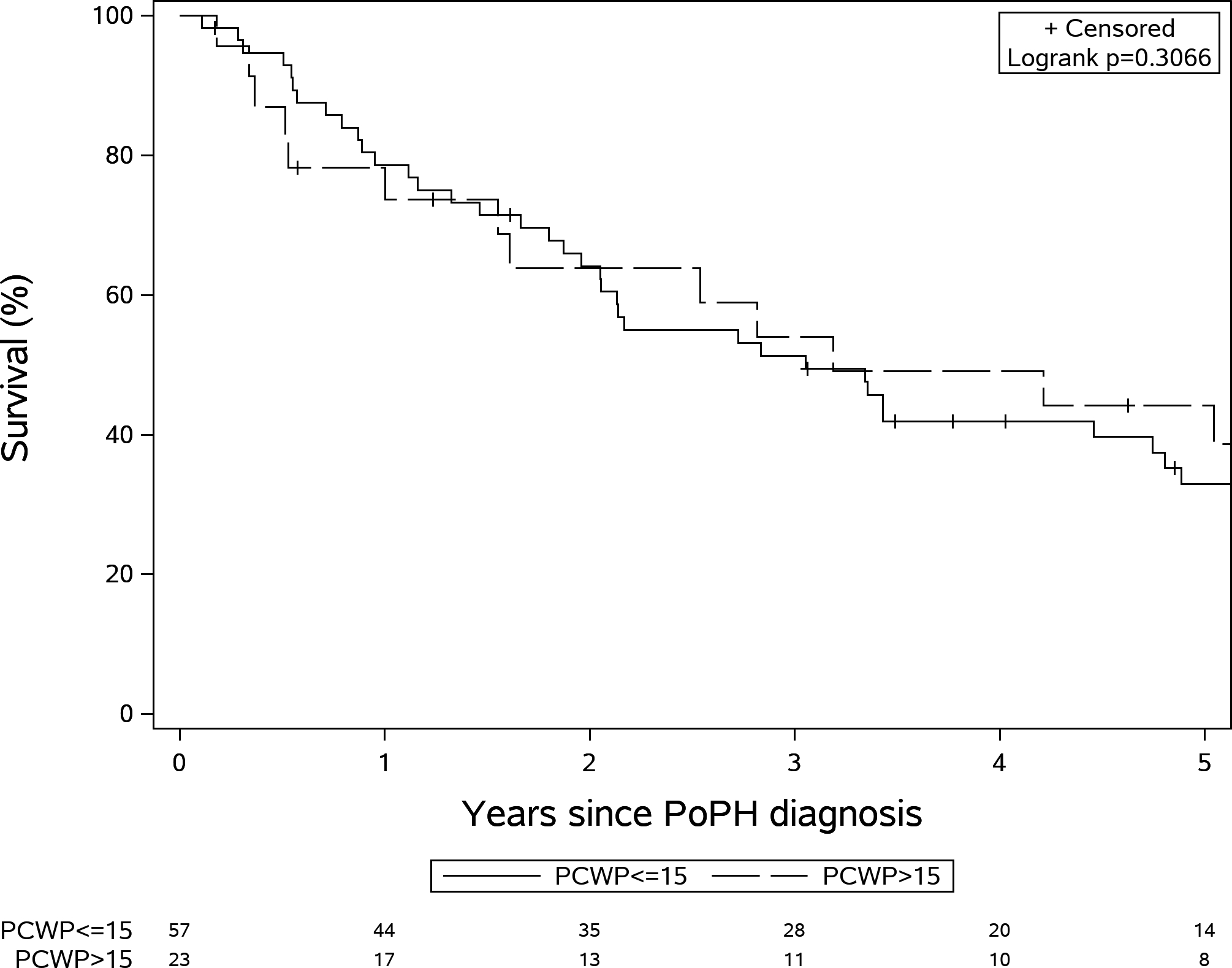
Eighty patients with PoPH with a mean ± SD age of 54 ± 10 years, (54% females) were included in the analysis. The median Model for End-Stage Liver Disease with sodium (MELD-Na) score was 13.0 (10.0-18.0) at PoPH diagnosis. World Health Association functional class III-IV was noted in 57%. Mean pulmonary arterial pressure was 47 ± 10 mmHg and pulmonary vascular resistance 6.0 ± 2.8 Woods units. A total of 63 (78.5%) patients were started on pulmonary arterial hypertension (PAH)-specific treatment during the first 6 months of diagnosis. Survival rates at 1-, 3- and 5-year were 77, 52 and 34%, respectively. Cardiopulmonary hemodynamics as well as PAH-specific treatment did not affect survival. In the multivariable model, MELD-Na, resting heart rate and the presence of hepatic encephalopathy were independent predictors of survival.
PoPH patients have poor 5-year survival which is strongly associated to the severity of underlying liver disease and not to the hemodynamic severity of PoPH; therefore efforts should be focused in facilitating liver transplantation for these patients.
门脉高压性肺高血压(PoPH)是一种罕见的门静脉高压症并发症,与预后不良相关。目前关于 PoPH 患者生存预测因素的数据较少,且结果存在争议。我们旨在描述美国人群中大量 PoPH 患者的结局和与生存相关的变量。
我们从 1998 年至 2019 年克利夫兰诊所肺动脉高压登记处中确定了 PoPH 患者。我们收集了预设数据,特别关注肝脏和心肺评估,并检验其对长期生存的影响。
共纳入 80 例 PoPH 患者,平均年龄为 54±10 岁(54%为女性)。PoPH 诊断时的中位终末期肝病模型钠评分(MELD-Na)为 13.0(10.0-18.0)。57%的患者为世界卫生组织心功能分级 III-IV 级。平均肺动脉压为 47±10mmHg,肺血管阻力为 6.0±2.8Woods 单位。诊断后 6 个月内,共有 63 例(78.5%)患者开始接受肺动脉高压(PAH)特异性治疗。1、3、5 年生存率分别为 77%、52%和 34%。心肺血液动力学和 PAH 特异性治疗均未影响生存。多变量模型中,MELD-Na、静息心率和肝性脑病的存在是生存的独立预测因素。
PoPH 患者 5 年生存率较差,与基础肝病的严重程度密切相关,与 PoPH 的血液动力学严重程度无关;因此,应努力为这些患者进行肝移植。