Department of Trauma Surgery, University Hospitals Leuven, Leuven, Belgium.
Department of Development and Regeneration, KU Leuven, Leuven, Belgium.
Microbiol Spectr. 2021 Dec 22;9(3):e0173621. doi: 10.1128/spectrum.01736-21. Epub 2021 Dec 15.
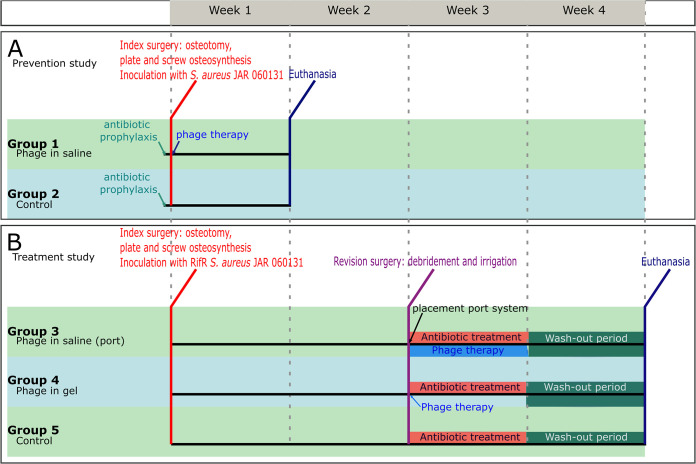
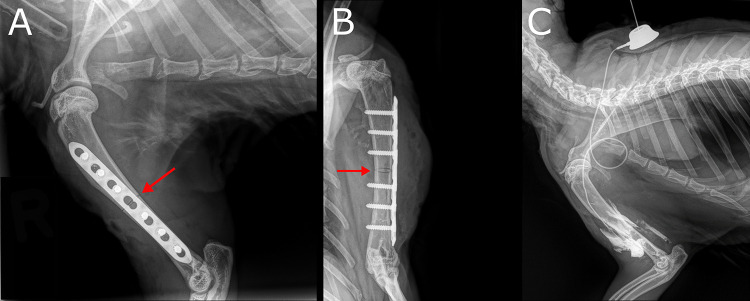
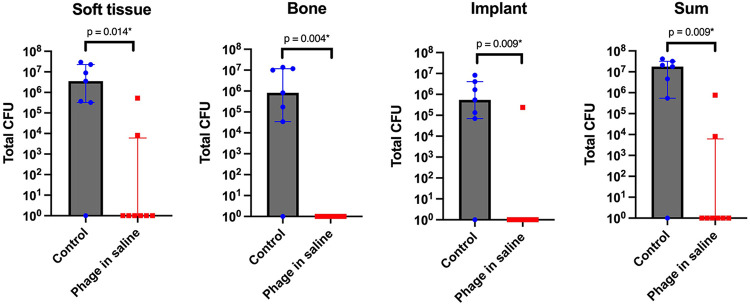
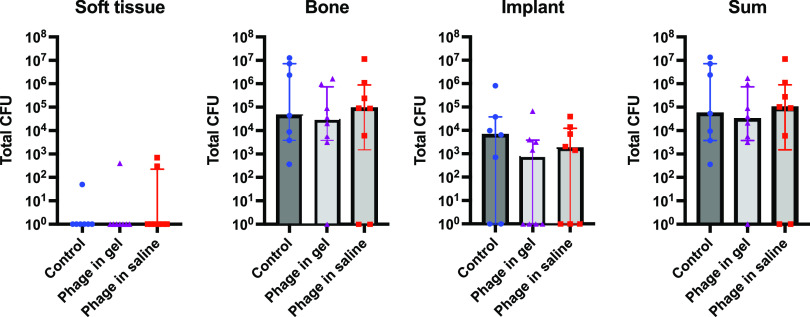
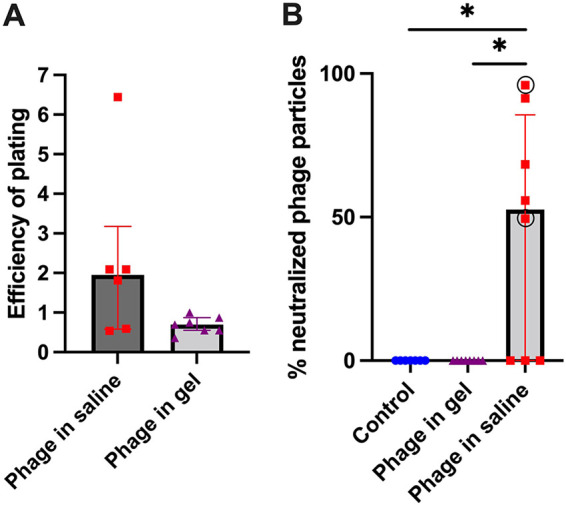
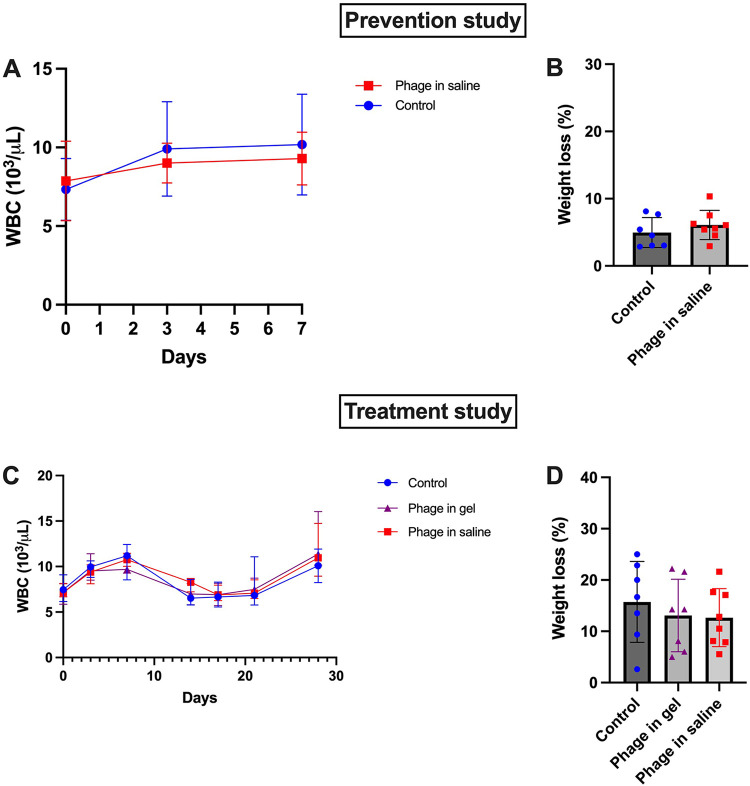
Although several studies have shown promising clinical outcomes of phage therapy in patients with orthopedic device-related infections, questions remain regarding the optimal application protocol, systemic effects, and the impact of the immune response. This study provides a proof-of-concept of phage therapy in a clinically relevant rabbit model of fracture-related infection (FRI) caused by Staphylococcus aureus. In a prevention setting, phage in saline (without any biomaterial-based carrier) was highly effective in the prevention of FRI, compared to systemic antibiotic prophylaxis alone. In the subsequent study involving treatment of established infection, daily administration of phage in saline through a subcutaneous access tube was compared to a single intraoperative application of a phage-loaded hydrogel and a control group receiving antibiotics only. In this setting, although a possible trend of bacterial load reduction on the implant was observed with the phage-loaded hydrogel, no superior effect of phage therapy was found compared to antibiotic treatment alone. The application of phage in saline through a subcutaneous access tube was, however, complicated by superinfection and the development of neutralizing antibodies. The latter was not found in the animals that received the phage-loaded hydrogel, which may indicate that encapsulation of phages into a carrier such as a hydrogel limits their exposure to the adaptive immune system. These studies show phage therapy can be useful in targeting orthopedic device-related infection, however, further research and improvements of these application methods are required for this complex clinical setting. Because of the growing spread of antimicrobial resistance, the use of alternative prevention and treatment strategies is gaining interest. Although the therapeutic potential of bacteriophages has been demonstrated in a number of case reports and series over the past decade, many unanswered questions remain regarding the optimal application protocol. Furthermore, a major concern during phage therapy is the induction of phage neutralizing antibodies. This study aimed at providing a proof-of-concept of phage therapy in a clinically relevant rabbit model of fracture-related infection caused by Staphylococcus aureus. Phage therapy was applied as prophylaxis in a first phase, and as treatment of an established infection in a second phase. The development of phage neutralizing antibodies was evaluated in the treatment study. This study demonstrates that phage therapy can be useful in targeting orthopedic device-related infection, especially as prophylaxis; however, further research and improvements of these application methods are required.
尽管已有几项研究表明噬菌体疗法在治疗与骨科植入物相关的感染方面具有良好的临床效果,但在优化应用方案、系统作用和免疫反应影响等方面仍存在一些问题。本研究通过金黄色葡萄球菌致骨折相关感染(FRI)的临床相关兔模型提供了噬菌体疗法的概念验证。在预防设置中,与单独全身应用抗生素相比,盐水(不含任何基于生物材料的载体)中的噬菌体在预防 FRI 方面非常有效。在随后的研究中,比较了通过皮下接入管每日给予盐水噬菌体与单次术中应用噬菌体负载水凝胶和仅接受抗生素治疗的对照组,在治疗已建立的感染方面。在这种情况下,虽然观察到负载噬菌体的水凝胶可降低植入物上的细菌负荷,但与单独使用抗生素治疗相比,噬菌体治疗并未显示出更好的效果。然而,通过皮下接入管给予盐水噬菌体的应用因继发感染和中和抗体的产生而变得复杂。在接受噬菌体负载水凝胶的动物中未发现后者,这可能表明噬菌体被包封在载体(如水凝胶)中限制了它们暴露于适应性免疫系统。这些研究表明,噬菌体疗法可用于针对骨科植入物相关感染,然而,针对这种复杂的临床情况,还需要进一步研究和改进这些应用方法。由于抗菌药物耐药性的不断传播,替代预防和治疗策略的应用日益受到关注。尽管在过去十年中,已有多项案例报告和系列研究表明了噬菌体的治疗潜力,但在最佳应用方案方面仍存在许多未解决的问题。此外,噬菌体治疗的一个主要关注点是诱导噬菌体中和抗体。本研究旨在通过金黄色葡萄球菌致骨折相关感染的临床相关兔模型提供噬菌体治疗的概念验证。噬菌体治疗在第一阶段作为预防应用,在第二阶段作为已建立感染的治疗应用。在治疗研究中评估了噬菌体中和抗体的发展。本研究表明,噬菌体疗法可用于针对骨科植入物相关感染,尤其是作为预防措施;然而,还需要进一步研究和改进这些应用方法。