Bignold Rebecca, Johnson Jill R
School of Health and Life Sciences, Aston University, Birmingham, UK.
College of Health and Life Sciences, Aston University, Birmingham, UK.
Curr Res Pharmacol Drug Discov. 2021 Apr 10;2:100023. doi: 10.1016/j.crphar.2021.100023. eCollection 2021.
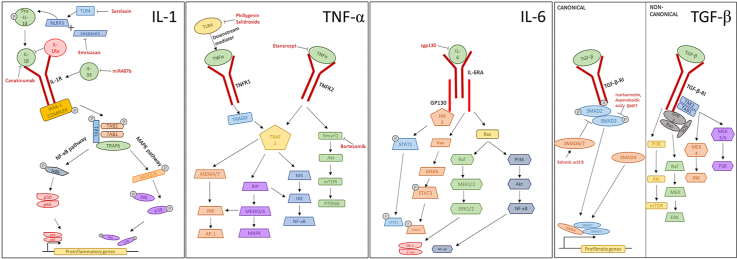
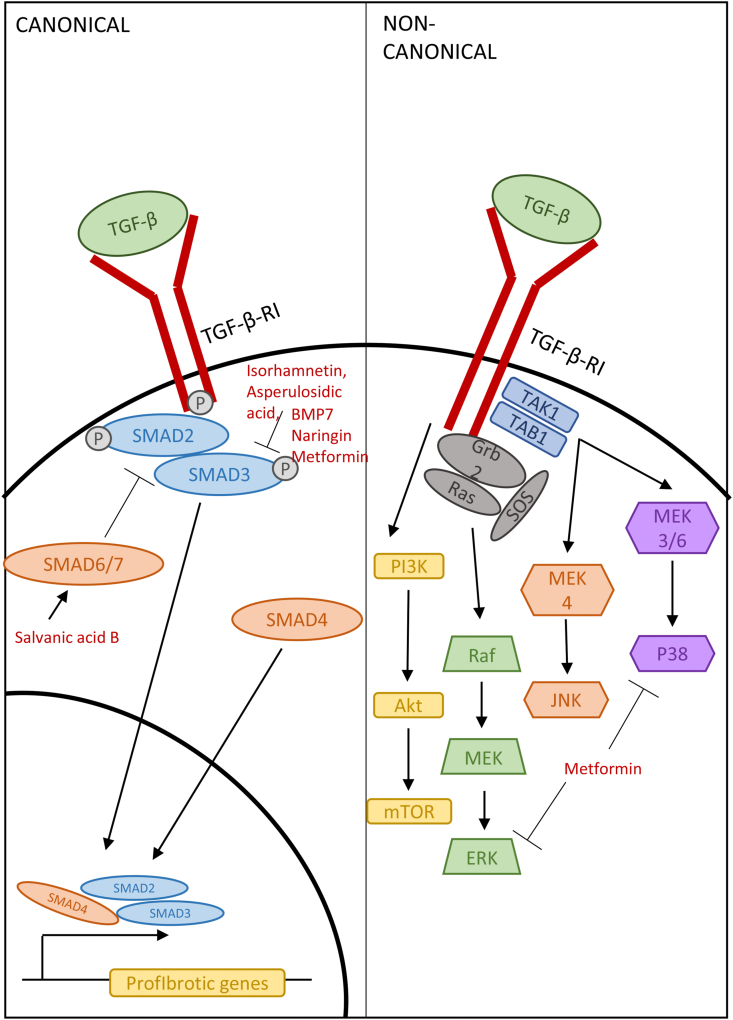
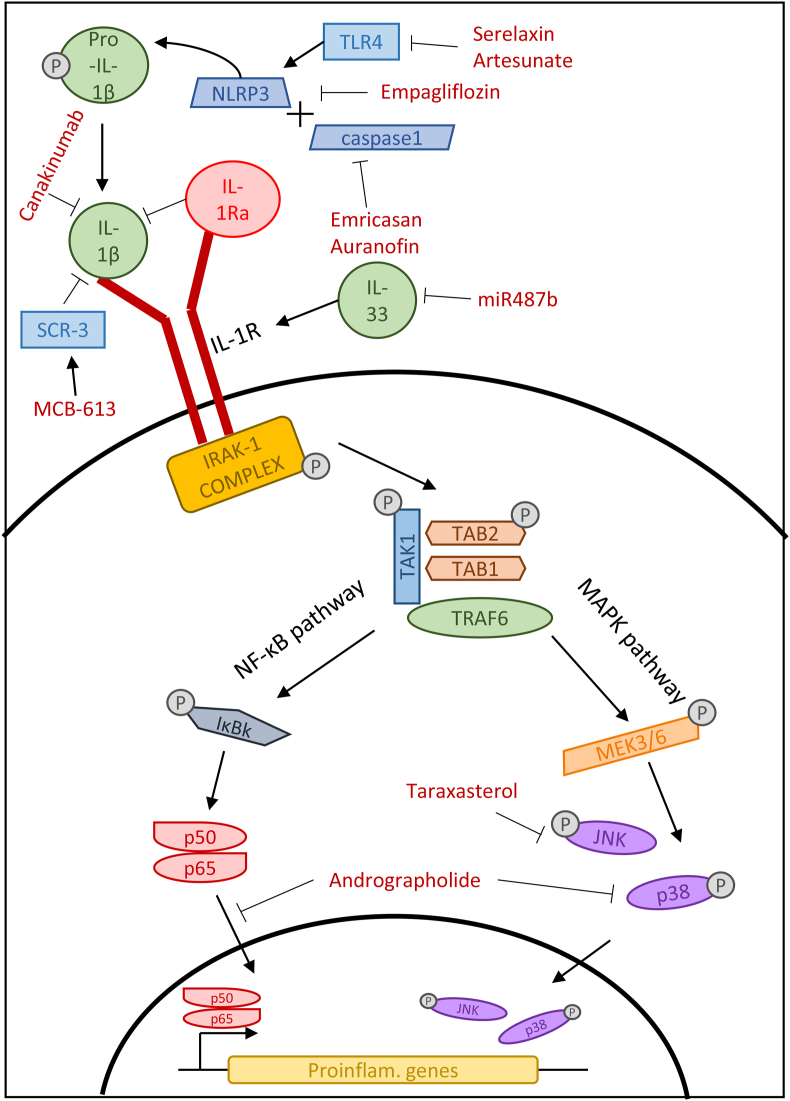
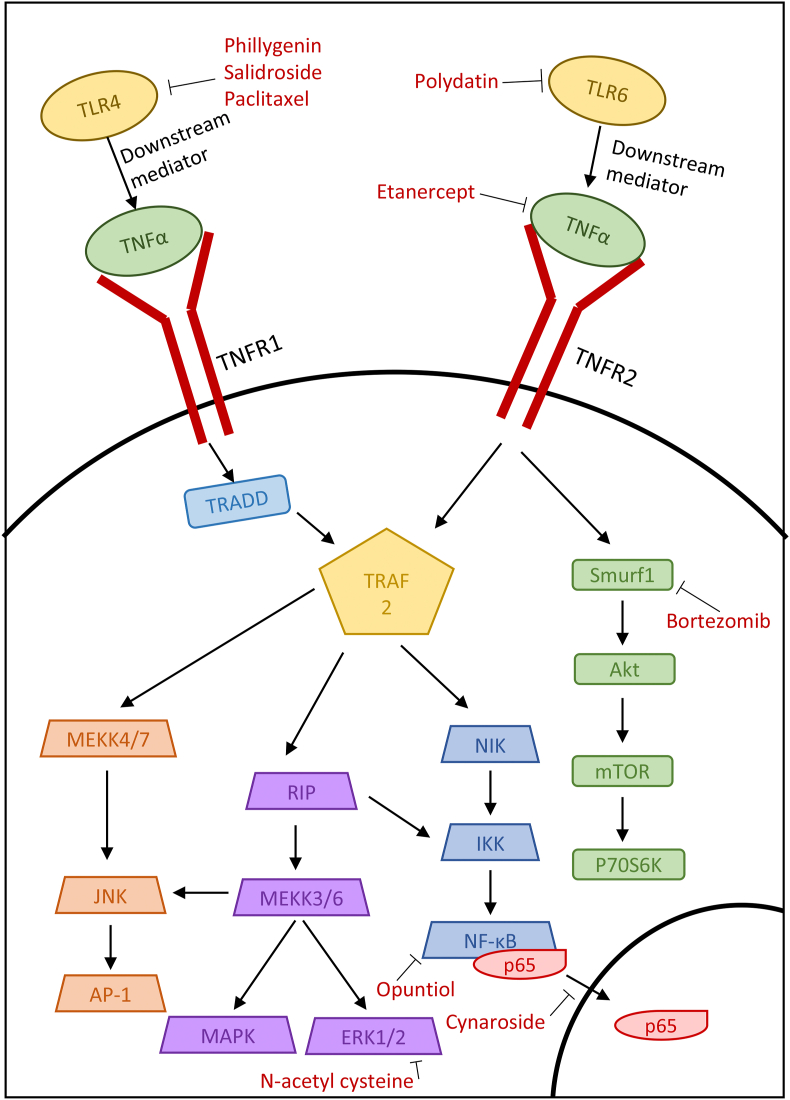
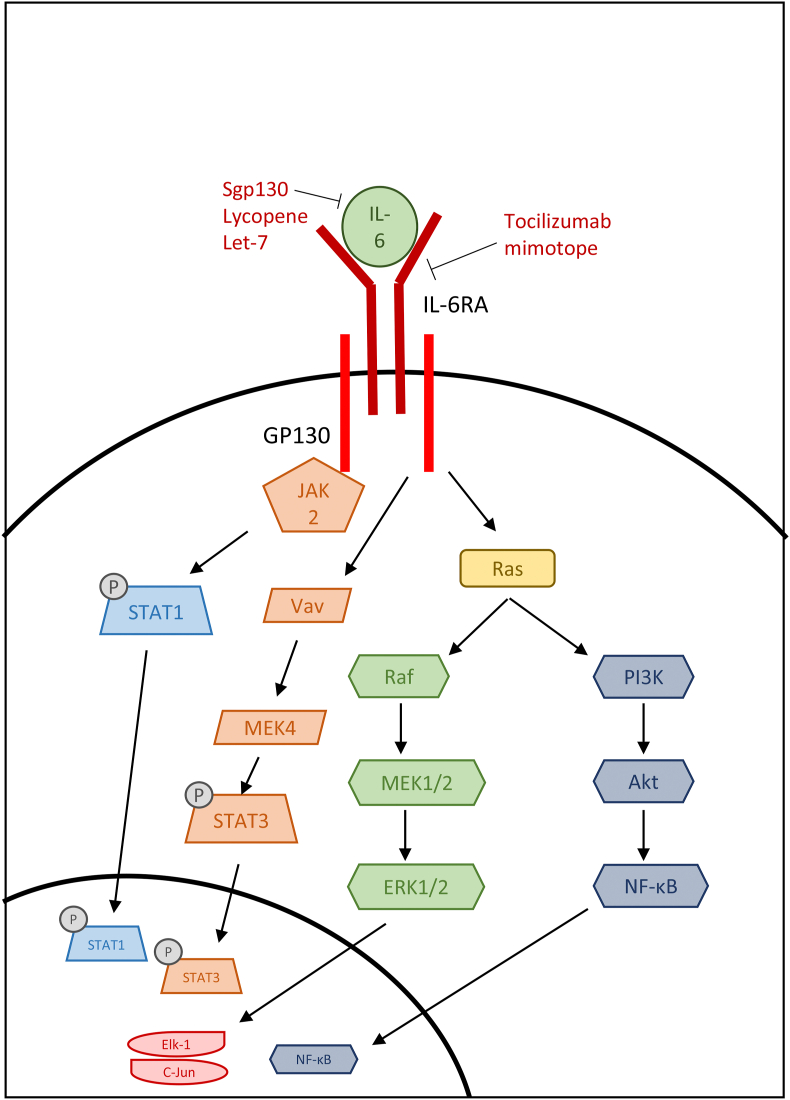
Fibrosis is a common condition that can affect all body tissues, driven by unresolved tissue inflammation and resulting in tissue dysfunction and organ failure that could ultimately lead to death. A myriad of factors are thought to contribute to fibrosis and, although it is relatively common, treatments focusing on reversing fibrosis are few and far between. The process of fibrosis involves a variety of cell types, including epithelial, endothelial, and mesenchymal cells, as well as immune cells, which have been shown to produce pro-fibrotic cytokines. Advances in our understanding of the molecular mechanisms of inflammation-driven tissue fibrosis and scar formation have led to the development of targeted therapeutics aiming to prevent, delay, or even reverse tissue fibrosis. In this review, we describe promising targets and agents in development, with a specific focus on cytokines that have been well-described to play a role in fibrosis: IL-1, TNF-α, IL-6, and TGF-β. An array of small molecule inhibitors, natural compounds, and biologics have been assessed in vivo, in vivo, and in the clinic, demonstrating the capacity to either directly interfere with pro-fibrotic pathways or to block intracellular enzymes that control fibrosis-related signaling pathways. Targeting pro-fibrotic cytokines, potentially via a multi-pronged approach, holds promise for the treatment of inflammation-driven fibrotic diseases in numerous organs. Despite the complexity of the interplay of cytokines in fibrotic tissues, the breadth of the currently ongoing research targeting cytokines suggests that these may hold the key to mitigating tissue fibrosis and reducing organ damage in the future.
纤维化是一种常见病症,可影响身体所有组织,由未解决的组织炎症驱动,导致组织功能障碍和器官衰竭,最终可能导致死亡。众多因素被认为与纤维化有关,尽管它相对常见,但专注于逆转纤维化的治疗方法却寥寥无几。纤维化过程涉及多种细胞类型,包括上皮细胞、内皮细胞和间充质细胞,以及免疫细胞,这些细胞已被证明会产生促纤维化细胞因子。我们对炎症驱动的组织纤维化和瘢痕形成分子机制的理解取得进展,促使开发旨在预防、延缓甚至逆转组织纤维化的靶向治疗方法。在本综述中,我们描述了正在研发中的有前景的靶点和药物,特别关注已被充分描述在纤维化中起作用的细胞因子:白细胞介素-1、肿瘤坏死因子-α、白细胞介素-6和转化生长因子-β。一系列小分子抑制剂、天然化合物和生物制剂已在体内、体外和临床中进行评估,证明它们有能力直接干扰促纤维化途径或阻断控制纤维化相关信号通路的细胞内酶。通过多管齐下的方法靶向促纤维化细胞因子,有望治疗多种器官的炎症驱动的纤维化疾病。尽管纤维化组织中细胞因子相互作用复杂,但目前针对细胞因子的广泛研究表明,这些细胞因子可能是未来减轻组织纤维化和减少器官损伤的关键。