Son Seung Seob, Kang Jeong Suk, Lee Eun Young
Department of Internal Medicine, Soonchunhyang University Cheonan Hospital, Cheonan, South Korea.
Institute of Tissue Regeneration, College of Medicine, Soonchunhyang University, Cheonan, South Korea.
Med Sci Monit Basic Res. 2020 Dec 16;26:e928265. doi: 10.12659/MSMBR.928265.
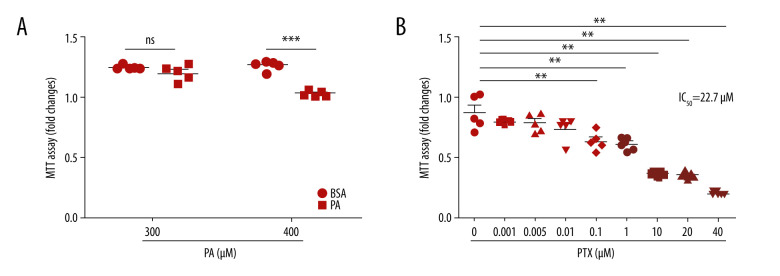
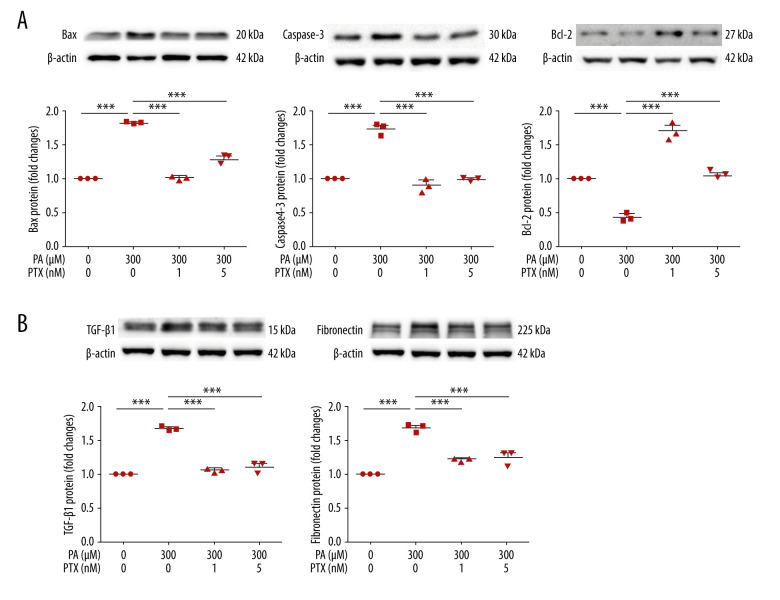
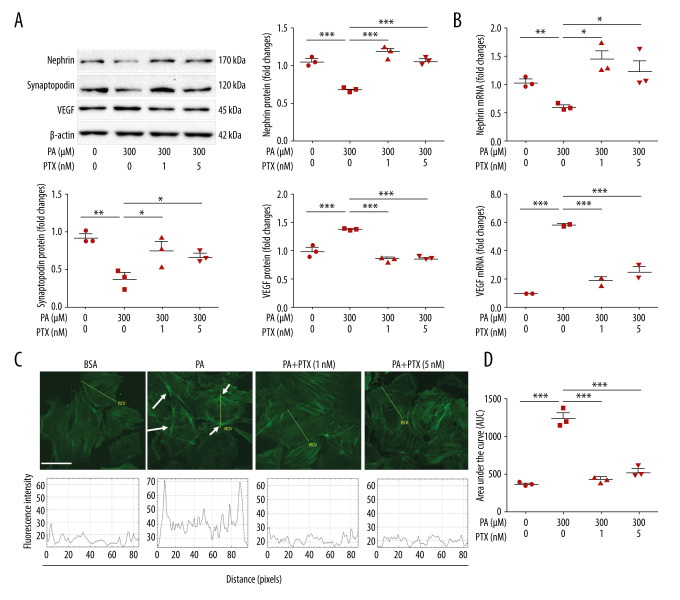
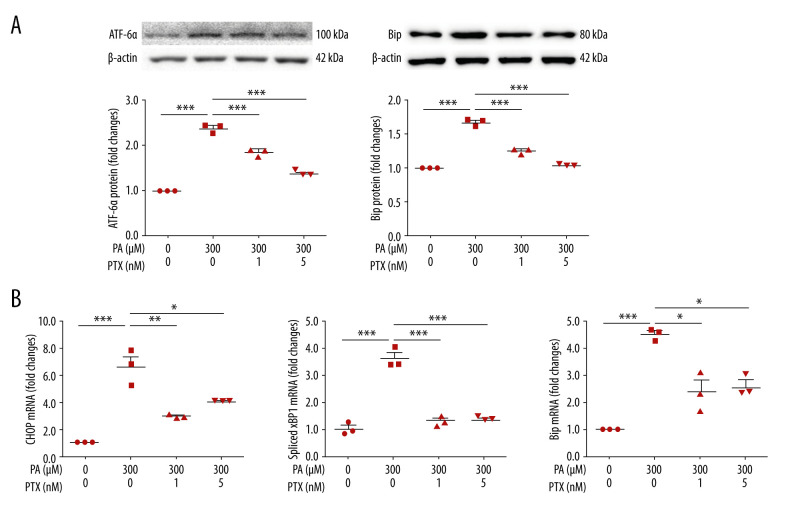
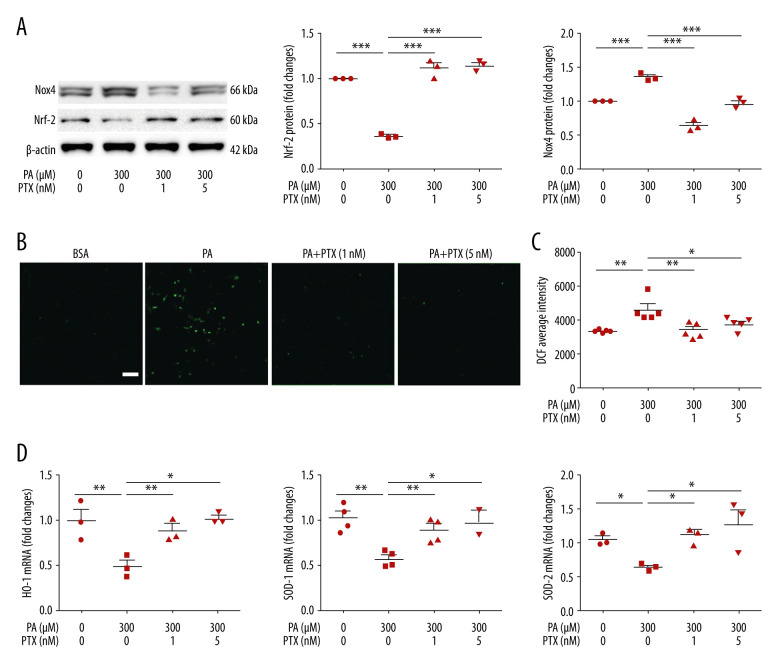
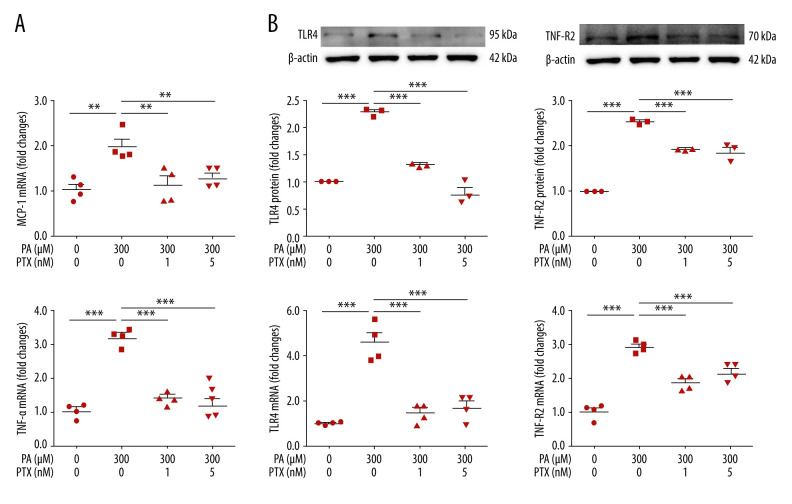
BACKGROUND Palmitate, a common saturated free fatty acid, is increased in patients with diabetic nephropathy (DN). Excessive palmitate in kidney is known to cause proteinuria and fibrosis. Several studies have demonstrated that paclitaxel has anti-fibrotic and anti-inflammatory effects on kidney disease. However, whether paclitaxel can relieve podocyte injury is unclear. MATERIAL AND METHODS Immortalized mouse podocytes were used as an in vitro system. Palmitate was used to induce podocyte injury. Podocytes were divided into 4 groups: bovine serum albumin, palmitate, palmitate+1 nM paclitaxel, and palmitate+5 nM paclitaxel. The effects of paclitaxel on palmitate-induced podocyte injury were analyzed by western blot and real-time PCR. Intracellular reactive oxygen species (ROS) generation and podocyte cytoskeletons were analyzed using CM-H2DCF-DA and phalloidin staining. RESULTS Paclitaxel restored downregulated expression of nephrin and synaptopodin and upregulated VEGF expression after injury induced by palmitate. Remarkably, palmitate-induced actin cytoskeleton rearrangement in podocytes was repaired by paclitaxel. Four endoplasmic reticulum stress markers, ATF-6alpha, Bip, CHOP, and spliced xBP1, were significantly increased in palmitate-treated podocytes compared with control podocytes. Such increases were decreased by paclitaxel treatment. Palmitate-induced ROS generation was ameliorated by paclitaxel. Elevated Nox4 expression was also improved by paclitaxel. Paclitaxel alleviated the expression levels of the antioxidant molecules, Nrf-2, HO-1, SOD-1, and SOD-2. The paclitaxel effects were accompanied by inhibition of the inflammatory cytokines, MCP-1, TNF-alpha, TNF-R2, and TLR4, as well as attenuation of the apoptosis markers, Bax, Bcl-2, and Caspase-3. Furthermore, paclitaxel suppressed the palmitate-induced fibrosis molecules, fibronectin and TGF-ß1. CONCLUSIONS This study suggests that paclitaxel could be a therapeutic agent for treating palmitate-induced podocyte injury in DN.
棕榈酸是一种常见的饱和游离脂肪酸,在糖尿病肾病(DN)患者中含量升高。已知肾脏中过量的棕榈酸会导致蛋白尿和纤维化。多项研究表明,紫杉醇对肾脏疾病具有抗纤维化和抗炎作用。然而,紫杉醇是否能减轻足细胞损伤尚不清楚。
使用永生化小鼠足细胞建立体外系统。用棕榈酸诱导足细胞损伤。足细胞分为4组:牛血清白蛋白组、棕榈酸组、棕榈酸+1 nM紫杉醇组和棕榈酸+5 nM紫杉醇组。通过蛋白质免疫印迹法和实时定量聚合酶链反应分析紫杉醇对棕榈酸诱导的足细胞损伤的影响。使用CM-H2DCF-DA和鬼笔环肽染色分析细胞内活性氧(ROS)生成和足细胞细胞骨架。
紫杉醇可恢复棕榈酸损伤后nephrin和突触足蛋白下调的表达,并上调VEGF表达。值得注意的是,紫杉醇修复了棕榈酸诱导的足细胞肌动蛋白细胞骨架重排。与对照足细胞相比,棕榈酸处理的足细胞中四种内质网应激标志物ATF-6α、Bip、CHOP和剪接的xBP1显著增加。紫杉醇处理可降低这种增加。紫杉醇改善了棕榈酸诱导的ROS生成。紫杉醇还改善了升高的Nox4表达。紫杉醇降低了抗氧化分子Nrf-2、HO-1、SOD-1和SOD-2的表达水平。紫杉醇的作用伴随着炎性细胞因子MCP-1、TNF-α、TNF-R2和TLR4的抑制,以及凋亡标志物Bax、Bcl-2和Caspase-3的减弱。此外,紫杉醇抑制了棕榈酸诱导的纤维化分子纤连蛋白和TGF-β1。
本研究表明,紫杉醇可能是治疗糖尿病肾病中棕榈酸诱导的足细胞损伤的一种治疗药物。