Bhosale Shailesh, Kumar Anoop
Department of Pharmacology and Toxicology, National Institute of Pharmaceutical Education and Research (NIPER), Raebareli, Lucknow, UP, India.
Curr Res Pharmacol Drug Discov. 2021 Jul 31;2:100043. doi: 10.1016/j.crphar.2021.100043. eCollection 2021.
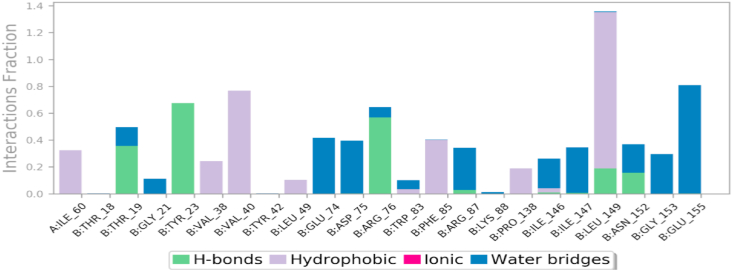
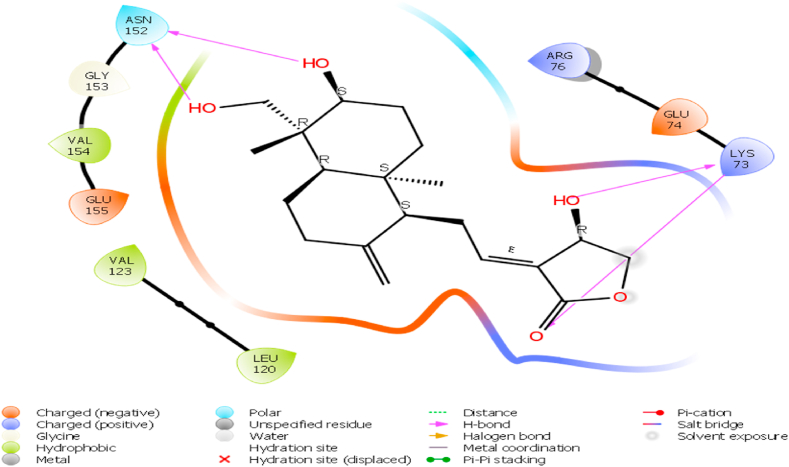
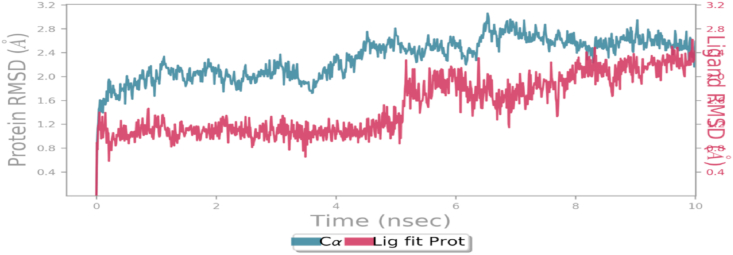
Japanese encephalitis (JE) is one of the viral diseases affecting millions of peoples across the globe specifically developing countries. There is no specific treatment available, however, vaccines are available for its prevention. Unfortunately, available vaccines are not effective against all clinical isolates and are also associated with neurological complications in some individuals. We have screened the selected phytoconstituents of against various targets of Japanese encephalitis virus (JEV) using Schrodinger suite 2019-3. Among all selected phytoconstituents, andrographolide has shown a good binding affinity towards NS3 protease as compared to NS3 helicase and NS5 Rdrp (RNA dependent RNA polymerase) of JEV. The molecular dynamics (MD) results have also shown good stability of andrographolide in the active site of NS3 protease. The absorption, distribution, metabolism, excretion, and toxicity (ADMET) analysis has also indicated a good pharmacokinetic and safety profile of andrographolide. Finally, the target-based assay have confirmed the inhibitory potential of andrographolide against the NS3 protease of JEV. In conclusion, andrographolide could have the potential to develop as an antiviral agent against JEV through inhibition of protease, however, further investigations are required.
日本脑炎(JE)是一种影响全球数百万人,特别是发展中国家人民的病毒性疾病。目前尚无特效治疗方法,但有疫苗可用于预防。不幸的是,现有的疫苗对所有临床分离株均无效,并且在某些个体中还会引发神经并发症。我们使用Schrodinger suite 2019-3对从 中筛选出的植物成分针对日本脑炎病毒(JEV)的各种靶点进行了研究。在所有选定的植物成分中,与JEV的NS3解旋酶和NS5 Rdrp(RNA依赖性RNA聚合酶)相比,穿心莲内酯对NS3蛋白酶表现出良好的结合亲和力。分子动力学(MD)结果也表明穿心莲内酯在NS3蛋白酶的活性位点具有良好的稳定性。吸收、分布、代谢、排泄和毒性(ADMET)分析也表明穿心莲内酯具有良好的药代动力学和安全性。最后,基于靶点的试验证实了穿心莲内酯对JEV的NS3蛋白酶具有抑制潜力。总之,穿心莲内酯有可能通过抑制蛋白酶而开发成为一种抗JEV的抗病毒药物,然而,还需要进一步的研究。