Division of Cardiology Massachusetts General Hospital and Harvard Medical School Boston MA.
Cardio-Oncology Program Division of Cardiology Massachusetts General Hospital and Harvard Medical School Boston MA.
J Am Heart Assoc. 2021 Dec 21;10(24):e024033. doi: 10.1161/JAHA.121.024033. Epub 2021 Dec 16.
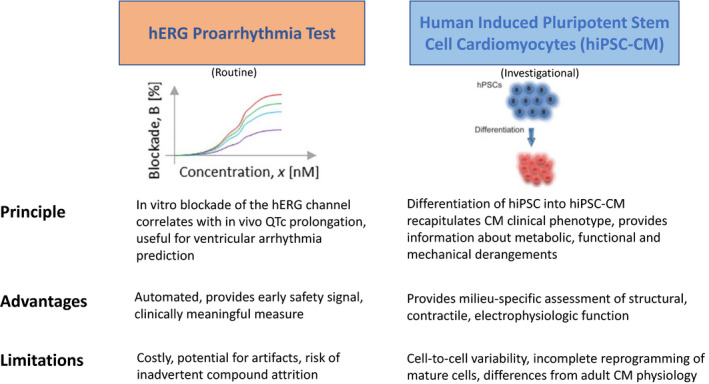
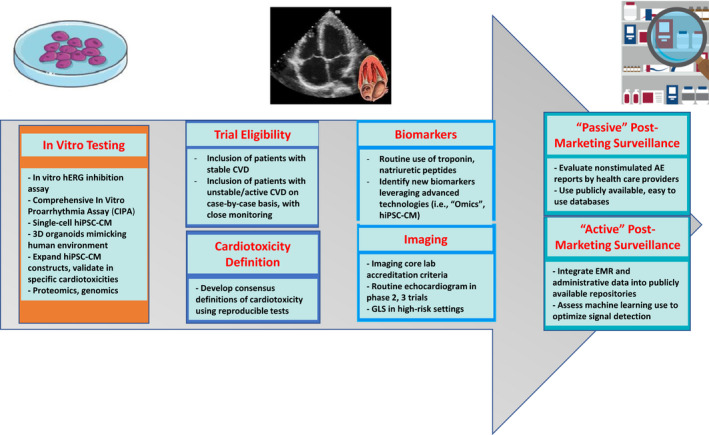
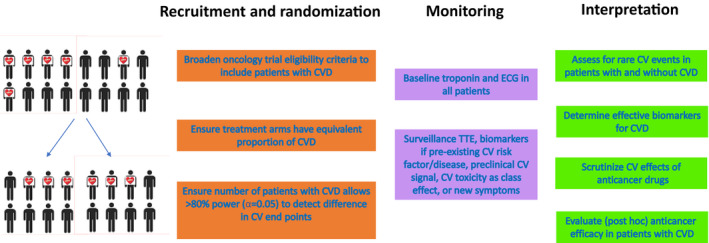
The development of cardiovascular toxicity attributable to anticancer drugs is a pivotal event that is associated with cardiovascular morbidity as well as with worse cancer-specific and overall outcomes. Although broad consensus exists regarding the importance of cardiovascular safety assessment in cancer drug development, real-world data suggest that cardiovascular events are significantly underestimated in oncology trials. This drug safety discrepancy has profound implications on drug development decisions, risk-benefit evaluation, formulation of surveillance and prevention protocols, and survivorship. In this article, we review the contemporary cardiovascular safety evaluation of new pharmaceuticals in hematology and oncology, spanning from in vitro pharmacodynamic testing to randomized clinical trials. We argue that cardiovascular safety assessment of anticancer drugs should be reformed and propose practical strategies, including development and validation of preclinical assays, expansion of oncology trial eligibility, incorporation of cardiovascular end points in early-phase studies, and design of longitudinal multi-institutional cardiotoxicity registries.
抗癌药物引起的心血管毒性的发展是一个关键事件,与心血管发病率以及更差的癌症特异性和总体预后相关。尽管在癌症药物开发中评估心血管安全性的重要性已达成广泛共识,但实际数据表明,肿瘤试验中严重低估了心血管事件。这种药物安全性差异对药物开发决策、风险效益评估、监测和预防方案的制定以及生存质量有深远影响。在本文中,我们综述了血液学和肿瘤学中新药物的当代心血管安全性评估,涵盖了从体外药效学测试到随机临床试验。我们认为,抗癌药物的心血管安全性评估应该进行改革,并提出了切实可行的策略,包括开发和验证临床前检测、扩大肿瘤试验的纳入标准、将心血管终点纳入早期研究以及设计纵向多机构心脏毒性登记处。