Pathology, Institute of Medical Genetics and Pathology, University Hospital Basel, University of Basel, Basel, Switzerland.
Department of Biomedicine, University of Basel, Basel, Switzerland.
Pathobiology. 2022;89(3):166-177. doi: 10.1159/000520221. Epub 2021 Dec 16.
Since angiotensin converting enzyme-2 (ACE2) was discovered as an essential entry factor of SARS-CoV-2 (severe acute respiratory syndrome coronavirus-2), there has been conflicting evidence regarding the role of renin-angiotensin-aldosterone system (RAAS) in COVID-19. This study elucidates pulmonary expression patterns SARS-CoV-2 entry factors (ACE2 and transmembrane protease serine subtype 2, TMPRSS2) and RAAS components in lethal COVID-19.
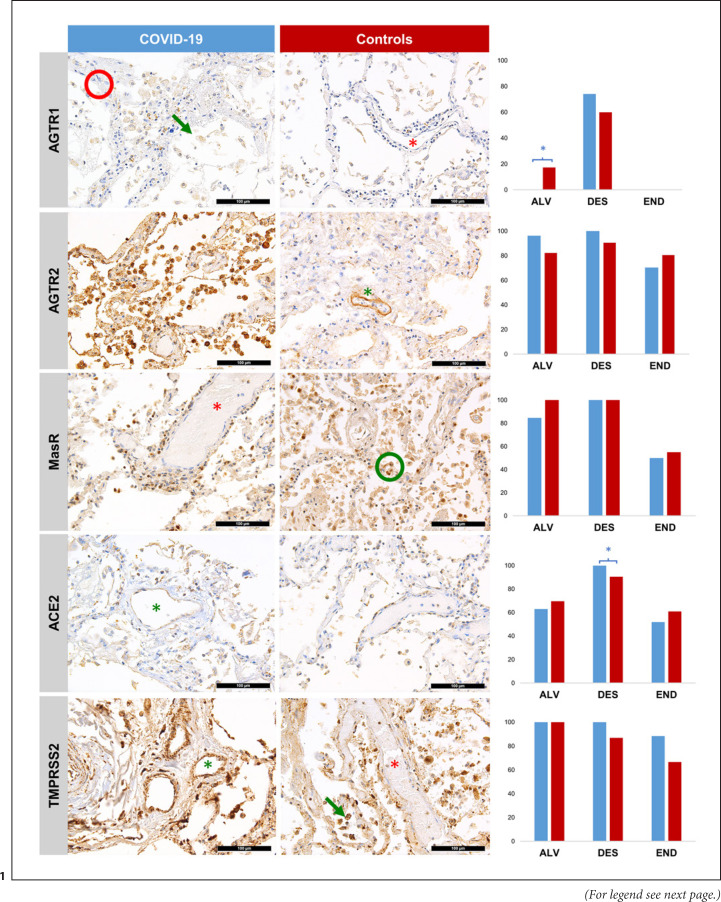
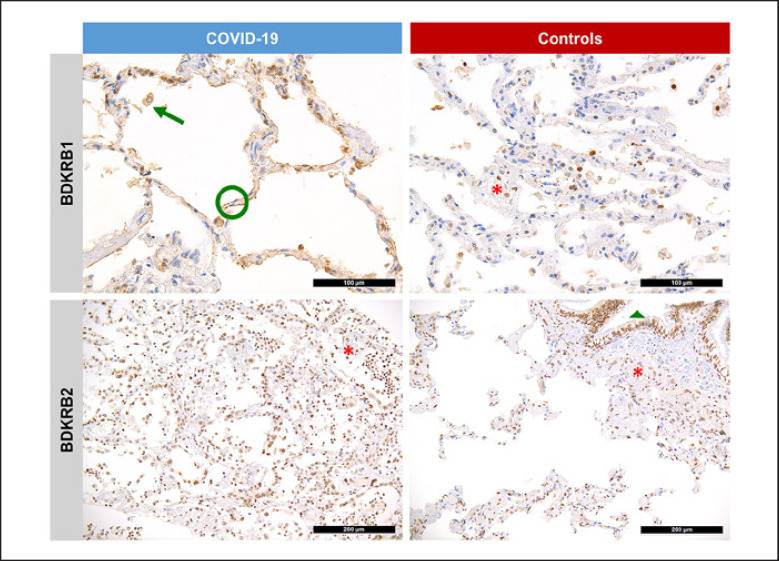
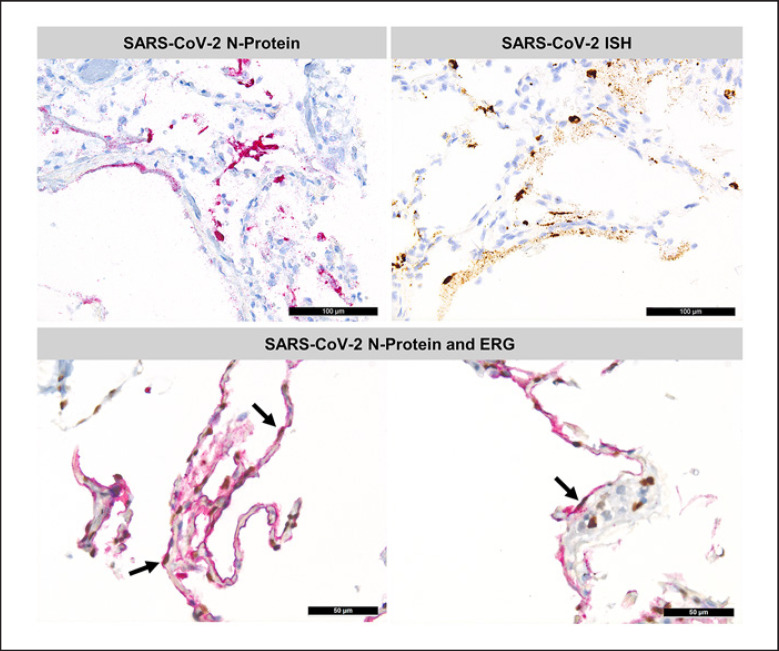
Lung tissue from COVID-19 autopsies (n = 27) and controls (n = 23) underwent immunohistochemical staining for RAAS components (angiotensin receptors 1 and 2, ACE2 and Mas-receptor) and bradykinin receptors 1 and 2. Staining of individual cellular populations (alveolar pneumocytes [ALV], desquamated cells [DES] and endothelium [END]) was measured by a binary scale (positive/negative). SARS-CoV-2 was detected using immunohistochemistry against nucleocapsid protein, in-situ hybridization and quantitative reverse transcriptase polymerase chain reaction. Gene expression profiling for ACE2, ACE and TMPRSS2 was performed.
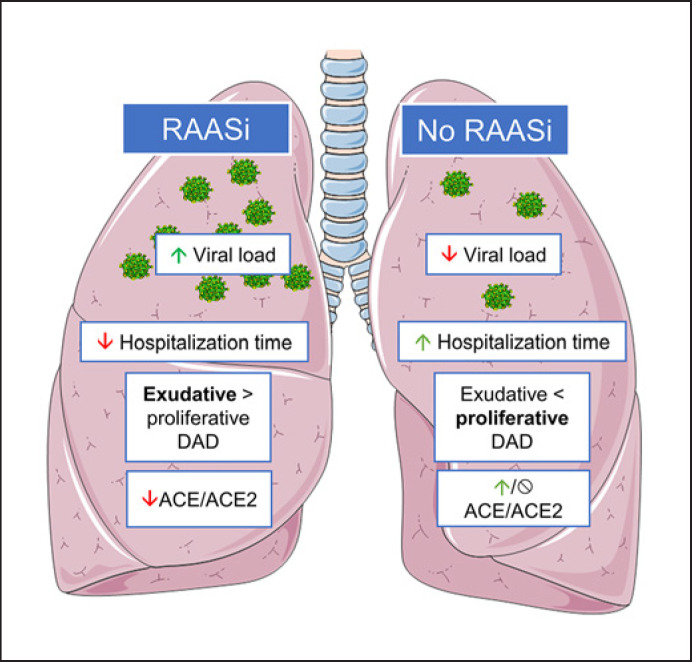
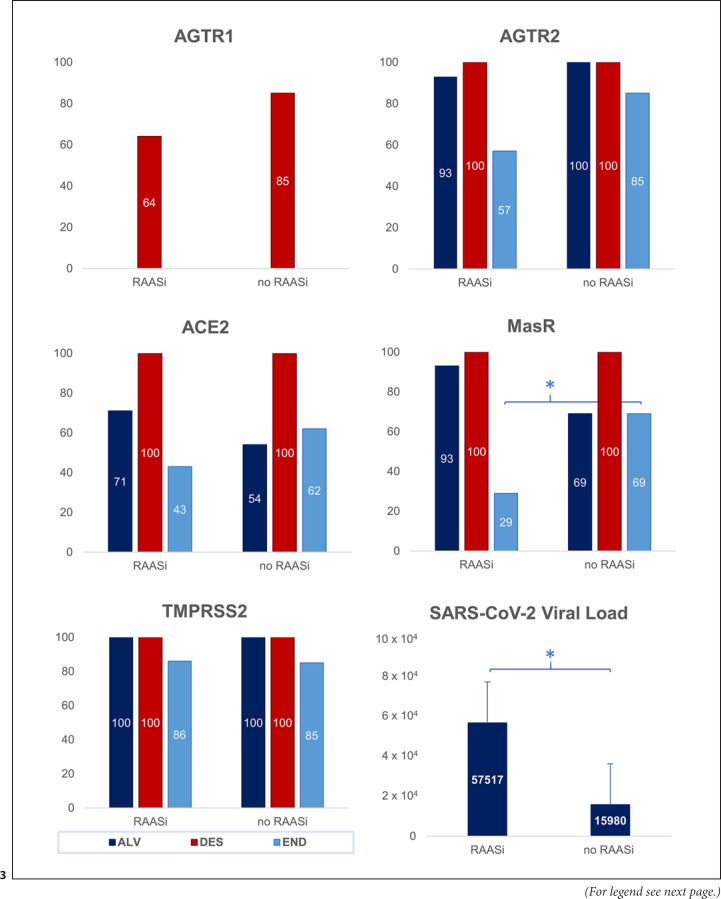
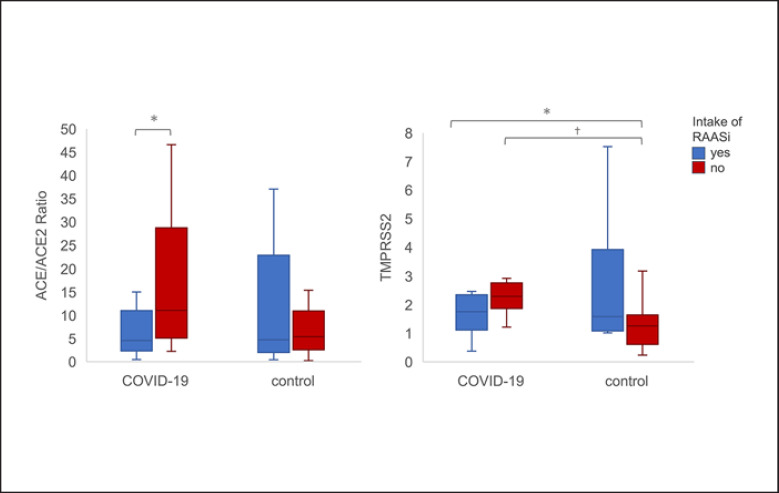
Subtle differences were observed when comparing COVID-19 patients and controls not reaching statistical significance, such as a higher incidence of ACE2-positivity in END (52% vs. 39%) but lower positivity in ALVs (63% vs. 70%) and an overall downregulation of ACE2 gene expression (0.25 vs. 0.55). However, COVID-19 patients with RAAS inhibitor (RAASi) intake had significantly shorter hospitalization times (5 vs. 12 days), higher viral loads (57,517 vs. 15,980/106 RNase P-gene copies) and decreased ACE/ACE2-expression ratios (4.58 vs. 11.07) than patients without. TMPRSS2 expression was significantly (1.76-fold) higher in COVID-19 patients than controls.
Our study delineates the heterogeneous expression patterns of RAAS components in the lungs, which vary amongst cellular populations, and implies that COVID-19 patients with RAASi-intake present with a more rapid disease progression, although this requires further investigation.
自血管紧张素转换酶-2(ACE2)被发现是严重急性呼吸综合征冠状病毒-2(SARS-CoV-2)的必需进入因子以来,肾素-血管紧张素-醛固酮系统(RAAS)在 COVID-19 中的作用一直存在争议。本研究阐明了致命 COVID-19 中 SARS-CoV-2 进入因子(ACE2 和跨膜丝氨酸蛋白酶 2 型,TMPRSS2)和 RAAS 成分的肺表达模式。
对 COVID-19 尸检(n = 27)和对照(n = 23)的肺组织进行 RAAS 成分(血管紧张素受体 1 和 2、ACE2 和 Mas 受体)和缓激肽受体 1 和 2 的免疫组织化学染色。通过二进制标度(阳性/阴性)测量单个细胞群(肺泡上皮细胞 [ALV]、剥落细胞 [DES] 和内皮 [END])的染色。使用针对核衣壳蛋白的免疫组织化学、原位杂交和定量逆转录聚合酶链反应检测 SARS-CoV-2。进行 ACE2、ACE 和 TMPRSS2 的基因表达谱分析。
与对照组相比,COVID-19 患者的比较观察到细微差异,但未达到统计学意义,例如 END 中 ACE2 阳性率更高(52% vs. 39%),但 ALV 中的阳性率更低(63% vs. 70%),以及 ACE2 基因表达整体下调(0.25 vs. 0.55)。然而,服用肾素-血管紧张素系统抑制剂(RAASi)的 COVID-19 患者的住院时间明显更短(5 天 vs. 12 天),病毒载量更高(57,517 比 15,980/106 RNase P-基因拷贝),ACE/ACE2 表达比值降低(4.58 比 11.07)。与对照组相比,TMPRSS2 表达在 COVID-19 患者中显著升高(1.76 倍)。
我们的研究描绘了 RAAS 成分在肺部的异质表达模式,这些模式在细胞群体之间有所不同,并暗示服用 RAASi 的 COVID-19 患者疾病进展更快,尽管这需要进一步研究。