Saha Tanmoy, van Vliet Amanda A, Cui Chunxiao, Macias Jorge Jimenez, Kulkarni Arpita, Pham Luu Nhat, Lawler Sean, Spanholtz Jan, Georgoudaki Anna-Maria, Duru Adil Doganay, Goldman Aaron
Division of Engineering in Medicine, Brigham and Women's Hospital, Boston, MA, United States.
Department of Medicine, Harvard Medical School, Boston, MA, United States.
Front Mol Biosci. 2021 Dec 1;8:754443. doi: 10.3389/fmolb.2021.754443. eCollection 2021.
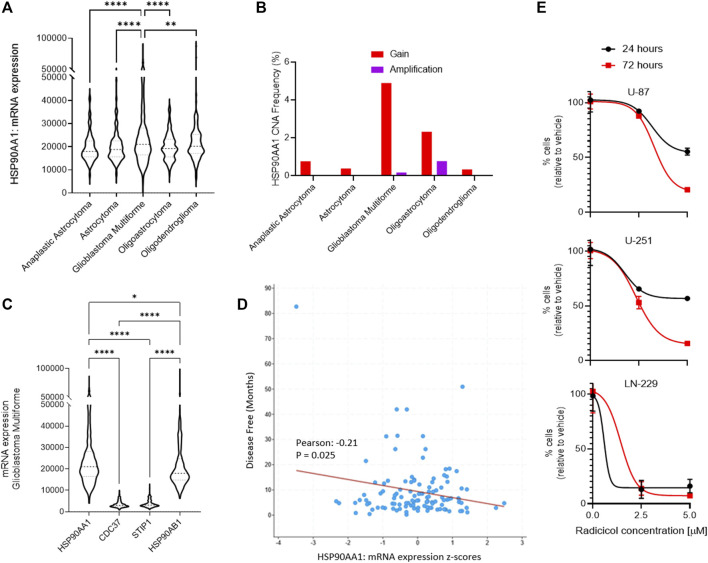
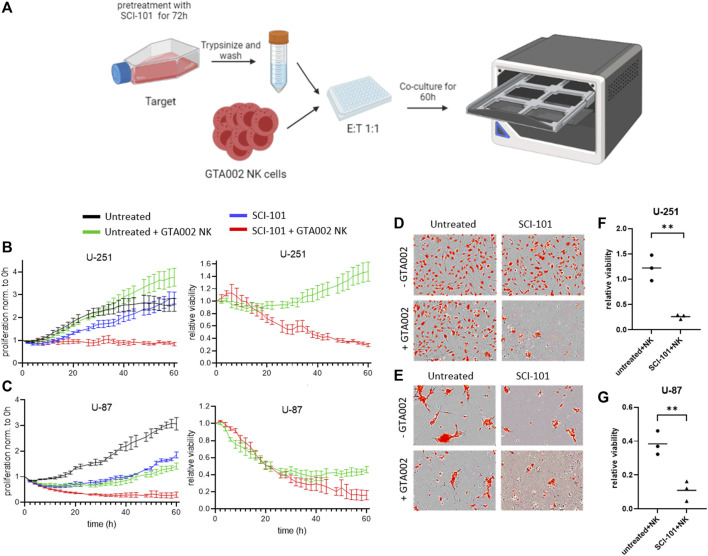
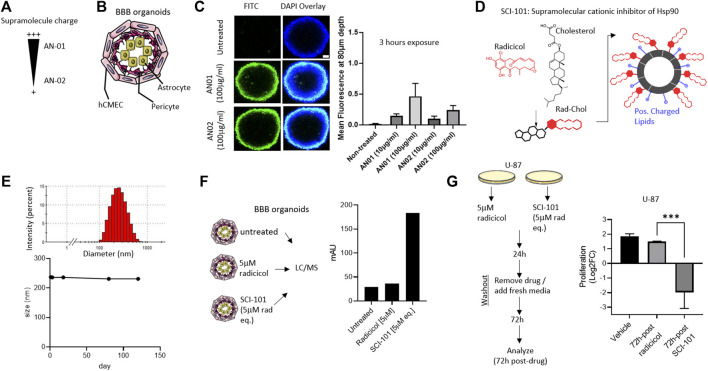
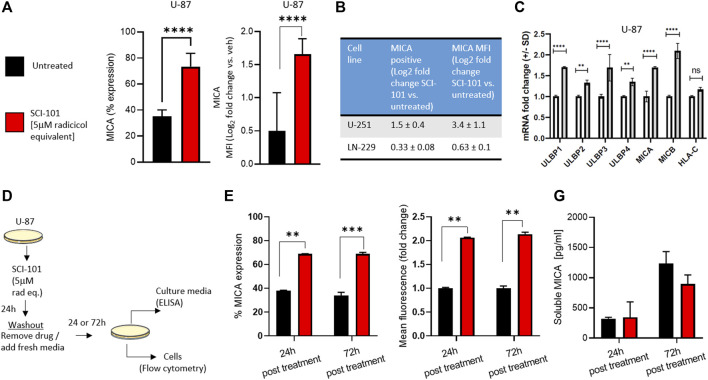
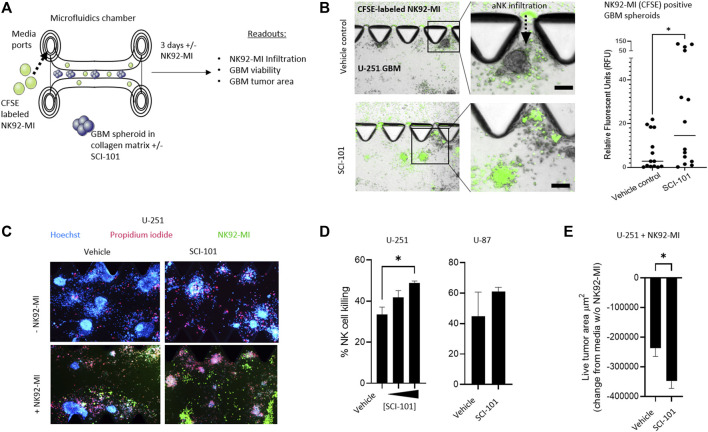
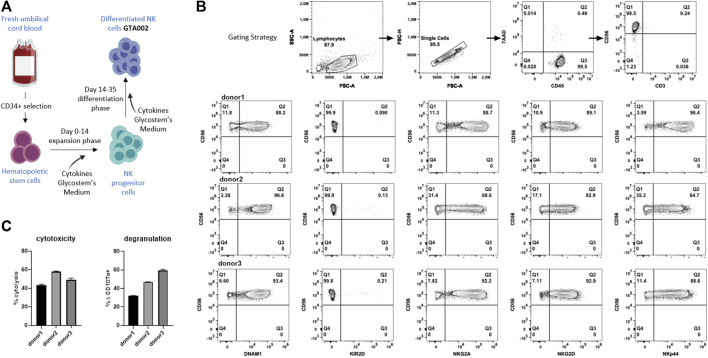
Allogeneic natural killer (aNK) cell adoptive therapy has the potential to dramatically impact clinical outcomes of glioblastoma multiforme (GBM). However, in order to exert therapeutic activity, NK cells require tumor expression of ligands for activating receptors, such as MHC Class I peptide A/B (MICA/B) and ULBPs. Here, we describe the use of a blood-brain barrier (BBB) permissive supramolecular cationic drug vehicle comprising an inhibitor of the chaperone heat shock protein 90 (Hsp90), which sustains a cytotoxic effect on GBM cells, boosts the expression of MICA/B and ULBPs on the residual population, and augments the activity of clinical-grade aNK cells (GTA002). First, we identify Hsp90 mRNA transcription and gain of function as significantly upregulated in GBM compared to other central nervous system tumors. Through a rational chemical design, we optimize a radicicol supramolecular prodrug containing cationic excipients, SCI-101, which displays >2-fold increase in relative BBB penetration compared to less cationic formulations in organoids, . Using 2D and 3D biological models, we confirm SCI-101 sustains GBM cytotoxicity 72 h after drug removal and induces cell surface MICA/B protein and ULBP mRNA up to 200% in residual tumor cells compared to the naked drug alone without augmenting the shedding of MICA/B, . Finally, we generate and test the sequential administration of SCI-101 with a clinical aNK cell therapy, GTA002, differentiated and expanded from healthy umbilical cord blood CD34 hematopoietic stem cells. Using a longitudinal model, we demonstrate >350% relative cell killing is achieved in SCI-101-treated cell lines compared to vehicle controls. In summary, these data provide a first-of-its-kind BBB-penetrating, long-acting inhibitor of Hsp90 with monotherapy efficacy, which improves response to aNK cells and thus may rapidly alter the treatment paradigm for patients with GBM.
同种异体自然杀伤(aNK)细胞过继性疗法有可能显著影响多形性胶质母细胞瘤(GBM)的临床治疗结果。然而,为了发挥治疗活性,NK细胞需要肿瘤表达用于激活受体的配体,如MHC I类肽A/B(MICA/B)和ULBP。在此,我们描述了一种使用血脑屏障(BBB)允许的超分子阳离子药物载体,其包含伴侣热休克蛋白90(Hsp90)的抑制剂,该载体对GBM细胞具有细胞毒性作用,可提高残余群体上MICA/B和ULBP的表达,并增强临床级aNK细胞(GTA002)的活性。首先,我们确定与其他中枢神经系统肿瘤相比,Hsp90 mRNA转录和功能获得在GBM中显著上调。通过合理的化学设计,我们优化了一种含有阳离子辅料的萝卜硫素超分子前药SCI-101,与类器官中阳离子性较低的制剂相比,其相对血脑屏障穿透率增加了2倍以上。使用二维和三维生物学模型,我们证实SCI-101在药物去除后72小时仍能维持对GBM的细胞毒性,并且与单独使用裸药相比,可使残余肿瘤细胞中的细胞表面MICA/B蛋白和ULBP mRNA增加高达200%,而不会增加MICA/B的脱落。最后,我们制备并测试了SCI-101与临床aNK细胞疗法GTA002的序贯给药,GTA002由健康脐带血CD34造血干细胞分化和扩增而来。使用纵向模型,我们证明与载体对照相比,SCI-101处理的细胞系实现了>350%的相对细胞杀伤。总之,这些数据提供了一种首创的具有单药疗效的血脑屏障穿透性Hsp90长效抑制剂,可改善对aNK细胞的反应,从而可能迅速改变GBM患者的治疗模式。