Department of Neurology, University Hospital Wuerzburg, Josef-Schneider-Str. 11, 97080, Würzburg, Germany.
Department of Neurology, Klinikum Main-Spessart, Grafen-von-Rieneck-Str. 5, 97816, Lohr, Germany.
Cell Death Dis. 2021 Dec 20;13(1):20. doi: 10.1038/s41419-021-04379-z.
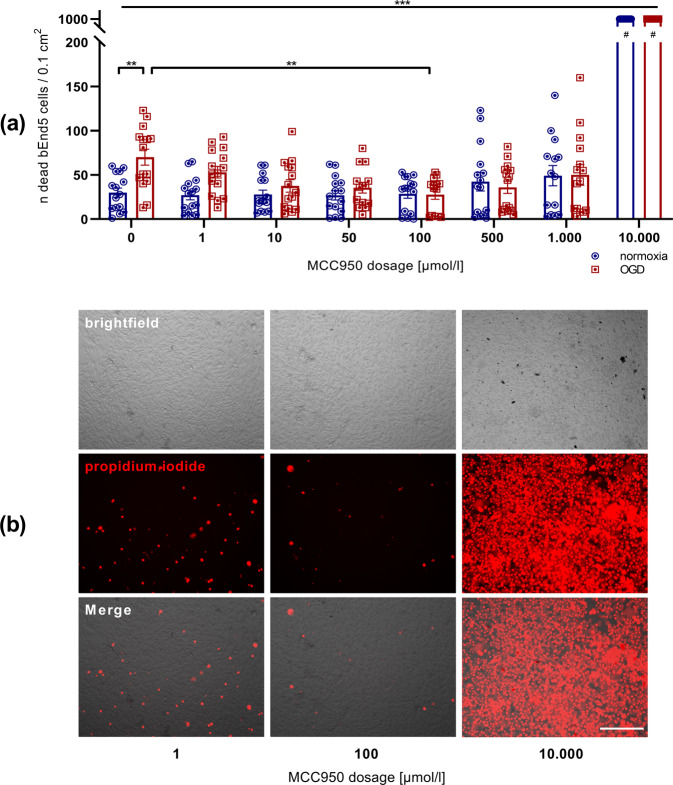
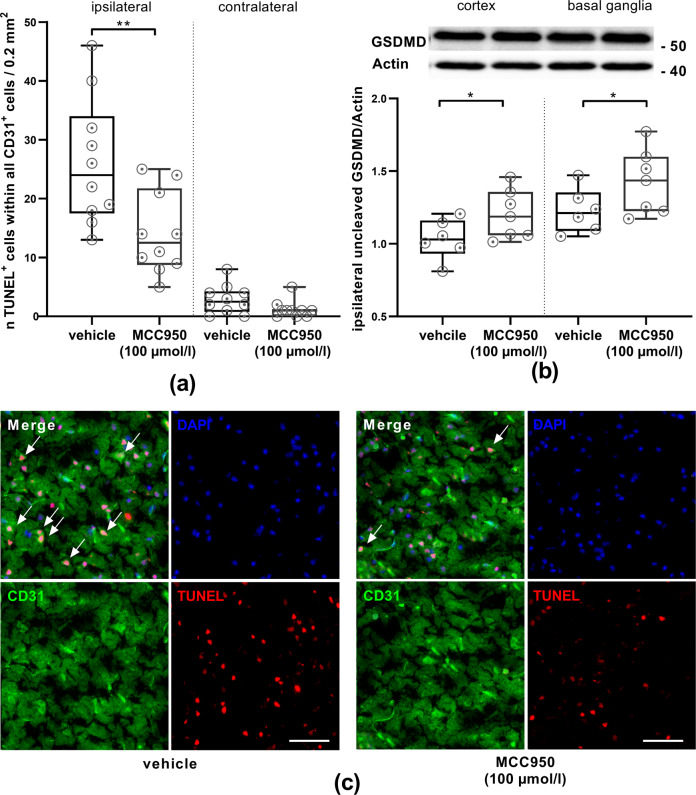
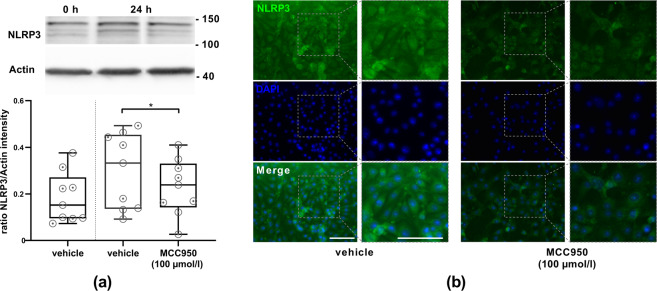
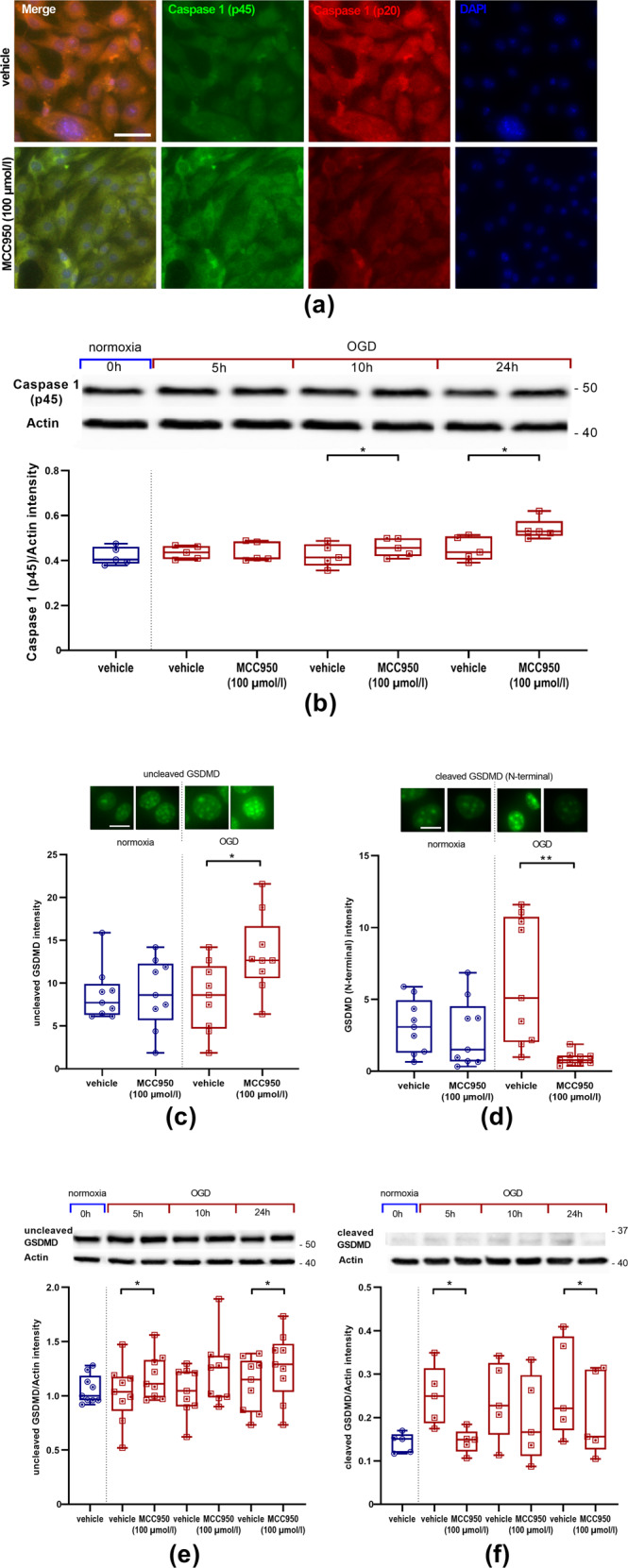
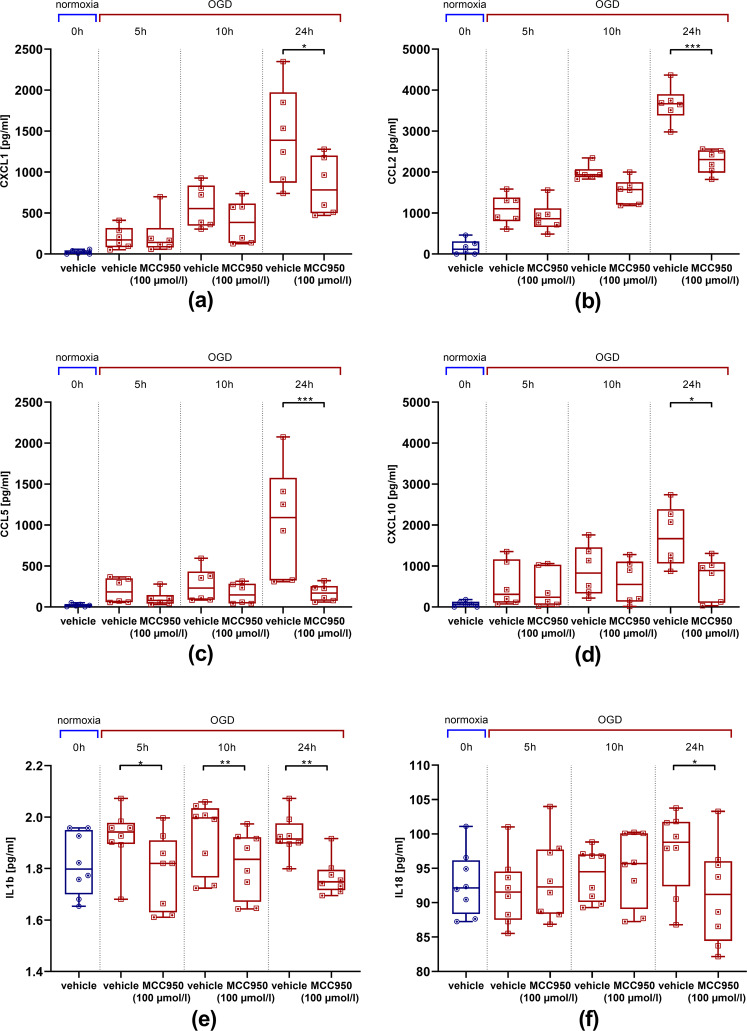
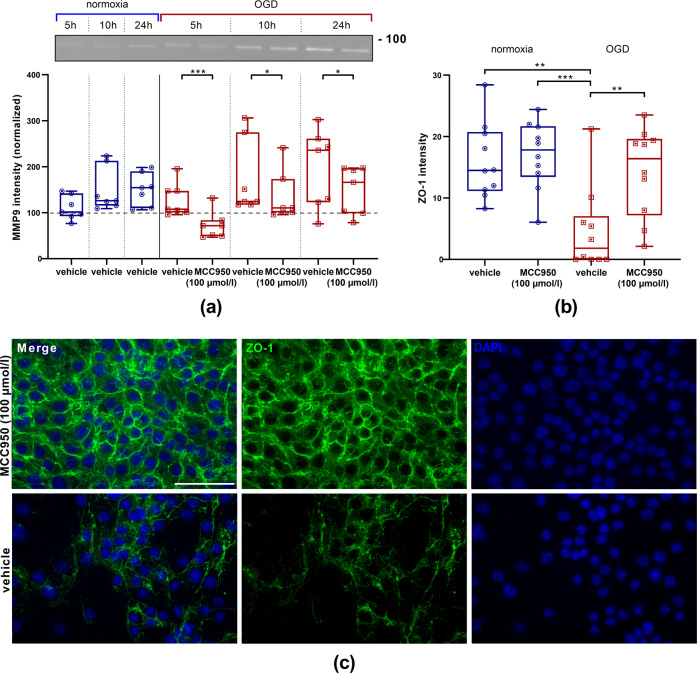
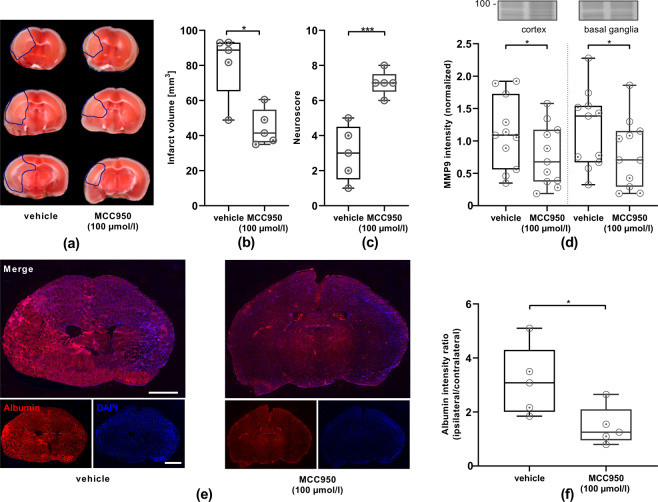
In ischemic stroke (IS) impairment of the blood-brain barrier (BBB) has an important role in the secondary deterioration of neurological function. BBB disruption is associated with ischemia-induced inflammation, brain edema formation, and hemorrhagic infarct transformation, but the underlying mechanisms are incompletely understood. Dysfunction of endothelial cells (EC) may play a central role in this process. Although neuronal NLR-family pyrin domain-containing protein 3 (NLRP3) inflammasome upregulation is an established trigger of inflammation in IS, the contribution of its expression in EC is unclear. We here used brain EC, exposed them to oxygen and glucose deprivation (OGD) in vitro, and analyzed their survival depending on inflammasome inhibition with the NLRP3-specific drug MCC950. During OGD, EC death could significantly be reduced when targeting NLRP3, concomitant with diminished endothelial NLRP3 expression. Furthermore, MCC950 led to reduced levels of Caspase 1 (p20) and activated Gasdermin D as markers for pyroptosis. Moreover, inflammasome inhibition reduced the secretion of pro-inflammatory chemokines, cytokines, and matrix metalloproteinase-9 (MMP9) in EC. In a translational approach, IS was induced in C57Bl/6 mice by 60 mins transient middle cerebral artery occlusion and 23 hours of reperfusion. Stroke volume, functional outcome, the BBB integrity, and-in good agreement with the in vitro results-MMP9 secretion as well as EC survival improved significantly in MCC950-treated mice. In conclusion, our results establish the NLRP3 inflammasome as a critical pathogenic effector of stroke-induced BBB disruption by activating inflammatory signaling cascades and pyroptosis in brain EC.
在缺血性中风(IS)中,血脑屏障(BBB)的损伤在神经功能的继发性恶化中起着重要作用。BBB 破坏与缺血诱导的炎症、脑水肿形成和出血性梗死转化有关,但潜在机制尚不完全清楚。内皮细胞(EC)的功能障碍可能在这个过程中起核心作用。虽然神经元 NOD 样受体热蛋白结构域包含蛋白 3(NLRP3)炎性小体的上调是 IS 中炎症的一个既定触发因素,但它在 EC 中的表达贡献尚不清楚。我们在这里使用脑 EC,在体外对其进行氧葡萄糖剥夺(OGD)处理,并根据 NLRP3 特异性药物 MCC950 抑制炎性小体来分析其存活情况。在 OGD 期间,当靶向 NLRP3 时,EC 死亡可显著减少,同时内皮 NLRP3 表达减少。此外,MCC950 导致半胱天冬酶 1(p20)和活化的 Gasdermin D 的水平降低,作为细胞焦亡的标志物。此外,炎性小体抑制可减少 EC 中促炎趋化因子、细胞因子和基质金属蛋白酶-9(MMP9)的分泌。在转化方法中,通过 60 分钟短暂性大脑中动脉闭塞和 23 小时再灌注,在 C57Bl/6 小鼠中诱导 IS。MCC950 治疗的小鼠中风体积、功能结果、BBB 完整性以及与体外结果一致的 MMP9 分泌和 EC 存活均显著改善。总之,我们的结果表明,NLRP3 炎性小体通过激活脑 EC 中的炎症信号级联和细胞焦亡,成为中风诱导的 BBB 破坏的关键致病效应因子。