Department of Psychology, University of Maryland, College Park, MD, USA.
Partners In Health, Boston, MA, USA.
Glob Health Sci Pract. 2021 Dec 21;9(4):990-999. doi: 10.9745/GHSP-D-20-00486. Print 2021 Dec 31.
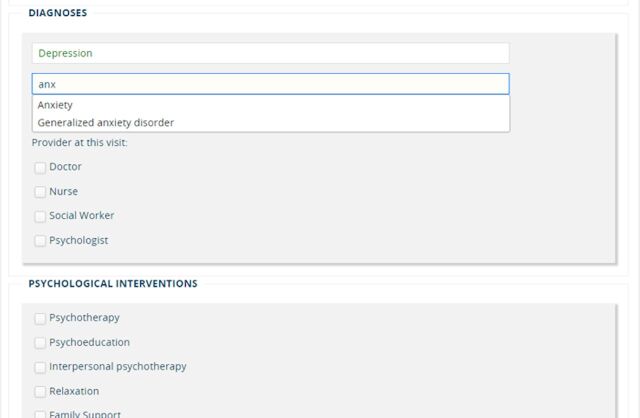
Effective digital health management information systems (HMIS) support health data validity, which enables health care teams to make programmatic decisions and country-level decision making in support of international development targets. In 2015, mental health was included within the Sustainable Development Goals, yet there are few applications of HMIS of any type in the practice of mental health care in resource-limited settings. Zanmi Lasante (ZL), one of the largest providers of mental health care in Haiti, developed a digital data collection system for mental health across 11 public rural health facilities.
We describe the development, implementation, and evaluation of the digital system for mental health data collection at ZL. To evaluate system reliability, we assessed the number of missing monthly reports. To evaluate data validity, we calculated concordance between the digital system and paper charts at 2 facilities. To evaluate the system's ability to inform decision making, we specified and then calculated 4 priority indicators.
The digital system was missing 5 of 143 monthly reports across all facilities and had 74.3% (55/74) and 98% (49/50) concordance with paper charts. It was possible to calculate all 4 indicators, which led to programmatic changes in 2 cases. In response to implementation challenges, it was necessary to use strategies to increase provider buy-in and ultimately to introduce dedicated data clerks to keep pace with data collection and protect time for clinical work.
While demonstrating the potential of collecting mental health data digitally in a low-resource rural setting, we found that it was necessary to consider the ongoing roles of paper records alongside digital data collection. We also identified the challenge of balancing clinical and data collection responsibilities among a limited staff. Ongoing work is needed to develop truly sustainable and scalable models for mental health data collection in resource-limited settings.
有效的数字健康管理信息系统(HMIS)支持健康数据的有效性,使医疗保健团队能够做出针对特定项目的决策和国家层面的决策,以支持国际发展目标。2015 年,精神卫生被纳入可持续发展目标,但在资源有限的环境中,精神卫生保健实践中很少应用任何类型的 HMIS。Zanmi Lasante(ZL)是海地最大的精神卫生保健提供者之一,在 11 个农村公共卫生设施中开发了一种用于精神卫生的数字数据收集系统。
我们描述了 ZL 的精神卫生数字数据收集系统的开发、实施和评估。为了评估系统的可靠性,我们评估了每月报告缺失的数量。为了评估数据的有效性,我们在 2 个设施中计算了数字系统与纸质图表之间的一致性。为了评估系统在决策中的作用,我们指定了 4 个优先指标,然后计算了这些指标。
该数字系统在所有设施中缺失了 143 份月度报告中的 5 份,与纸质图表的一致性分别为 74.3%(55/74)和 98%(49/50)。所有 4 个指标都可以计算,这导致了 2 个案例中的项目变更。为了应对实施挑战,有必要采取策略来提高提供者的参与度,并最终引入专门的数据录入员来跟上数据收集的步伐,保护临床工作的时间。
虽然在资源匮乏的农村环境中展示了数字方式收集精神卫生数据的潜力,但我们发现有必要考虑纸质记录与数字数据收集同时存在的情况。我们还发现,在有限的工作人员中平衡临床和数据收集职责是一个挑战。需要开展进一步的工作,以开发出在资源有限的环境中真正可持续和可扩展的精神卫生数据收集模式。