Veterinary Diagnostic Laboratory, Department of Veterinary Diagnostic & Production Animal Medicine, College of Veterinary Medicine, Iowa State Universitygrid.34421.30, Ames, Iowa, USA.
mSphere. 2021 Dec 22;6(6):e0082021. doi: 10.1128/mSphere.00820-21.
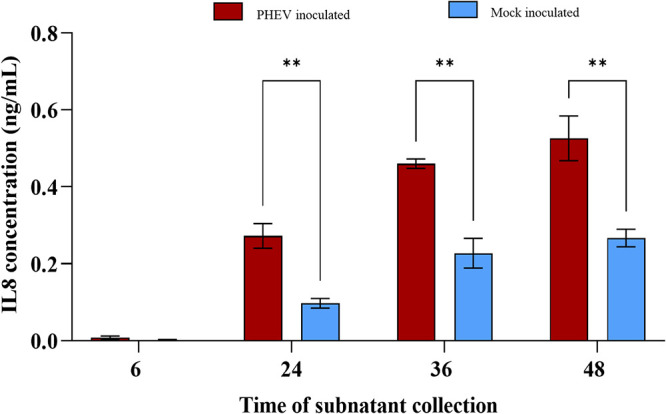
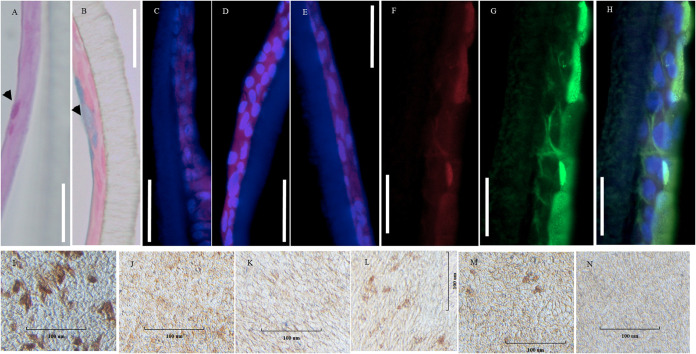
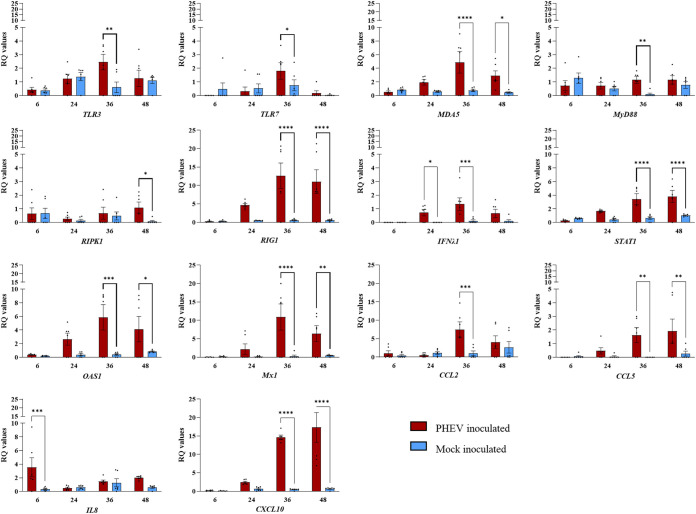
The upper respiratory tract is the primary site of infection by porcine hemagglutinating encephalomyelitis virus (PHEV). In this study, primary porcine respiratory epithelial cells (PRECs) were cultured in an air-liquid interface (ALI) to differentiate into a pseudostratified columnar epithelium, proliferative basal cells, M cells, ciliated cells, and mucus-secreting goblet cells. ALI-PRECs recreates a cell culture environment morphologically and functionally more representative of the epithelial lining of the swine trachea than traditional culture systems. PHEV replicated actively in this environment, inducing cytopathic changes and progressive disruption of the mucociliary apparatus. The innate immunity against PHEV was comparatively evaluated in ALI-PREC cultures and tracheal tissue sections derived from the same cesarean-derived, colostrum-deprived (CDCD) neonatal donor pigs. Increased expression levels of TLR3 and/or TLR7, RIG1, and MyD88 genes were detected in response to infection, resulting in the transcriptional upregulation of IFN-λ1 in both ALI-PREC cultures and tracheal epithelia. IFN-λ1 triggered the upregulation of the transcription factor STAT1, which in turn induced the expression of the antiviral IFN-stimulated genes OAS1 and Mx1. No significant modulation of the major proinflammatory cytokines interleukin-1β (IL-1β), IL-6, and tumor necrosis factor alpha (TNF-α) was detected in response to PHEV infection. However, a significant upregulation of different chemokines was observed in ALI-PREC cultures (CCL2, CCL5, CXCL8, and CXCL10) and tracheal epithelium (CXCL8 and CXCL10). This study shed light on the molecular mechanisms driving the innate immune response to PHEV at the airway epithelium, underscoring the important role of respiratory epithelial cells in the maintenance of respiratory homeostasis and on the initiation, resolution, and outcome of the infectious process. The neurotropic betacoronavirus porcine hemagglutinating encephalomyelitis virus (PHEV) primarily infects and replicates in the swine upper respiratory tract, causing vomiting and wasting disease and/or encephalomyelitis in suckling pigs. This study investigated the modulation of key early innate immune genes at the respiratory epithelia on tracheal tissue sections from experimentally infected pigs, and , on air-liquid interface porcine respiratory cell cultures. The results from the study underscore the important role of respiratory epithelial cells in maintaining respiratory homeostasis and on the initiation, resolution, and outcome of the PHEV infectious process.
猪传染性脑脊髓炎病毒(PHEV)主要感染和复制于猪的上呼吸道,引起仔猪呕吐和消瘦病以及/或脑脊髓炎。本研究在感染猪的气管组织切片和气道上皮细胞气液界面培养物中,检测了关键早期先天免疫基因的调控。研究结果强调了呼吸道上皮细胞在维持呼吸道内环境稳态以及启动、解决和影响 PHEV 感染过程方面的重要作用。