Eigenschink Michael, Savran Danylo, Zitterer Christoph P, Granitzer Sebastian, Fritz Magdalena, Baron David M, Müllner Ernst W, Salzer Ulrich
Center for Medical Biochemistry, Max Perutz Labs Vienna, Medical University of Vienna, Vienna, Austria.
Institute of Medical Genetics, Medical University of Vienna, Vienna, Austria.
Front Physiol. 2021 Dec 6;12:767439. doi: 10.3389/fphys.2021.767439. eCollection 2021.
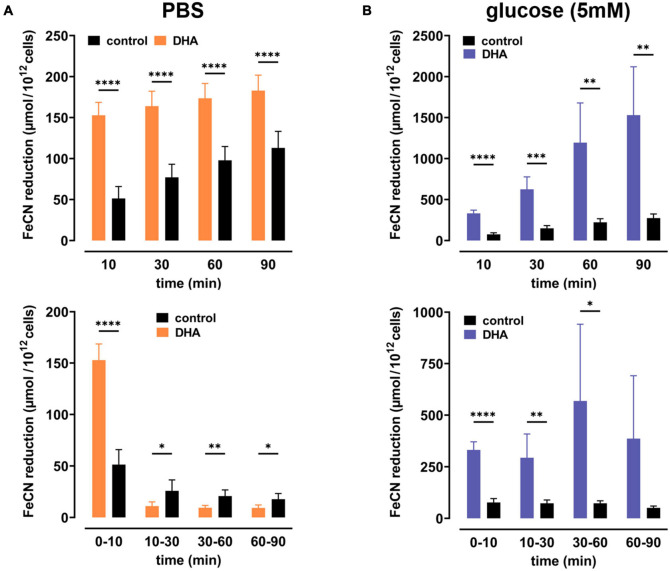
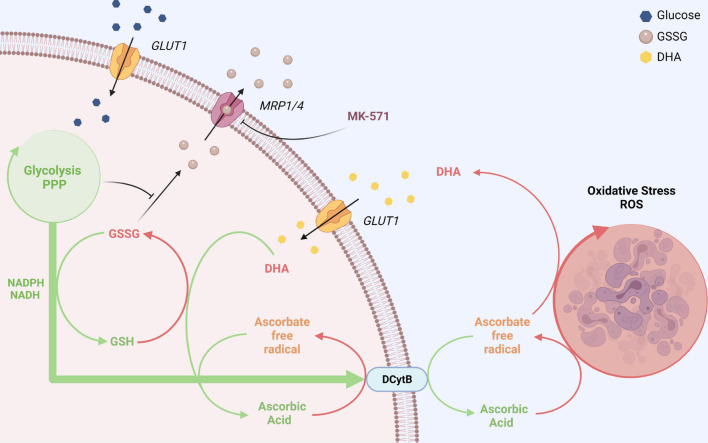
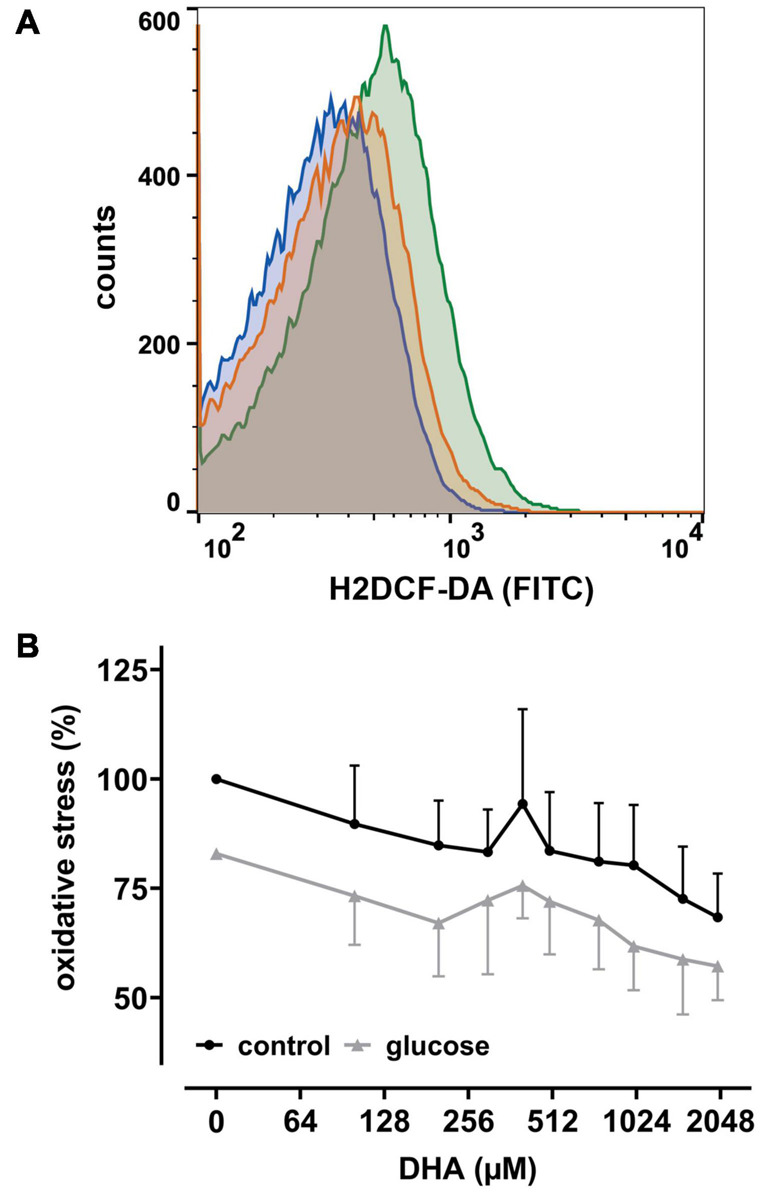
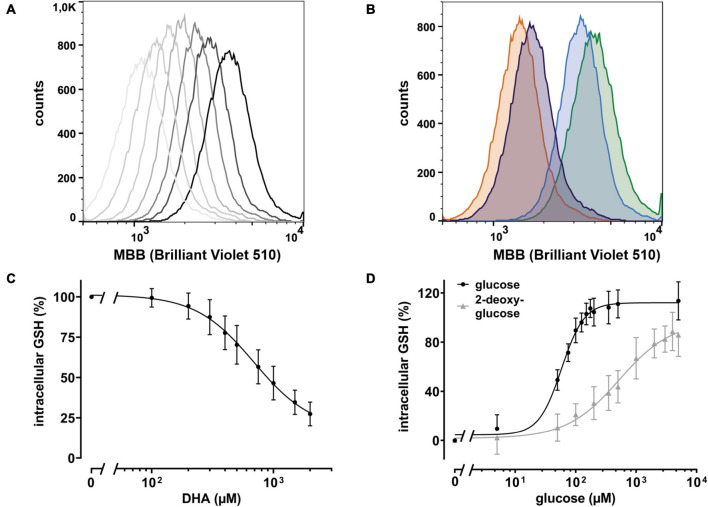
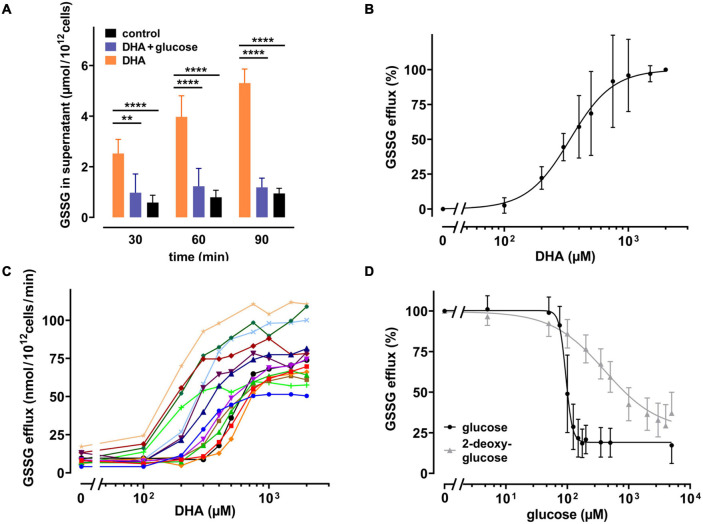
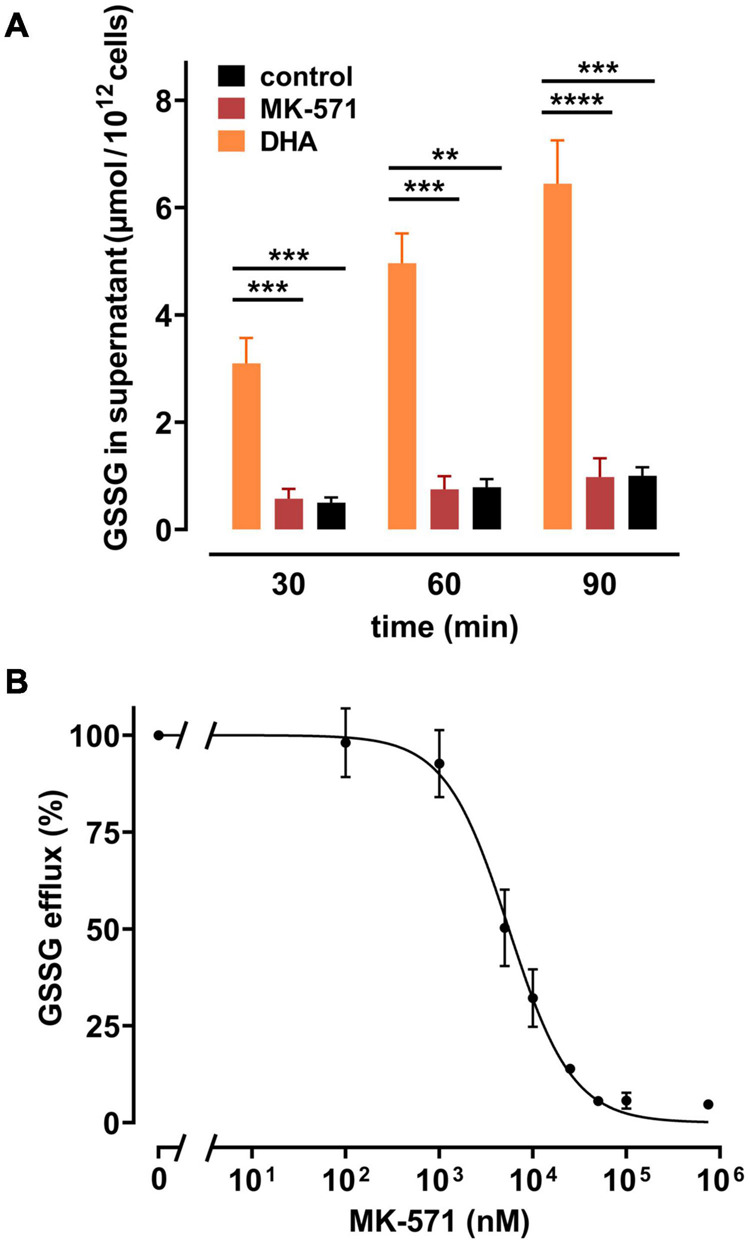
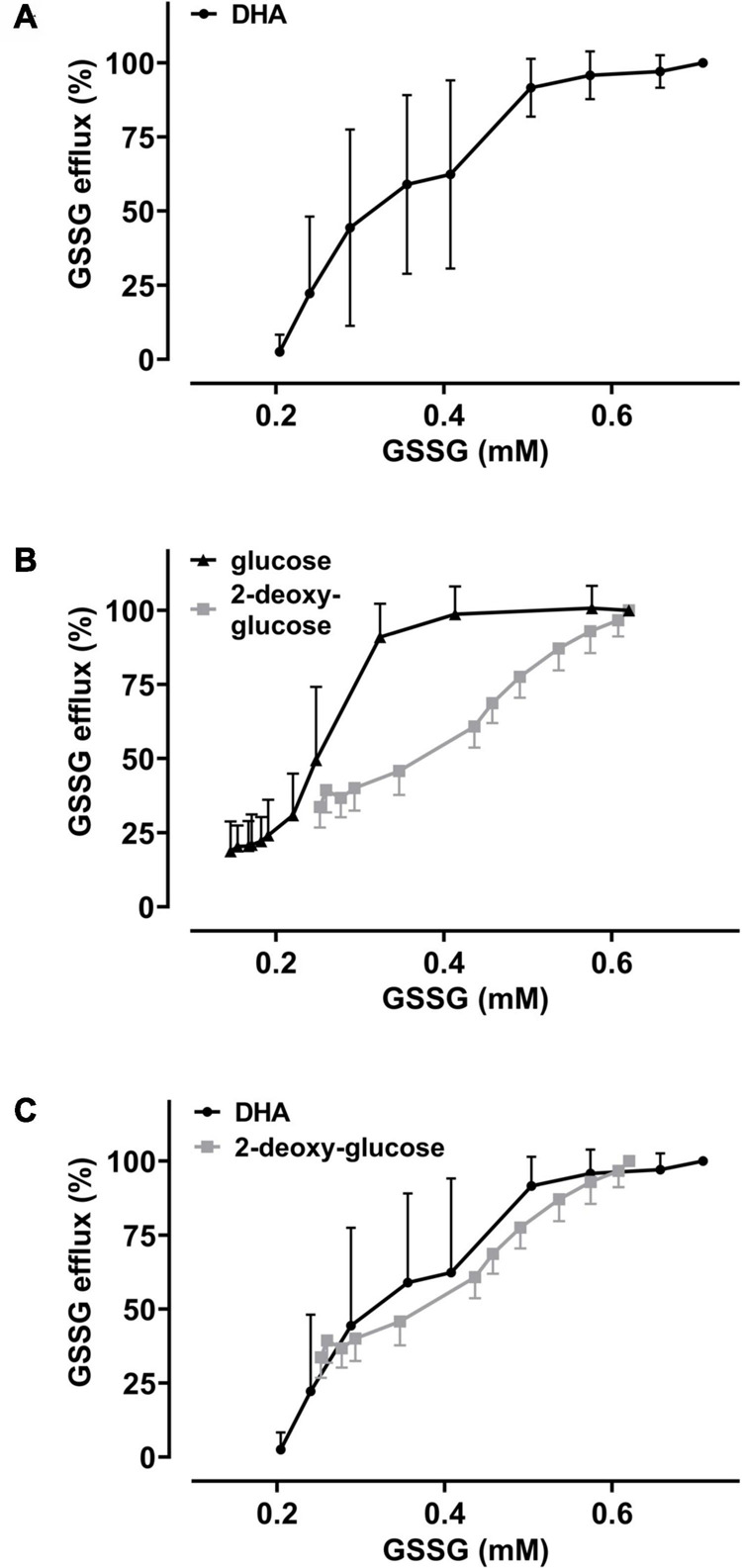
Ascorbic acid (AA; or vitamin C) is an important physiological antioxidant and radical scavenger. Some mammalian species, including , have lost the ability to synthetize AA and depend on its nutritional uptake. Erythrocytes from AA-auxotroph mammals express high amounts of the glucose transporter GLUT1. This isoform enables rapid uptake of glucose as well as dehydroascorbate (DHA), the fully oxidized form of AA. Here, we explored the effects of DHA uptake on the redox metabolism of human erythrocytes. DHA uptake enhanced plasma membrane electron transport (PMET) activity. This process is mediated by DCytb, a membrane bound cytochrome catalyzing extracellular reduction of Fe and ascorbate free radical (AFR), the first oxidized form of AA. DHA uptake also decreased cellular radical oxygen species (ROS) levels. Both effects were massively enhanced in the presence of physiological glucose concentrations. Reduction of DHA to AA largely depleted intracellular glutathione (GSH) and induced the efflux of its oxidized form, GSSG. GSSG efflux could be inhibited by MK-571 ( = 5 μM), indicating involvement of multidrug resistance associated protein (MRP1/4). DHA-dependent GSH depletion and GSSG efflux were completely rescued in the presence of 5 mM glucose and, partially, by 2-deoxy-glucose (2-DG), respectively. These findings indicate that human erythrocytes are physiologically adapted to recycle AA both intracellularly GLUT1-mediated DHA uptake and reduction and extracellularly DCytb-mediated AFR reduction. We discuss the possibility that this improved erythrocyte-mediated AA recycling was a prerequisite for the emergence of AA auxotrophy which independently occurred at least twice during mammalian evolution.
抗坏血酸(AA;即维生素C)是一种重要的生理抗氧化剂和自由基清除剂。包括人类在内的一些哺乳动物物种已经失去了合成AA的能力,而依赖于从营养物质中摄取。来自AA营养缺陷型哺乳动物的红细胞表达大量的葡萄糖转运蛋白GLUT1。这种异构体能够快速摄取葡萄糖以及脱氢抗坏血酸(DHA),即AA的完全氧化形式。在此,我们探究了DHA摄取对人红细胞氧化还原代谢的影响。DHA摄取增强了质膜电子传递(PMET)活性。这一过程由DCytb介导,DCytb是一种膜结合细胞色素,催化细胞外铁和抗坏血酸自由基(AFR,AA的第一种氧化形式)的还原。DHA摄取还降低了细胞内活性氧(ROS)水平。在生理葡萄糖浓度存在的情况下,这两种效应都大大增强。DHA还原为AA在很大程度上消耗了细胞内谷胱甘肽(GSH),并诱导其氧化形式谷胱甘肽二硫化物(GSSG)的外流。MK - 571(IC50 = 5 μM)可抑制GSSG外流,表明多药耐药相关蛋白(MRP1/4)参与其中。在5 mM葡萄糖存在的情况下,DHA依赖性GSH消耗和GSSG外流分别完全和部分地被2 - 脱氧葡萄糖(2 - DG)挽救。这些发现表明,人红细胞在生理上适应于通过GLUT1介导的DHA摄取和还原在细胞内以及通过DCytb介导的AFR还原在细胞外循环利用AA。我们讨论了这种改善的红细胞介导的AA循环可能是AA营养缺陷型出现的先决条件的可能性,AA营养缺陷型在哺乳动物进化过程中至少独立出现了两次。