Dey Kamol, Agnelli Silvia, Borsani Elisa, Sartore Luciana
Department of Applied Chemistry and Chemical Engineering, Faculty of Science, University of Chittagong, Chittagong 4331, Bangladesh.
Department of Mechanical and Industrial Engineering, University of Brescia, 25123 Brescia, Italy.
Gels. 2021 Dec 20;7(4):277. doi: 10.3390/gels7040277.
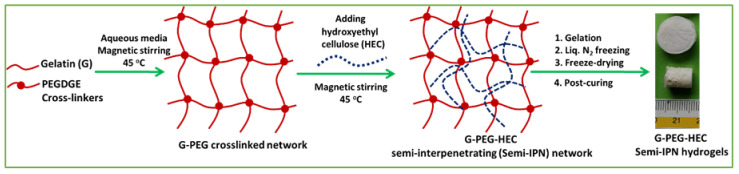
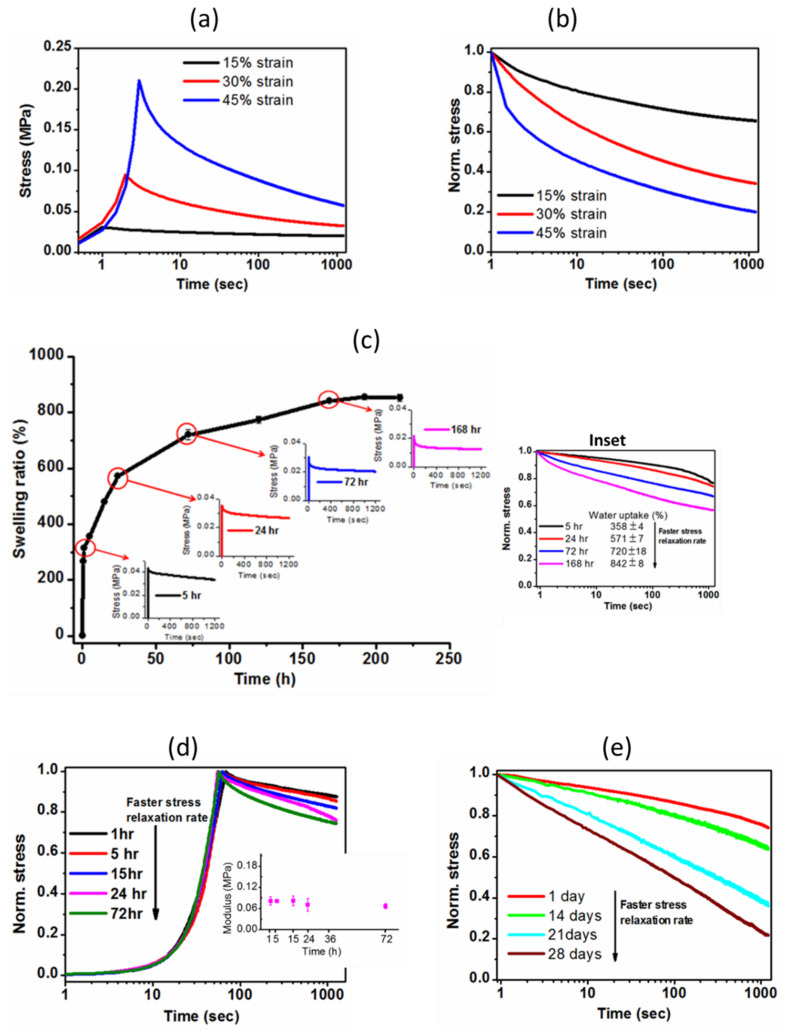
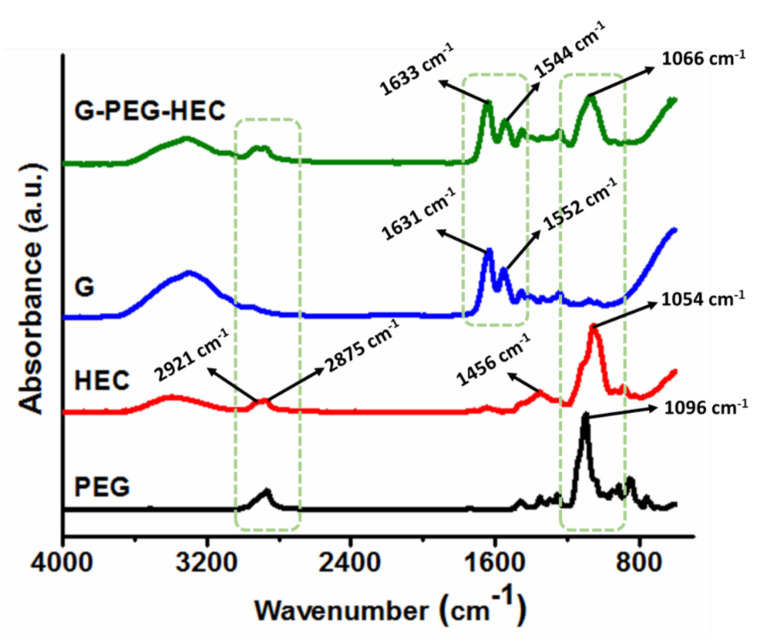
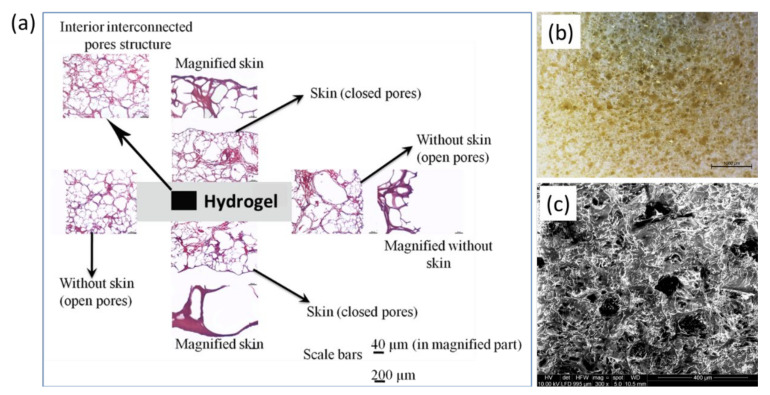
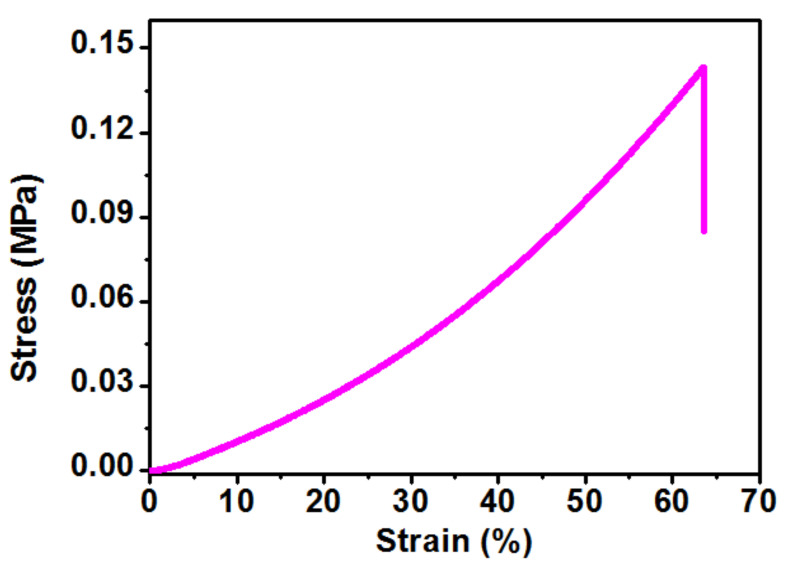
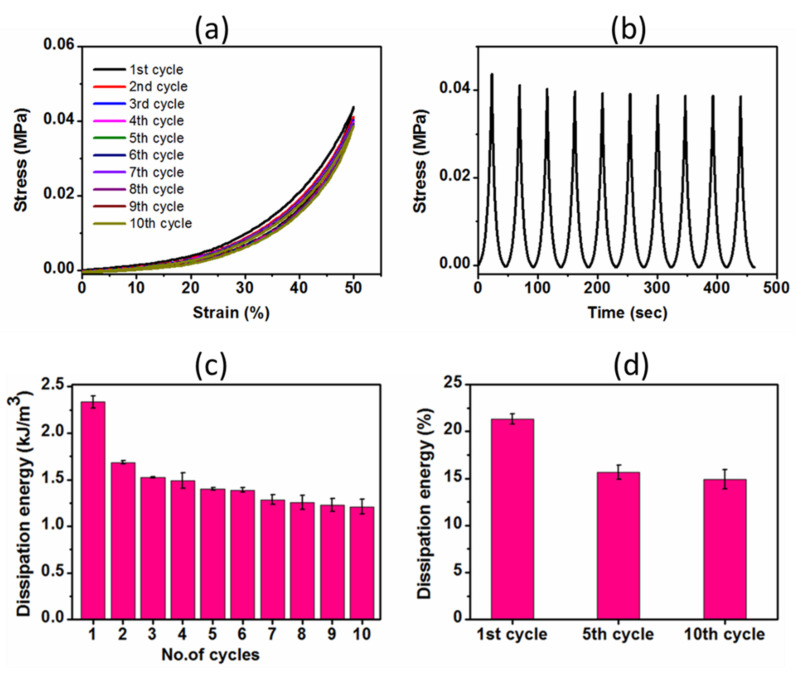
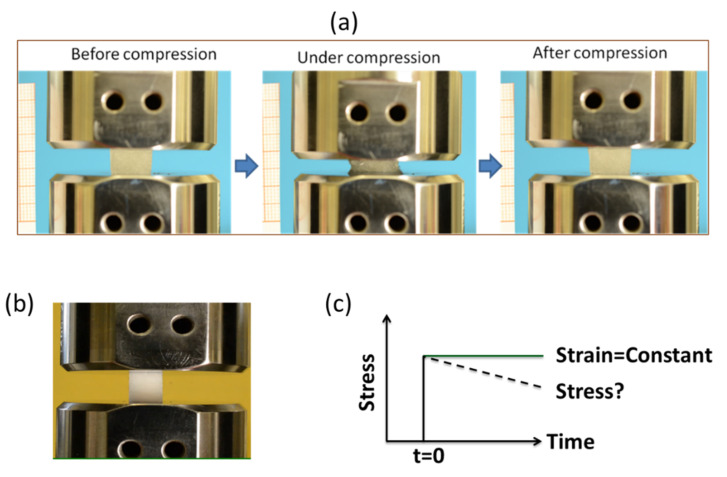
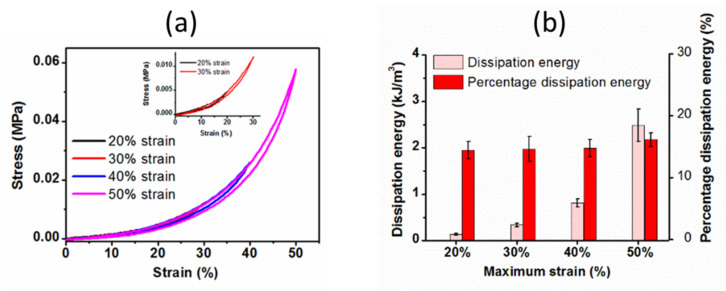
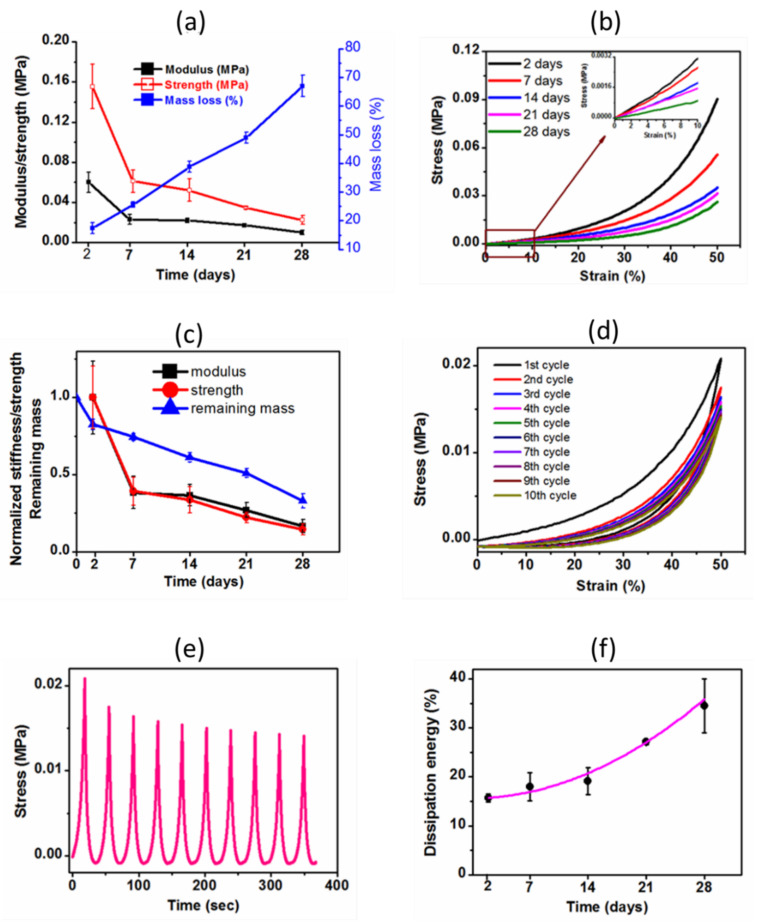
The mechanical milieu of the extracellular matrix (ECM) plays a key role in modulating the cellular responses. The native ECM exhibits viscoelasticity with stress relaxation behavior. Here, we reported the preparation of degradation-mediated stress relaxing semi-interpenetrating (semi-IPN) polymeric networks of hydroxyethyl cellulose in the crosslinked gelatin-polyethylene glycol (PEG) architecture, leveraging a newly developed synthesis protocol which successively includes one-pot gelation under physiological conditions, freeze-drying and a post-curing process. Fourier transform infrared (FTIR) confirmed the formation of the semi-IPN blend mixture. A surface morphology analysis revealed an open pore porous structure with a compact skin on the surface. The hydrogel showed a high water-absorption ability (720.00 ± 32.0%) indicating the ability of retaining a hydrophilic nature even after covalent crosslinking with functionalized PEG. Detailed mechanical properties such as tensile, compressive, cyclic compression and stress relaxation tests were conducted at different intervals over 28 days of hydrolytic degradation. Overall, the collective mechanical properties of the hydrogel resembled the mechanics of cartilage tissue. The rate of stress relaxation gradually increased with an increasing swelling ratio. Hydrolytic degradation led to a marked increase in the percentage dissipation energy and stress relaxation response, indicating the degradation-dependent viscoelasticity of the hydrogel. Strikingly, the hydrogel maintained the structural stability even after degrading two-thirds of its initial mass after a month-long hydrolytic degradation. This study demonstrates that this semi-IPN G-PEG-HEC hydrogel possesses bright prospects as a potential scaffolding material in tissue engineering.
细胞外基质(ECM)的力学环境在调节细胞反应中起着关键作用。天然ECM表现出具有应力松弛行为的粘弹性。在此,我们报告了在交联明胶 - 聚乙二醇(PEG)结构中制备降解介导的应力松弛半互穿(半IPN)聚合物网络,利用一种新开发的合成方案,该方案依次包括生理条件下的一锅凝胶化、冷冻干燥和后固化过程。傅里叶变换红外光谱(FTIR)证实了半IPN共混物的形成。表面形态分析揭示了一种开放孔的多孔结构,表面有致密的皮层。水凝胶显示出高吸水能力(720.00±32.0%),表明即使在与功能化PEG共价交联后仍能保持亲水性。在28天的水解降解过程中的不同时间间隔进行了详细的力学性能测试,如拉伸、压缩、循环压缩和应力松弛测试。总体而言,水凝胶的综合力学性能类似于软骨组织的力学性能。应力松弛速率随着溶胀率的增加而逐渐增加。水解降解导致能量耗散百分比和应力松弛响应显著增加,表明水凝胶具有降解依赖性粘弹性。引人注目的是,经过长达一个月的水解降解,即使水凝胶降解了其初始质量的三分之二后仍保持结构稳定性。这项研究表明,这种半IPN G - PEG - HEC水凝胶作为组织工程中的潜在支架材料具有广阔的前景。