Salvatore Teresa, Galiero Raffaele, Caturano Alfredo, Vetrano Erica, Rinaldi Luca, Coviello Francesca, Di Martino Anna, Albanese Gaetana, Marfella Raffaele, Sardu Celestino, Sasso Ferdinando Carlo
Department of Precision Medicine, University of Campania Luigi Vanvitelli, Via De Crecchio 7, I-80138 Naples, Italy.
Department of Advanced Medical and Surgical Sciences, University of Campania Luigi Vanvitelli, Piazza Luigi Miraglia 2, I-80138 Naples, Italy.
Biomolecules. 2021 Dec 4;11(12):1834. doi: 10.3390/biom11121834.
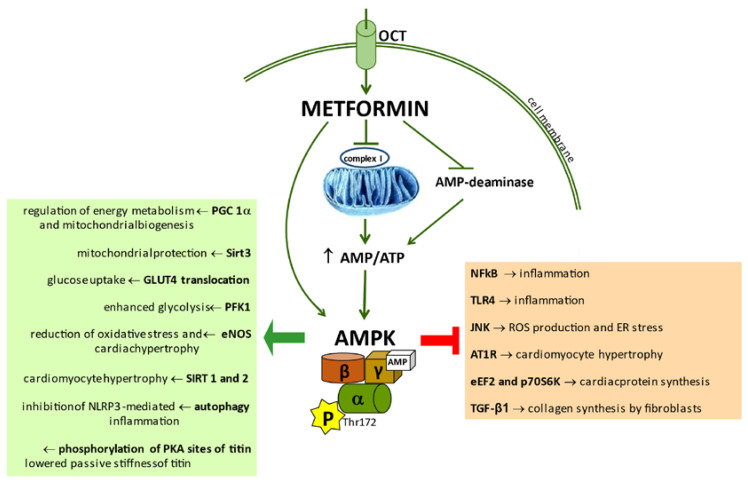
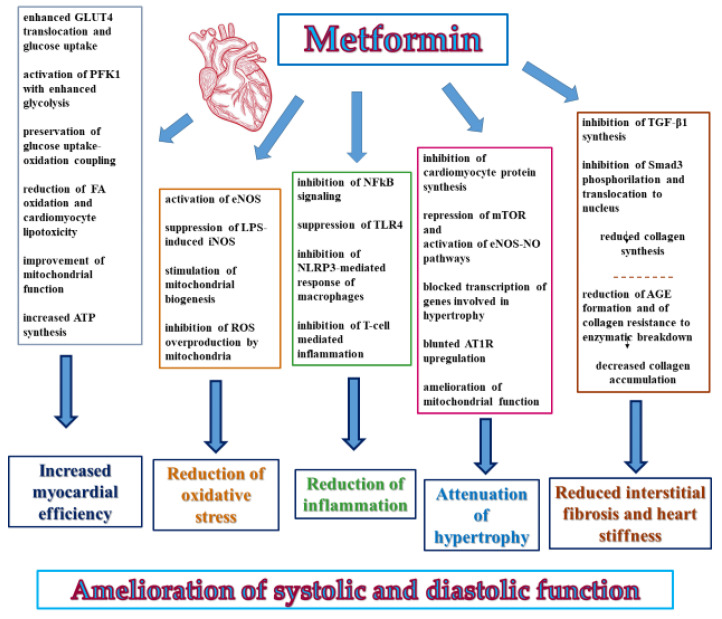
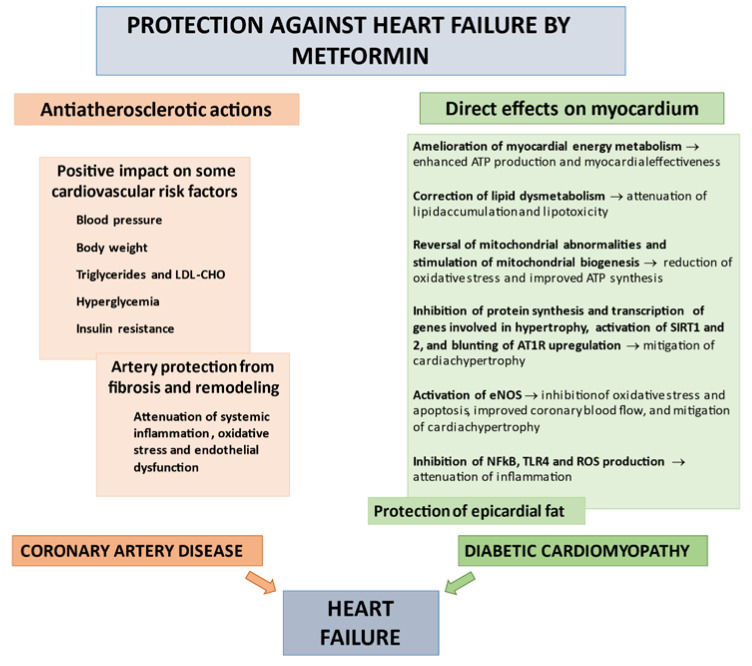
Type 2 diabetes mellitus (T2DM) is a worldwide major health burden and heart failure (HF) is the most common cardiovascular (CV) complication in affected patients. Therefore, identifying the best pharmacological approach for glycemic control, which is also useful to prevent and ameliorate the prognosis of HF, represents a crucial issue. Currently, the choice is between the new drugs sodium/glucose co-transporter 2 inhibitors that have consistently shown in large CV outcome trials (CVOTs) to reduce the risk of HF-related outcomes in T2DM, and metformin, an old medicament that might end up relegated to the background while exerting interesting protective effects on multiple organs among which include heart failure. When compared with other antihyperglycemic medications, metformin has been demonstrated to be safe and to lower morbidity and mortality for HF, even if these results are difficult to interpret as they emerged mainly from observational studies. Meta-analyses of randomized controlled clinical trials have not produced positive results on the risk or clinical course of HF and sadly, large CV outcome trials are lacking. The point of force of metformin with respect to new diabetic drugs is the amount of data from experimental investigations that, for more than twenty years, still continues to provide mechanistic explanations of the several favorable actions in heart failure such as, the improvement of the myocardial energy metabolic status by modulation of glucose and lipid metabolism, the attenuation of oxidative stress and inflammation, and the inhibition of myocardial cell apoptosis, leading to reduced cardiac remodeling and preserved left ventricular function. In the hope that specific large-scale trials will be carried out to definitively establish the metformin benefit in terms of HF failure outcomes, we reviewed the literature in this field, summarizing the available evidence from experimental and clinical studies reporting on effects in heart metabolism, function, and structure, and the prominent pathophysiological mechanisms involved.
2型糖尿病(T2DM)是全球主要的健康负担,心力衰竭(HF)是受影响患者中最常见的心血管(CV)并发症。因此,确定最佳的血糖控制药物治疗方法,这对预防和改善HF的预后也很有用,是一个关键问题。目前,选择在于新型药物钠/葡萄糖共转运蛋白2抑制剂,这类药物在大型心血管结局试验(CVOTs)中一直显示可降低T2DM患者发生HF相关结局的风险,以及二甲双胍,一种可能最终被边缘化的老药,但其对包括心力衰竭在内的多个器官具有有趣的保护作用。与其他降糖药物相比,二甲双胍已被证明是安全的,可降低HF的发病率和死亡率,尽管这些结果难以解释,因为它们主要来自观察性研究。随机对照临床试验的荟萃分析在HF的风险或临床病程方面未产生阳性结果,遗憾的是,缺乏大型心血管结局试验。二甲双胍相对于新型糖尿病药物的优势在于来自实验研究的数据量,二十多年来,这些数据仍在继续为心力衰竭的多种有利作用提供机制解释,例如通过调节葡萄糖和脂质代谢改善心肌能量代谢状态、减轻氧化应激和炎症以及抑制心肌细胞凋亡,从而减少心脏重塑并保留左心室功能。希望能开展特定的大规模试验,以最终确定二甲双胍在HF结局方面的益处,我们回顾了该领域的文献,总结了实验和临床研究中关于心脏代谢、功能和结构影响以及所涉及的突出病理生理机制的现有证据。