Schreiber Janina, Liaukouskaya Nastassia, Fuhrmann Lars, Hauser Alexander-Thomas, Jung Manfred, Huber Tobias B, Wanner Nicola
Department of Medicine IV, Faculty of Medicine, University of Freiburg, 79106 Freiburg, Germany.
III Department of Medicine, University Medical Center Hamburg-Eppendorf, 20246 Hamburg, Germany.
Biomedicines. 2021 Dec 10;9(12):1878. doi: 10.3390/biomedicines9121878.
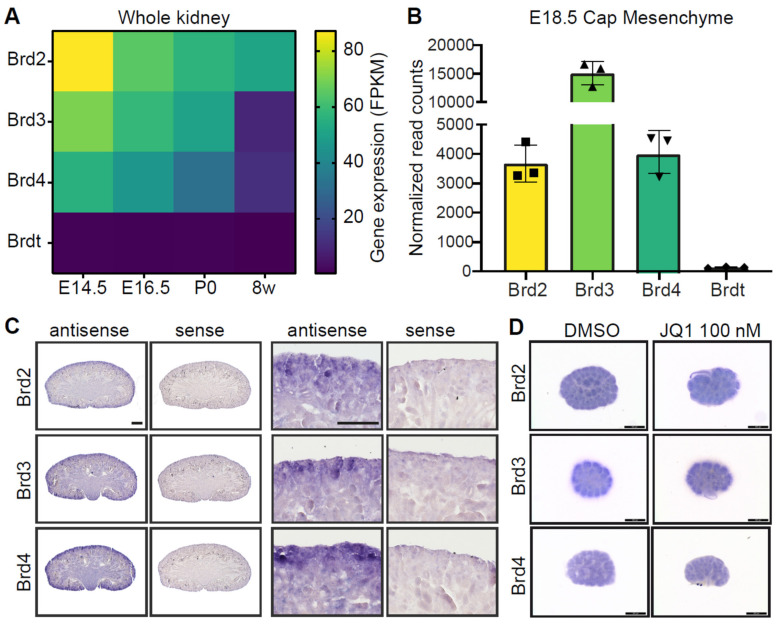
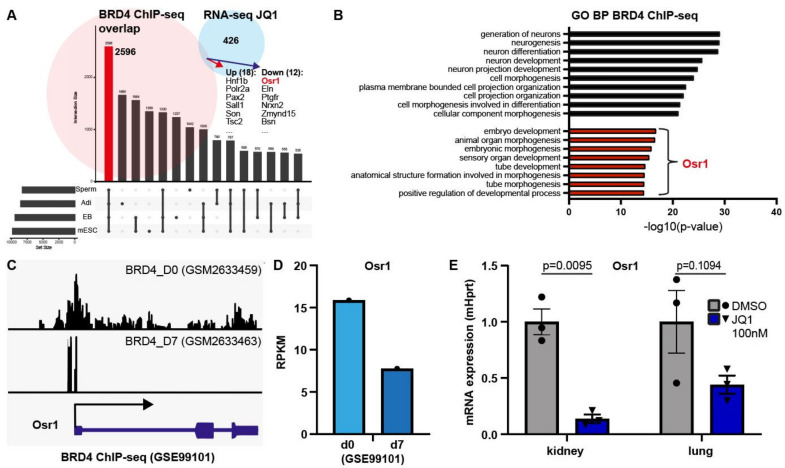
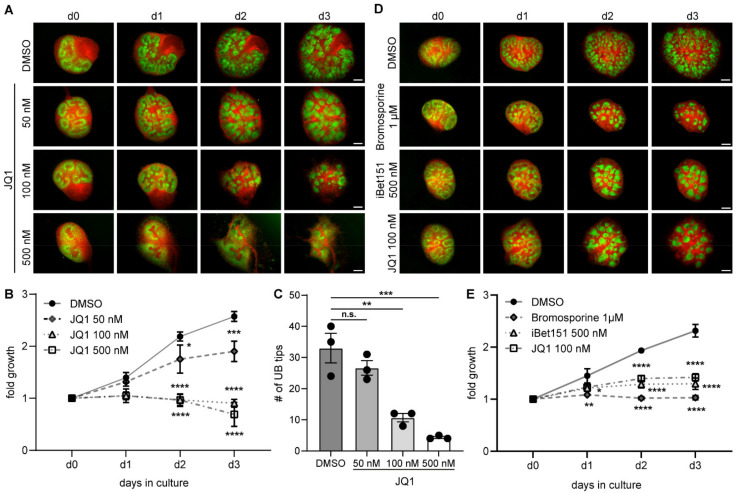
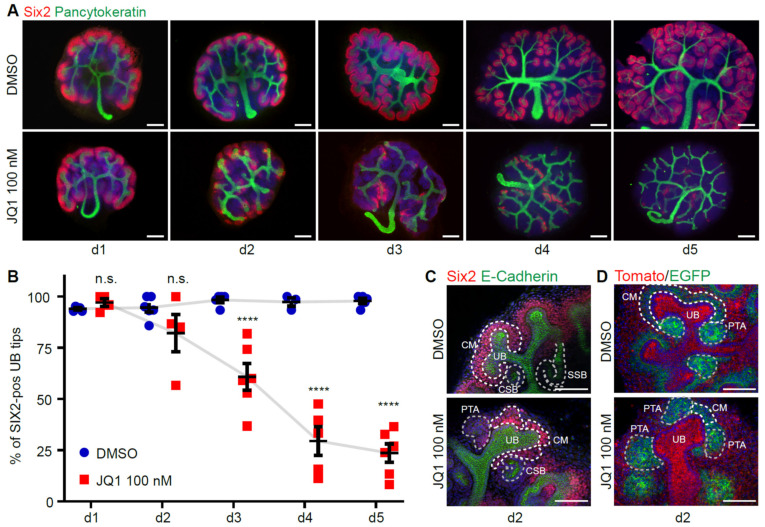
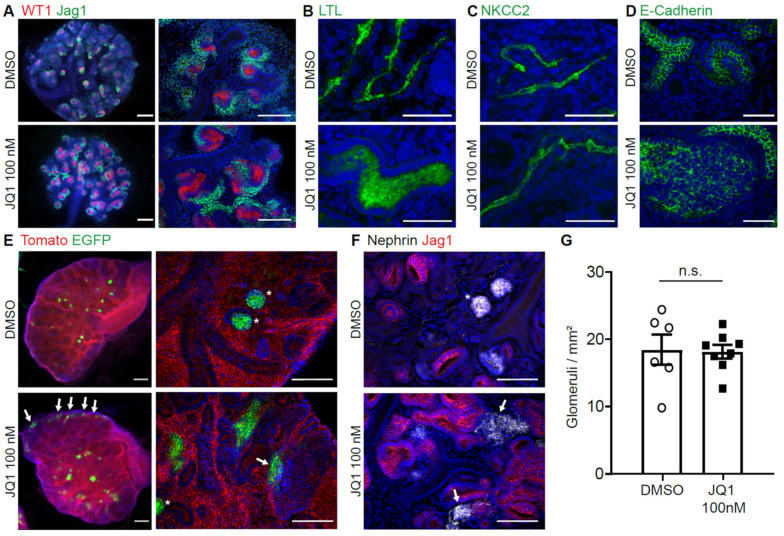
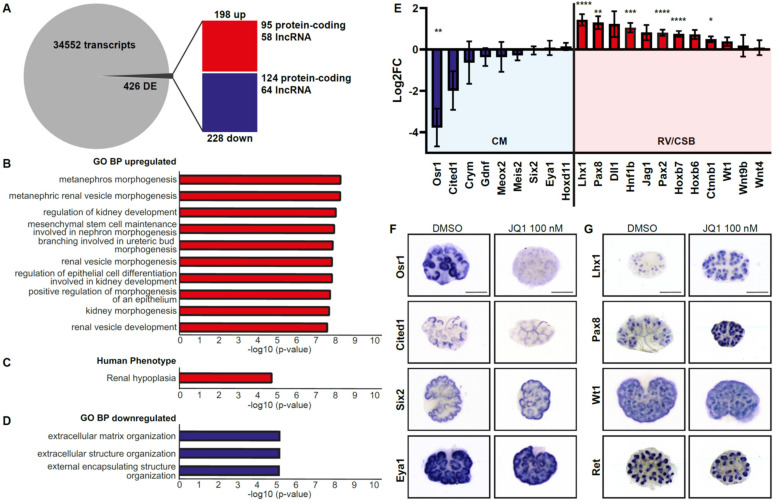
In utero renal development is subject to maternal metabolic and environmental influences affecting long-term renal function and the risk of developing chronic kidney failure and cardiovascular disease. Epigenetic processes have been implicated in the orchestration of renal development and prenatal programming of nephron number. However, the role of many epigenetic modifiers for kidney development is still unclear. Bromodomain and extra-terminal domain (BET) proteins act as histone acetylation reader molecules and promote gene transcription. BET family members Brd2, Brd3 and Brd4 are expressed in the nephrogenic zone during kidney development. Here, the effect of the BET inhibitor JQ1 on renal development is evaluated. Inhibition of BET proteins via JQ1 leads to reduced growth of metanephric kidney cultures, loss of the nephron progenitor cell population, and premature and disturbed nephron differentiation. Gene expression of key nephron progenitor transcription factor Osr1 is downregulated after 24 h BET inhibition, while Lhx1 and Pax8 expression is increased. Mining of BRD4 ChIP-seq and gene expression data identify Osr1 as a key factor regulated by BRD4-controlled gene activation. Inhibition of BRD4 by BET inhibitor JQ1 leads to downregulation of Osr1, thereby causing a disturbance in the balance of nephron progenitor cell self-renewal and premature differentiation of the nephron, which ultimately leads to kidney hypoplasia and disturbed nephron development. This raises questions about the potential teratogenic effects of BET inhibitors for embryonic development. In summary, our work highlights the role of BET proteins for prenatal programming of nephrogenesis and identifies Osr1 as a potential target of BET proteins.
子宫内肾脏发育受到母体代谢和环境影响,这些影响会作用于长期肾功能以及患慢性肾衰竭和心血管疾病的风险。表观遗传过程参与了肾脏发育的调控以及肾单位数量的产前编程。然而,许多表观遗传修饰因子在肾脏发育中的作用仍不清楚。溴结构域和额外末端结构域(BET)蛋白作为组蛋白乙酰化读取分子,促进基因转录。BET家族成员Brd2、Brd3和Brd4在肾脏发育过程中的肾发生区表达。在此,评估了BET抑制剂JQ1对肾脏发育的影响。通过JQ1抑制BET蛋白会导致后肾培养物生长减少、肾单位祖细胞群体丧失以及肾单位分化提前和紊乱。在BET抑制24小时后,关键肾单位祖转录因子Osr1的基因表达下调,而Lhx1和Pax8的表达增加。对BRD4染色质免疫沉淀测序(ChIP-seq)和基因表达数据的挖掘确定Osr1是受BRD4控制的基因激活所调控的关键因子。BET抑制剂JQ1抑制BRD4会导致Osr1下调,从而引起肾单位祖细胞自我更新平衡的紊乱和肾单位的过早分化,最终导致肾脏发育不全和肾单位发育紊乱。这引发了关于BET抑制剂对胚胎发育潜在致畸作用的问题。总之,我们的工作突出了BET蛋白在肾发生产前编程中的作用,并确定Osr1是BET蛋白的一个潜在靶点。