Gart Eveline, van Duyvenvoorde Wim, Toet Karin, Caspers Martien P M, Verschuren Lars, Nielsen Mette Juul, Leeming Diana Julie, Souto Lima Everton, Menke Aswin, Hanemaaijer Roeland, Keijer Jaap, Salic Kanita, Kleemann Robert, Morrison Martine C
Department of Metabolic Health Research, The Netherlands Organisation for Applied Scientific Research (TNO), 2333 CK Leiden, The Netherlands.
Human and Animal Physiology, Wageningen University, 6708 WD Wageningen, The Netherlands.
Biomedicines. 2021 Dec 20;9(12):1954. doi: 10.3390/biomedicines9121954.
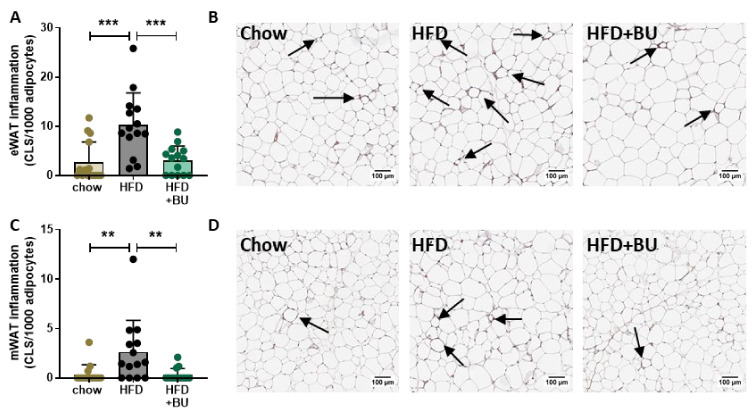
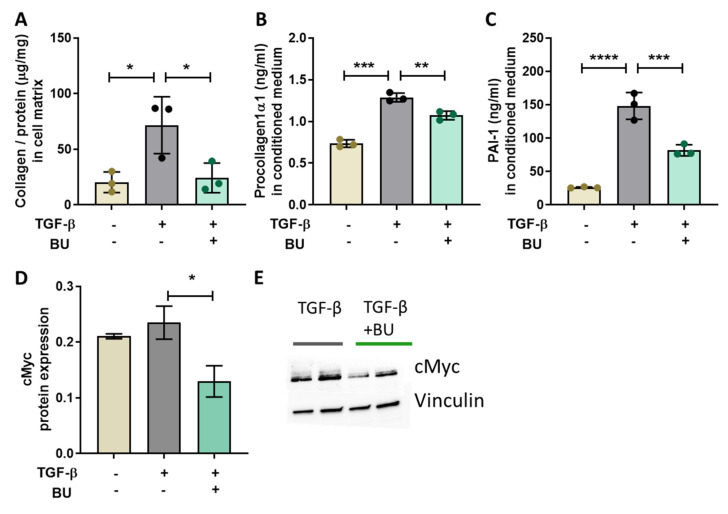
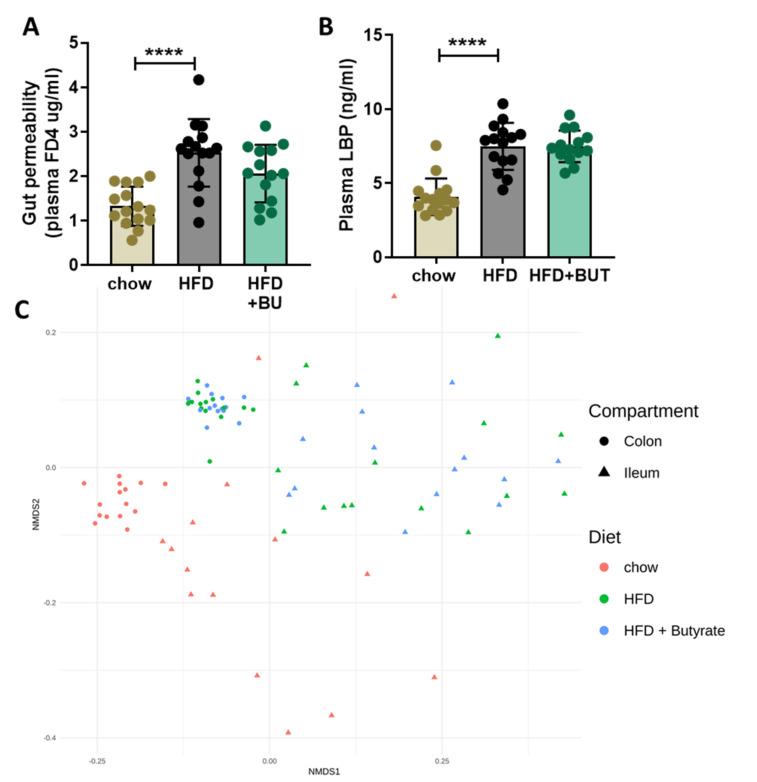
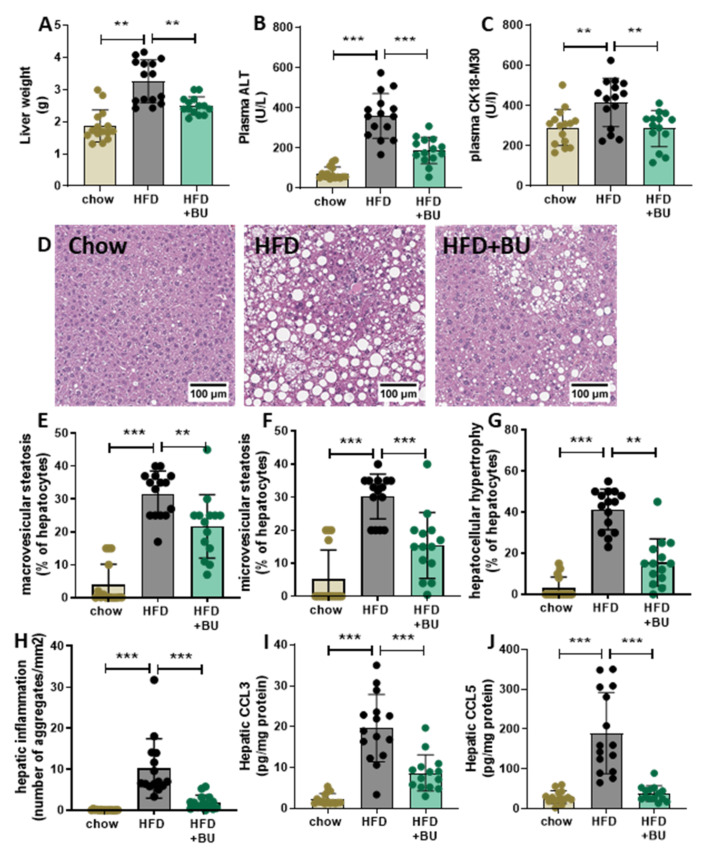
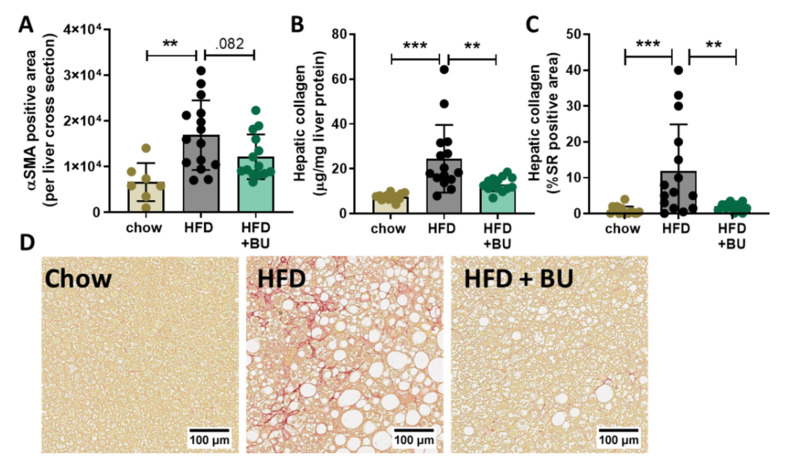
In obesity-associated non-alcoholic steatohepatitis (NASH), persistent hepatocellular damage and inflammation are key drivers of fibrosis, which is the main determinant of NASH-associated mortality. The short-chain fatty acid butyrate can exert metabolic improvements and anti-inflammatory activities in NASH. However, its effects on NASH-associated liver fibrosis remain unclear. Putative antifibrotic effects of butyrate were studied in Ldlr-/-.Leiden mice fed an obesogenic diet (HFD) containing 2.5% (/) butyrate for 38 weeks and compared with a HFD-control group. Antifibrotic mechanisms of butyrate were further investigated in TGF-β-stimulated primary human hepatic stellate cells (HSC). HFD-fed mice developed obesity, insulin resistance, increased plasma leptin levels, adipose tissue inflammation, gut permeability, dysbiosis, and NASH-associated fibrosis. Butyrate corrected hyperinsulinemia, lowered plasma leptin levels, and attenuated adipose tissue inflammation, without affecting gut permeability or microbiota composition. Butyrate lowered plasma ALT and CK-18M30 levels and attenuated hepatic steatosis and inflammation. Butyrate inhibited fibrosis development as demonstrated by decreased hepatic collagen content and Sirius-red-positive area. In TGF-β-stimulated HSC, butyrate dose-dependently reduced collagen deposition and decreased procollagen1α1 and PAI1 protein expression. Transcriptomic analysis and subsequent pathway and upstream regulator analysis revealed deactivation of specific non-canonical TGF-β signaling pathways Rho-like GTPases and PI3K/AKT and other important pro-fibrotic regulators (e.g., YAP/TAZ, MYC) by butyrate, providing a potential rationale for its antifibrotic effects. In conclusion, butyrate protects against obesity development, insulin resistance-associated NASH, and liver fibrosis. These antifibrotic effects are at least partly attributable to a direct effect of butyrate on collagen production in hepatic stellate cells, involving inhibition of non-canonical TGF-β signaling pathways.
在肥胖相关的非酒精性脂肪性肝炎(NASH)中,持续性肝细胞损伤和炎症是纤维化的关键驱动因素,而纤维化是NASH相关死亡率的主要决定因素。短链脂肪酸丁酸可改善NASH的代谢并具有抗炎活性。然而,其对NASH相关肝纤维化的影响仍不清楚。在喂食含2.5%(/)丁酸的致肥胖饮食(高脂饮食,HFD)38周的Ldlr-/-。莱顿小鼠中研究了丁酸假定的抗纤维化作用,并与HFD对照组进行比较。在转化生长因子-β(TGF-β)刺激的原代人肝星状细胞(HSC)中进一步研究了丁酸的抗纤维化机制。喂食HFD的小鼠出现肥胖、胰岛素抵抗、血浆瘦素水平升高、脂肪组织炎症、肠道通透性增加、微生物群失调和NASH相关纤维化。丁酸纠正了高胰岛素血症,降低了血浆瘦素水平,并减轻了脂肪组织炎症,而不影响肠道通透性或微生物群组成。丁酸降低了血浆谷丙转氨酶(ALT)和细胞角蛋白18 M30水平,并减轻了肝脂肪变性和炎症。丁酸抑制了纤维化的发展,表现为肝胶原含量和天狼星红阳性面积减少。在TGF-β刺激的HSC中,丁酸剂量依赖性地减少胶原沉积,并降低前胶原1α1和纤溶酶原激活物抑制剂1(PAI1)蛋白表达。转录组分析以及随后的信号通路和上游调节因子分析显示,丁酸使特定的非经典TGF-β信号通路Rho样GTP酶和磷脂酰肌醇-3-激酶/蛋白激酶B(PI3K/AKT)以及其他重要的促纤维化调节因子(如Yes相关蛋白/具有PDZ结合基序的转录共激活因子(YAP/TAZ)、原癌基因(MYC))失活,为其抗纤维化作用提供了潜在的理论依据。总之,丁酸可预防肥胖发展、胰岛素抵抗相关的NASH和肝纤维化。这些抗纤维化作用至少部分归因于丁酸对肝星状细胞中胶原产生的直接作用,涉及对非经典TGF-β信号通路的抑制。