Vaes Rianne D W, Reynders Kobe, Sprooten Jenny, Nevola Kathleen T, Rouschop Kasper M A, Vooijs Marc, Garg Abhishek D, Lambrecht Maarten, Hendriks Lizza E L, Rucevic Marijana, De Ruysscher Dirk
Department of Radiation Oncology (MAASTRO), GROW School for Oncology and Developmental Biology, Maastricht University Medical Center, 6200 MD Maastricht, The Netherlands.
Cell Stress & Immunity (CSI) Lab, Department for Cellular and Molecular Medicine, KU Leuven, 3000 Leuven, Belgium.
Cancers (Basel). 2021 Dec 13;13(24):6259. doi: 10.3390/cancers13246259.
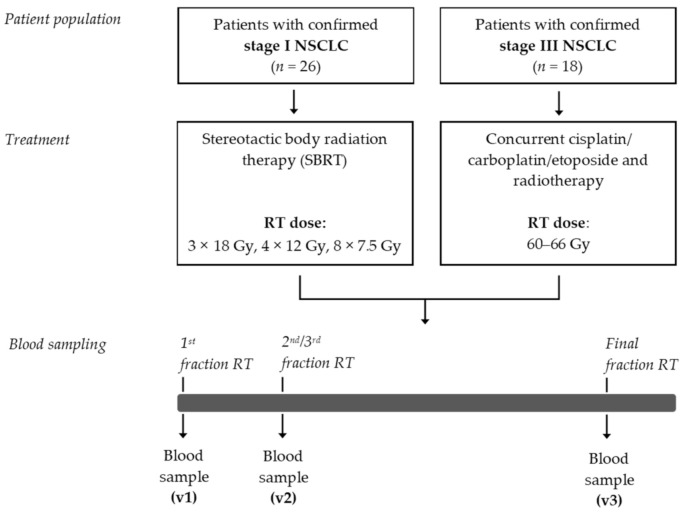
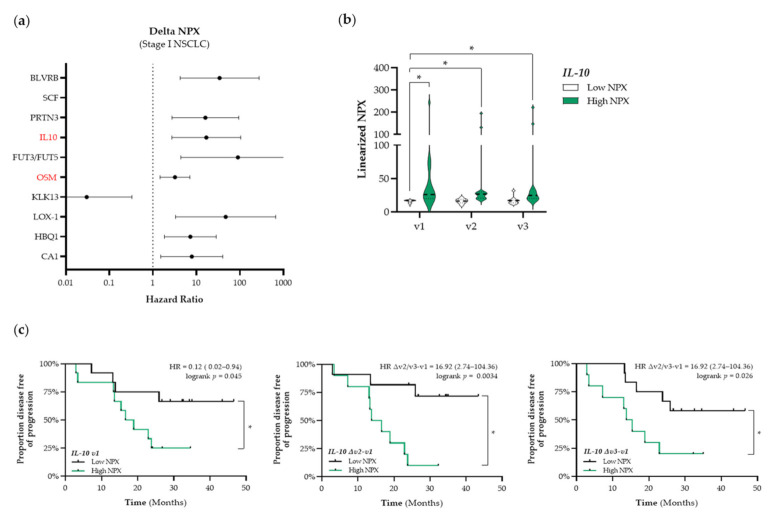
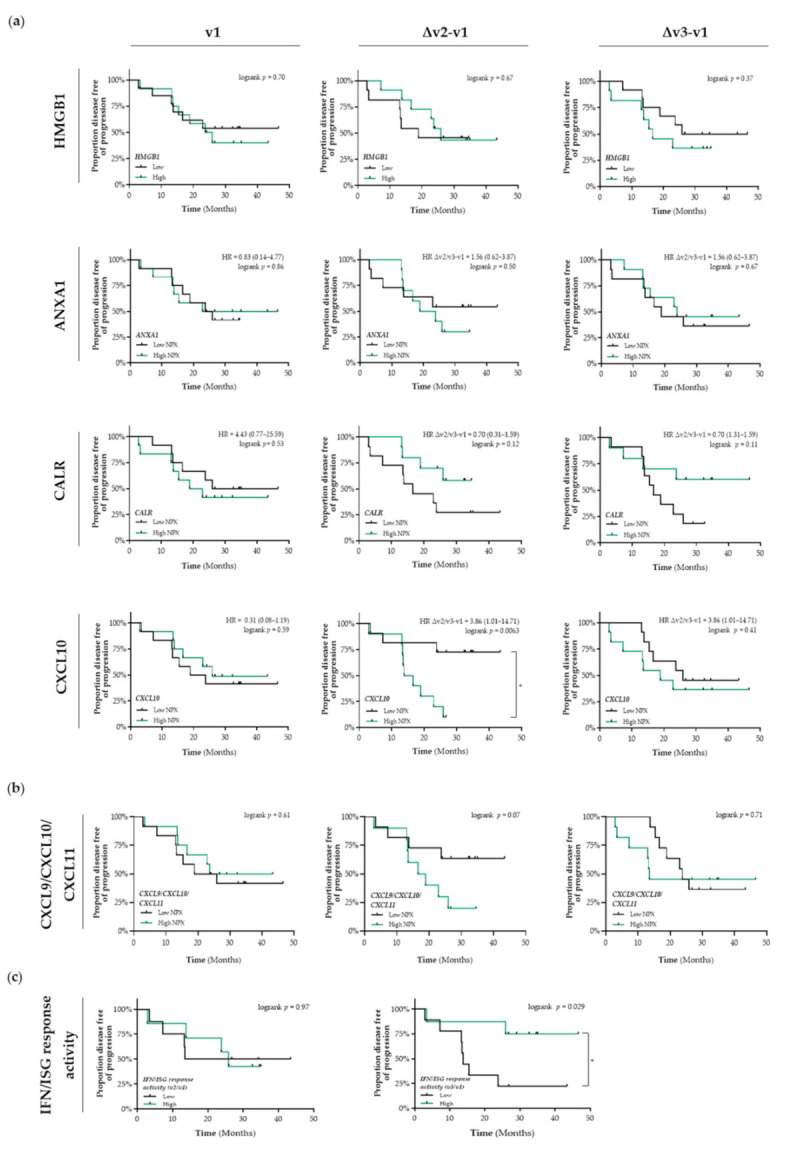
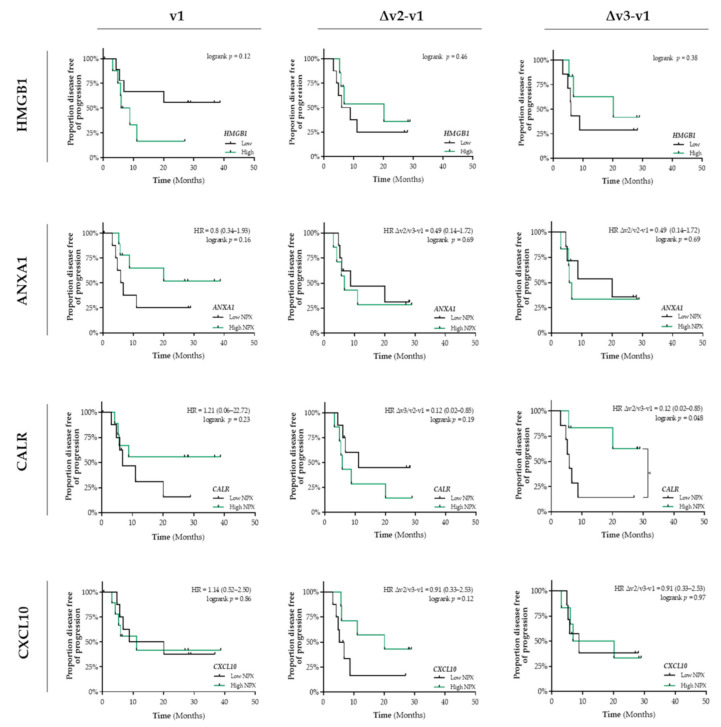
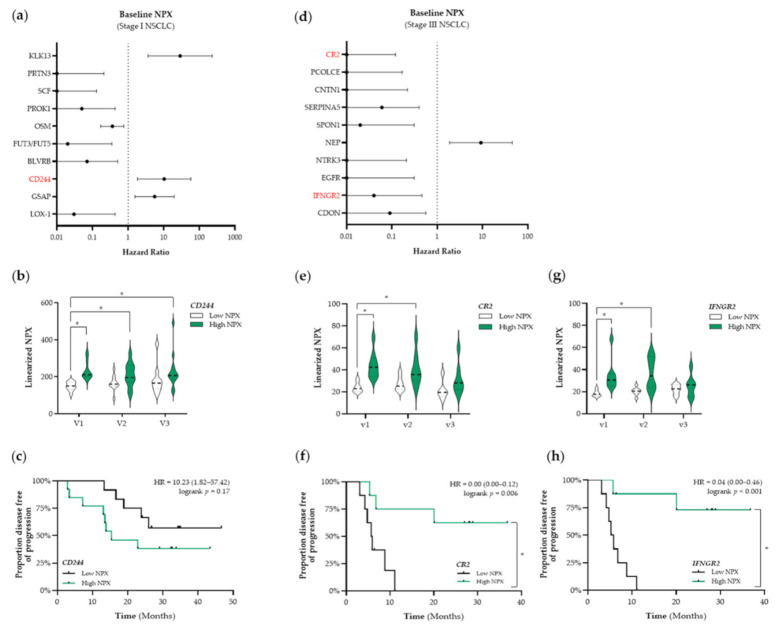
Radiotherapy (RT) and chemotherapy can induce immune responses, but not much is known regarding treatment-induced immune changes in patients. This exploratory study aimed to identify potential prognostic and predictive immune-related proteins associated with progression-free survival (PFS) in patients with non-small cell lung cancer (NSCLC). In this prospective study, patients with stage I NSCLC treated with stereotactic body radiation therapy ( = 26) and patients with stage III NSCLC treated with concurrent chemoradiotherapy ( = 18) were included. Blood samples were collected before (v1), during (v2), and after RT (v3). In patients with stage I NSCLC, CD244 (HR: 10.2, 95% CI: 1.8-57.4) was identified as a negative prognostic biomarker. In patients with stage III NSCLC, CR2 and IFNGR2 were identified as positive prognostic biomarkers (CR2, HR: 0.00, 95% CI: 0.00-0.12; IFNGR2, HR: 0.04, 95% CI: 0.00-0.46). In addition, analysis of the treatment-induced changes of circulating protein levels over time (Δv2/v3-v1) also identified CXCL10 and IL-10 as negative predictive biomarkers (CXCL10, HR: 3.86, 95% CI: 1.0-14.7; IL-10, HR: 16.92 (2.74-104.36)), although serum-induced interferon (IFN) response was a positive prognostic. In conclusion, we identified several circulating immunogenic proteins that are correlated with PFS in patients with stage I and stage III NSCLC before and during treatment.
放射疗法(RT)和化疗可诱导免疫反应,但对于治疗引起的患者免疫变化知之甚少。这项探索性研究旨在确定与非小细胞肺癌(NSCLC)患者无进展生存期(PFS)相关的潜在预后和预测性免疫相关蛋白。在这项前瞻性研究中,纳入了接受立体定向体部放射治疗的I期NSCLC患者(n = 26)和接受同步放化疗的III期NSCLC患者(n = 18)。在放疗前(v1)、放疗期间(v2)和放疗后(v3)采集血样。在I期NSCLC患者中,CD244(HR:10.2,95%CI:1.8 - 57.4)被确定为负性预后生物标志物。在III期NSCLC患者中,CR2和IFNGR2被确定为正性预后生物标志物(CR2,HR:0.00,95%CI:0.00 - 0.12;IFNGR2,HR:0.04,95%CI:0.00 - 0.46)。此外,对循环蛋白水平随时间的治疗诱导变化(Δv2/v3 - v1)的分析还确定CXCL10和IL - 10为负性预测生物标志物(CXCL10,HR:3.86,95%CI:1.0 - 14.7;IL - 10,HR:16.92(2.74 - 104.36)),尽管血清诱导的干扰素(IFN)反应是正性预后因素。总之,我们确定了几种循环免疫原性蛋白,它们在I期和III期NSCLC患者治疗前和治疗期间与PFS相关。