Mohamed-Amine Alliche, Mohamed Djennane, Abdelhakim Djebara, Songmene Victor
Laboratoire de Mécanique et Systèmes Énergétiques Avancés (LMSEA), Department of Mechanical Engineering, École Nationale Polytechnique de Constantine, Constantine 25000, Algeria.
Laboratoire D'Ingénieriedes Produits, Procédés et Systèmes(LIPPS), Departments of Mechanical Engineering, École de Technologie Supérieure, Montreal, QC H3C 1K3, Canada.
Materials (Basel). 2021 Dec 19;14(24):7876. doi: 10.3390/ma14247876.
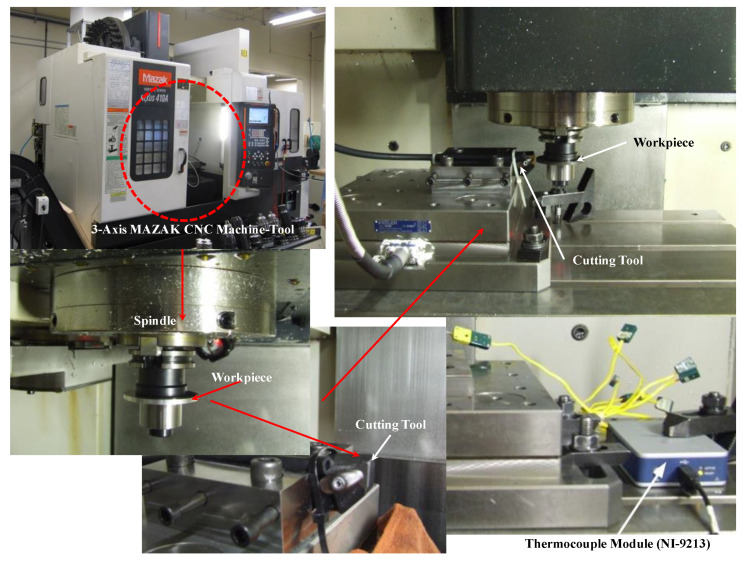
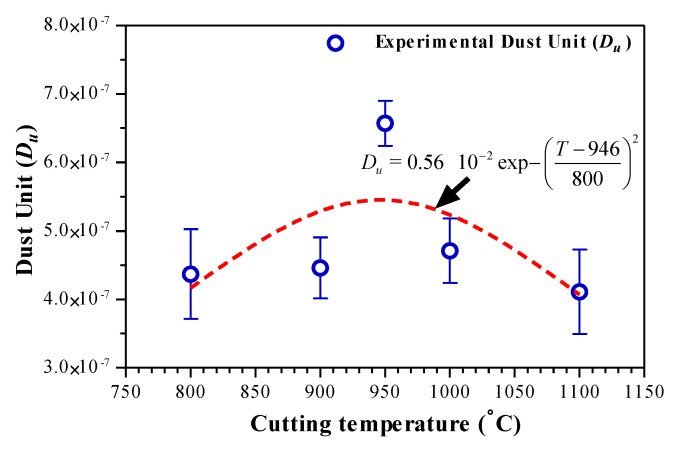
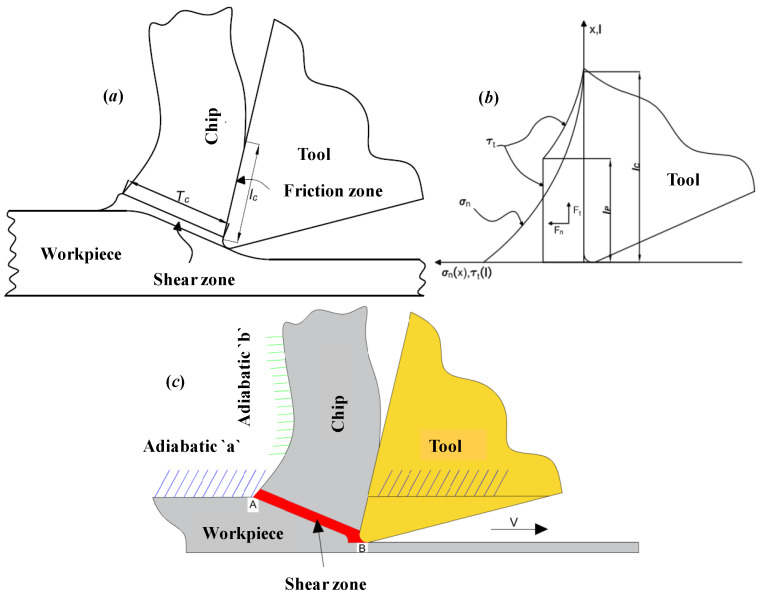
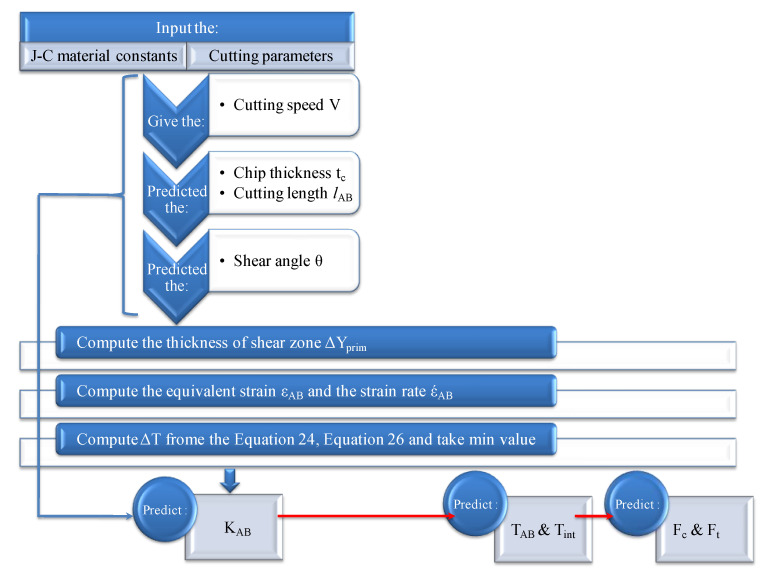
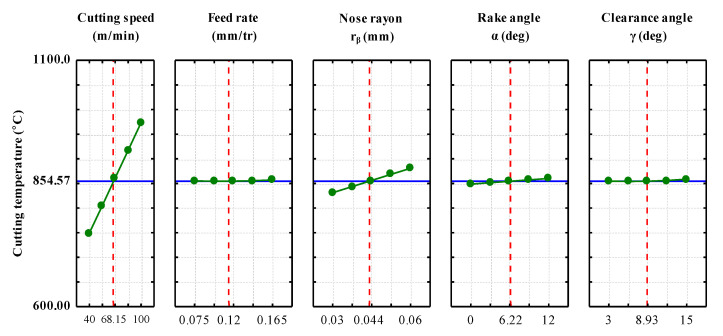
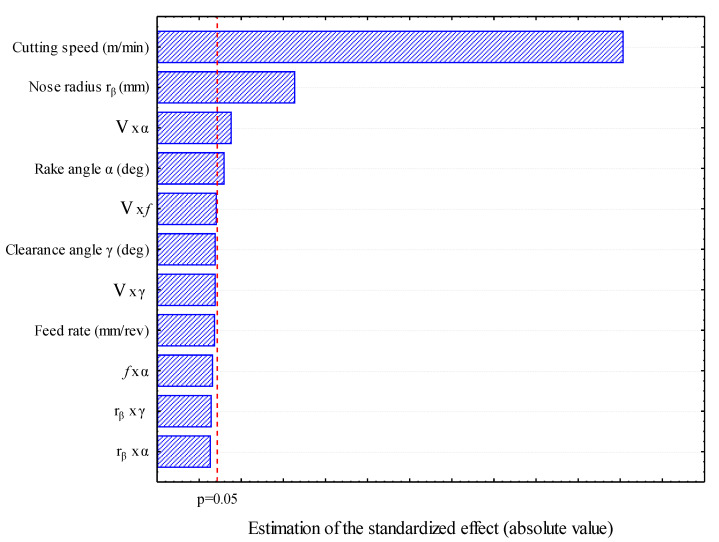
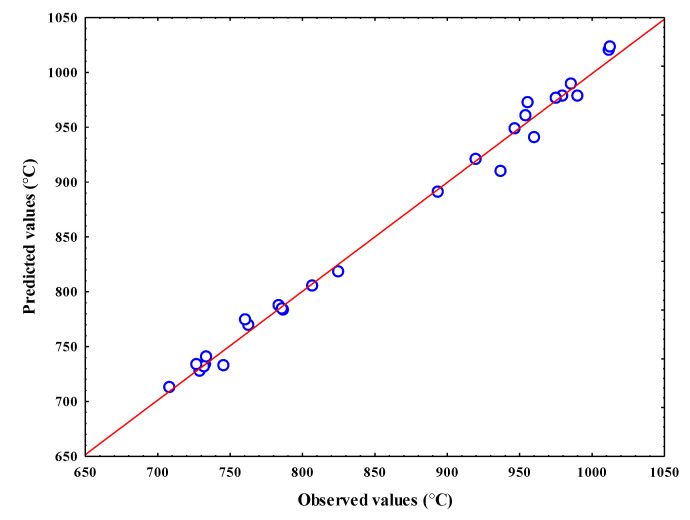
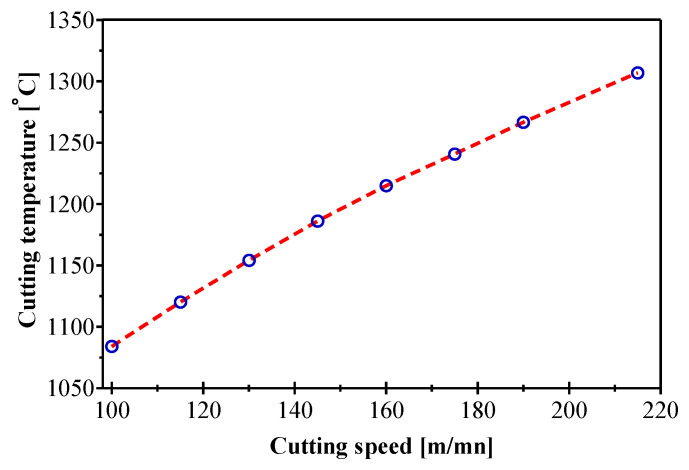
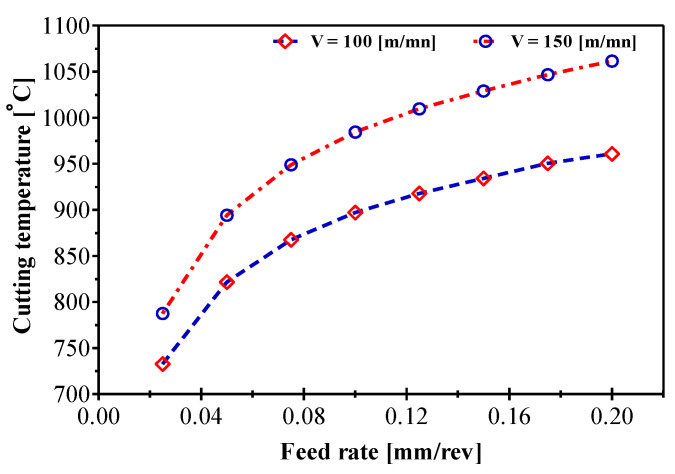
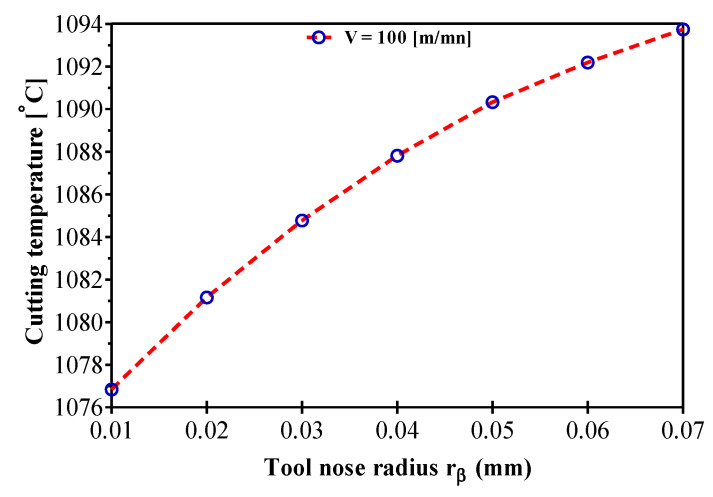
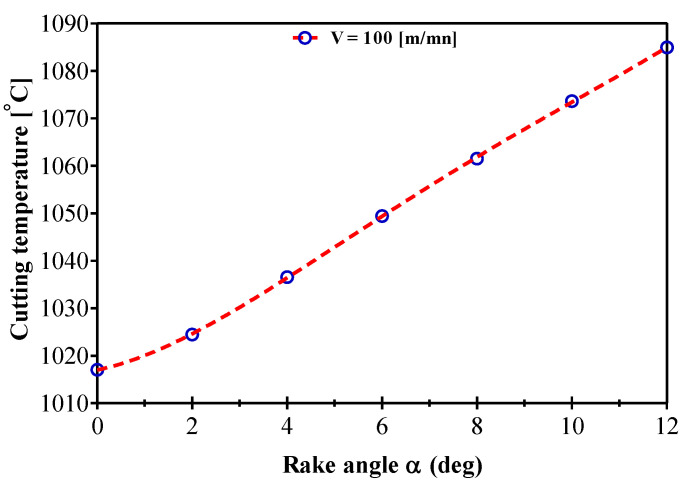
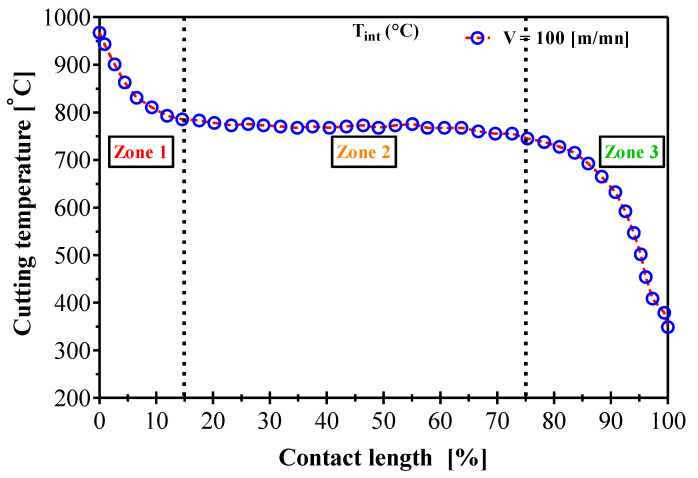
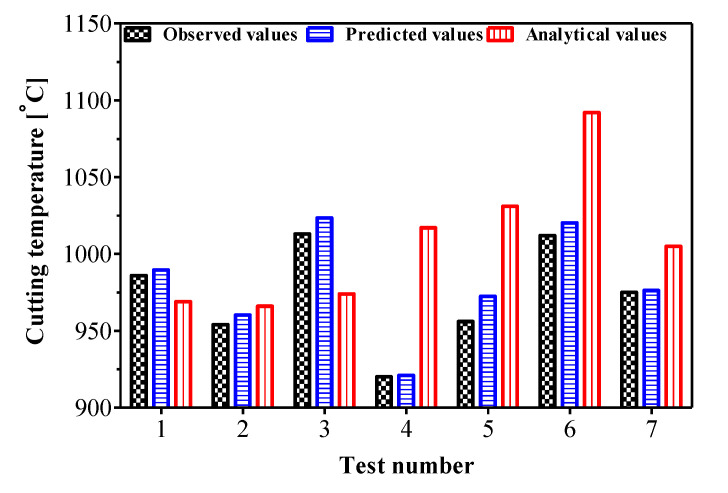
Factor relationships in a machining system do not work in pairs. Varying the cutting parameters, materials machined, or volumes produced will influence many machining characteristics. For this reason, we are attempting to better understand the effect of the Johnson-Cook (J-C) law of behavior on cutting temperature prediction. Thus, the objective of the present study is to investigate, experimentally and theoretically, the tool/material interactions and their effects on dust emission during orthogonal cutting. The proposed approach is built on three steps. First, we established an experimental design to analyze, experimentally, the cutting conditions effects on the cutting temperature under dry condition. The empirical model which is based on the response surface methodology was used to generate a large amount of data depending on the machining conditions. Through this step, we were able to analyze the sensitivity of the cutting temperature to different cutting parameters. It was found that cutting speed, tool tip radius, rake angle, and the interaction between the cutting speed and the rake angle explain more than 84.66% of the cutting temperature variation. The cutting temperature will be considered as a reference to validate the analytical model. Hence, a temperature prediction model is important as a second step. The modeling of orthogonal machining using the J-C plasticity model showed a good correlation between the predicted cutting temperature and that obtained by the proposed empirical model. The calculated deviations for the different cutting conditions tested are relatively acceptable (with a less than 10% error). Finally, the established analytical model was then applied to the machining processes in order to optimize the cutting parameters and, at the same time, minimize the generated dust. The evaluation of the dust generation revealed that the dust emission is closely related to the variation of the cutting temperature. We also noticed that the dust generation can indicate different phenomena of fine and ultrafine particles generation during the cutting process, related to the heat source or temperature during orthogonal machining. Finally, the effective strategy to limit dust emissions at the source is to avoid the critical temperature zone. For this purpose, the two-sided values can be seen as combinations to limit dust emissions at the source.
加工系统中的因素关系并非成对起作用。改变切削参数、被加工材料或产量会影响许多加工特性。因此,我们试图更好地理解约翰逊 - 库克(J - C)行为定律对切削温度预测的影响。因此,本研究的目的是通过实验和理论研究正交切削过程中的刀具/材料相互作用及其对粉尘排放的影响。所提出的方法基于三个步骤。首先,我们建立了一个实验设计,以在干燥条件下通过实验分析切削条件对切削温度的影响。基于响应面方法的经验模型用于根据加工条件生成大量数据。通过这一步,我们能够分析切削温度对不同切削参数的敏感性。结果发现,切削速度、刀尖半径、前角以及切削速度与前角之间的相互作用解释了超过84.66%的切削温度变化。切削温度将被视为验证分析模型的参考。因此,作为第二步,温度预测模型很重要。使用J - C塑性模型对正交加工进行建模表明,预测的切削温度与所提出的经验模型获得的切削温度之间具有良好的相关性。对测试的不同切削条件计算出的偏差相对可以接受(误差小于10%)。最后,将建立的分析模型应用于加工过程,以优化切削参数,同时尽量减少产生的粉尘。对粉尘产生的评估表明,粉尘排放与切削温度的变化密切相关。我们还注意到,粉尘产生可以表明切削过程中细颗粒和超细颗粒产生的不同现象,这与正交加工过程中的热源或温度有关。最后,从源头上限制粉尘排放的有效策略是避免临界温度区。为此,双边值可被视为从源头上限制粉尘排放的组合。