Sohail Muhammad, Altalhi Tariq, Al-Sehemi Abdullah G, Taha Taha Abdel Mohaymen, S El-Nasser Karam, Al-Ghamdi Ahmed A, Boukhari Mahnoor, Palamanit Arkom, Hayat Asif, A Amin Mohammed, Nawawi Bin Wan Ismail Wan Izhan
Yangtze Delta Region Institute (Huzhou), University of Electronic Science and Technology of China, Huzhou 313001, China.
Department of Chemistry, College of Science, Taif University, P.O. Box 11099, Taif 21944, Saudi Arabia.
Nanomaterials (Basel). 2021 Nov 29;11(12):3245. doi: 10.3390/nano11123245.
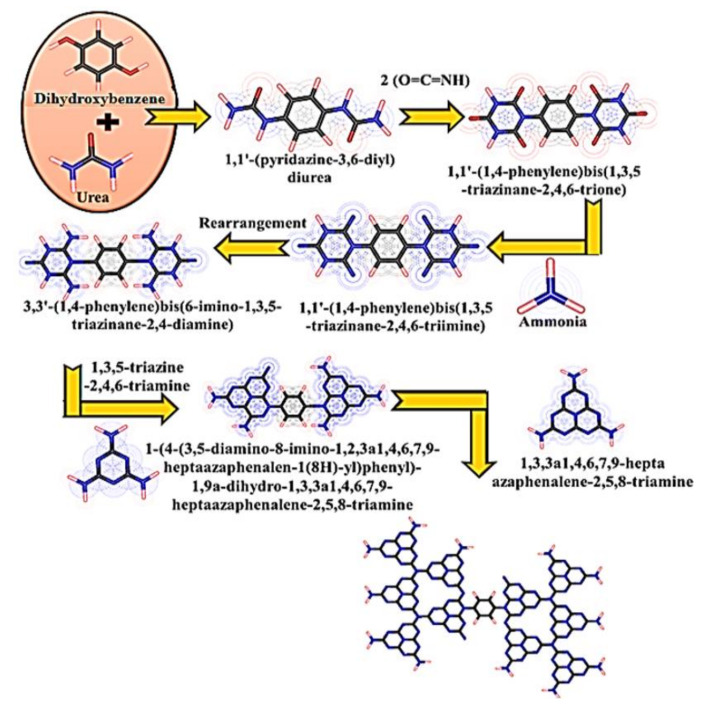
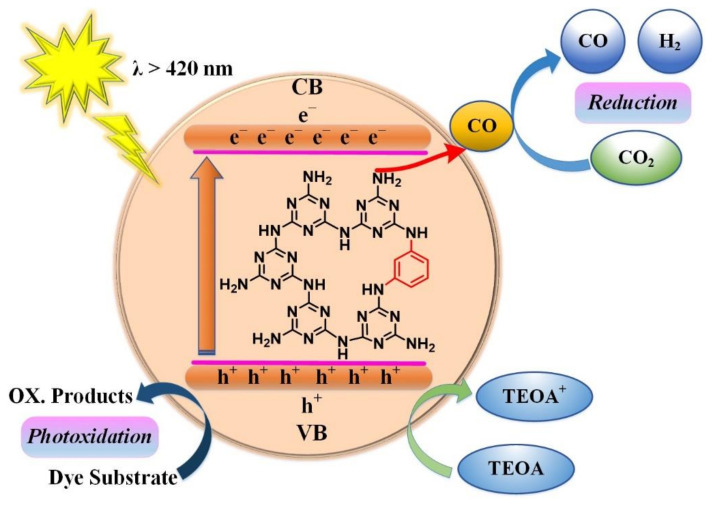
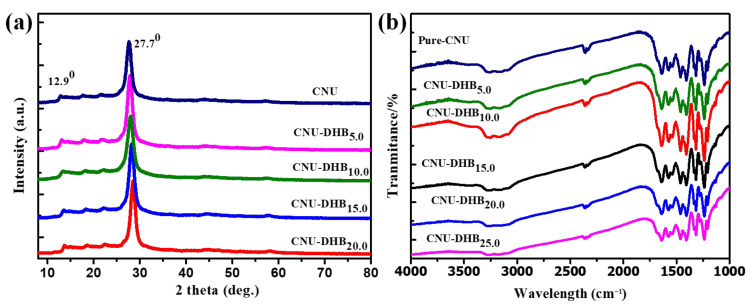
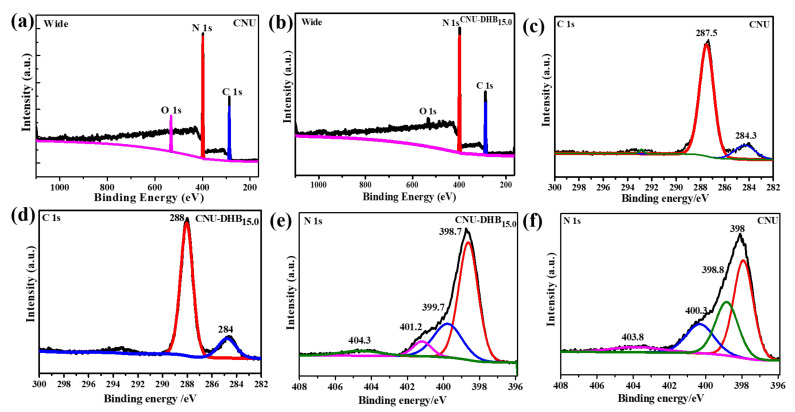
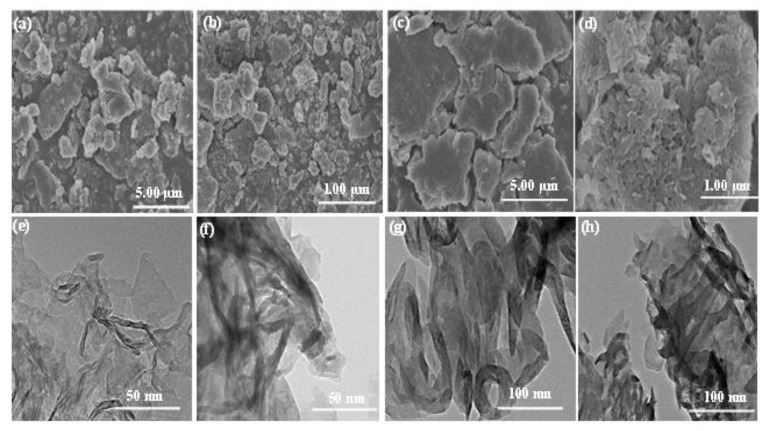
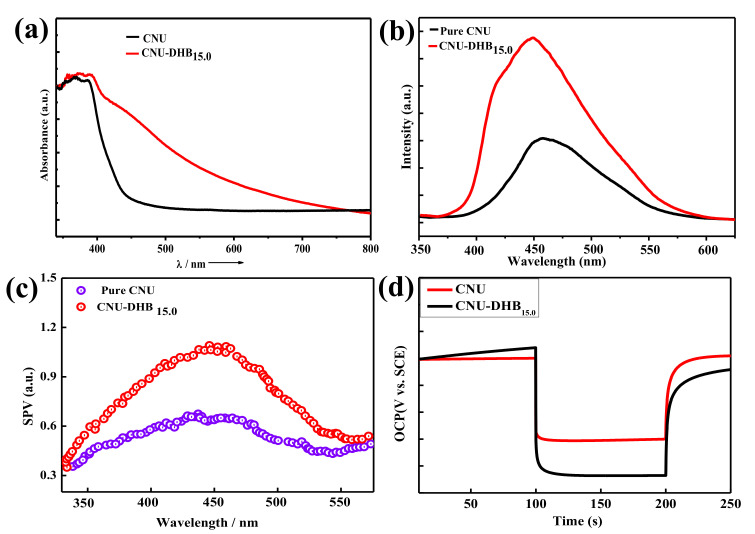
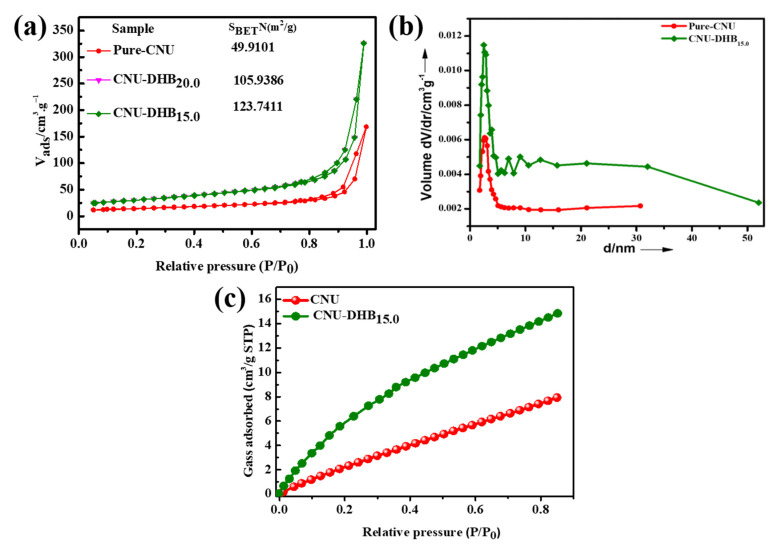
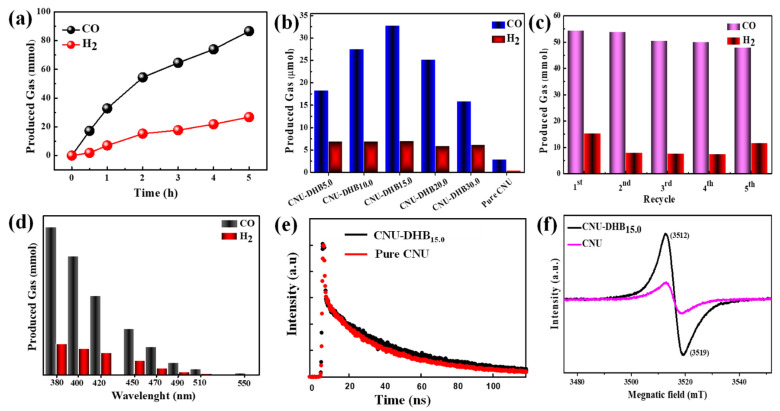
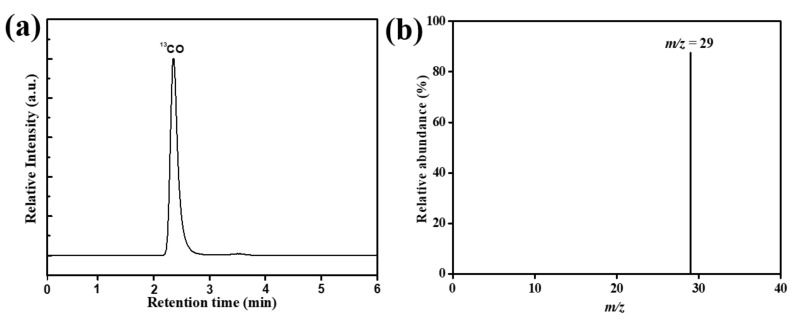
Light-driven heterogeneous photocatalysis has gained great significance for generating solar fuel; the challenging charge separation process and sluggish surface catalytic reactions significantly restrict the progress of solar energy conversion using a semiconductor photocatalyst. Herein, we propose a novel and feasible strategy to incorporate dihydroxy benzene (DHB) as a conjugated monomer within the framework of urea containing CN (CNU-DHBx) to tune the electronic conductivity and charge separation due to the aromaticity of the benzene ring, which acts as an electron-donating species. Systematic characterizations such as SPV, PL, XPS, DRS, and TRPL demonstrated that the incorporation of the DHB monomer greatly enhanced the photocatalytic CO reduction of CN due to the enhanced charge separation and modulation of the ionic mobility. The significantly enhanced photocatalytic activity of CNU-DHB in comparison with parental CN was 85 µmol/h for CO and 19.92 µmol/h of the H source. It can be attributed to the electron-hole pair separation and enhance the optical adsorption due to the presence of DHB. Furthermore, this remarkable modification affected the chemical composition, bandgap, and surface area, encouraging the controlled detachment of light-produced photons and making it the ideal choice for CO photoreduction. Our research findings potentially offer a solution for tuning complex charge separation and catalytic reactions in photocatalysis that could practically lead to the generation of artificial photocatalysts for efficient solar energy into chemical energy conversion.
光驱动的多相光催化对于太阳能燃料的产生具有重要意义;具有挑战性的电荷分离过程和缓慢的表面催化反应显著限制了使用半导体光催化剂进行太阳能转换的进展。在此,我们提出了一种新颖且可行的策略,即将二羟基苯(DHB)作为共轭单体引入含氰尿素(CNU-DHBx)的框架中,由于苯环的芳香性作为电子供体物种来调节电子导电性和电荷分离。诸如表面光电压(SPV)、光致发光(PL)、X射线光电子能谱(XPS)、漫反射光谱(DRS)和时间分辨光致发光(TRPL)等系统表征表明,DHB单体的引入由于电荷分离的增强和离子迁移率的调制,极大地增强了CN的光催化CO还原性能。与母体CN相比,CNU-DHB显著增强的光催化活性对于CO为85 μmol/h,对于H源为19.92 μmol/h。这可归因于电子 - 空穴对的分离以及由于DHB的存在而增强的光吸收。此外,这种显著的改性影响了化学成分、带隙和表面积,促进了光生光子的可控分离,使其成为CO光还原的理想选择。我们的研究结果可能为调节光催化中复杂的电荷分离和催化反应提供一种解决方案,这实际上可能导致产生用于将高效太阳能转化为化学能的人工光催化剂。