The Wingate Institute, The Academic College at Wingate, Netanya 4290200, Israel.
Int J Environ Res Public Health. 2021 Dec 15;18(24):13217. doi: 10.3390/ijerph182413217.
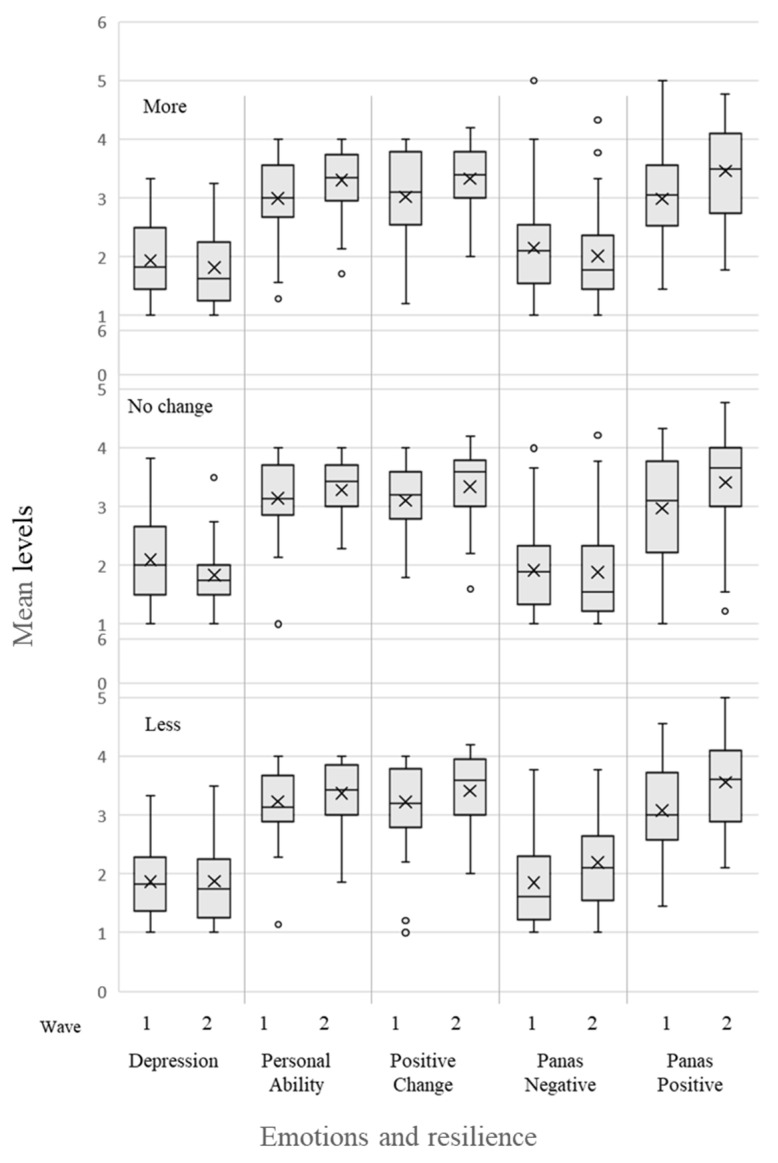
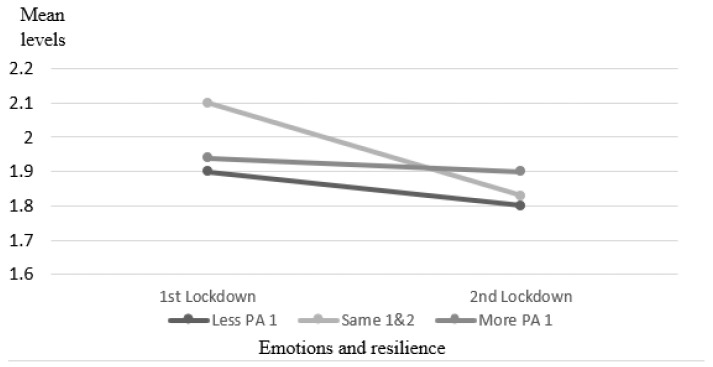
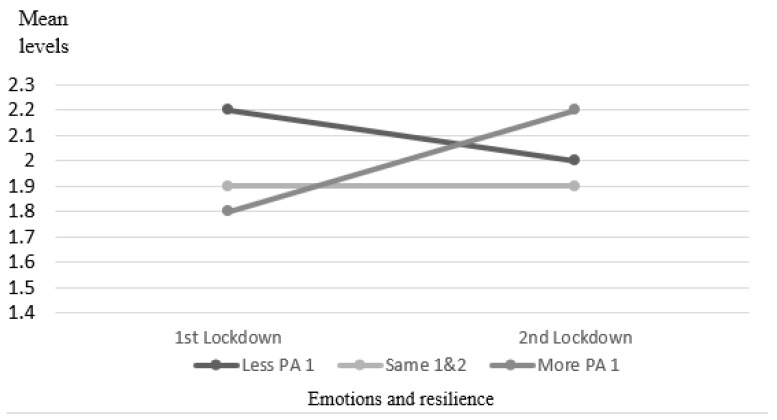
Governments worldwide have imposed harsh restrictions for decreasing the Covid-19 pandemic and maintaining public health. Yet such limitations have impacted people's physical activity. This study examined relationships between changes in physical activity and resilience, emotions, and depression during two lockdowns in Israel. An online survey was completed twice by 135 participants during two consecutive lockdowns. The results indicate that resilience and positive emotions were higher, and negative emotions and depression were lower during the second lockdown compared to the first one-even though people spent less time performing physical activity in the later lockdown. Moreover, negative emotions significantly decreased among people who reported increased physical activity during the second lockdown [M = 2.2 (SD = 0.9) compared to M = 1.9 (SD = 0.8) on a scale of 1-5] and increased among those who reported a reduction in activity [M = 1.8 (SD = 0.7) compared to M = 2.2 (SD = 0.7)]. It could therefore be concluded that while the Israeli population's resilience is higher compared to other populations (who do not regularly deal with crisis situations), their increased physical activity was associated with better resilience and emotions and lower depression scores. Since lockdowns are an extreme yet often repeated phenomenon, it is important to understand the psychological implications of engaging in physical activity.
各国政府为了降低新冠疫情的影响并维护公众健康,实施了严格的限制措施。然而,这些限制措施影响了人们的身体活动。本研究考察了以色列两次封锁期间身体活动的变化与韧性、情绪和抑郁之间的关系。135 名参与者在两次连续封锁期间两次完成了在线调查。结果表明,与第一次封锁相比,第二次封锁期间的韧性和积极情绪更高,而消极情绪和抑郁水平更低——尽管人们在第二次封锁期间进行身体活动的时间更少。此外,报告第二次封锁期间身体活动增加的人其消极情绪显著下降[M = 2.2(SD = 0.9),而在 1-5 的量表上,M = 1.9(SD = 0.8)],而报告活动减少的人其消极情绪增加[M = 1.8(SD = 0.7),而 M = 2.2(SD = 0.7)]。因此,可以得出结论,尽管与其他人群(他们不经常应对危机情况)相比,以色列人口的韧性更高,但他们增加的身体活动与更好的韧性和情绪以及更低的抑郁评分相关。由于封锁是一种极端但经常重复的现象,因此了解参与身体活动的心理影响很重要。