Department of General Surgery and Center of Minimal Invasive Gastrointestinal Surgery, Southwest Hospital, Third Military Medical University, Chongqing, 400038, China.
National Engineering Research Center of Immunological Products, Department of Microbiology and Biochemical Pharmacy, College of Pharmacy and Laboratory Medicine, Third Military Medical University, Chongqing, 400038, China.
Adv Sci (Weinh). 2022 Feb;9(5):e2103543. doi: 10.1002/advs.202103543. Epub 2021 Dec 26.
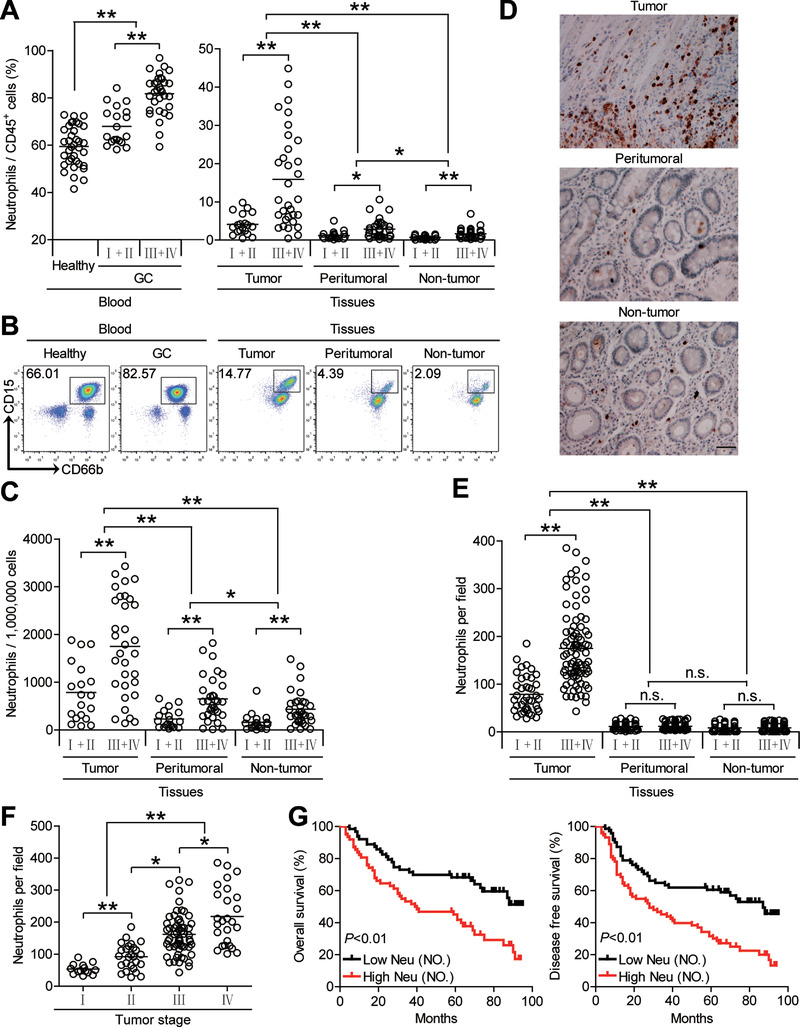
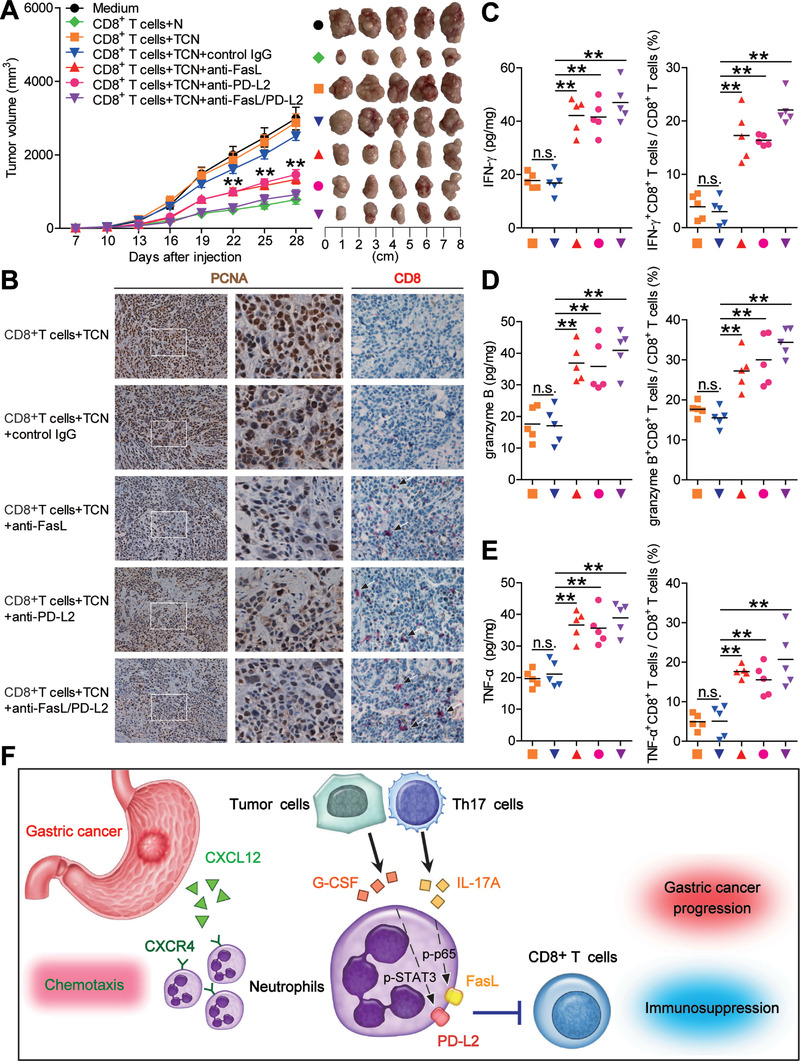
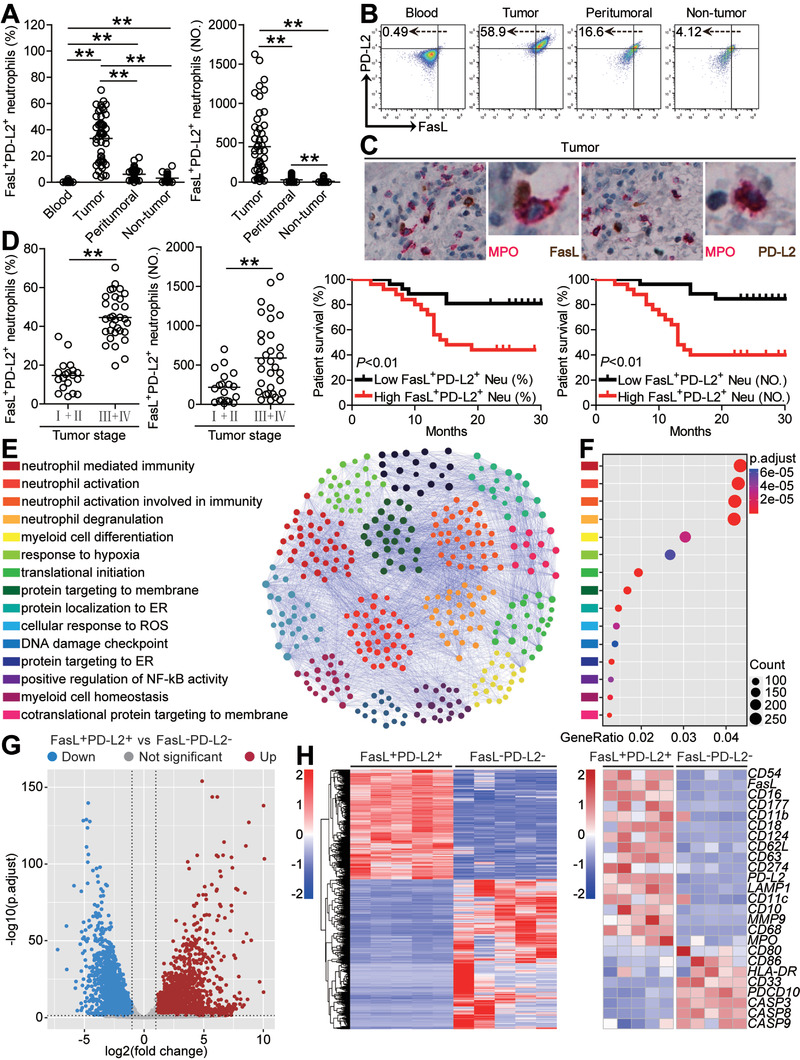
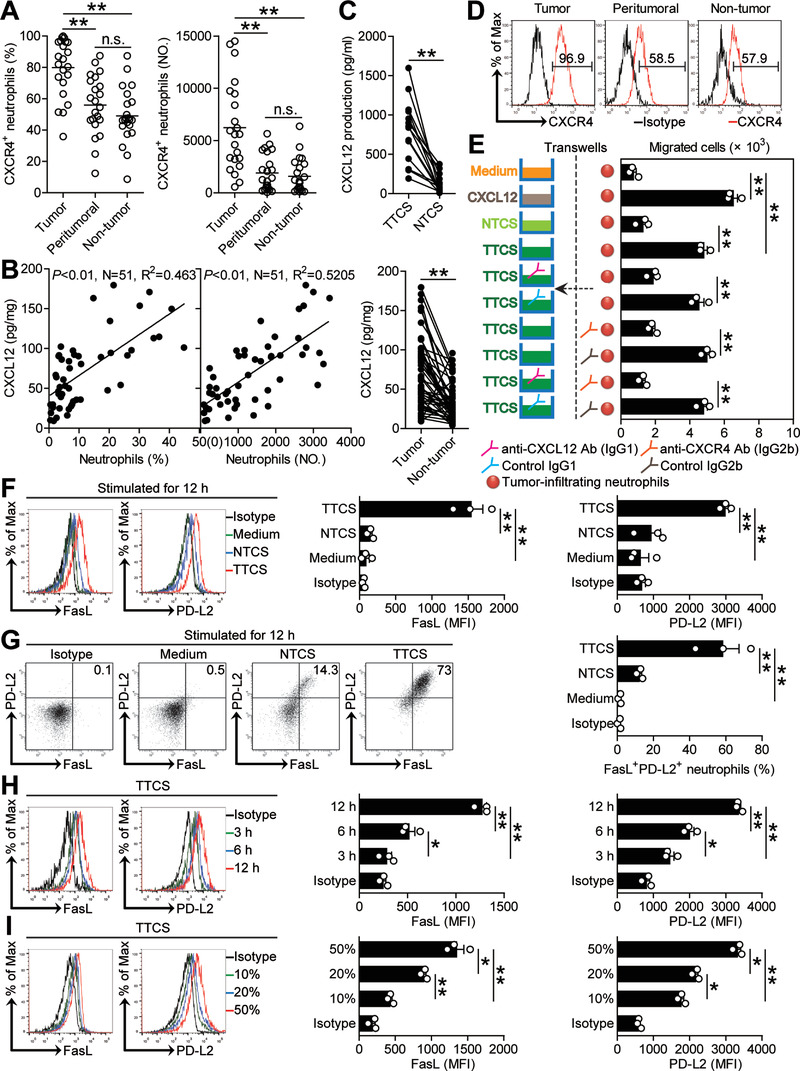
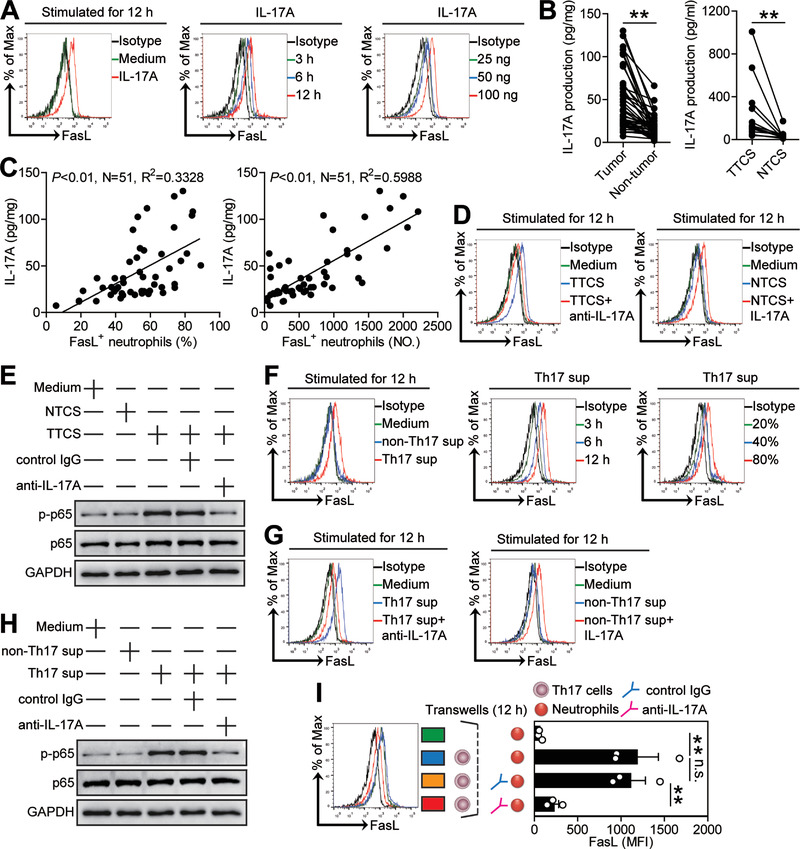
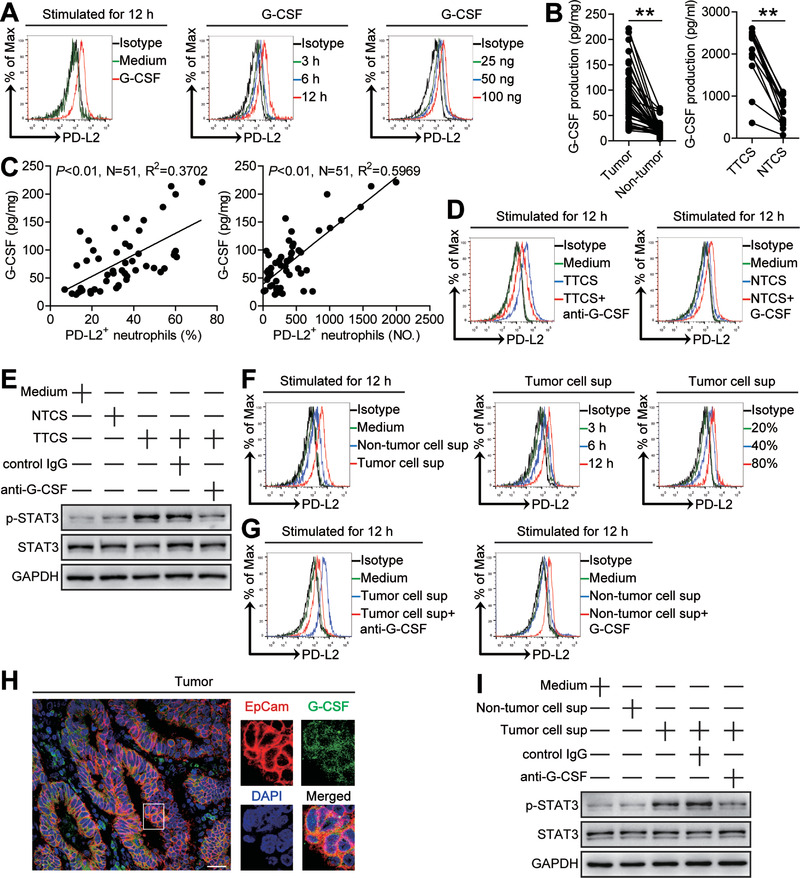
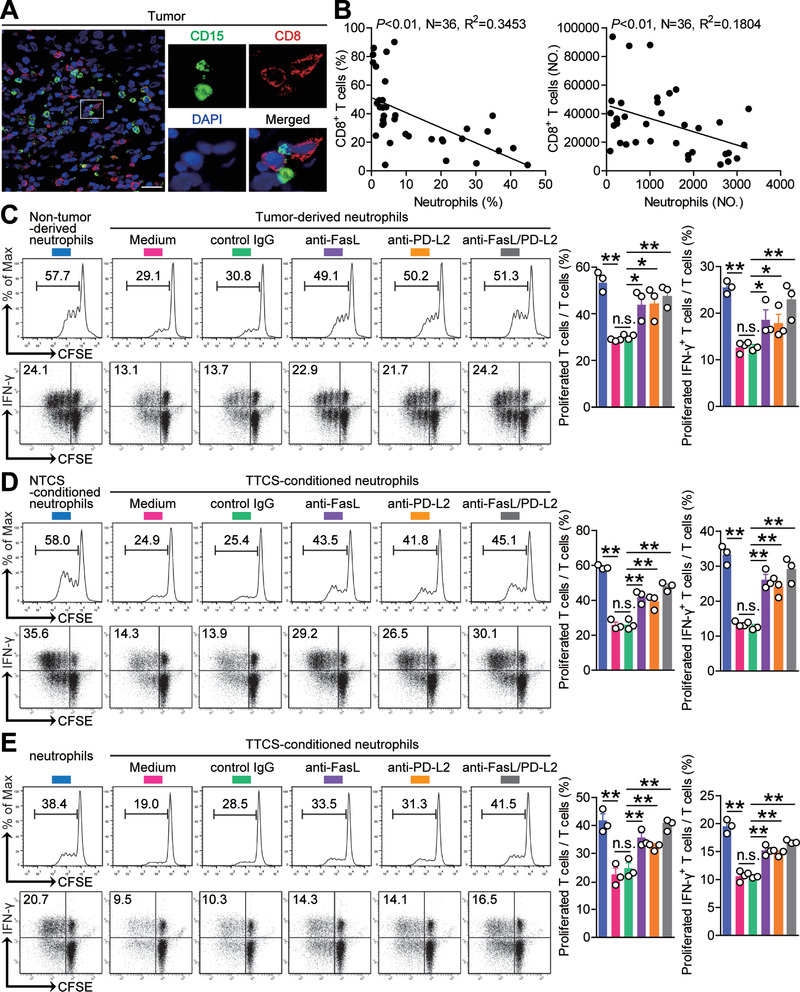
Neutrophils constitute abundant cellular components in human gastric cancer (GC) tissues, but their protumorigenic subset in pathogenesis of GC progression is unclear. Here, it is found that patients with GC show significantly higher neutrophil infiltration in tumors that is regulated by CXCL12-CXCR4 chemotaxis. These tumor-infiltrating neutrophils express high level immunosuppressive molecules FasL and PD-L2, and this FasL PD-L2 neutrophil subset with a unique phenotype constitutes at least 20% of all neutrophils in advanced GC and predicts poor patient survival. Tumor induces neutrophils to express FasL and PD-L2 proteins with similar phenotype to those in GC tumors in both time-dependent and dose-dependent manners. Mechanistically, Th17 cell-derived IL-17A and tumor cell-derived G-CSF can significantly induce neutrophil FasL and PD-L2 expression via activating ERK-NF-κB and JAK-STAT3 signaling pathway, respectively. Importantly, upon over-expressing FasL and PD-L2, neutrophils acquire immunosuppressive functions on tumor-specific CD8 T-cells and promote the growth and progression of human GC tumors in vitro and in vivo, which can be reversed by blocking FasL and PD-L2 on these neutrophils. Thus, the work identifies a novel protumorigenic FasL PD-L2 neutrophil subset in GC and provides new insights for human cancer immunosuppression and anti-cancer therapies targeting these pathogenic cells.
中性粒细胞是人类胃癌(GC)组织中丰富的细胞成分,但它们在 GC 进展发病机制中的促肿瘤亚群尚不清楚。在这里,研究发现 GC 患者的肿瘤中中性粒细胞浸润明显增加,这种浸润受 CXCL12-CXCR4 趋化作用调节。这些肿瘤浸润的中性粒细胞表达高水平的免疫抑制分子 FasL 和 PD-L2,这种具有独特表型的 FasL PD-L2 中性粒细胞亚群至少占晚期 GC 中所有中性粒细胞的 20%,并预测患者预后不良。肿瘤以时间依赖性和剂量依赖性的方式诱导中性粒细胞表达 FasL 和 PD-L2 蛋白,其表型与 GC 肿瘤中的相似。在机制上,Th17 细胞衍生的 IL-17A 和肿瘤细胞衍生的 G-CSF 可分别通过激活 ERK-NF-κB 和 JAK-STAT3 信号通路,显著诱导中性粒细胞 FasL 和 PD-L2 的表达。重要的是,过表达 FasL 和 PD-L2 后,中性粒细胞获得了对肿瘤特异性 CD8 T 细胞的免疫抑制功能,并促进了人 GC 肿瘤在体外和体内的生长和进展,而阻断这些中性粒细胞上的 FasL 和 PD-L2 可以逆转这种作用。因此,这项工作鉴定了 GC 中一种新的促肿瘤性 FasL PD-L2 中性粒细胞亚群,为人类癌症免疫抑制和针对这些致病细胞的抗癌治疗提供了新的见解。