Kim Jeong-Won, Kim Chang-Yeop, Kim Jin-Hwa, Jeong Ji-Soo, Lim Je-Oh, Ko Je-Won, Kim Tae-Won
College of Veterinary Medicine (BK21 FOUR Program), Chungnam National University, 99 Daehak-ro, Daejeon 34131, Korea.
College of Veterinary Medicine (BK21 Plus Project Team), Chonnam National University, 77 Yongbong-ro, Buk-gu, Gwangju 61186, Korea.
Pathogens. 2021 Dec 2;10(12):1573. doi: 10.3390/pathogens10121573.
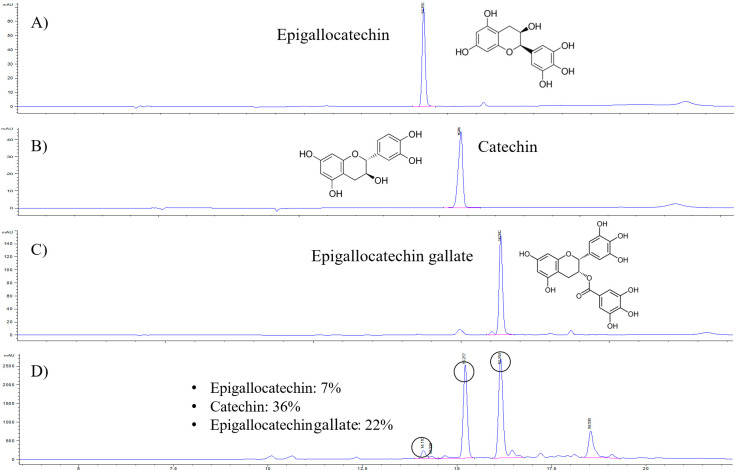
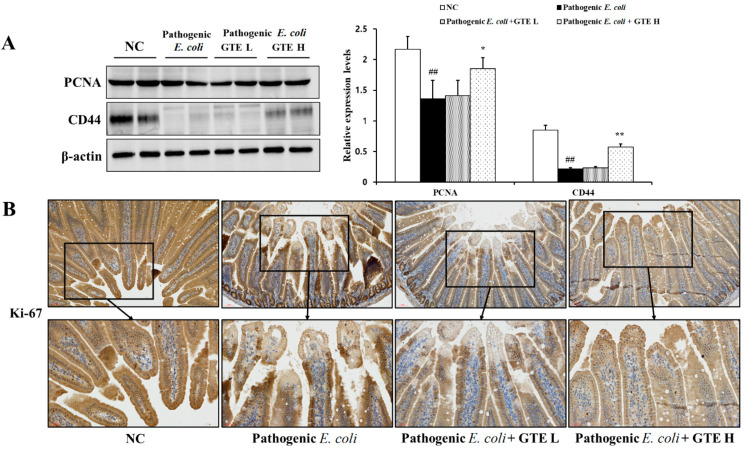
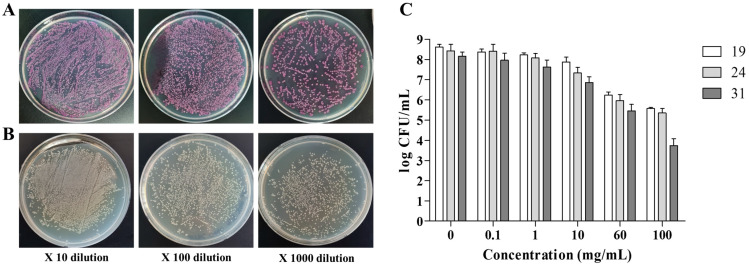
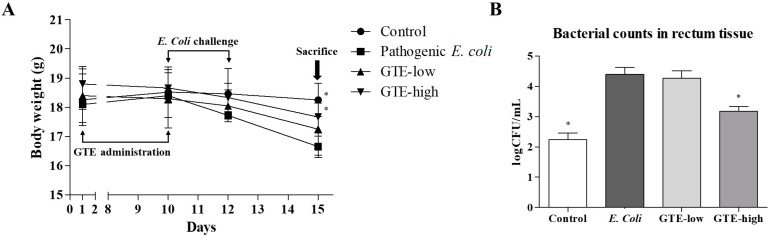
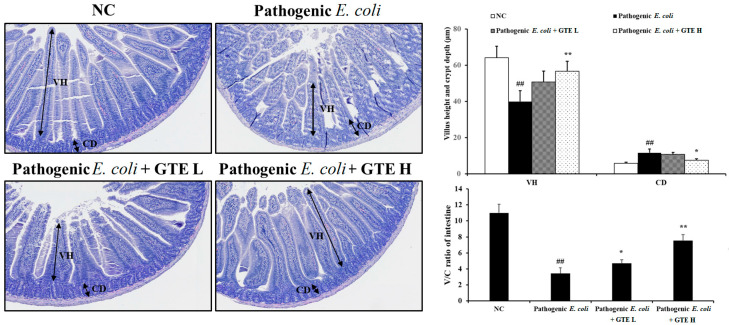
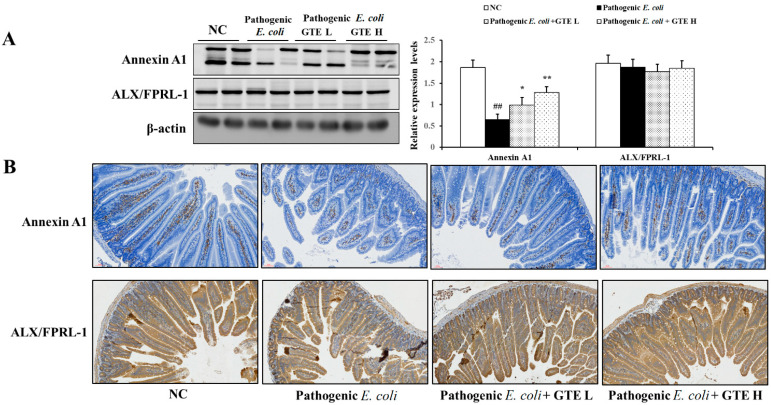
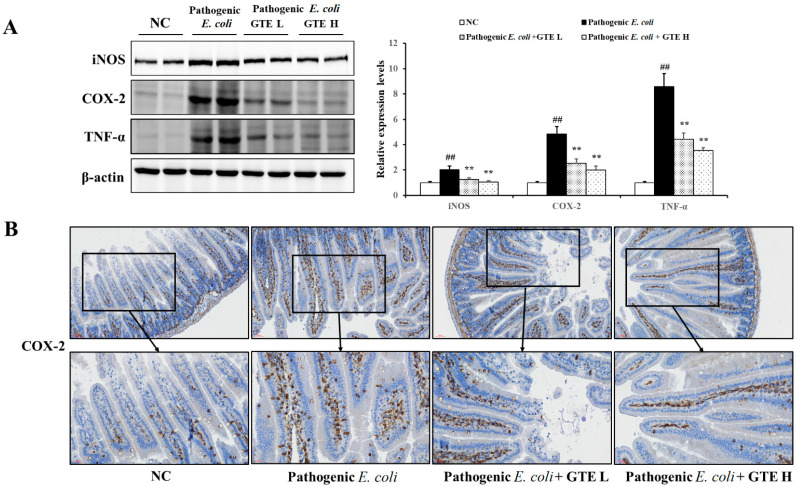
In this study, we explored the potential beneficial effects of green tea extract (GTE) in a pathogenic (F18:LT:STa:Stx2e)-induced colitis model. The GTE was standardized with catechin and epigallocatechin-3-gallate content using chromatography analysis. Ten consecutive days of GTE (500 and 1000 mg/kg) oral administration was followed by 3 days of a pathogenic challenge (1 × 10 CFU/mL). In vitro antibacterial analysis showed that GTE successfully inhibited the growth of pathogenic , demonstrating over a 3-fold reduction under time- and concentration-dependent conditions. The in vivo antibacterial effect of GTE was confirmed, with an inhibition rate of approximately 90% when compared to that of the alone group. GTE treatment improved pathogenic -induced intestinal injury with well-preserved epithelial linings and villi. In addition, the increased expression of annexin A1 in GTE-treated jejunum tissue was detected, which was accompanied by suppressed inflammation-related signal expression, including TNFA, COX-2, and iNOS. Moreover, proliferation-related signals such as PCNA, CD44, and Ki-67 were enhanced in the GTE group compared to those in the alone group. Taken together, these results indicate that GTE has an antibacterial activity against pathogenic and ameliorates pathogenic -induced intestinal damage by modulating inflammation and epithelial cell proliferation.
在本研究中,我们在致病性(F18:LT:STa:Stx2e)诱导的结肠炎模型中探究了绿茶提取物(GTE)的潜在有益作用。使用色谱分析对GTE的儿茶素和表没食子儿茶素-3-没食子酸酯含量进行了标准化。连续10天口服GTE(500和1000毫克/千克),随后进行3天的致病性攻击(1×10 CFU/毫升)。体外抗菌分析表明,GTE成功抑制了病原菌的生长,在时间和浓度依赖性条件下显示出超过3倍的降低。GTE的体内抗菌作用得到证实,与单独病原菌组相比,抑制率约为90%。GTE治疗改善了致病性病原菌诱导的肠道损伤,上皮内衬和绒毛保存良好。此外,在GTE处理的空肠组织中检测到膜联蛋白A1表达增加,同时炎症相关信号表达受到抑制,包括肿瘤坏死因子α(TNFA)、环氧化酶-2(COX-2)和诱导型一氧化氮合酶(iNOS)。此外,与单独病原菌组相比,GTE组中增殖相关信号如增殖细胞核抗原(PCNA)、CD44和Ki-67增强。综上所述,这些结果表明,GTE对致病性病原菌具有抗菌活性,并通过调节炎症和上皮细胞增殖改善致病性病原菌诱导的肠道损伤。