Univ. Lille, Inserm, CHU Lille, Institut Pasteur de Lille, U1167-RID-AGE-Facteurs de Risque et Déterminants Moléculaires des Maladies Liées au Vieillissement, F-59000 Lille, France.
Univ. Lille, CHU Lille, Institut Pasteur de Lille, ULR 4483-IMPECS-IMPact de l'Environnement Chimique sur la Santé Humaine, F-59000 Lille, France.
Nutrients. 2021 Dec 8;13(12):4398. doi: 10.3390/nu13124398.
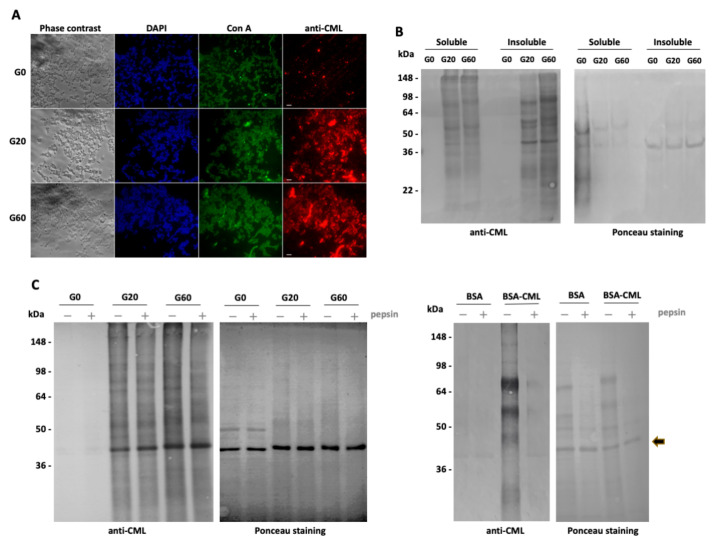
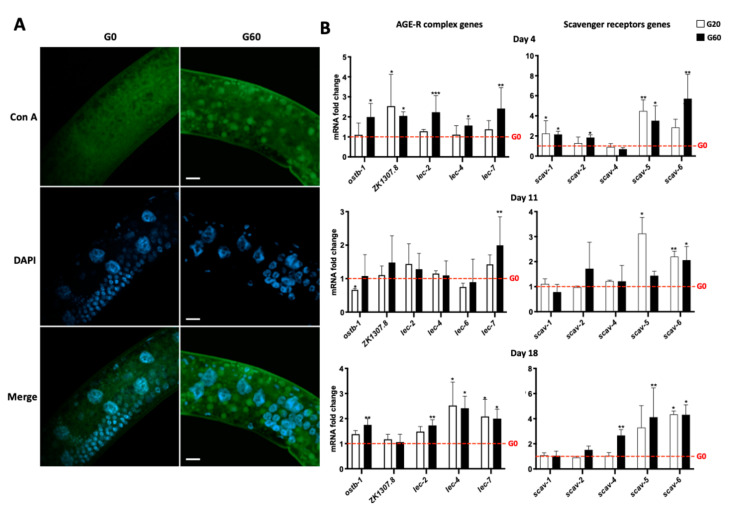
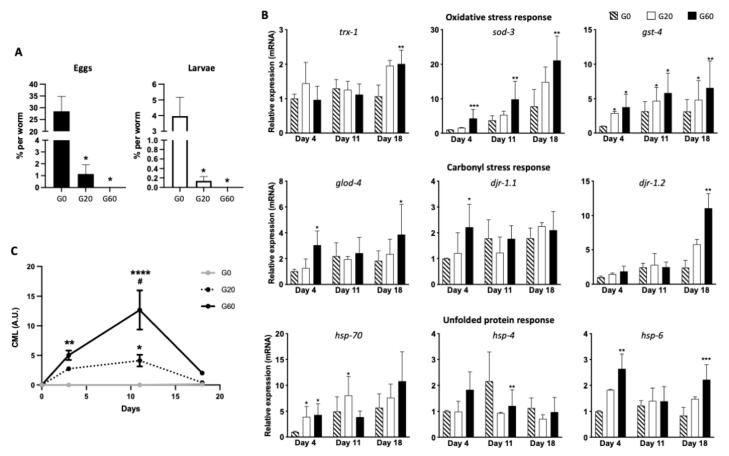
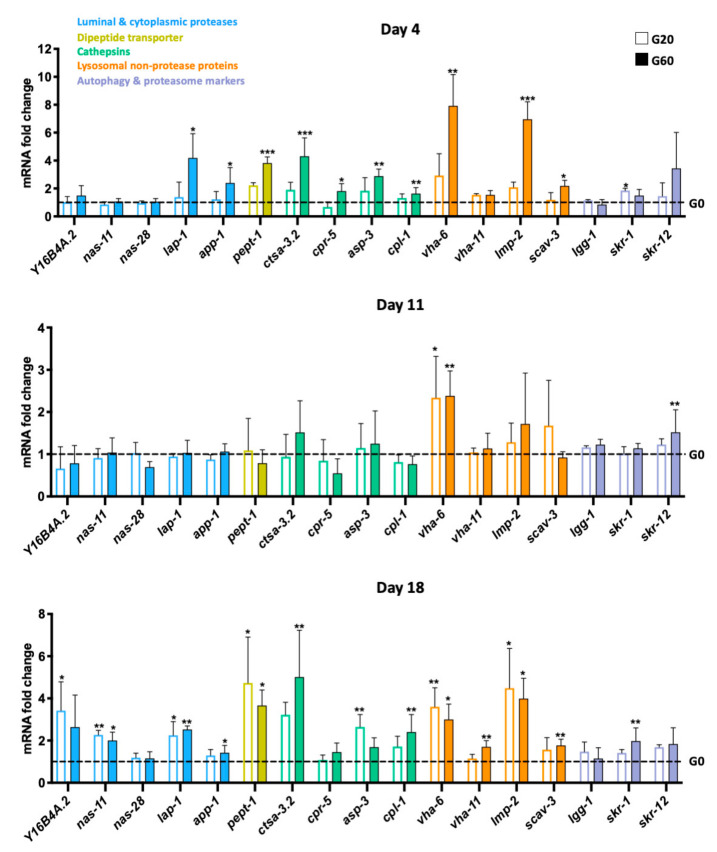
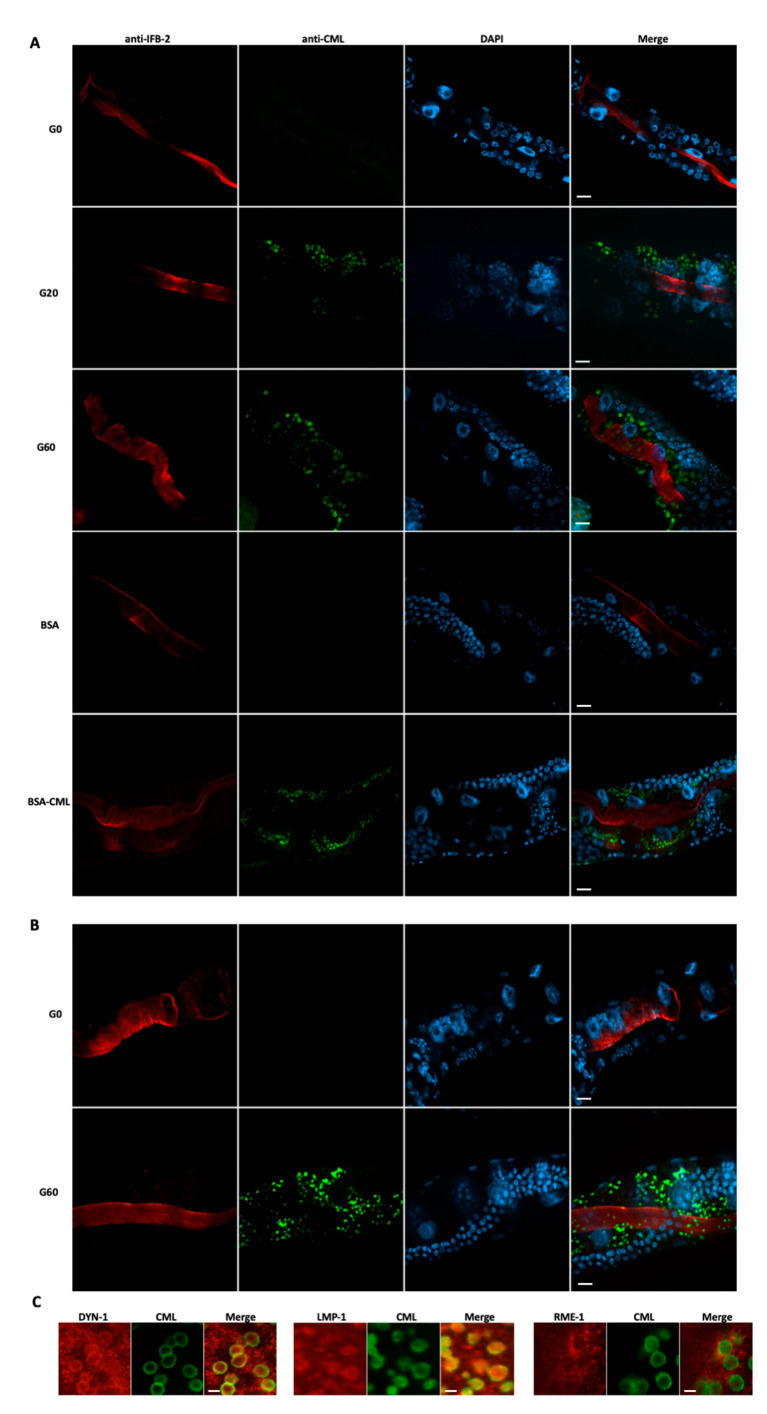
The impact of dietary advanced glycation end products (dAGEs) on human health has been discussed in many studies but, to date, no consensual pathophysiological process has been demonstrated. The intestinal absorption pathways which have so far been described for dAGEs, the passive diffusion of free AGE adducts and transport of glycated di-tripeptides by the peptide transporter 1 (PEPT-1), are not compatible with certain pathophysiological processes described. To get new insight into the intestinal absorption pathways and the pathophysiological mechanisms of dAGEs, we initiated an in vivo study with a so-called simple animal model with a complete digestive tract, . Dietary bacteria were chemically modified with glyoxylic acid to mainly produce -carboxymethyllysine (CML) and used to feed the worms. We performed different immunotechniques using an anti-CML antibody for the relative quantification of ingested CML and localization of this AGE in the worms' intestine. The relative expression of genes encoding different biological processes such as response to stresses and intestinal digestion were determined. The physiological development of the worms was verified. All the results were compared with those obtained with the control bacteria. The results revealed a new route for the intestinal absorption of dietary CML (dCML), endocytosis, which could be mediated by scavenger receptors. The exposure of worms to dCML induced a reproductive defect and a transcriptional response reflecting oxidative, carbonyl and protein folding stresses. These data, in particular the demonstration of endocytosis of dCML by enterocytes, open up new perspectives to better characterize the pathophysiological mechanisms of dAGEs.
膳食晚期糖基化终产物(dAGE)对人类健康的影响在许多研究中都有讨论,但迄今为止,尚未证明存在一致的病理生理过程。迄今为止描述的 dAGE 的肠道吸收途径,即游离 AGE 加合物的被动扩散和糖化二肽通过肽转运蛋白 1(PEPT-1)的转运,与某些描述的病理生理过程不兼容。为了深入了解 dAGE 的肠道吸收途径和病理生理机制,我们使用具有完整消化道的所谓简单动物模型启动了一项体内研究,。膳食细菌用乙醛酸化学修饰,主要产生 -羧甲基赖氨酸(CML)并用于喂养蠕虫。我们使用抗 CML 抗体进行了不同的免疫技术,用于相对定量摄入的 CML 和这种 AGE 在蠕虫肠道中的定位。确定了编码不同生物学过程(如应激反应和肠道消化)的基因的相对表达。验证了蠕虫的生理发育。将所有结果与对照细菌的结果进行比较。结果揭示了膳食 CML(dCML)的新肠道吸收途径(内吞作用),它可能由清道夫受体介导。蠕虫暴露于 dCML 会引起生殖缺陷和转录反应,反映氧化、羰基和蛋白质折叠应激。这些数据,特别是证明肠细胞摄取 dCML 的内吞作用,为更好地描述 dAGE 的病理生理机制开辟了新的前景。