Research Center for Agricultural Information Technology, National Agriculture and Food Research Organization, 1-31-1 Kannondai, Tsukuba, Ibaraki 305-0856, Japan.
Sensors (Basel). 2021 Dec 15;21(24):8368. doi: 10.3390/s21248368.
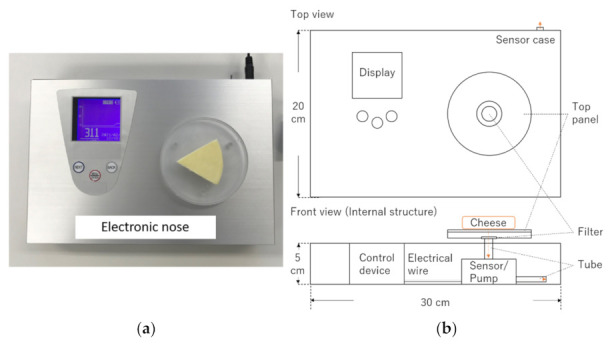
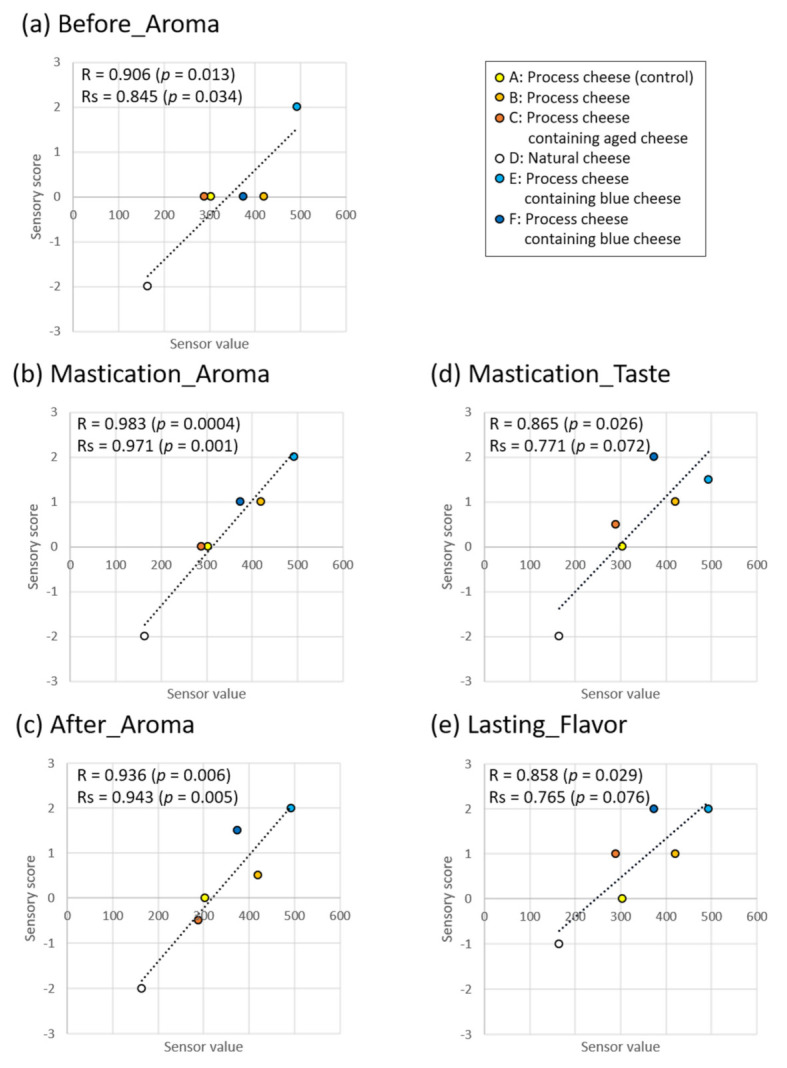
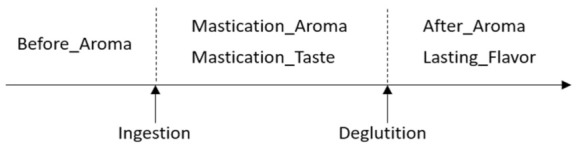
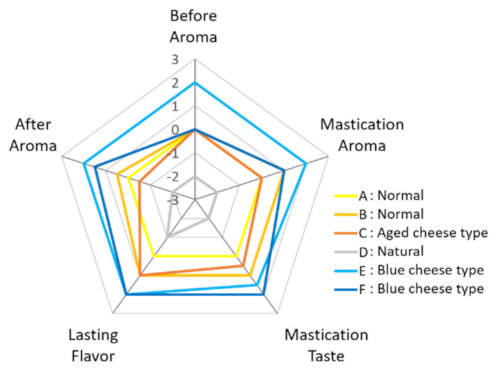
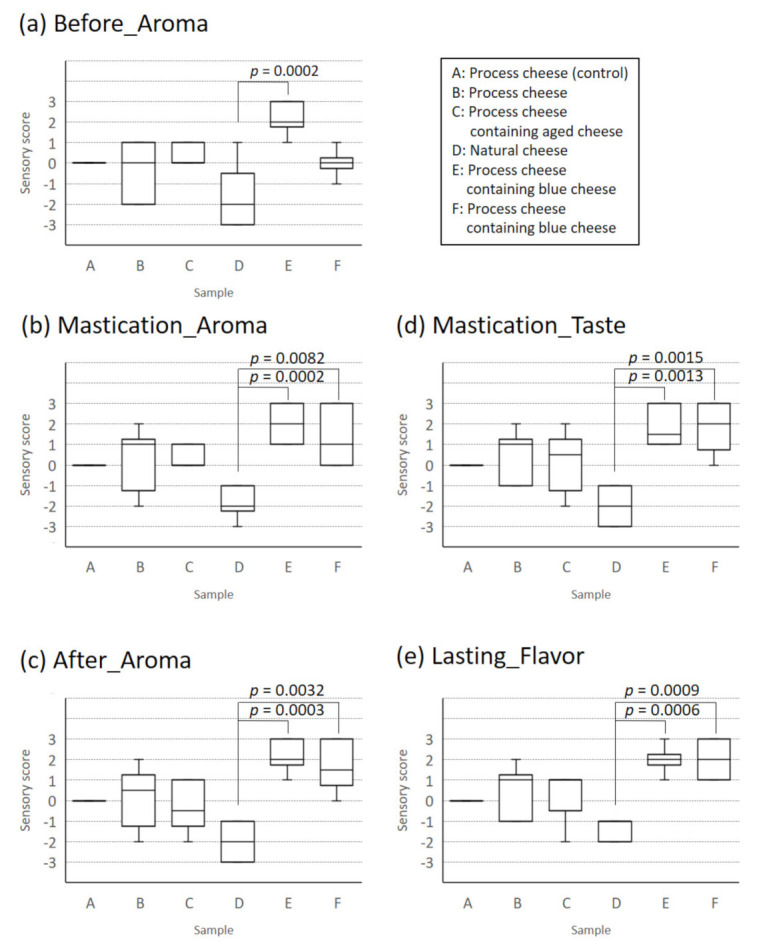
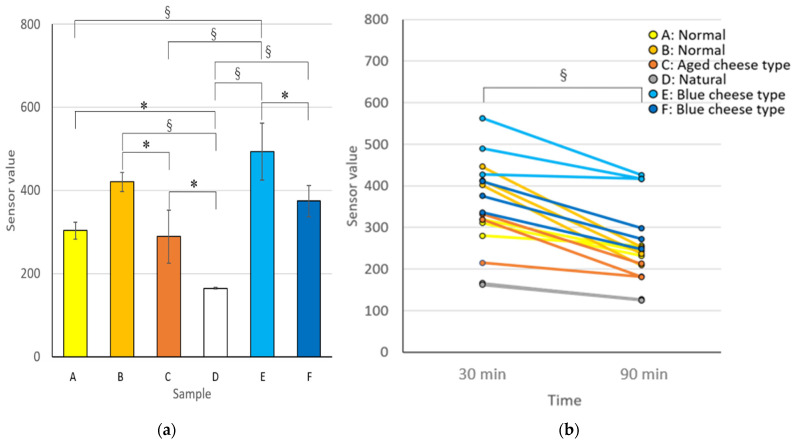
Cheese aroma is known to affect consumer preference. One of the methods to measure cheese aroma is the use of an electronic nose (e-nose), which has been used to classify cheese types, production areas, and cheese ages. However, few studies have directly compared the aroma intensity scores derived from sensory evaluations with the values of metal oxide semiconductor sensors that can easily measure the aroma intensity. This pilot study aimed to investigate the relationship between sensory evaluation scores and e-nose values with respect to cheese aroma. Five types of processed cheese (two types of normal processed cheese, one type containing aged cheese, and two types containing blue cheese), and one type of natural cheese were used as samples. The sensor values obtained using the electronic nose, which measured sample aroma non-destructively, and five sensory evaluation scores related to aroma (aroma intensity before intake, during mastication, and after swallowing; taste intensity during mastication; and remaining flavor after swallowing (lasting flavor)) determined by six panelists, were compared. The e-nose values of many of the tested cheese types were significantly different, whereas the sensory scores of the one or two types of processed cheese containing blue cheese and those of the natural cheese were significantly different. Significant correlations were observed between the means of e-nose values and the medians of aroma intensity scores derived from the sensory evaluation testing before intake, during mastication, and after swallowing. In particular, the aroma intensity score during mastication was found to have a linear relationship with the e-nose values (Pearson's R = 0.983). In conclusion, the e-nose values correlated with the sensory scores with respect to cheese aroma intensity and could be helpful in predicting them.
奶酪的香气会影响消费者的偏好。其中一种测量奶酪香气的方法是使用电子鼻(e-nose),它已被用于对奶酪类型、产地和奶酪年龄进行分类。然而,很少有研究直接比较感官评估得出的香气强度评分与能够轻松测量香气强度的金属氧化物半导体传感器的值。本初步研究旨在探讨感官评估评分与电子鼻值之间与奶酪香气相关的关系。使用五种加工奶酪(两种普通加工奶酪、一种含陈年奶酪和两种含蓝纹奶酪)和一种天然奶酪作为样本。使用电子鼻非破坏性地测量样品香气,并获得传感器值,同时还获得了六位品尝员进行感官评估得出的五个与香气相关的评分(摄入前的香气强度、咀嚼时的香气强度、吞咽后的香气强度;咀嚼时的味道强度;吞咽后的余味(持久风味))。对电子鼻值和五种感官评估评分进行了比较。许多测试的奶酪类型的电子鼻值有显著差异,而两种含蓝纹奶酪的加工奶酪或天然奶酪的一种或两种感官评分有显著差异。电子鼻值的平均值与感官评估测试中摄入前、咀嚼时和吞咽后的香气强度评分的中位数之间存在显著相关性。特别是,咀嚼时的香气强度评分与电子鼻值呈线性关系(Pearson R = 0.983)。总之,电子鼻值与奶酪香气强度的感官评分相关,可以帮助预测这些评分。