Division of Clinical Care and Research, Institute of Human Virology, University of Maryland School of Medicine, Baltimore, MD 21201, USA.
Institute for Genome Sciences, University of Maryland School of Medicine, Baltimore, MD 21201, USA.
Viruses. 2021 Nov 30;13(12):2400. doi: 10.3390/v13122400.
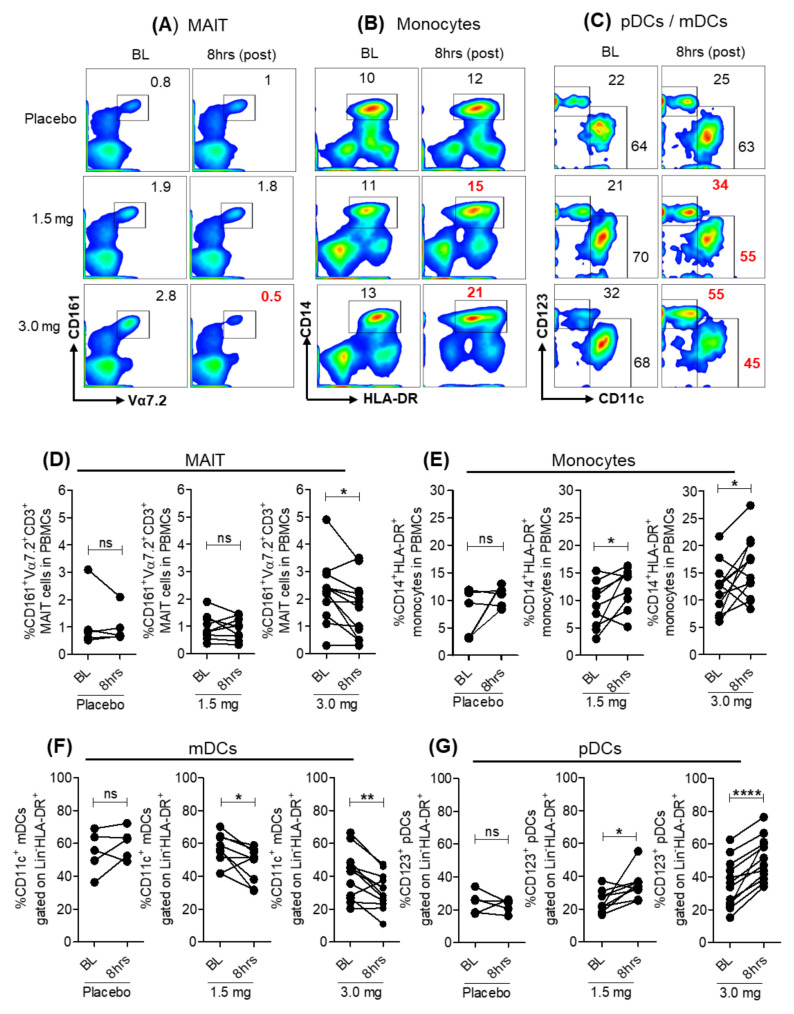
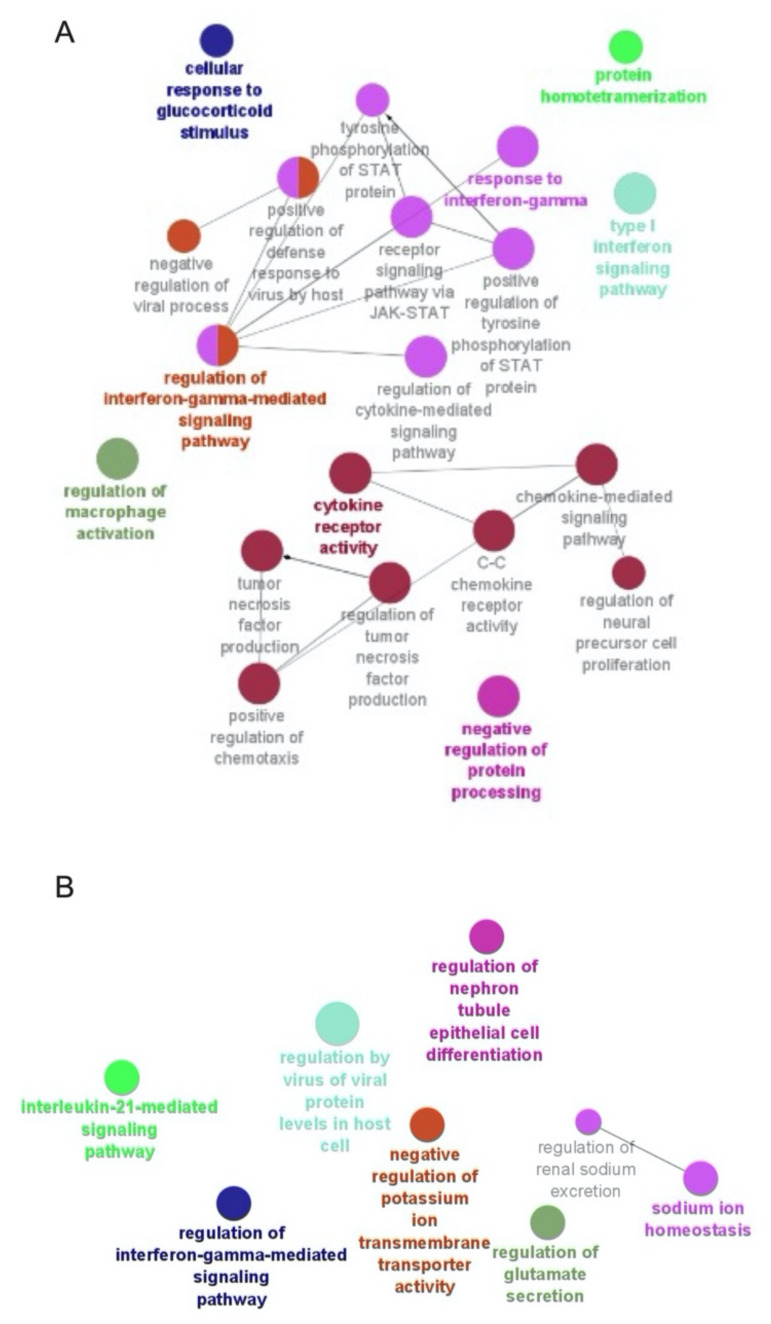
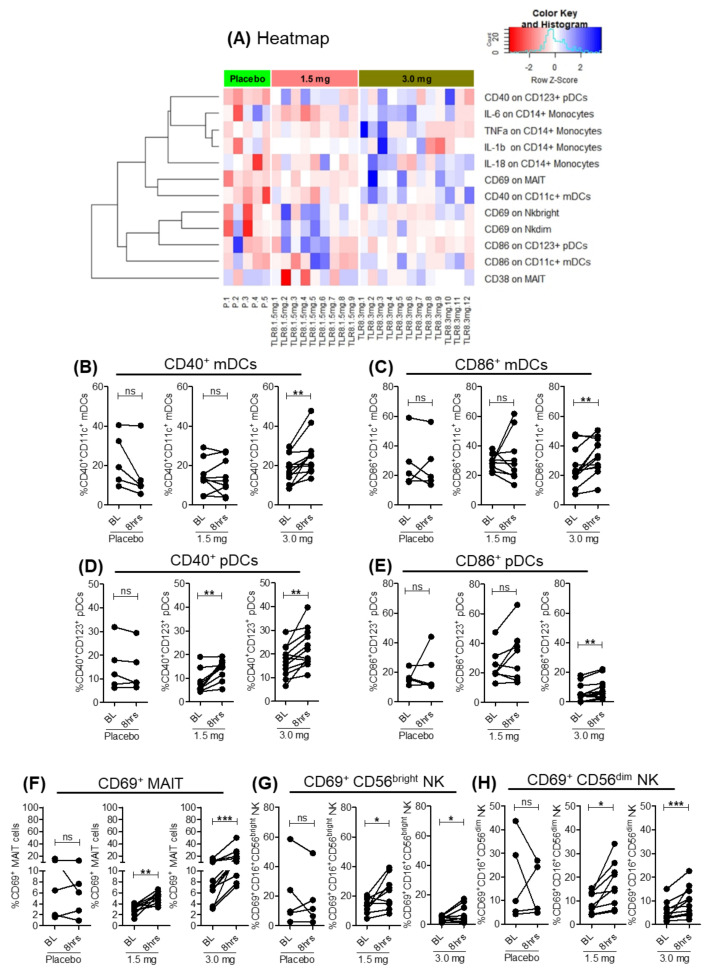
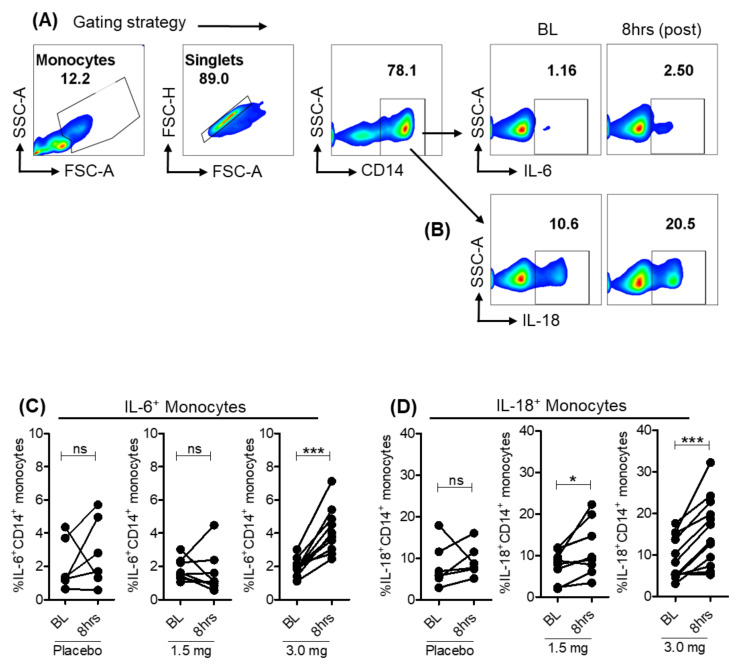
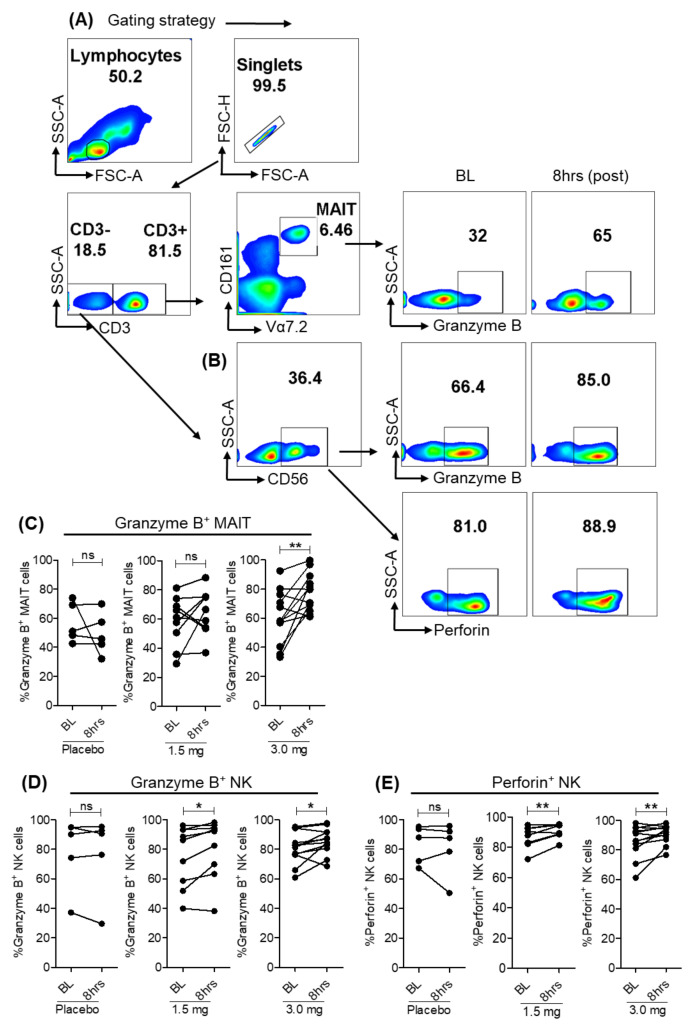
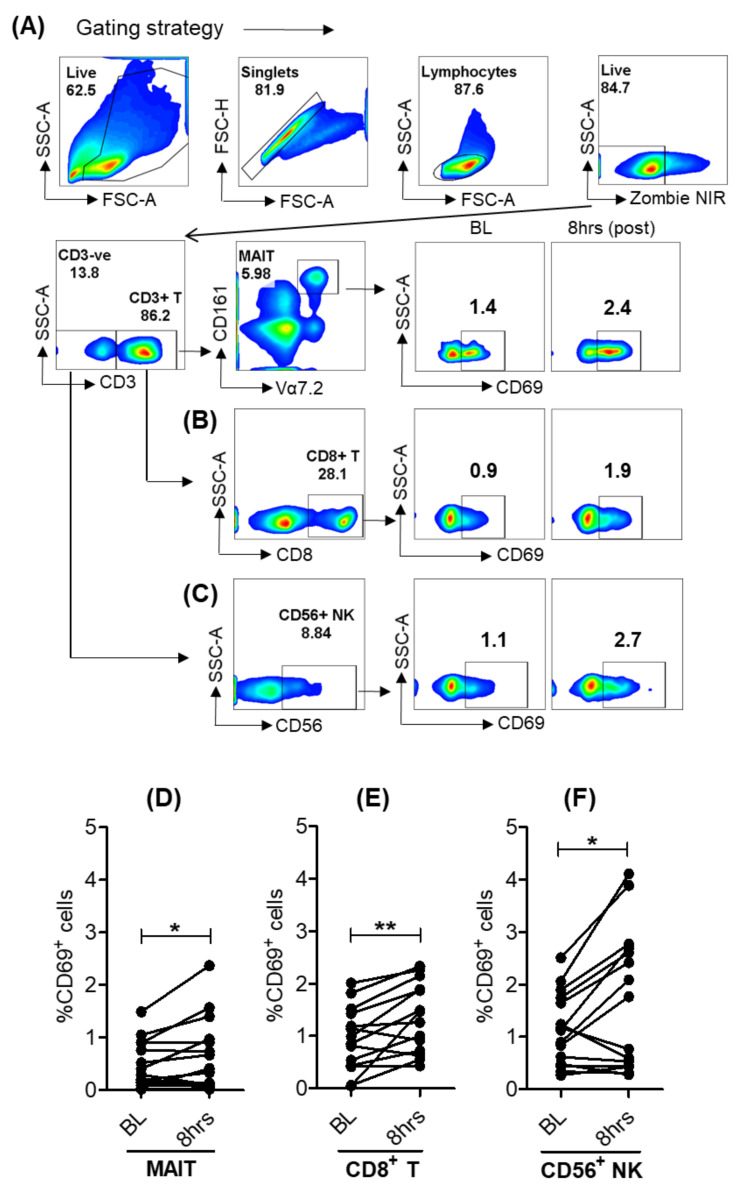
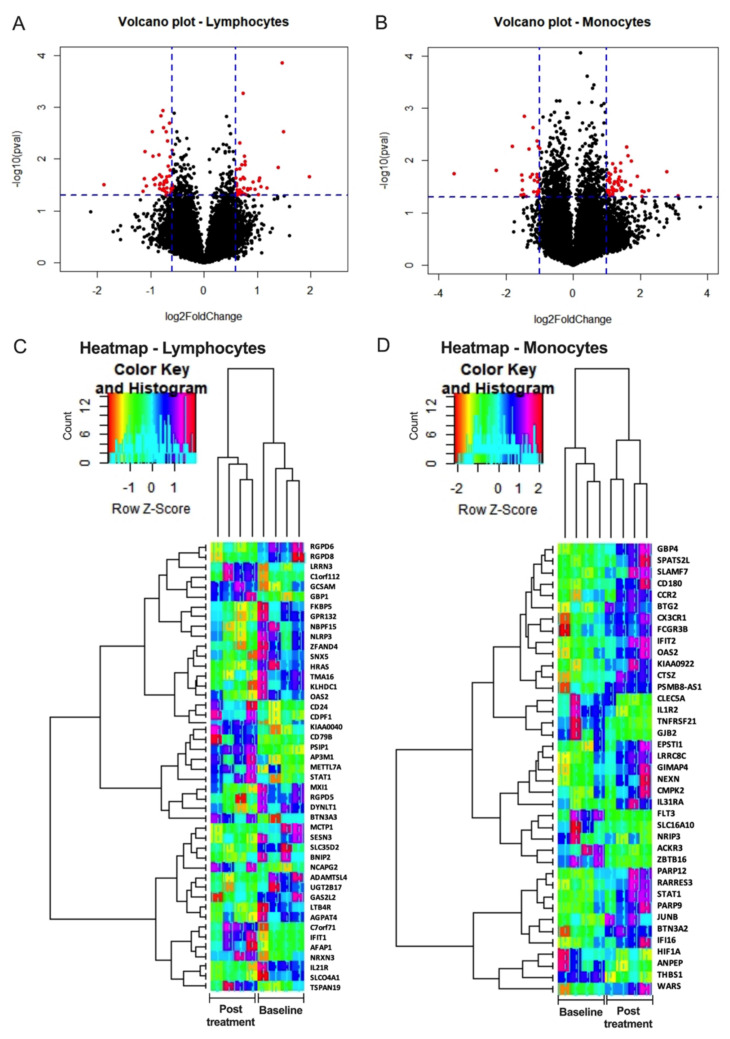
TLR8 agonists have the potential for use as immunomodulatory components in therapeutic modalities for viral infections such as chronic HBV (CHB) and HIV. In this study, using peripheral blood samples from a phase 1a clinical trial, we examined the acute effects of a single oral administration of a selective TLR8 agonist on immune cell phenotypes. Administration of the TLR8 agonist selgantolimod (SLGN) in healthy individuals resulted in alteration in frequencies of peripheral blood monocytes, pDCs, mDCs and MAIT cells. Frequencies of mDCs and lymphoid cells significantly reduced after 8 h of SLGN administration, whereas pDC frequencies significantly increased, with changes possibly reflecting migration of different cell types between peripheral and tissue compartments in response to the agonist. Myeloid cell activation was evident by an upregulated expression of co-stimulatory molecules CD40 and CD86 accompanied by the production of IL-6 and IL-18 from these cells. Concomitantly, there was induction of the early activation marker CD69 on innate and adaptive lymphoid cells, including MAIT and NK cell subsets. Further, these activated lymphoid cells had enhanced expression of the effector molecules granzyme B and perforin. Microarray analysis of isolated lymphocytes and monocytes from baseline and post-SLGN treatment revealed changes in expression of genes involved in cellular response to cytokine stimulus, innate immune response, myeloid cell differentiation and antigen receptor-mediated signaling pathway. In a preliminary analysis of samples from CHB patients treated with selgantolimod, activation of innate and adaptive lymphocytes was evident. In conclusion, this first in-human study shows that selgantolimod administration in humans results in activation of multiple immune cell responses with antiviral potential.
TLR8 激动剂具有作为治疗病毒感染(如慢性乙型肝炎(CHB)和 HIV)的免疫调节成分的潜力。在这项研究中,我们使用了 1a 期临床试验的外周血样本,研究了单次口服选择性 TLR8 激动剂对免疫细胞表型的急性影响。在健康个体中给予 TLR8 激动剂 selgantolimod(SLGN)会改变外周血单核细胞、pDC、mDC 和 MAIT 细胞的频率。在 SLGN 给药 8 小时后,mDC 和淋巴细胞的频率显著降低,而 pDC 的频率显著增加,这些变化可能反映了不同细胞类型在外周和组织隔室之间因激动剂而迁移。髓样细胞的激活表现为共刺激分子 CD40 和 CD86 的上调表达,并伴有这些细胞产生 IL-6 和 IL-18。同时,固有和适应性淋巴细胞(包括 MAIT 和 NK 细胞亚群)上诱导了早期激活标记物 CD69。此外,这些激活的淋巴细胞表达效应分子颗粒酶 B 和穿孔素的能力增强。从基线和 SLGN 治疗后分离的淋巴细胞和单核细胞的微阵列分析显示,参与细胞对细胞因子刺激反应、先天免疫反应、髓样细胞分化和抗原受体介导的信号通路的基因表达发生变化。在对接受 selgantolimod 治疗的 CHB 患者样本的初步分析中,观察到固有和适应性淋巴细胞的激活。总之,这项首次人体研究表明,在人体中给予 selgantolimod 会导致多种具有抗病毒潜力的免疫细胞反应的激活。