Gilead Sciences, Inc., Foster City, CA.
Georgetown University Medical Center, Washington, DC.
Hepatology. 2021 Jan;73(1):53-67. doi: 10.1002/hep.31255. Epub 2020 Nov 27.
GS-9688 (selgantolimod) is an oral selective small molecule agonist of toll-like receptor 8 in clinical development for the treatment of chronic hepatitis B. In this study, we evaluated the antiviral efficacy of GS-9688 in woodchucks chronically infected with woodchuck hepatitis virus (WHV), a hepadnavirus closely related to hepatitis B virus.
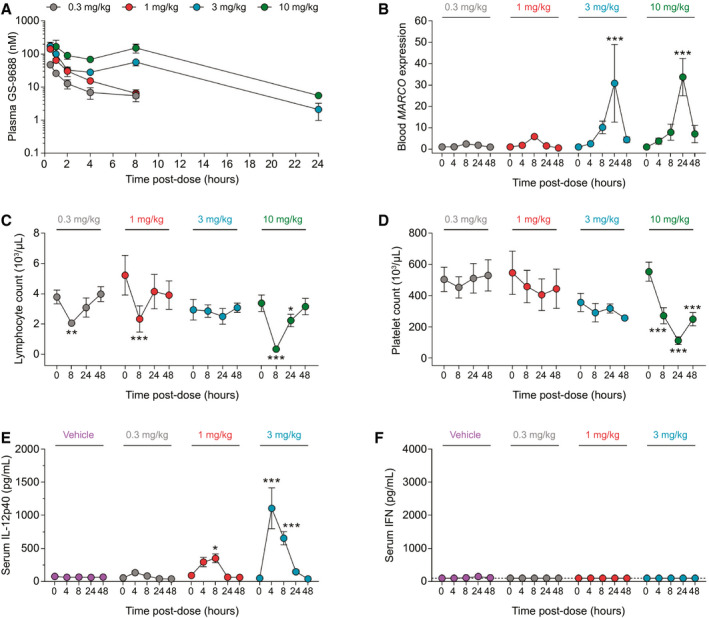
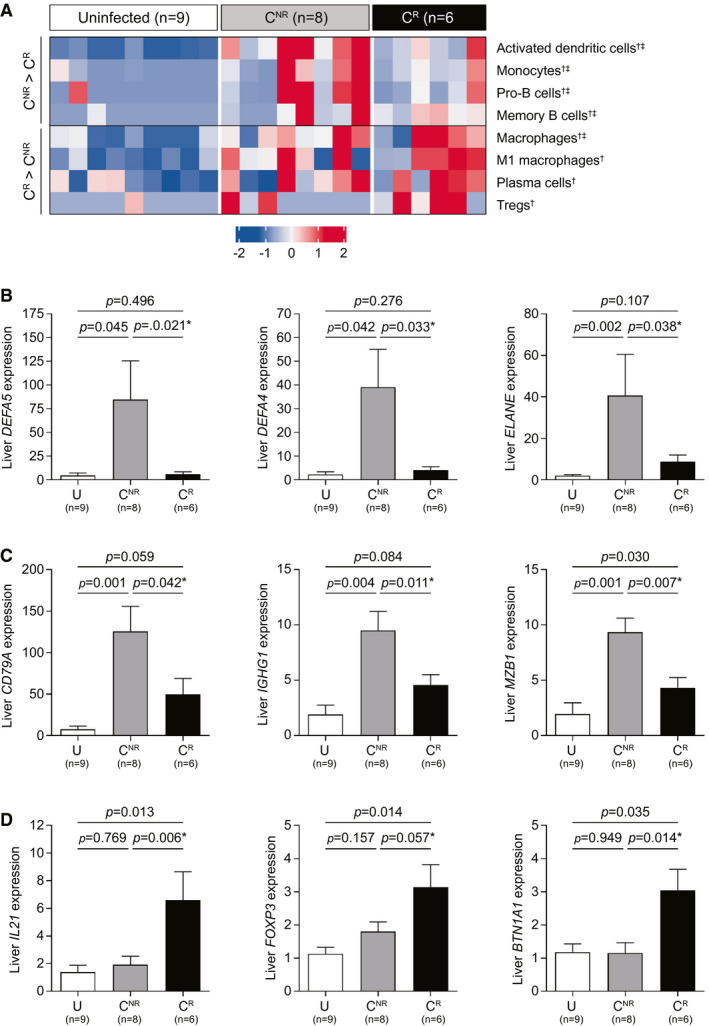
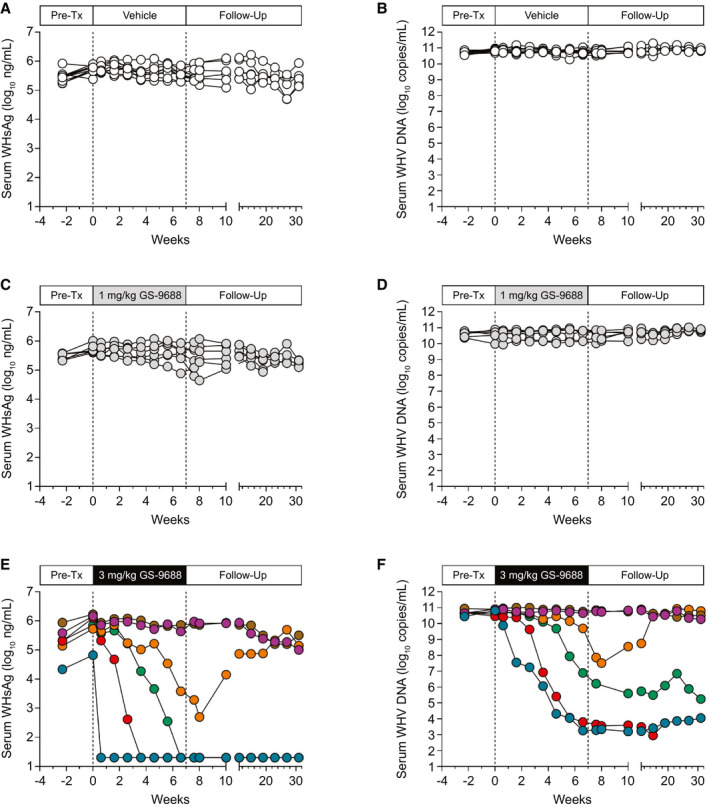
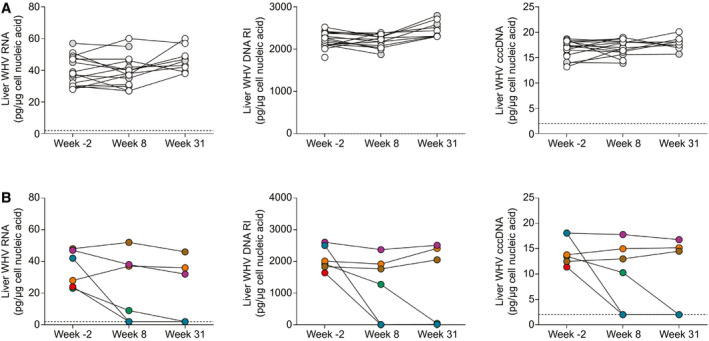
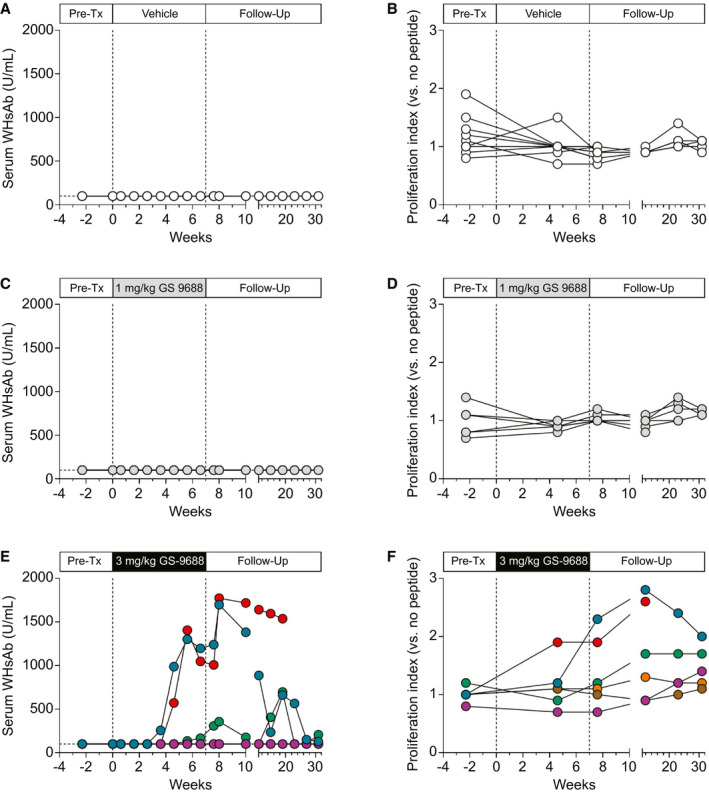
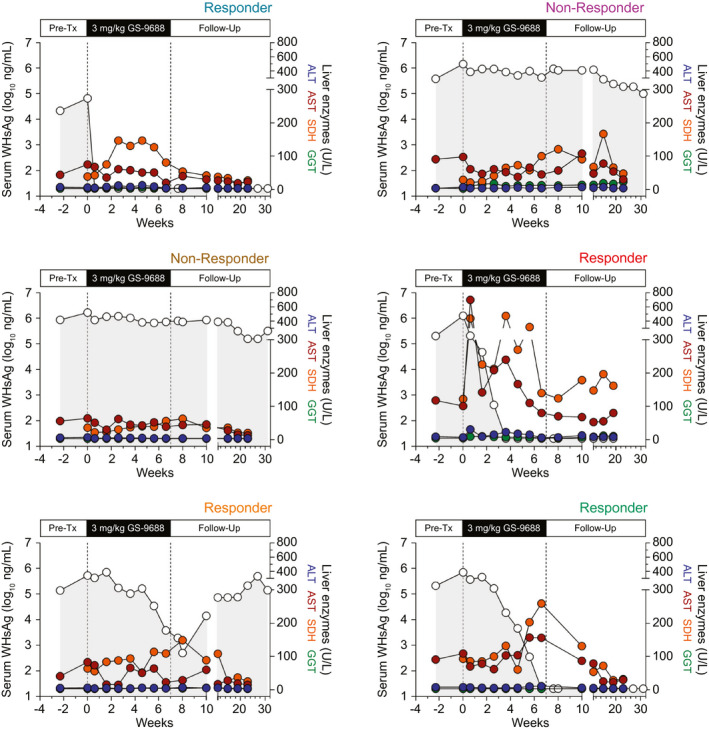
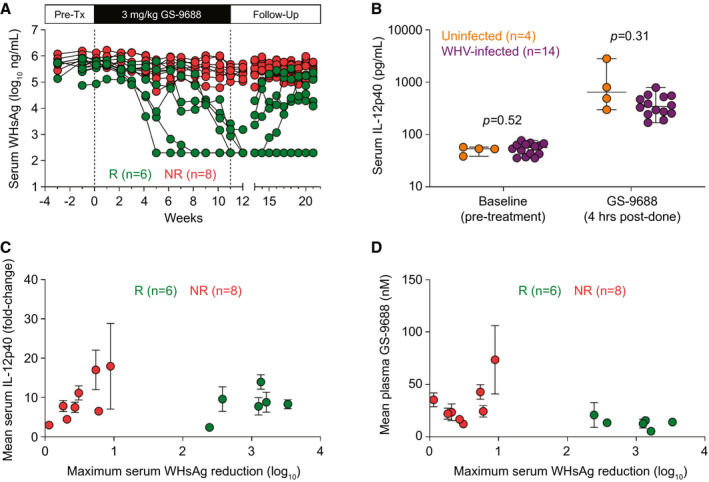
WHV-infected woodchucks received eight weekly oral doses of vehicle, 1 mg/kg GS-9688, or 3 mg/kg GS-9688. Vehicle and 1 mg/kg GS-9688 had no antiviral effect, whereas 3 mg/kg GS-9688 induced a >5 log reduction in serum viral load and reduced WHV surface antigen (WHsAg) levels to below the limit of detection in half of the treated woodchucks. In these animals, the antiviral response was maintained until the end of the study (>5 months after the end of treatment). GS-9688 treatment reduced intrahepatic WHV RNA and DNA levels by >95% in animals in which the antiviral response was sustained after treatment cessation, and these woodchucks also developed detectable anti-WHsAg antibodies. The antiviral efficacy of weekly oral dosing with 3 mg/kg GS-9688 was confirmed in a second woodchuck study. The antiviral response to GS-9688 did not correlate with systemic GS-9688 or cytokine levels but was associated with transient elevation of liver injury biomarkers and enhanced proliferative response of peripheral blood mononuclear cells to WHV peptides. Transcriptomic analysis of liver biopsies taken prior to treatment suggested that T follicular helper cells and various other immune cell subsets may play a role in the antiviral response to GS-9688.
Finite, short-duration treatment with a clinically relevant dose of GS-9688 is well tolerated and can induce a sustained antiviral response in WHV-infected woodchucks; the identification of a baseline intrahepatic transcriptional signature associated with response to GS-9688 treatment provides insights into the immune mechanisms that mediate this antiviral effect.
GS-9688(selgantolimod)是一种临床开发用于治疗慢性乙型肝炎的 Toll 样受体 8 的口服选择性小分子激动剂。在这项研究中,我们评估了 GS-9688 在慢性感染土拨鼠肝炎病毒(WHV)的土拨鼠中的抗病毒疗效,WHV 是一种与乙型肝炎病毒密切相关的嗜肝病毒。
WHV 感染的土拨鼠接受了 8 周的每周口服一次安慰剂、1mg/kg GS-9688 或 3mg/kg GS-9688。安慰剂和 1mg/kg GS-9688 没有抗病毒作用,而 3mg/kg GS-9688 可使血清病毒载量降低>5 个对数,使 WHV 表面抗原(WHsAg)水平降低至检测限以下,在一半接受治疗的土拨鼠中。在这些动物中,抗病毒反应一直持续到研究结束(治疗结束后>5 个月)。在治疗停止后持续抗病毒反应的动物中,GS-9688 治疗可使肝内 WHV RNA 和 DNA 水平降低>95%,这些土拨鼠也产生了可检测的抗 WHsAg 抗体。每周口服 3mg/kg GS-9688 的抗病毒疗效在第二项土拨鼠研究中得到了证实。GS-9688 的抗病毒反应与全身 GS-9688 或细胞因子水平无关,但与肝损伤生物标志物的短暂升高和外周血单个核细胞对 WHV 肽的增殖反应增强有关。治疗前肝活检的转录组分析表明,滤泡辅助 T 细胞和各种其他免疫细胞亚群可能在 GS-9688 的抗病毒反应中发挥作用。
临床相关剂量的 GS-9688 进行有限的短期治疗可耐受良好,并可在 WHV 感染的土拨鼠中诱导持续的抗病毒反应;与对 GS-9688 治疗反应相关的基线肝内转录特征的鉴定提供了对介导这种抗病毒作用的免疫机制的深入了解。