Department of Gastroenterology and Hepatology, Aalborg University Hospital, Aalborg, Denmark.
Center for Neuroplasticity and Pain, SMI, Department of Health Science and Technology, Faculty of Medicine, Aalborg University, Aalborg, Denmark.
Trials. 2021 Dec 27;22(1):958. doi: 10.1186/s13063-021-05941-y.
The global burden of osteoarthritis (OA) is steadily increasing due to demographic and lifestyle changes. The nervous system can undergo peripheral and central neuroplastic changes (sensitization) in patients with OA impacting the options to manage the pain adequately. As a result of sensitization, patients with OA show lower pressure pain thresholds (PPTs), facilitated temporal summation of pain (TSP), and impaired conditioned pain modulation (CPM). As traditional analgesics (acetaminophen and non-steroidal anti-inflammatory drugs) are not recommended for long-term use in OA, more fundamental knowledge related to other possible management regimes are needed. Duloxetine is a serotonin-noradrenalin reuptake inhibitor, and analgesic effects are documented in patients with OA although the underlying fundamental mechanisms remain unclear. The descending pain inhibitory control system is believed to be dependent on serotonin and noradrenalin. We hypothesized that the analgesic effect of duloxetine could act through these pathways and consequently indirectly reduce pain and sensitization. The aim of this mechanistic study is to investigate if PPTs, TSP, CPM, and clinical pain parameters are modulated by duloxetine.
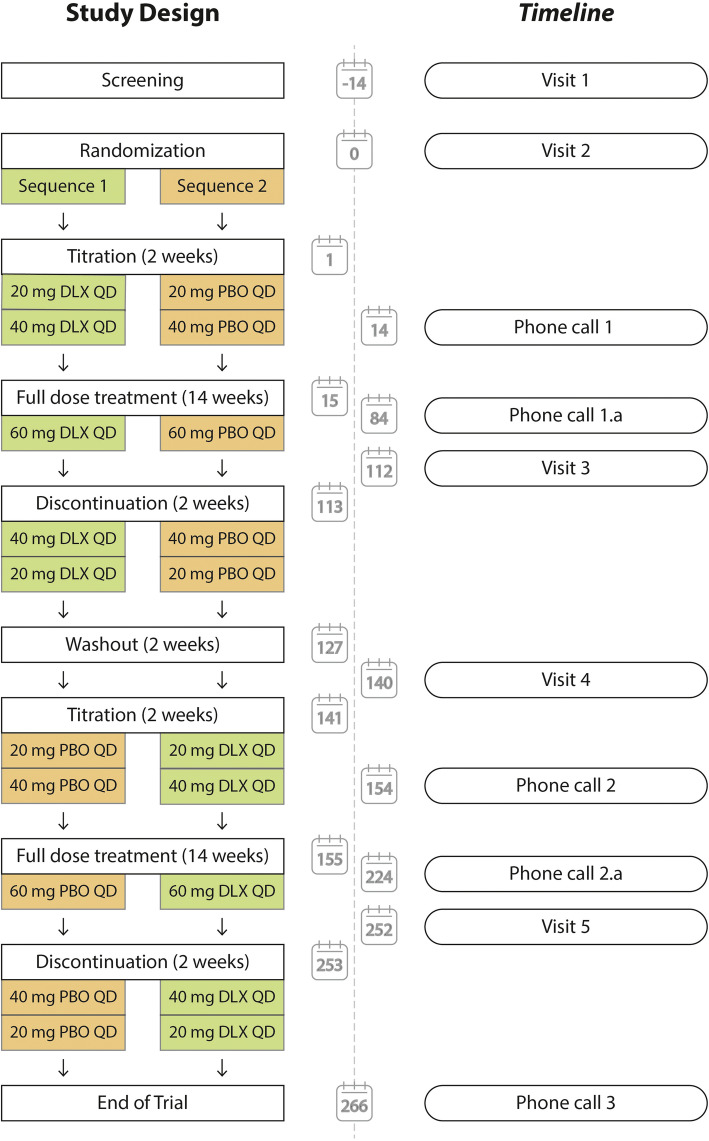
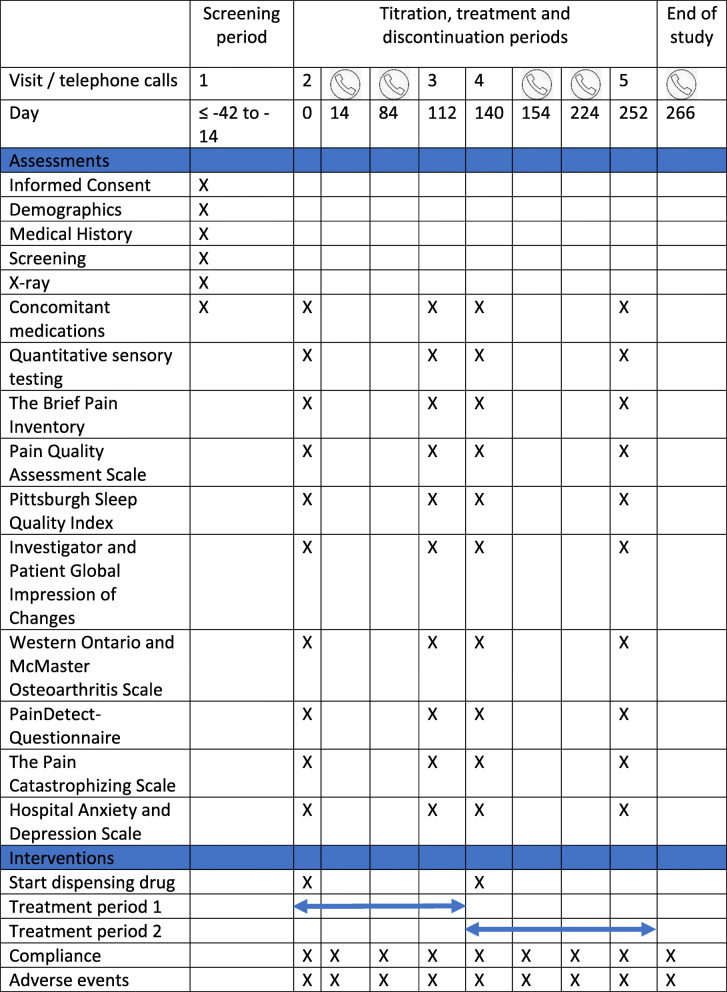
This proof of concept study is a randomized, placebo-controlled, double-blinded, crossover trial, which compares PPTs, TSP, and CPM before and after 18 weeks of duloxetine and placebo in forty patients with knee OA. The intervention periods include a titration period (2 weeks), treatment period (60 mg daily for 14 weeks), and a discontinuation period (2 weeks). Intervention periods are separated by 2 weeks.
Duloxetine is recommended for the treatment of chronic pain, but the underlying mechanisms of the analgesic effects are currently unknown. This study will investigate if duloxetine can modify central pain mechanisms and thereby provide insights into the underlying mechanisms of the analgesic effect.
ClinicalTrials.gov NCT04224584 . Registered on January 6, 2020. EudraCT 2019-003437-42 . Registered on October 22, 2019. The North Denmark Region Committee on Health Research Ethics N-20190055. Registered on October 31, 2019.
由于人口结构和生活方式的改变,全球骨关节炎(OA)的负担正在稳步增加。OA 患者的神经系统可能会发生外周和中枢神经重塑变化(敏化),从而影响充分管理疼痛的选择。由于敏化,OA 患者的压力疼痛阈值(PPT)较低,疼痛的时间总和(TSP)更容易发生,条件性疼痛调制(CPM)受损。由于传统镇痛药(对乙酰氨基酚和非甾体抗炎药)不建议 OA 患者长期使用,因此需要更多与其他可能管理方案相关的基本知识。度洛西汀是一种 5-羟色胺和去甲肾上腺素再摄取抑制剂,其在 OA 患者中的镇痛效果已有记载,尽管其潜在的基本机制尚不清楚。据信,下行疼痛抑制控制系统依赖于 5-羟色胺和去甲肾上腺素。我们假设度洛西汀的镇痛作用可能通过这些途径发挥作用,从而间接减轻疼痛和敏化。本机制研究旨在探讨度洛西汀是否能调节 PPT、TSP、CPM 和临床疼痛参数。
这是一项随机、安慰剂对照、双盲、交叉试验,比较了 40 名膝关节 OA 患者在接受度洛西汀和安慰剂治疗 18 周前后的 PPT、TSP 和 CPM。干预期包括滴定期(2 周)、治疗期(60mg 每日 14 周)和停药期(2 周)。干预期之间间隔 2 周。
度洛西汀推荐用于治疗慢性疼痛,但镇痛作用的潜在机制目前尚不清楚。本研究将探讨度洛西汀是否能改变中枢疼痛机制,从而深入了解镇痛作用的潜在机制。
ClinicalTrials.gov NCT04224584.于 2020 年 1 月 6 日注册。EudraCT 2019-003437-42.于 2019 年 10 月 22 日注册。北丹麦地区健康研究伦理委员会 N-20190055.于 2019 年 10 月 31 日注册。