Department of Ophthalmology, Technical University Munich, Munich, Germany.
Max von Pettenkofer Institute & Gene Center, Virology, National Reference Center for Retroviruses, LMU München, Munich, Germany.
Graefes Arch Clin Exp Ophthalmol. 2022 May;260(5):1789-1797. doi: 10.1007/s00417-021-05529-x. Epub 2021 Dec 28.
To detect SARS-CoV-2 RNA in post-mortem human eyes. Ocular symptoms are common in patients with COVID-19. In some cases, they can occur before the onset of respiratory and other symptoms. Accordingly, SARS-CoV-2 RNA has been detected in conjunctival samples and tear film of patients suffering from COVID-19. However, the detection and clinical relevance of intravitreal SARS-CoV-2 RNA still remain unclear due to so far contradictory reports in the literature.
In our study 20 patients with confirmed diagnosis of COVID-19 were evaluated post-mortem to assess the conjunctival and intraocular presence of SARS-CoV-2 RNA using sterile pulmonary and conjunctival swabs as well as intravitreal biopsies (IVB) via needle puncture. SARS-CoV-2 PCR and whole genome sequencing from the samples of the deceased patients were performed. Medical history and comorbidities of all subjects were recorded and analyzed for correlations with viral data.
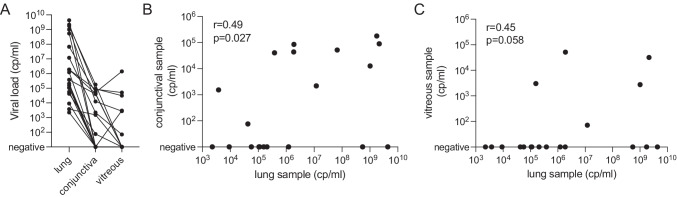
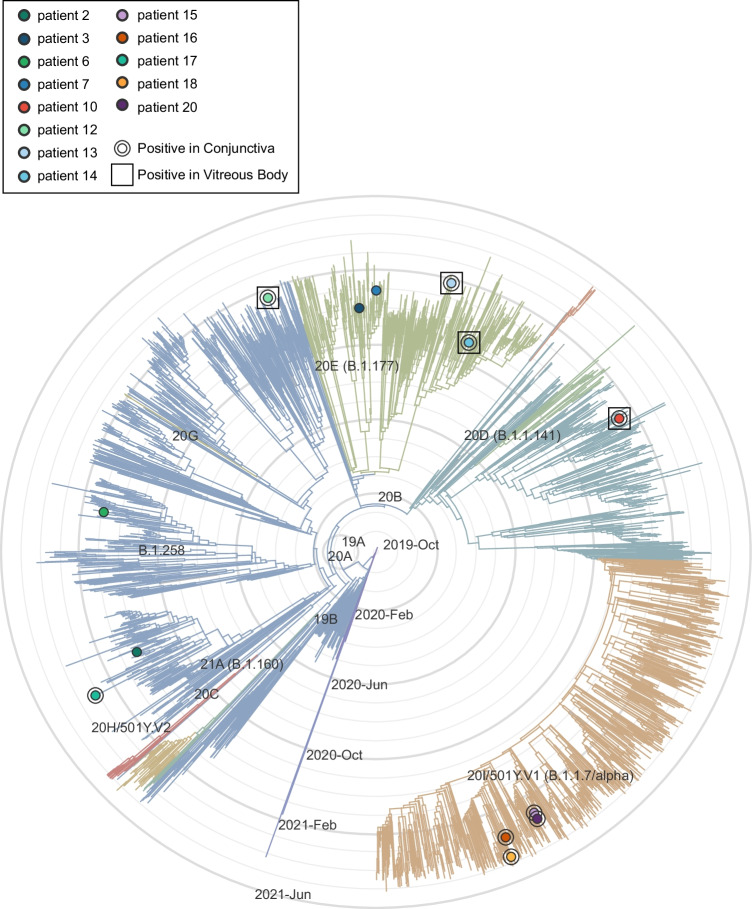
SARS-CoV-2 RNA was detected in 10 conjunctival (50%) and 6 vitreal (30%) samples. SARS-CoV-2 whole genome sequencing showed the distribution of cases largely reflecting the frequency of circulating lineages in the Munich area at the time of examination with no preponderance of specific variants. Especially there was no association between the presence of SARS-CoV-2 RNA in IVBs and infection with the variant of concern (VOC) alpha. Viral load in bronchial samples correlated positively with load in conjunctiva but not the vitreous.
SARS-CoV-2 RNA can be detected post mortem in conjunctival tissues and IVBs. This is relevant to the planning of ophthalmologic surgical procedures in COVID-19 patients, such as pars plana vitrectomy or corneal transplantation. Furthermore, not only during surgery but also in an outpatient setting it is important to emphasize the need for personal protection in order to avoid infection and spreading of SARS-CoV-2. Prospective studies are needed, especially to determine the clinical relevance of conjunctival and intravitreal SARS-CoV-2 detection concerning intraocular affection in active COVID-19 state and in post-COVID syndrome.
检测死后人类眼睛中的 SARS-CoV-2 RNA。COVID-19 患者常出现眼部症状,且在某些情况下,这些症状可能早于呼吸道及其他症状出现。因此,已有研究在患有 COVID-19 的患者的结膜样本和泪膜中检测到了 SARS-CoV-2 RNA。然而,由于文献中存在相互矛盾的报道,眼内液中 SARS-CoV-2 RNA 的检测和临床相关性仍不清楚。
本研究评估了 20 例经确诊患有 COVID-19 的患者的死后情况,使用无菌的肺和结膜拭子以及通过针穿刺获取的眼内液活检(IVB)来评估眼表和眼内是否存在 SARS-CoV-2 RNA。对死者样本进行了 SARS-CoV-2 PCR 和全基因组测序。记录并分析了所有受试者的病史和合并症,以评估其与病毒数据的相关性。
在 10 例结膜(50%)和 6 例玻璃体内(30%)样本中检测到了 SARS-CoV-2 RNA。SARS-CoV-2 全基因组测序结果显示,病例分布在很大程度上反映了检测时慕尼黑地区流行株的频率,没有特定变体的优势。特别是,在 IVB 中存在 SARS-CoV-2 RNA 与感染关切变异株(VOC)alpha 之间没有关联。支气管样本中的病毒载量与结膜中的病毒载量呈正相关,但与玻璃体内的病毒载量无关。
SARS-CoV-2 RNA 可在死后的结膜组织和 IVB 中检测到。这与 COVID-19 患者眼科手术计划相关,如玻璃体切除术或角膜移植术。此外,不仅在手术期间,而且在门诊环境中,强调个人防护以避免 SARS-CoV-2 的感染和传播也很重要。需要开展前瞻性研究,特别是要确定在 COVID-19 活动期和新冠后综合征中,眼内液中 SARS-CoV-2 的检测与眼内受累的临床相关性。