Department of Clinical and Experimental Medicine, Neonatology and Neonatal Intensive Care Unit, University of Pisa, Pisa, Italy.
Department of Experimental and Clinical Medicine, University of Florence, Florence, Italy.
Med Res Rev. 2022 May;42(3):1179-1201. doi: 10.1002/med.21874. Epub 2021 Dec 29.
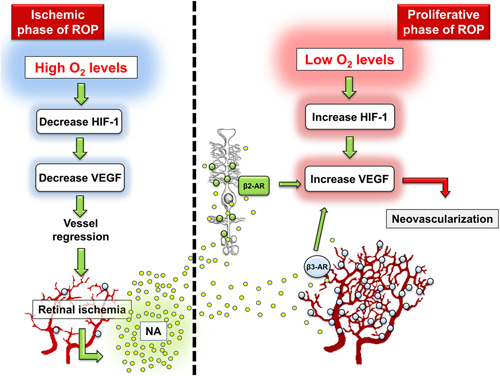
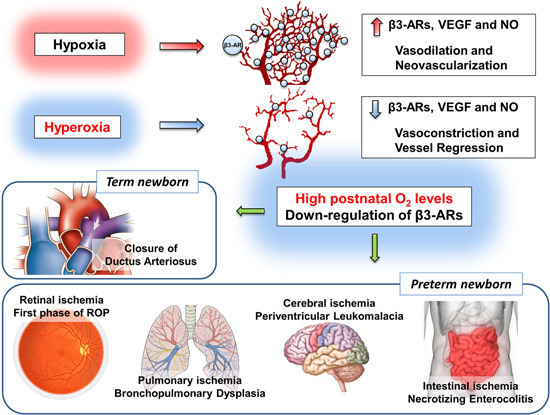
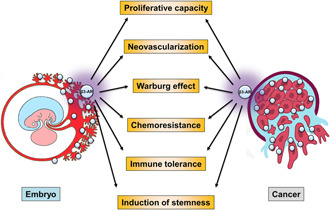
The role of the β-adrenoceptors (β-ARs) in hypoxia-driven diseases has gained visibility after the demonstration that propranolol promotes the regression of infantile hemangiomas and ameliorates the signs of retinopathy of prematurity (ROP). Besides the role of β2-ARs, preclinical studies in ROP have also revealed that β3-ARs are upregulated by hypoxia and that they are possibly involved in retinal angiogenesis. In a sort of figurative round trip, peculiarities typical of ROP, where hypoxia drives retinal neovascularization, have been then translated to cancer, a disease equally characterized by hypoxia-driven angiogenesis. In this step, investigating the role of β3-ARs has taken advantage of the assumption that cancer growth uses a set of strategies in common with embryo development. The possibility that hypoxic induction of β3-ARs may represent one of the mechanisms through which primarily embryo (and then cancer, as an astute imitator) adapts to grow in an otherwise hostile environment, has grown evidence. In both cancer and embryo, β3-ARs exert similar functions by exploiting a metabolic shift known as the Warburg effect, by acquiring resistance against xenobiotics, and by inducing a local immune tolerance. An additional potential role of β3-AR as a marker of stemness has been suggested by the finding that its antagonism induces cancer cell differentiation evoking that β3-ARs may help cancer to grow in a nonhospital environment, a strategy also exploited by embryos. From cancer, the round trip goes back to neonatal diseases for which new possible interpretative keys and potential pharmacological perspectives have been suggested.
β-肾上腺素受体(β-ARs)在缺氧驱动疾病中的作用在普萘洛尔促进婴儿血管瘤消退和改善早产儿视网膜病变(ROP)的迹象后得到了关注。除了β2-ARs 的作用外,ROP 的临床前研究还表明,β3-ARs 被缺氧上调,并且可能参与视网膜血管生成。在某种象征性的往返中,ROP 的特点,即缺氧驱动视网膜新生血管形成,然后被转化为癌症,这是一种同样以缺氧驱动血管生成为特征的疾病。在这一步中,研究β3-ARs 的作用利用了这样一种假设,即癌症的生长使用了与胚胎发育共同的一套策略。缺氧诱导β3-ARs 的可能性可能是胚胎(然后是癌症,作为一个敏锐的模仿者)适应在原本恶劣的环境中生长的机制之一,这一假设得到了越来越多的证据支持。在癌症和胚胎中,β3-ARs 通过利用一种称为瓦伯格效应的代谢转变、获得对异源生物的抗性以及诱导局部免疫耐受来发挥类似的功能。β3-AR 作为干性标志物的另一个潜在作用是通过发现其拮抗剂诱导癌细胞分化而提出的,这表明β3-ARs 可能有助于癌症在非医院环境中生长,这也是胚胎所利用的策略。从癌症到新生儿疾病,都提出了新的可能的解释性线索和潜在的药理学观点。