Florence Nightingale Faculty of Nursing, Midwifery and Palliative Care, King's College London, London, UK.
Great Ormond Street Hospital NHS Foundation Trust, London, UK.
Eur Child Adolesc Psychiatry. 2023 Jul;32(7):1241-1251. doi: 10.1007/s00787-021-01930-3. Epub 2021 Dec 30.
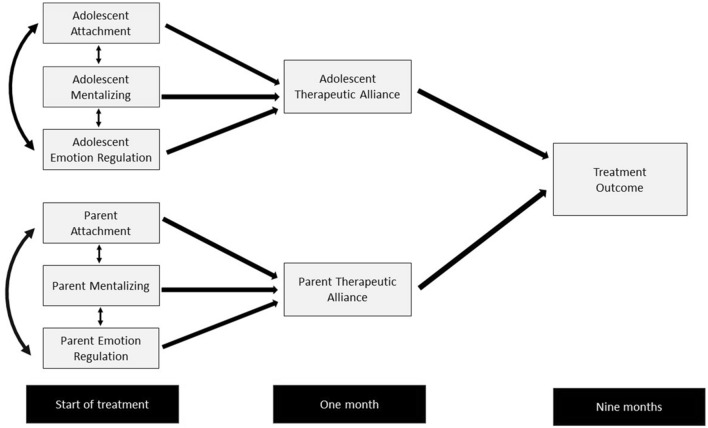
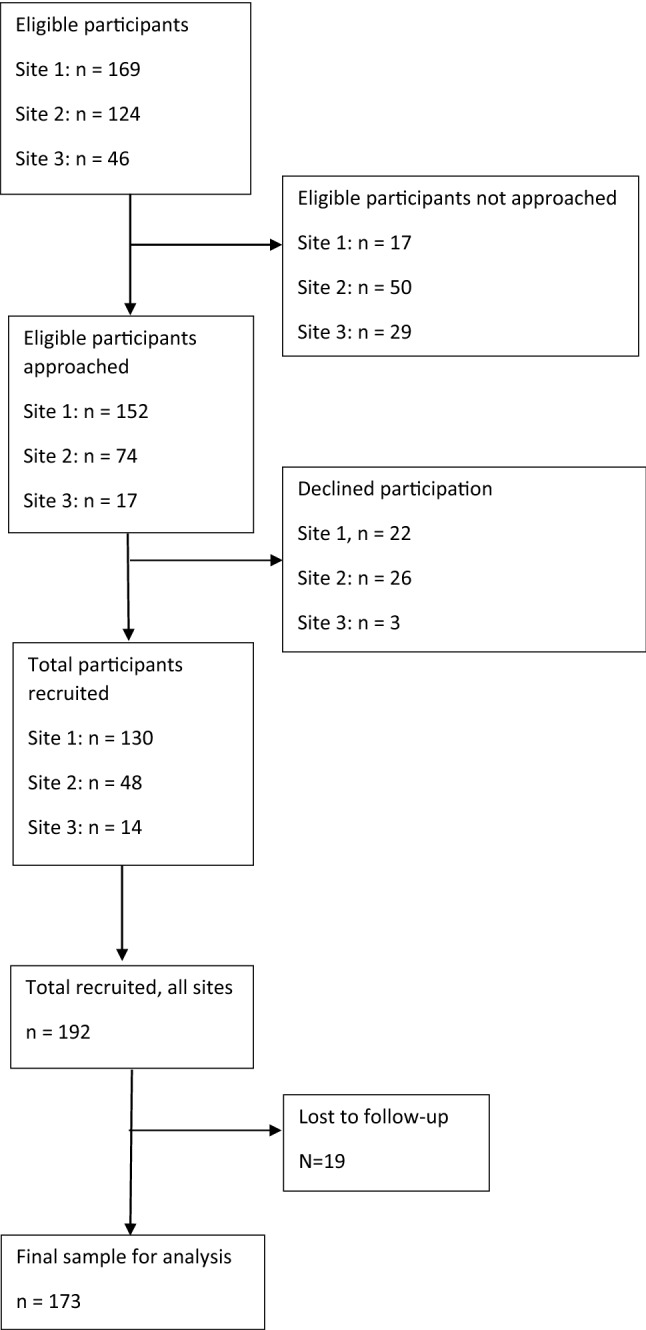
Anorexia nervosa-focussed family therapy (FT-AN) is the first-line treatment for adolescent anorexia nervosa (AN), but the predictors of poor treatment response are not well understood. The main aim of this study was to investigate the role of attachment and mentalization in predicting treatment outcome. The secondary aims of the study were to investigate therapeutic alliance at 1 month as a predictor of outcome, and to test the associations between alliance and baseline attachment and mentalization. 192 adolescents with AN and their parents were recruited as they began family therapy in out-patient specialist eating disorder services. Self-report measures of attachment, mentalization, and emotion regulation were completed at the start of treatment by adolescent patients and one of their parents. Self-reported alliance scores were collected at one month. Higher scores on the Certainty Scale of the Reflective Functioning Questionnaire, completed by parents, which indicate over-certainty about mental states, were the strongest predictor of poor outcome (Odds Ratio: 0.42, CI: 0.20-0.87). Similarly, for adolescents, higher Lack of Clarity scores on the Difficulties in Emotion Regulation Scale, representing being unclear about one's feelings, were predictive of positive treatment outcome (OR: 1.10, CI: 1.00-1.21). Higher alliance scores at 1 month predicted positive outcome, and were associated with attachment security and mentalization. These novel findings suggest that, particularly in parents, a tendency towards excessive certainty about mental states in others may predict poor outcome in FT-AN. Further research is warranted to replicate the finding and characterise families at risk of poor outcome.
神经性厌食症为焦点的家庭治疗(FT-AN)是青少年神经性厌食症(AN)的一线治疗方法,但对不良治疗反应的预测因素尚不清楚。本研究的主要目的是调查依恋和心理化在预测治疗结果中的作用。该研究的次要目的是调查治疗联盟在 1 个月时作为预后预测指标的作用,并测试联盟与基线依恋和心理化之间的关联。192 名患有 AN 的青少年及其父母在门诊专科饮食失调服务中开始家庭治疗时被招募。青少年患者及其父母之一在治疗开始时完成了依恋、心理化和情绪调节的自我报告测量。在一个月时收集自我报告的联盟评分。父母完成的反映功能问卷的确定性量表得分较高,表明对心理状态的过度确定,是不良结果的最强预测因素(优势比:0.42,CI:0.20-0.87)。同样,对于青少年来说,情绪调节困难量表上的不清晰评分较高,代表对自己的感受不明确,是积极治疗结果的预测因素(OR:1.10,CI:1.00-1.21)。1 个月时较高的联盟评分预测了积极的结果,并且与依恋安全性和心理化有关。这些新发现表明,特别是在父母中,对他人心理状态的过度确定性倾向可能预示着 FT-AN 的不良结果。需要进一步的研究来复制这一发现,并描述不良预后风险的家庭。