Department of Neonatology, Yichang Maternal and Child Health Care Hospital, Clinical Medical College of Women and Children, Three Gorges University, Yichang, China.
Department of Pediatrics, Yichang Maternal and Child Health Care Hospital, Clinical Medical College of Women and Children, Three Gorges University, Yichang, China.
Bioengineered. 2022 Jan;13(1):508-520. doi: 10.1080/21655979.2021.2009970.
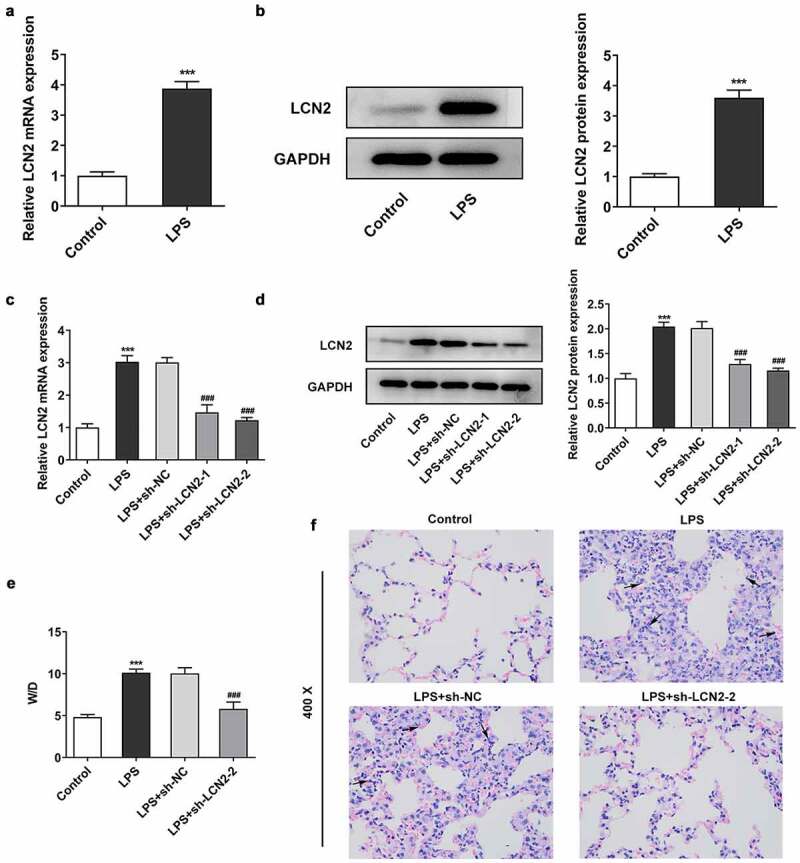
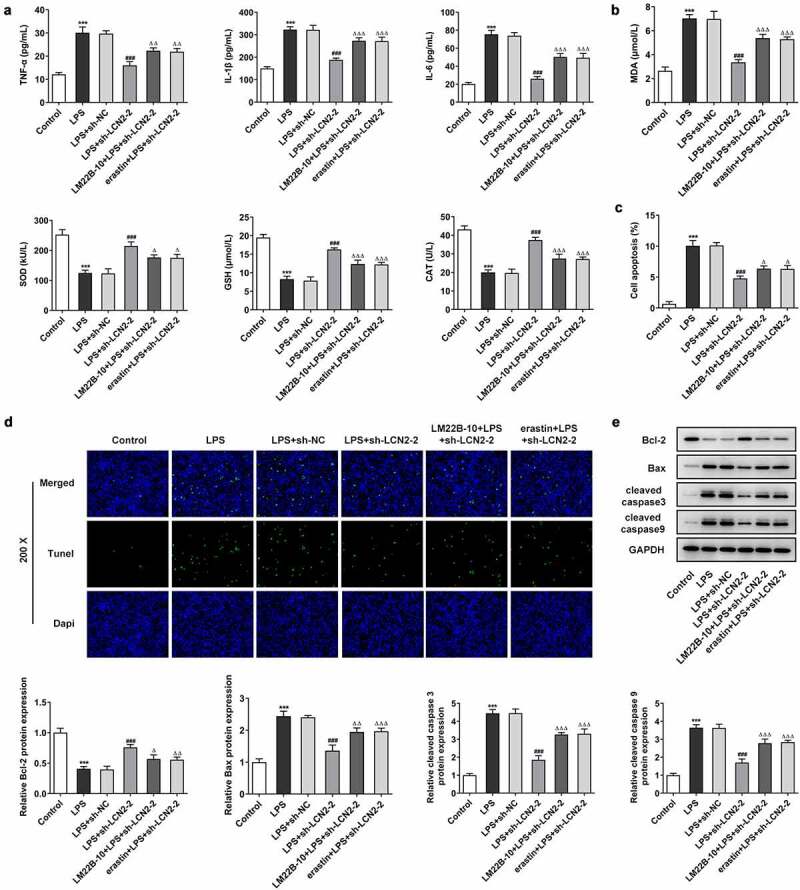
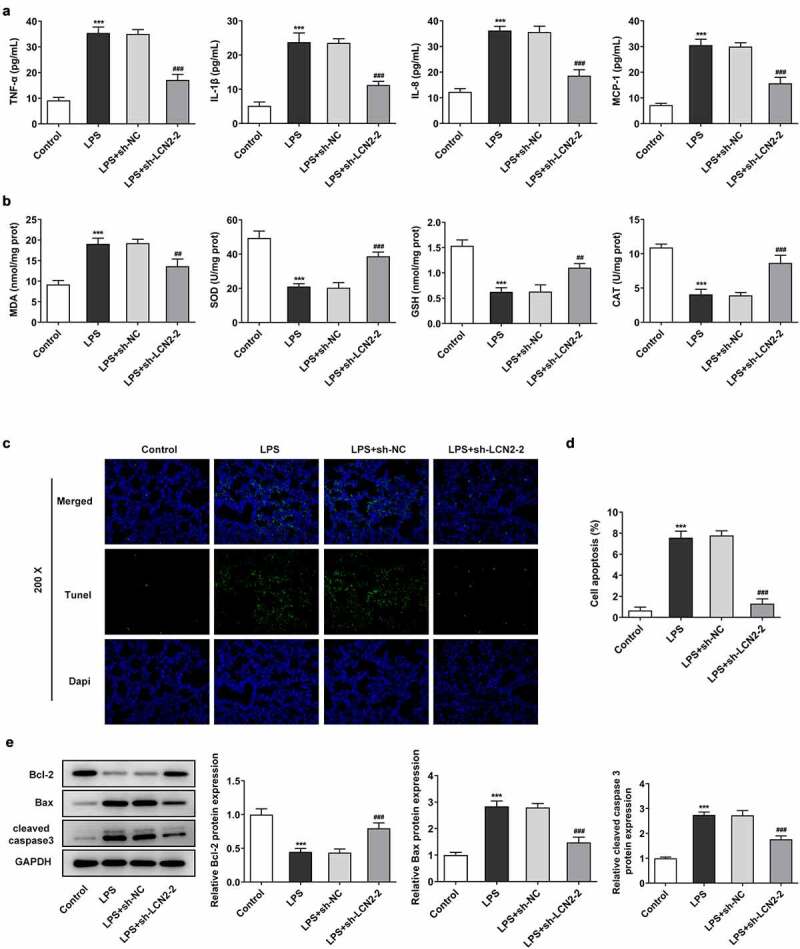
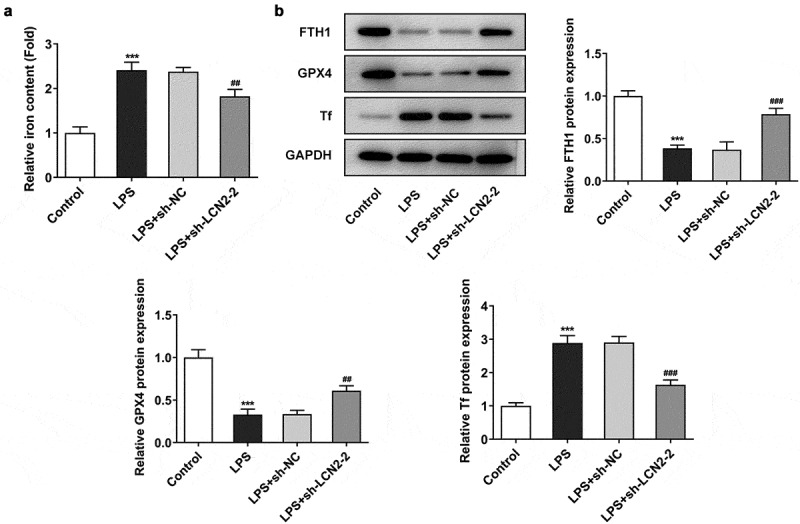
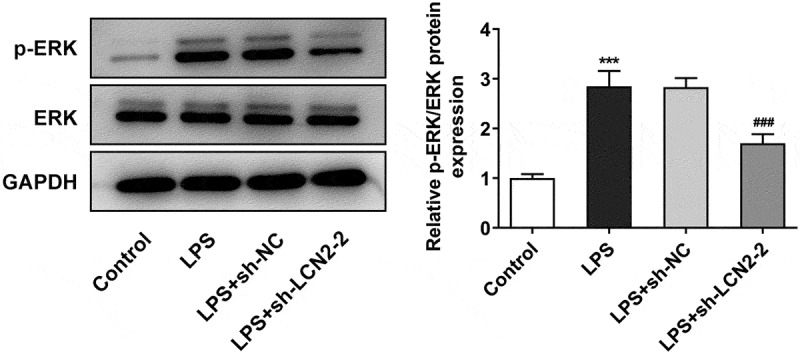
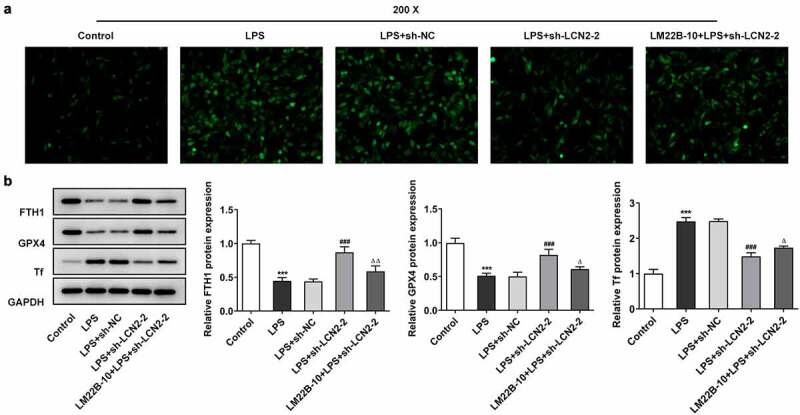
Neonatal acute respiratory distress syndrome (ARDS) has high morbidity and mortality rates worldwide, but there is a lack of pharmacologic treatment and clinical targeted therapies. In this study, we aimed to explore the effects of Lipocalin-2 (LCN2) on ferroptosis-mediated inflammation and oxidative stress in neonatal ARDS and the potential mechanism. In this study, we established an in vivo ARDS mouse model and an in vitro ARDS cell model by LPS (Lipopolysaccharide) stimulation. Lung tissue injury was evaluated by wet/dry ratios and histopathological examination. LCN2 expression was detected by qRT-PCR and Western blot. Inflammatory factors, oxidative stress and apoptosis were also detected. Ferroptosis was identified by detection of Fe level and ferroptosis-associated protein expressions. Mitogen-activated protein kinases (MAPK)/extracellular signal-regulated kinase (ERK) pathway signaling was examined by Western blot analysis. The data revealed that LCN2 expression was significantly upregulated in neonatal mice with ARDS. Interference with LCN2 protected LPS-induced lung in neonatal mouse by reducing the radio of wet/dry and alleviating pathological damages. In addition, LCN2 silencing repressed LPS-induced inflammation, oxidative stress in vivo and in vitro, as well as apoptosis. Meanwhile, decreased level of Fe and transferrin while increased levels of ferritin heavy chain 1 (FTH1) and glutathione peroxidase 4 (GPX4) were observed. The expression MAPK/ERK pathway was inhibited by depletion of LCN2. The present results suggest that LCN2 knockdown protected LPS-induced ARDS model via inhibition of ferroptosis-related inflammation and oxidative stress by inhibiting the MAPK/ERK pathway, thereby presenting a novel target for the treatment of ARDS.
新生儿急性呼吸窘迫综合征(ARDS)在全球范围内具有较高的发病率和死亡率,但目前缺乏药理学治疗和临床靶向治疗方法。本研究旨在探讨脂质运载蛋白 2(LCN2)对新生儿 ARDS 中铁死亡介导的炎症和氧化应激的影响及其潜在机制。本研究通过 LPS(脂多糖)刺激建立了体内 ARDS 小鼠模型和体外 ARDS 细胞模型。通过湿/干比和组织病理学检查评估肺组织损伤。通过 qRT-PCR 和 Western blot 检测 LCN2 的表达。还检测了炎症因子、氧化应激和细胞凋亡。通过检测 Fe 水平和铁死亡相关蛋白的表达来鉴定铁死亡。通过 Western blot 分析检测丝裂原活化蛋白激酶(MAPK)/细胞外信号调节激酶(ERK)通路信号。结果表明,ARDS 新生儿小鼠中 LCN2 的表达明显上调。干扰 LCN2 通过降低湿/干比和减轻病理损伤来保护 LPS 诱导的新生小鼠肺。此外,LCN2 沉默抑制 LPS 诱导的体内和体外炎症、氧化应激和细胞凋亡。同时,观察到 Fe 和转铁蛋白水平降低,而铁蛋白重链 1(FTH1)和谷胱甘肽过氧化物酶 4(GPX4)水平升高。LCN2 耗竭抑制了 MAPK/ERK 通路的表达。这些结果表明,LCN2 敲低通过抑制 MAPK/ERK 通路抑制铁死亡相关炎症和氧化应激,从而为 ARDS 的治疗提供了一个新的靶点。