Departments of Clinical Cancer Prevention, The University of Texas MD Anderson Cancer Center, Houston, TX, USA.
Departments of Surgical Oncology, The University of Texas MD Anderson Cancer Center, Houston, TX, USA.
Mol Metab. 2022 Feb;56:101426. doi: 10.1016/j.molmet.2021.101426. Epub 2021 Dec 28.
Intra-tumoral expression of the serine hydrolase carboxylesterase 2 (CES2) contributes to the activation of the pro-drug irinotecan in pancreatic ductal adenocarcinoma (PDAC). Given other potential roles of CES2, we assessed its regulation, downstream effects, and contribution to tumor development in PDAC.
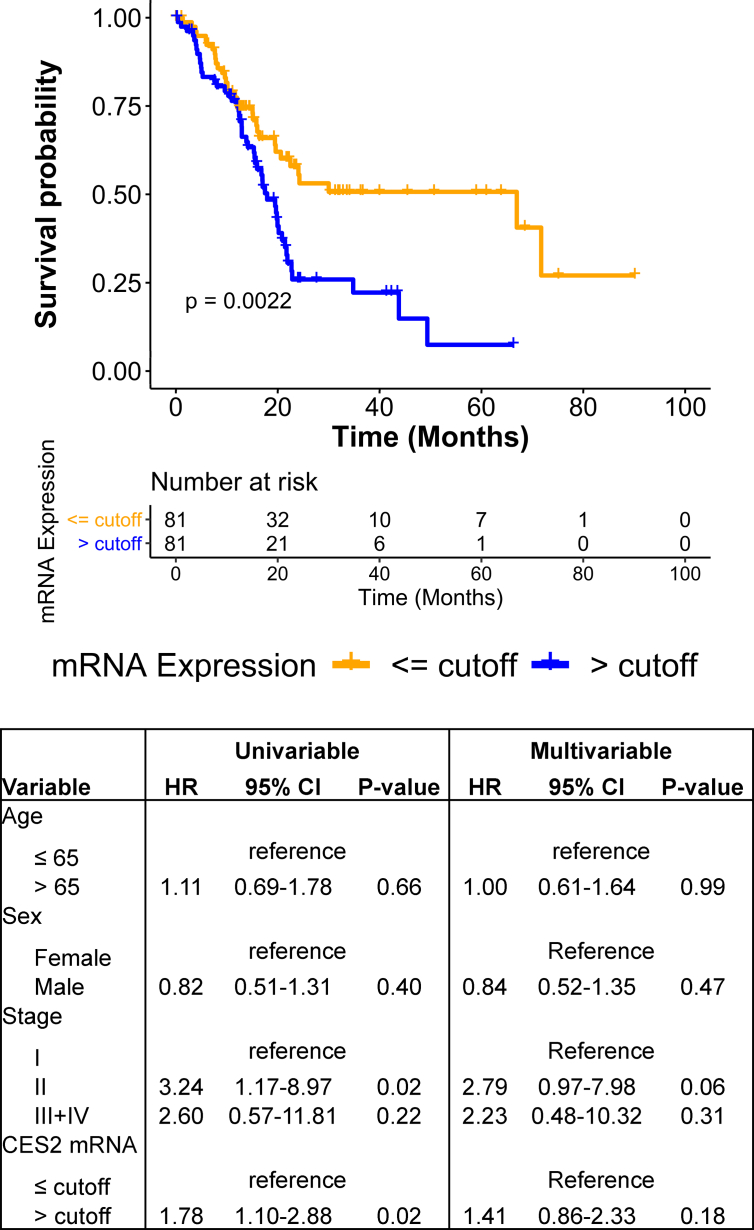
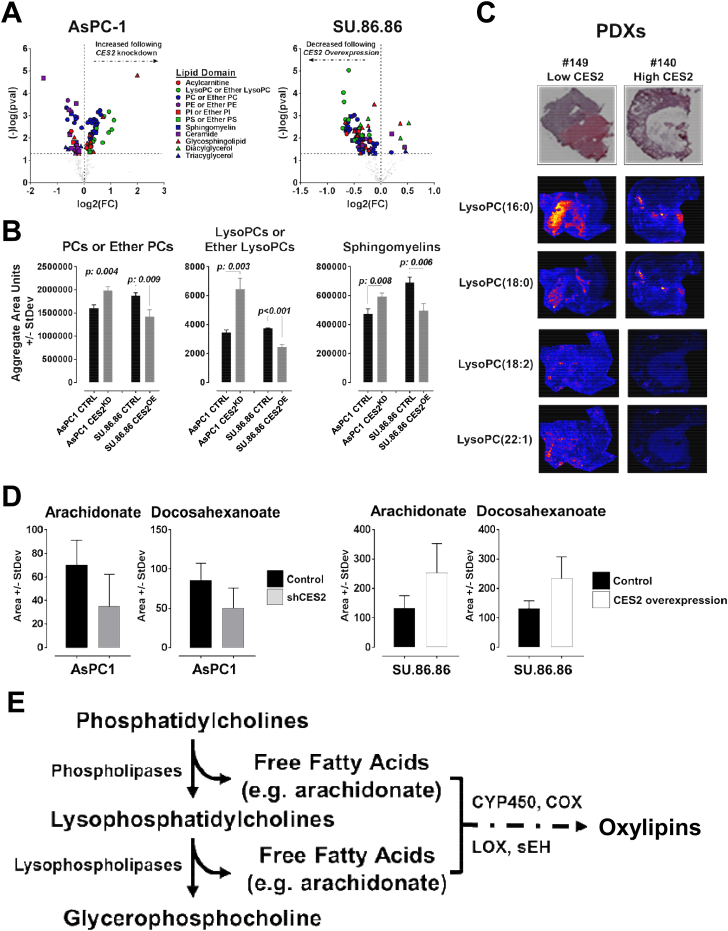
Association between the mRNA expression of CES2 in pancreatic tumors and overall survival was assessed using The Cancer Genome Atlas. Cell viability, clonogenic, and anchorage-independent growth assays as well as an orthotopic mouse model of PDAC were used to evaluate the biological relevance of CES2 in pancreatic cancer. CES2-driven metabolic changes were determined by untargeted and targeted metabolomic analyses.
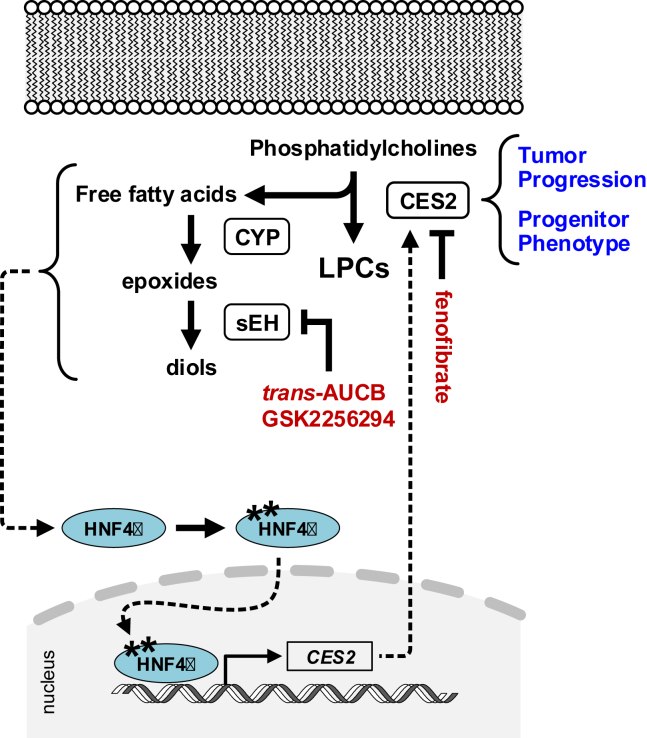
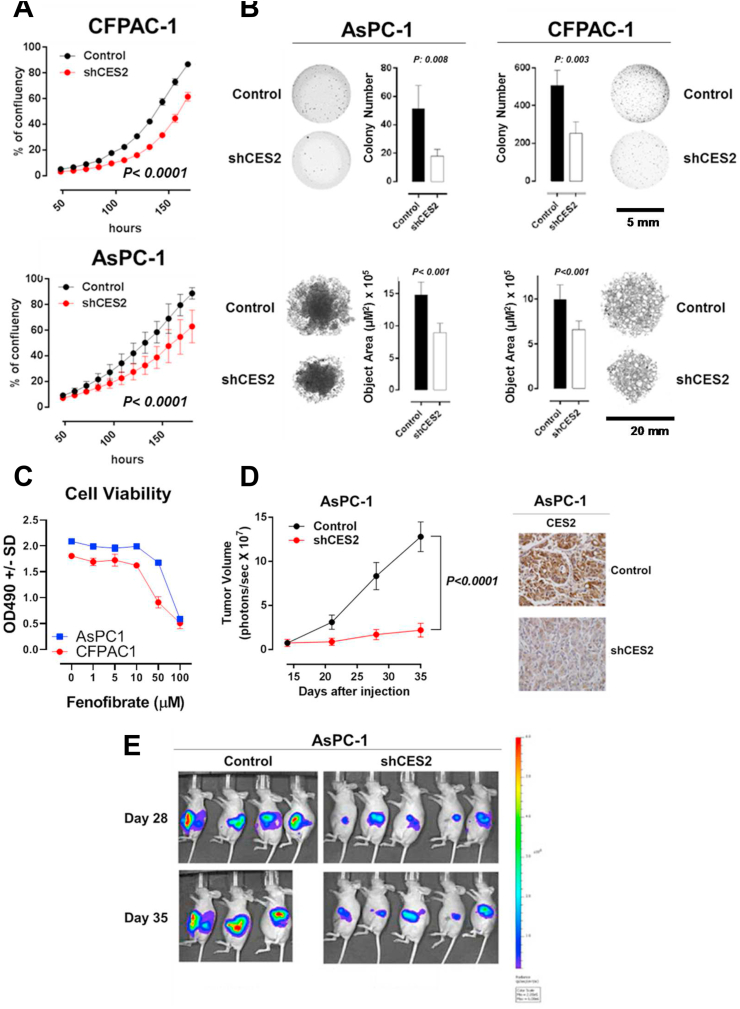
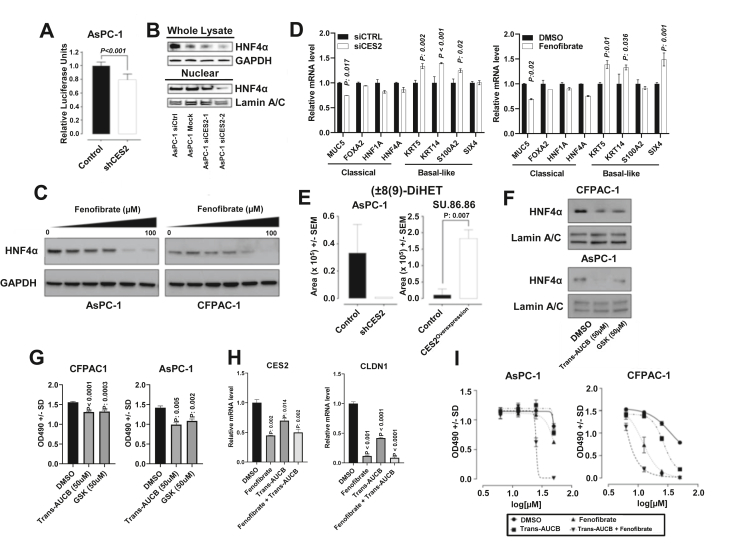
Elevated tumoral CES2 mRNA expression was a statistically significant predictor of poor overall survival in PDAC patients. Knockdown of CES2 in PDAC cells reduced cell viability, clonogenic capacity, and anchorage-independent growth in vitro and attenuated tumor growth in an orthotopic mouse model of PDAC. Mechanistically, CES2 was found to promote the catabolism of phospholipids resulting in HNF4α activation through a soluble epoxide hydrolase (sEH)-dependent pathway. Targeting of CES2 via siRNA or small molecule inhibitors attenuated HNF4α protein expression and reduced gene expression of classical/progenitor markers and increased basal-like markers. Targeting of the CES2-sEH-HNF4α axis using small molecule inhibitors of CES2 or sEH reduced cell viability.
We establish a novel regulatory loop between CES2 and HNF4α to sustain the progenitor subtype and promote PDAC progression and highlight the potential utility of CES2 or sEH inhibitors for the treatment of PDAC as part of non-irinotecan-containing regimens.
丝氨酸水解酶羧酸酯酶 2(CES2)在肿瘤内的表达有助于胰腺导管腺癌(PDAC)中前药伊立替康的激活。鉴于 CES2 可能具有其他作用,我们评估了其在 PDAC 中的调节、下游效应及其对肿瘤发展的贡献。
使用癌症基因组图谱评估胰腺肿瘤中 CES2 的 mRNA 表达与总生存期之间的关联。使用细胞活力、集落形成和非锚定依赖性生长测定以及 PDAC 的原位小鼠模型来评估 CES2 在胰腺癌中的生物学相关性。通过非靶向和靶向代谢组学分析来确定 CES2 驱动的代谢变化。
肿瘤 CES2 mRNA 表达升高是 PDAC 患者总体生存不良的统计学显著预测因子。PDAC 细胞中 CES2 的敲低降低了细胞活力、集落形成能力和非锚定依赖性生长能力,并减弱了 PDAC 的原位小鼠模型中的肿瘤生长。从机制上讲,CES2 被发现促进了磷脂的分解代谢,导致 HNF4α 通过可溶性环氧化物水解酶(sEH)依赖性途径激活。通过 siRNA 或小分子抑制剂靶向 CES2 可减弱 HNF4α 蛋白表达并降低经典/祖细胞标志物的基因表达,同时增加基础样标志物。CES2-sEH-HNF4α 轴的靶向治疗,使用 CES2 或 sEH 的小分子抑制剂,可降低细胞活力。
我们建立了 CES2 和 HNF4α 之间的新的调节环,以维持祖细胞亚型并促进 PDAC 的进展,并强调了 CES2 或 sEH 抑制剂作为非伊立替康包含方案的一部分用于治疗 PDAC 的潜在效用。