Department of Community Medicine, Faculty of Medicine and Allied Sciences, Rajarata University of Sri Lanka, Saliyapura, 50008, Sri Lanka.
Acta Diabetol. 2022 Apr;59(4):535-543. doi: 10.1007/s00592-021-01828-1. Epub 2022 Jan 1.
We aimed to determine the effect of early pregnancy hyperglycaemia on having a large for gestational age (LGA) neonate.
A prospective cohort study was conducted among pregnant women in their first trimester. One-step plasma glucose (PG) evaluation procedure was performed to assess gestational diabetes mellitus (GDM) and diabetes mellitus (DM) in pregnancy as defined by the World Health Organization (WHO) criteria with International Association of Diabetes in Pregnancy Study Group (IADPSG) thresholds. The main outcome studied was large for gestational age neonates (LGA).
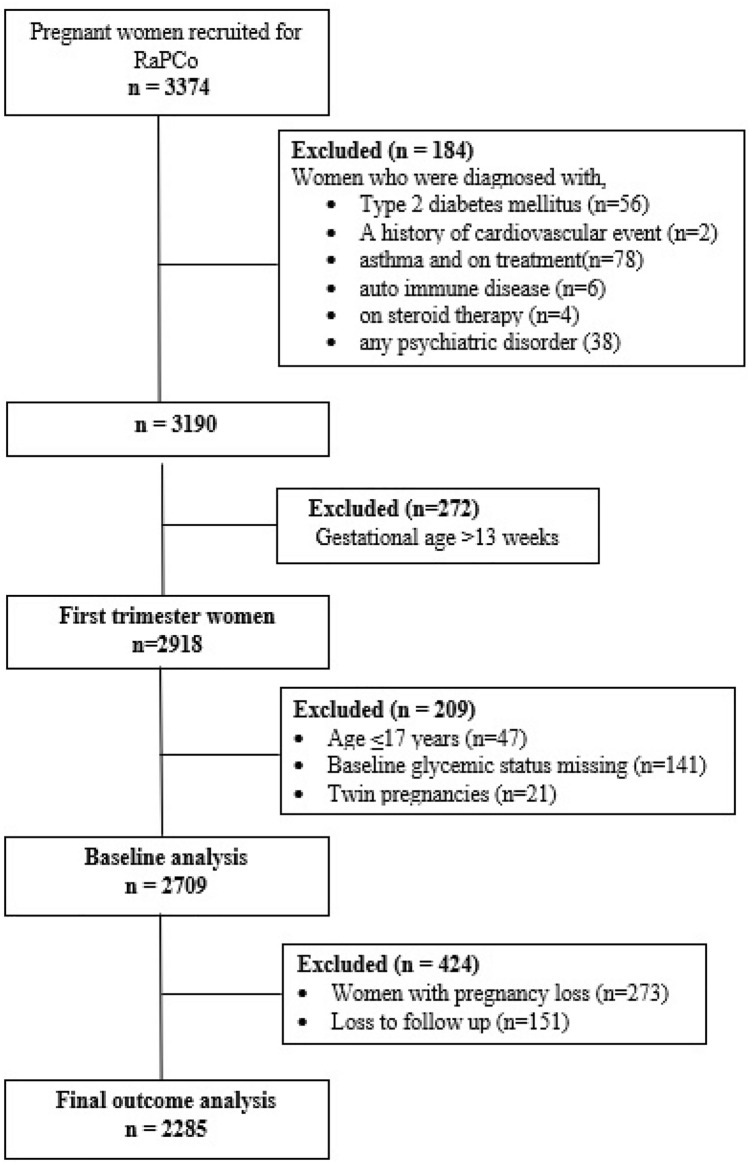
A total of 2,709 participants were recruited with a mean age of 28 years (SD = 5.4) and a median gestational age (GA) of eight weeks (interquartile range [IQR] = 2). The prevalence of GDM in first trimester (T1) was 15.0% (95% confidence interval [CI] = 13.7-16.4). Previously undiagnosed DM was detected among 2.5% of the participants. Out of 2,285 live births with a median delivery GA of 38 weeks (IQR = 3), 7.0% were LGA neonates. The cumulative incidence of LGA neonates in women with GDM and DM was 11.1 and 15.5 per 100 women, respectively. The relative risk of having an LGA neonate among women with DM and GDM was 2.30 (95% CI = 1.23-4.28) and 1.80 (95% CI = 1.27-2.53), respectively. The attributable risk percentage of a LGA neonate for hyperglycaemia was 15.01%. T1 fasting PG was significantly correlated with both neonatal birth weight and birth weight centile.
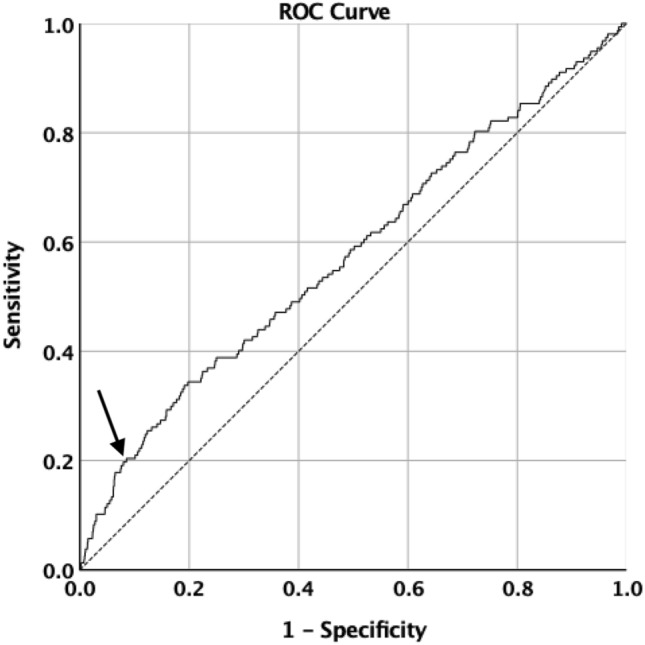
The proposed WHO criteria for hyperglycaemia in pregnancy are valid, even in T1, for predicting LGA neonates. The use of IADPSG threshold for Fasting PG, for risk assessment in early pregnancy in high-risk populations is recommended.
本研究旨在探讨早孕期高血糖对巨大儿(LGA)发生的影响。
这是一项前瞻性队列研究,研究对象为处于孕早期的孕妇。采用一步法血浆葡萄糖(PG)评估程序,按照世界卫生组织(WHO)标准和国际妊娠糖尿病研究组(IADPSG)阈值,诊断妊娠期糖尿病(GDM)和糖尿病(DM)。主要研究结局为巨大儿(LGA)新生儿。
共纳入 2709 名参与者,平均年龄 28 岁(标准差=5.4),中位孕龄(GA)为 8 周(四分位距[IQR]=2)。早孕期(T1)GDM 的患病率为 15.0%(95%置信区间[CI]=13.7-16.4)。在 2.5%的参与者中发现了先前未诊断的 DM。在 2285 例活产中,中位分娩 GA 为 38 周(IQR=3),7.0%的新生儿为 LGA。患有 GDM 和 DM 的女性中 LGA 新生儿的累积发生率分别为 11.1%和 15.5%/100 例。DM 和 GDM 女性中 LGA 新生儿的相对风险分别为 2.30(95%CI=1.23-4.28)和 1.80(95%CI=1.27-2.53)。LGA 新生儿归因于高血糖的风险百分比为 15.01%。T1 空腹 PG 与新生儿出生体重和体重百分位均显著相关。
即使在 T1 时,妊娠期高血糖的 WHO 标准也是有效的,可预测 LGA 新生儿。建议在高危人群中,使用 IADPSG 的空腹 PG 阈值进行早孕期的风险评估。