Department of Neural and Behavioral Sciences, Pennsylvania State University College of Medicine, Hershey, PA, USA.
Department of Neural and Behavioral Sciences, Pennsylvania State University College of Medicine, Hershey, PA, USA.
Peptides. 2022 Apr;150:170733. doi: 10.1016/j.peptides.2021.170733. Epub 2021 Dec 29.
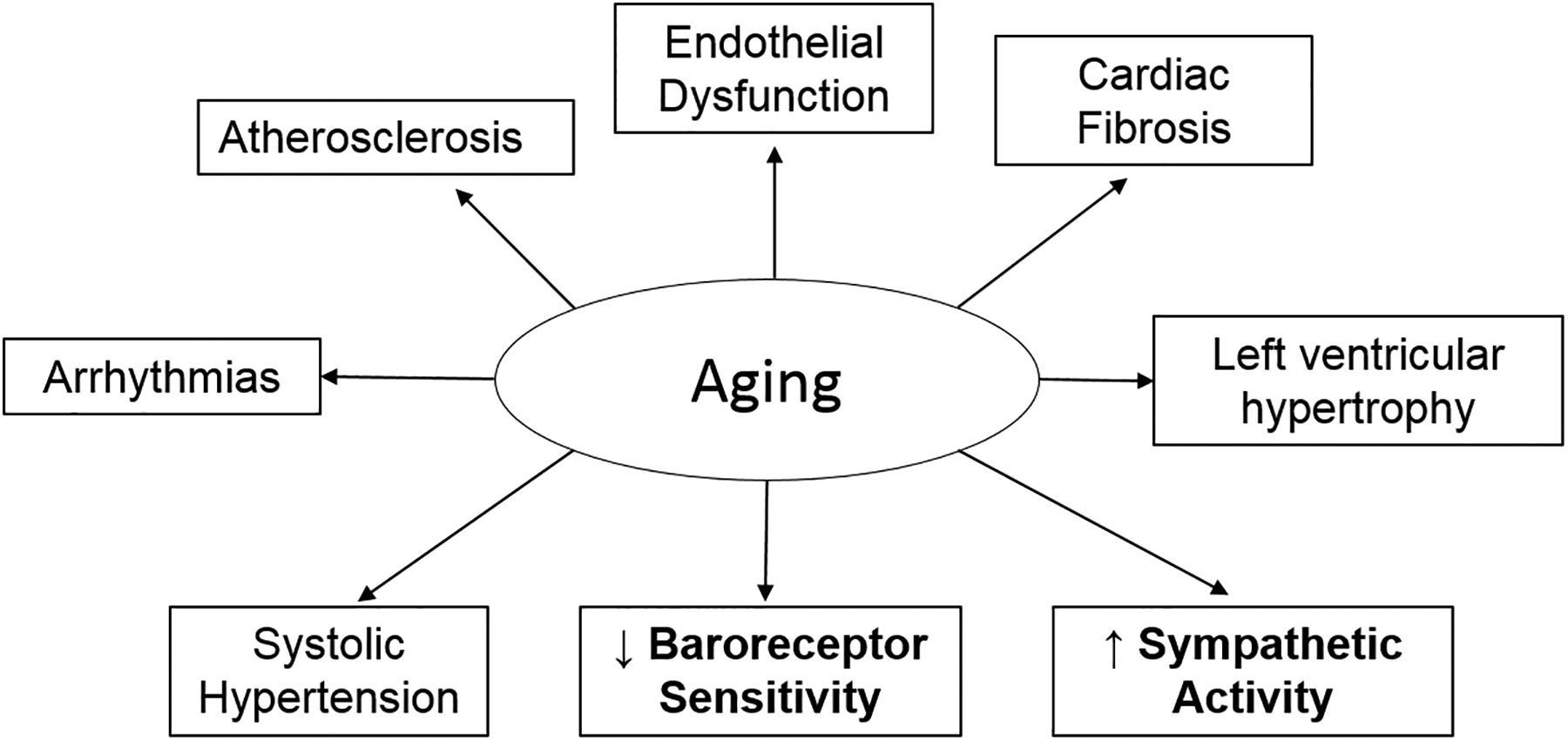
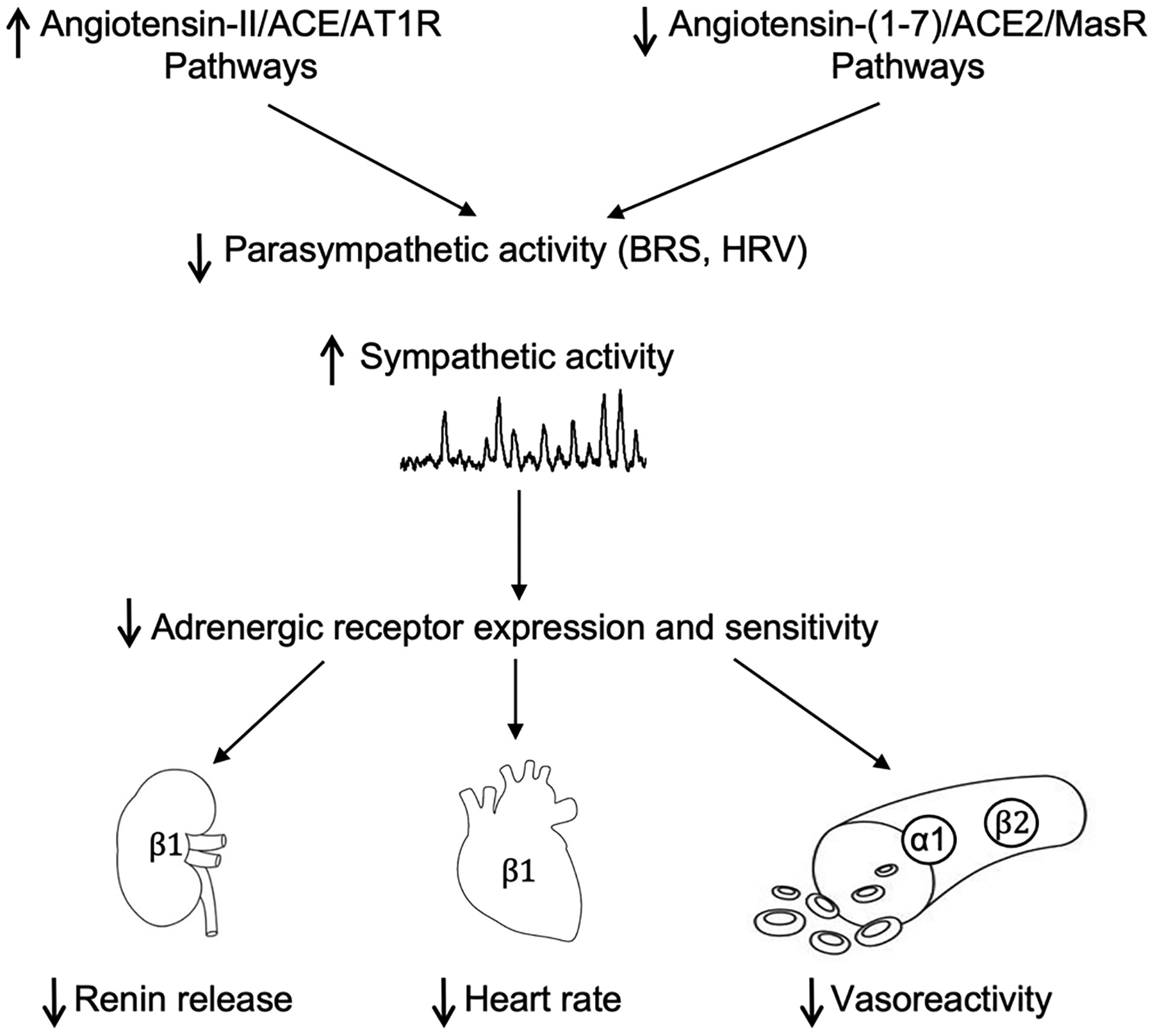
Aging is the greatest independent risk factor for developing hypertension and cardiovascular-related diseases including systolic hypertension, vascular disease, ischemic events, arrhythmias, and heart failure. Age-related cardiovascular risk is associated with dysfunction of peripheral organ systems, such as the heart and vasculature, as well as an imbalance in the autonomic nervous system characterized by increased sympathetic and decreased parasympathetic neurotransmission. Given the increasing prevalence of aged individuals worldwide, it is critical to better understand mechanisms contributing to impaired cardiovascular autonomic control in this population. In this regard, the renin-angiotensin system has emerged as an important hormonal modulator of cardiovascular function in aging, in part through modulation of autonomic pathways controlling sympathetic and parasympathetic outflow to cardiovascular end organs. This review will summarize the role of the RAS in cardiovascular autonomic control during aging, with a focus on current knowledge of angiotensin II versus angiotensin-(1-7) pathways in both rodent models and humans, pharmacological treatment strategies targeting the renin-angiotensin system, and unanswered questions for future research.
衰老是发展高血压和心血管相关疾病(包括收缩期高血压、血管疾病、缺血事件、心律失常和心力衰竭)的最大独立风险因素。与年龄相关的心血管风险与外周器官系统(如心脏和血管)的功能障碍以及自主神经系统的失衡有关,其特征是交感神经传出增加和副交感神经传出减少。鉴于全球老年人口的增加,了解导致该人群心血管自主控制受损的机制至关重要。在这方面,肾素-血管紧张素系统已成为衰老过程中心血管功能的重要激素调节剂,部分通过调节控制心血管终末器官交感神经和副交感神经传出的自主途径。本综述将总结 RAS 在衰老过程中心血管自主控制中的作用,重点介绍血管紧张素 II 与血管紧张素-(1-7) 途径在啮齿动物模型和人类中的作用、针对肾素-血管紧张素系统的药物治疗策略,以及未来研究的未解决问题。