Lee Seon Jin, Kim Da Yeon, Yun Jisoo, Choi Sung Hyun, Jung Seok Yun, Kang Songhwa, Park Ji Hye, Kim Yeon Ju, Ha Jong Seong, Ji Seung Taek, Jang Woong Bi, Lee Dong Hyung, Lee Dongjun, Kwon Sang-Mo
Department of Physiology, Laboratory for Vascular Medicine and Stem Cell Biology, Convergence Stem Cell Research Center, Medical Research Institute, Pusan National University School of Medicine, Yangsan 50612, Republic of Korea.
Cellular Therapeutics Development Team, Bio Center, Institute of Daewoong Life Science, Department of R&D, Daewoong Pharmaceutical Co., Ltd, Yongin-si, Gyeonggi-do 17028, Republic of Korea.
Stem Cells Int. 2018 Oct 29;2018:7453161. doi: 10.1155/2018/7453161. eCollection 2018.
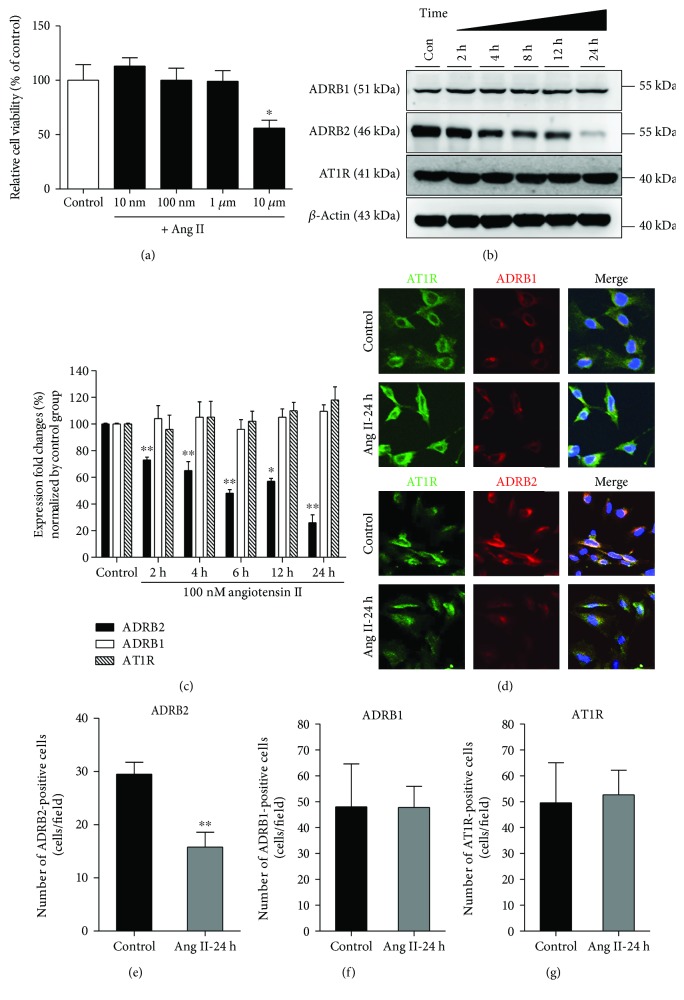
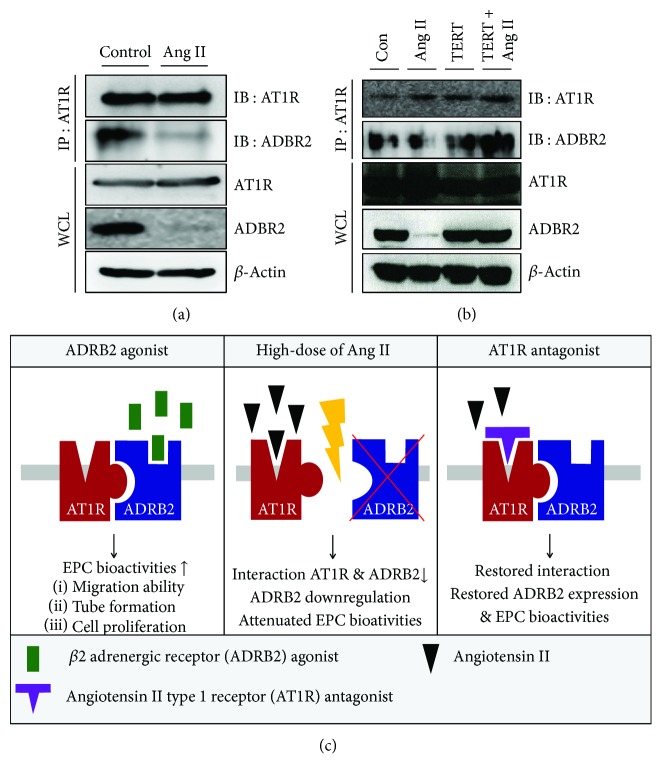
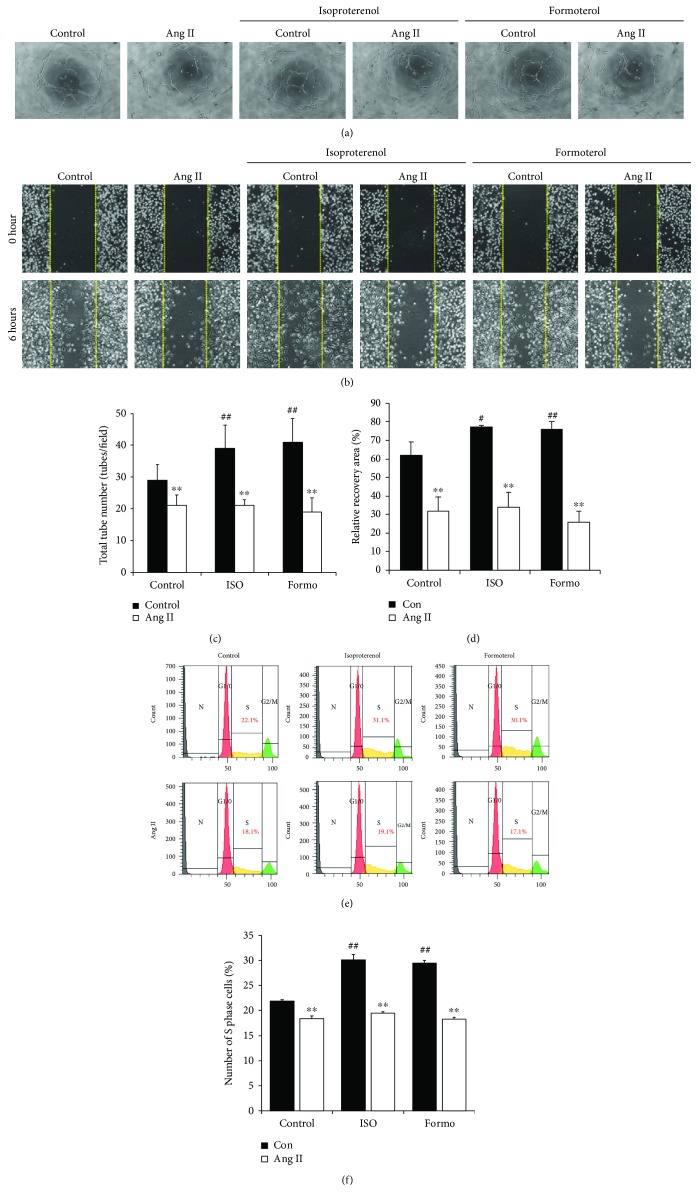
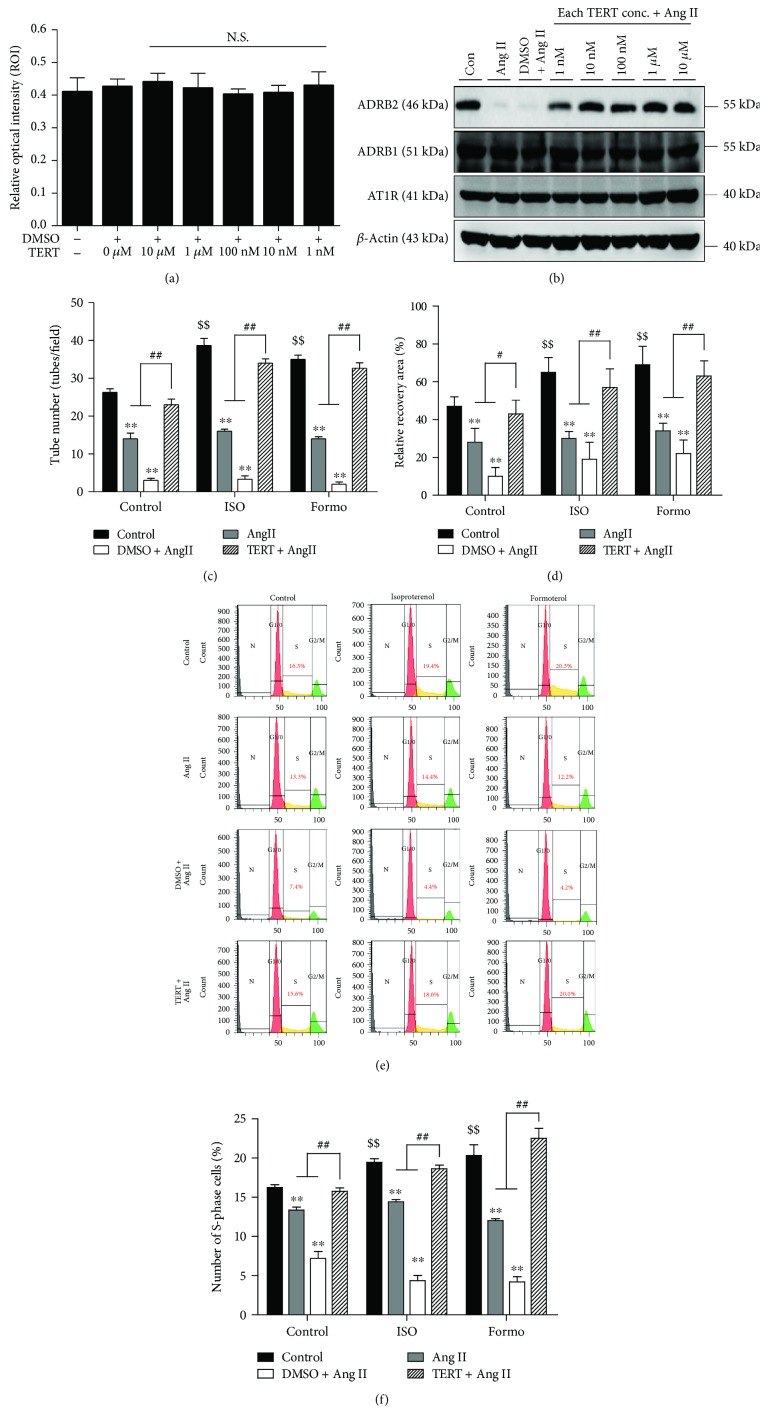
Cross talks between the renin-angiotensin system (RAS), sympathetic nervous system, and vascular homeostasis are tightly coordinated in hypertension. Angiotensin II (Ang II), a key factor in RAS, when abnormally activated, affects the number and bioactivity of circulating human endothelial progenitor cells (hEPCs) in hypertensive patients. In this study, we investigated how the augmentation of Ang II regulates adrenergic receptor-mediated signaling and angiogenic bioactivities of hEPCs. Interestingly, the short-term treatment of hEPCs with Ang II drastically attenuated the expression of beta-2 adrenergic receptor (ADRB2), but did not alter the expression of beta-1 adrenergic receptor (ADRB1) and Ang II type 1 receptor (AT1R). EPC functional assay clearly demonstrated that the treatment with ADRB2 agonists significantly increased EPC bioactivities including cell proliferation, migration, and tube formation abilities. However, EPC bioactivities were decreased dramatically when treated with Ang II. Importantly, the attenuation of EPC bioactivities by Ang II was restored by treatment with an AT1R antagonist (telmisartan; TERT). We found that AT1R binds to ADRB2 in physiological conditions, but this binding is significantly decreased in the presence of Ang II. Furthermore, TERT, an Ang II-AT1R interaction blocker, restored the interaction between AT1R and ADRB2, suggesting that Ang II might induce the dysfunction of EPCs via downregulation of ADRB2, and an AT1R blocker could prevent Ang II-mediated ADRB2 depletion in EPCs. Taken together, our report provides novel insights into potential therapeutic approaches for hypertension-related cardiovascular diseases.
在高血压中,肾素-血管紧张素系统(RAS)、交感神经系统和血管稳态之间的相互作用紧密协调。血管紧张素II(Ang II)是RAS中的关键因子,异常激活时会影响高血压患者循环中人类内皮祖细胞(hEPCs)的数量和生物活性。在本研究中,我们调查了Ang II的增加如何调节hEPCs的肾上腺素能受体介导的信号传导和血管生成生物活性。有趣的是,用Ang II对hEPCs进行短期处理会显著减弱β-2肾上腺素能受体(ADRB2)的表达,但不会改变β-1肾上腺素能受体(ADRB1)和血管紧张素II 1型受体(AT1R)的表达。EPC功能测定清楚地表明,用ADRB2激动剂处理可显著增加EPC的生物活性,包括细胞增殖、迁移和管形成能力。然而,用Ang II处理时,EPC的生物活性会显著降低。重要的是,用AT1R拮抗剂(替米沙坦;TERT)处理可恢复Ang II对EPC生物活性的减弱作用。我们发现,在生理条件下,AT1R与ADRB2结合,但在存在Ang II的情况下,这种结合会显著减少。此外,TERT是一种Ang II-AT1R相互作用阻滞剂,可恢复AT1R与ADRB2之间的相互作用,这表明Ang II可能通过下调ADRB2诱导EPC功能障碍,而AT1R阻滞剂可防止Ang II介导的EPC中ADRB2的消耗。综上所述,我们的报告为高血压相关心血管疾病的潜在治疗方法提供了新的见解。