Institute of Nephrology, Zhongda Hospital, School of Medicine, Southeast University, Nanjing, 210009, China.
John Moorhead Research Laboratory, Department of Renal Medicine, University College London (UCL) Medical School, Royal Free Campus, London, NW3 2PF, UK.
Int J Biol Sci. 2022 Jan 1;18(1):96-111. doi: 10.7150/ijbs.64665. eCollection 2022.
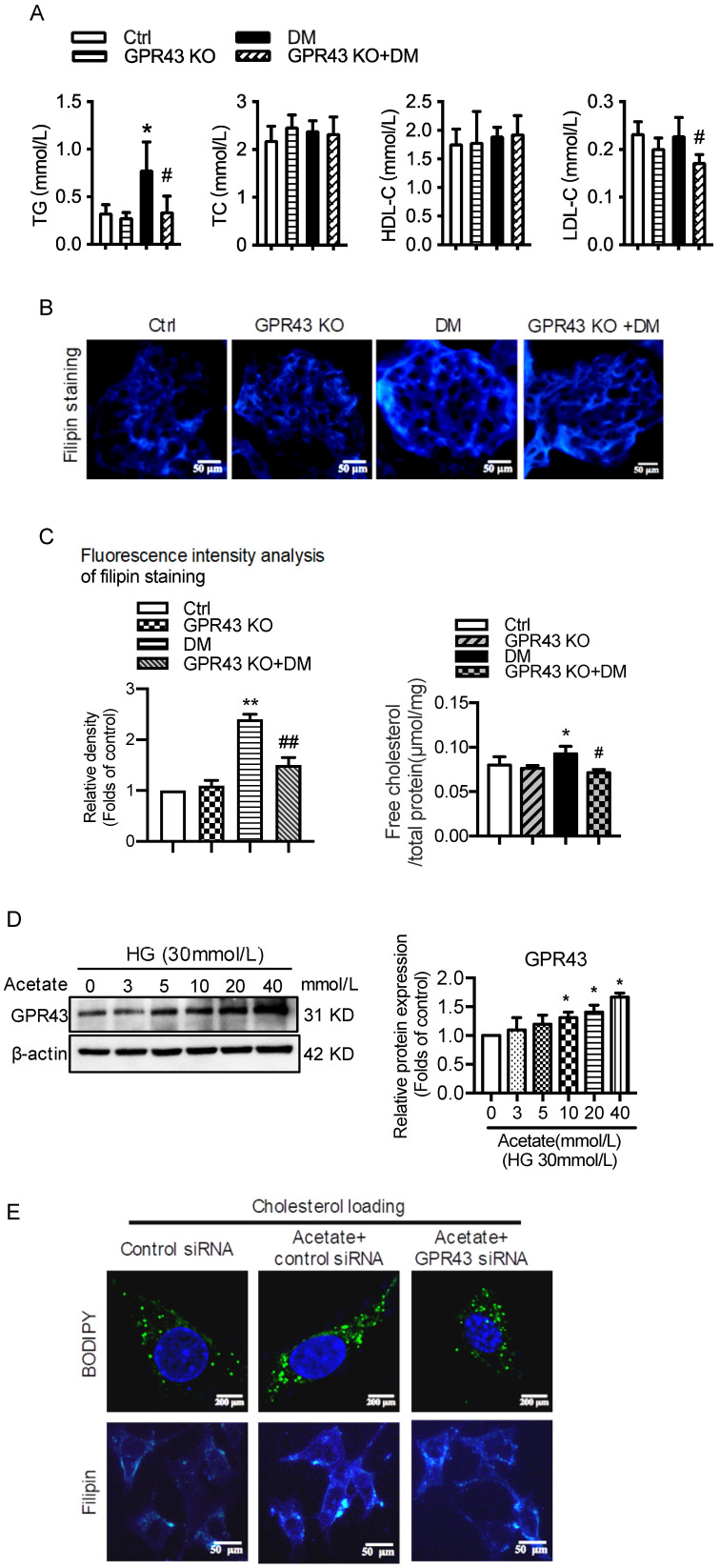
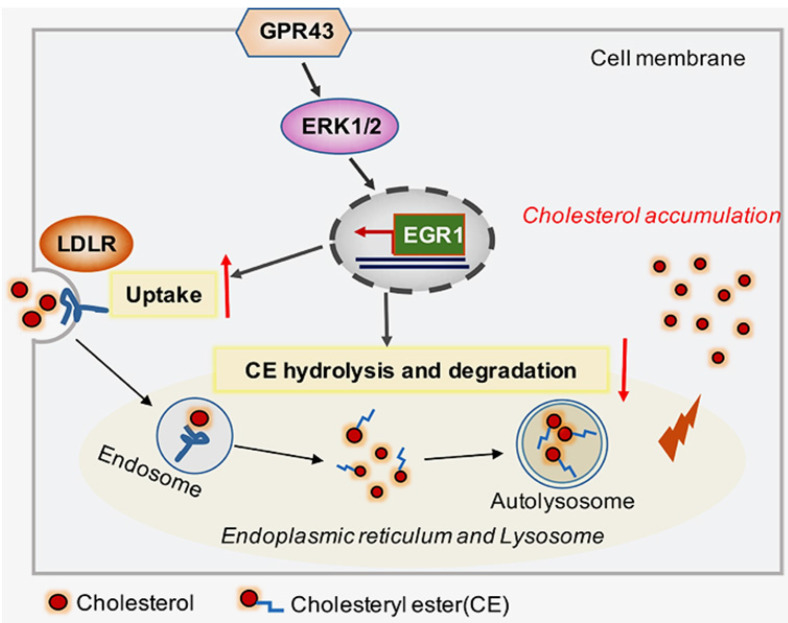
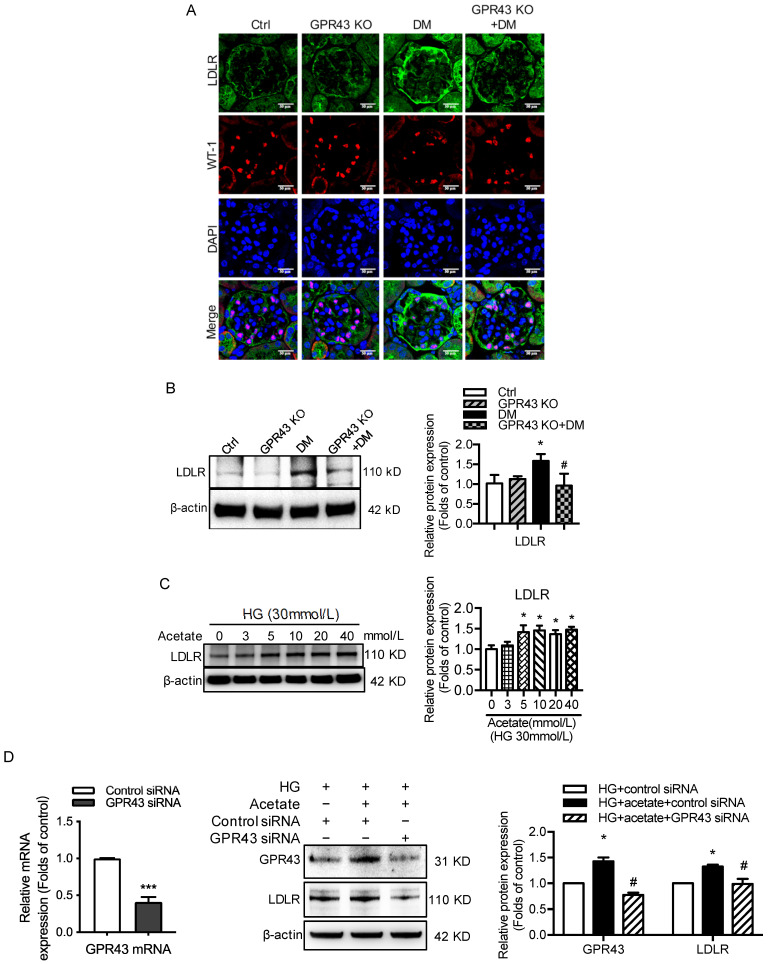
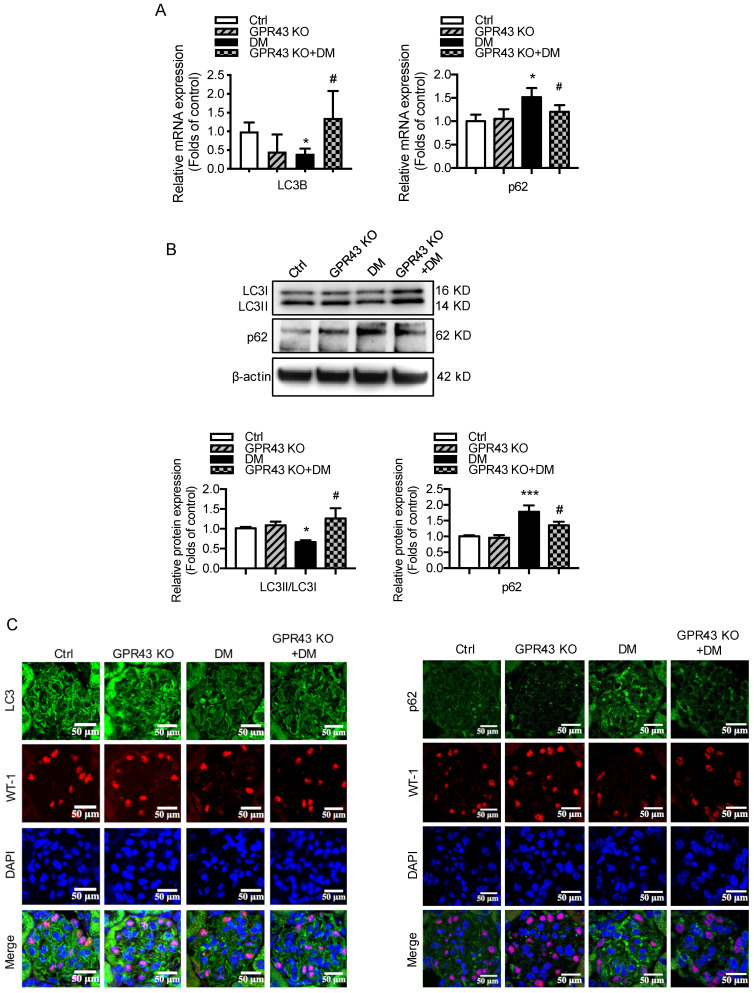
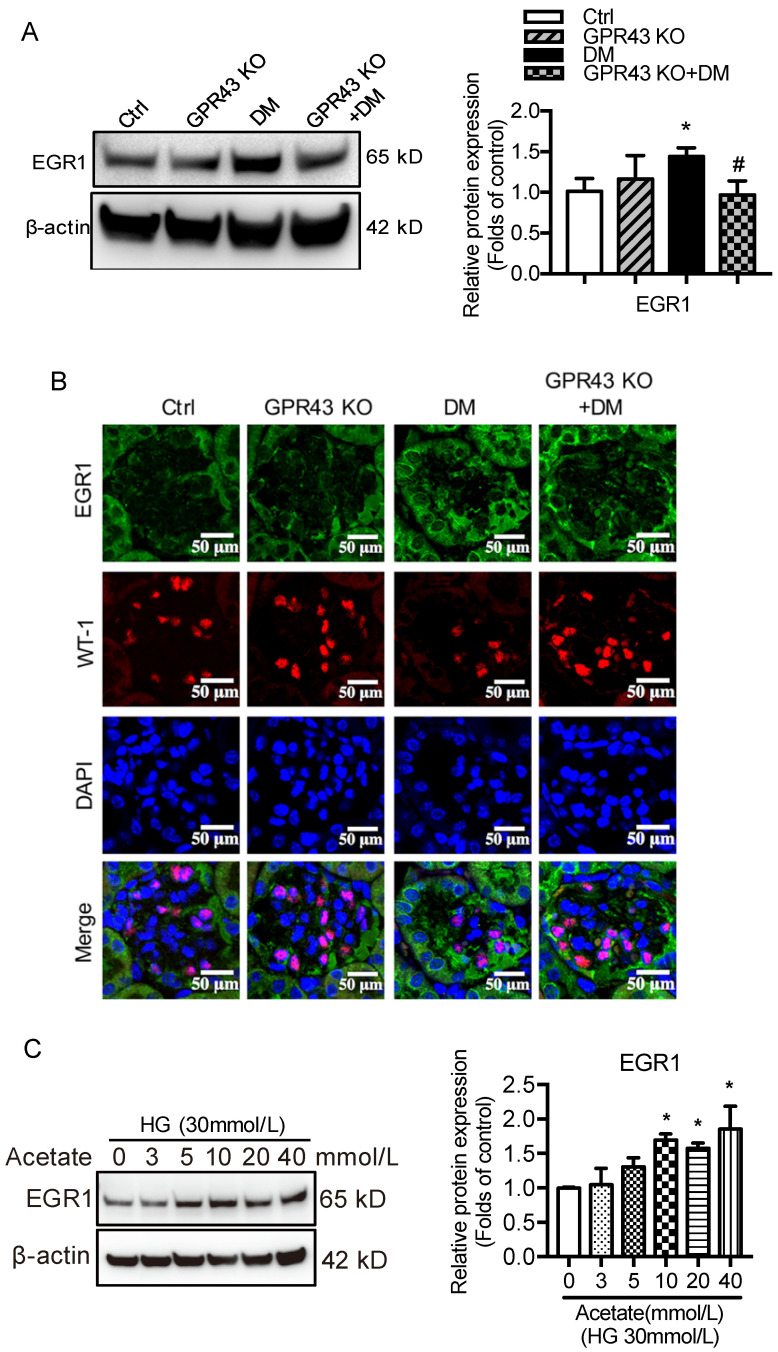
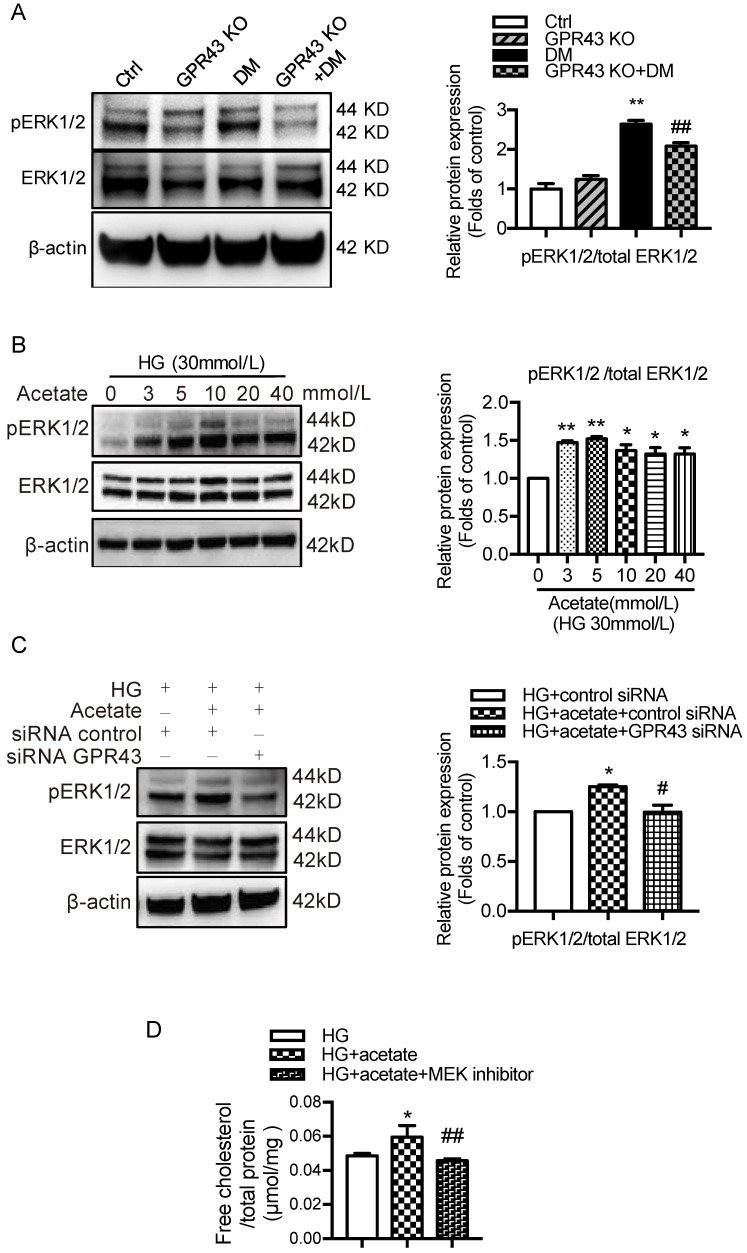
G-protein-coupled receptor 43 (GPR43) is a posttranscriptional regulator involved in cholesterol metabolism. This study aimed to investigate the possible roles of GPR43 activation in podocyte lipotoxicity in diabetic nephropathy (DN) and explore the potential mechanisms. The experiments were conducted by using diabetic GPR43-knockout mice and a podocyte cell culture model. Lipid deposition and free cholesterol levels in kidney tissues were measured by BODIPY staining and quantitative cholesterol assays, respectively. The protein expression of GPR43, LC3II, p62, beclin1, low-density lipoprotein receptor (LDLR) and early growth response protein 1 (EGR1) in kidney tissues and podocytes was measured by real-time PCR, immunofluorescent staining and Western blotting. There were increased LDL cholesterol levels in plasma and cholesterol accumulation in the kidneys of diabetic mice. However, GPR43 gene knockout inhibited these changes. An study further demonstrated that acetate treatment induced cholesterol accumulation in high glucose-stimulated podocytes, which was correlated with increased cholesterol uptake mediated by LDLR and reduced cholesterol autophagic degradation, as characterized by the inhibition of LC3 maturation, p62 degradation and autophagosome formation. Gene knockdown or pharmacological inhibition of GPR43 prevented these effects on podocytes. Furthermore, GPR43 activation increased extracellular regulated protein kinases 1/2 (ERK1/2) activity and EGR1 expression in podocytes, which resulted in an increase in cholesterol influx and autophagy inhibition. In contrast, after GPR43 deletion, these changes in podocytes were improved, as shown by the and results. GPR43 activation-mediated lipotoxicity contributes to podocyte injury in DN by modulating the ERK/EGR1 pathway.
G 蛋白偶联受体 43(GPR43)是参与胆固醇代谢的转录后调节因子。本研究旨在探讨 GPR43 激活在糖尿病肾病(DN)足细胞脂毒性中的可能作用,并探讨其潜在机制。实验采用糖尿病 GPR43 敲除小鼠和足细胞培养模型进行。通过 BODIPY 染色和定量胆固醇测定分别测量肾脏组织中的脂质沉积和游离胆固醇水平。通过实时 PCR、免疫荧光染色和 Western blot 测定肾脏组织和足细胞中 GPR43、LC3II、p62、beclin1、低密度脂蛋白受体(LDLR)和早期生长反应蛋白 1(EGR1)的蛋白表达。 糖尿病小鼠的血浆中 LDL 胆固醇水平升高,肾脏中胆固醇积累增加。然而,GPR43 基因敲除抑制了这些变化。一项研究进一步表明,醋酸盐处理诱导高糖刺激的足细胞中胆固醇积累,这与 LDLR 介导的胆固醇摄取增加和胆固醇自噬降解减少有关,表现为 LC3 成熟、p62 降解和自噬体形成减少。GPR43 的基因敲低或药理学抑制可防止这些对足细胞的影响。此外,GPR43 激活增加了足细胞中细胞外调节蛋白激酶 1/2(ERK1/2)的活性和 EGR1 的表达,导致胆固醇内流增加和自噬抑制。相比之下,GPR43 缺失后,足细胞中的这些变化得到改善,结果显示。GPR43 激活介导的脂毒性通过调节 ERK/EGR1 通路导致 DN 中的足细胞损伤。