Hu Ze Bo, Lu Jian, Chen Pei Pei, Lu Chen Chen, Zhang Jia Xiu, Li Xue Qi, Yuan Ben Yin, Huang Si Jia, Ruan Xiong Zhong, Liu Bi Cheng, Ma Kun Ling
Institute of Nephrology, Zhongda Hospital, School of Medicine, Southeast University, Nanjing, 210009, China.
Department of Pathophysiology, School of Basic Medicine, Wannan Medical College, Wuhu, 241002, China.
Theranostics. 2020 Feb 3;10(6):2803-2816. doi: 10.7150/thno.40571. eCollection 2020.
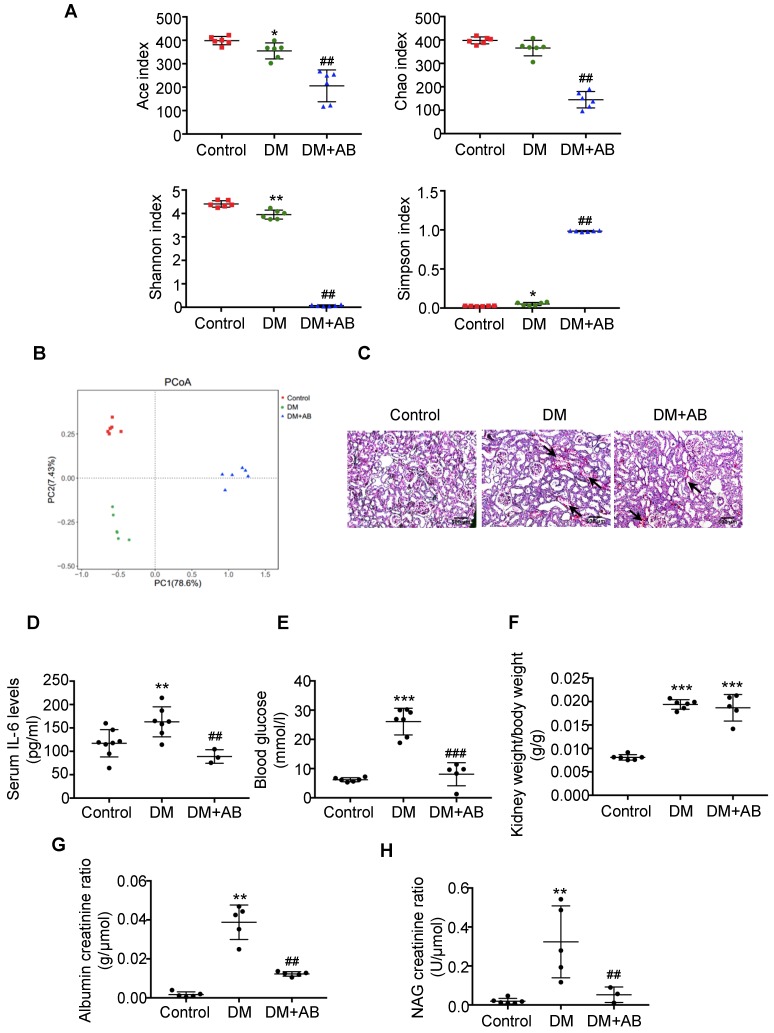
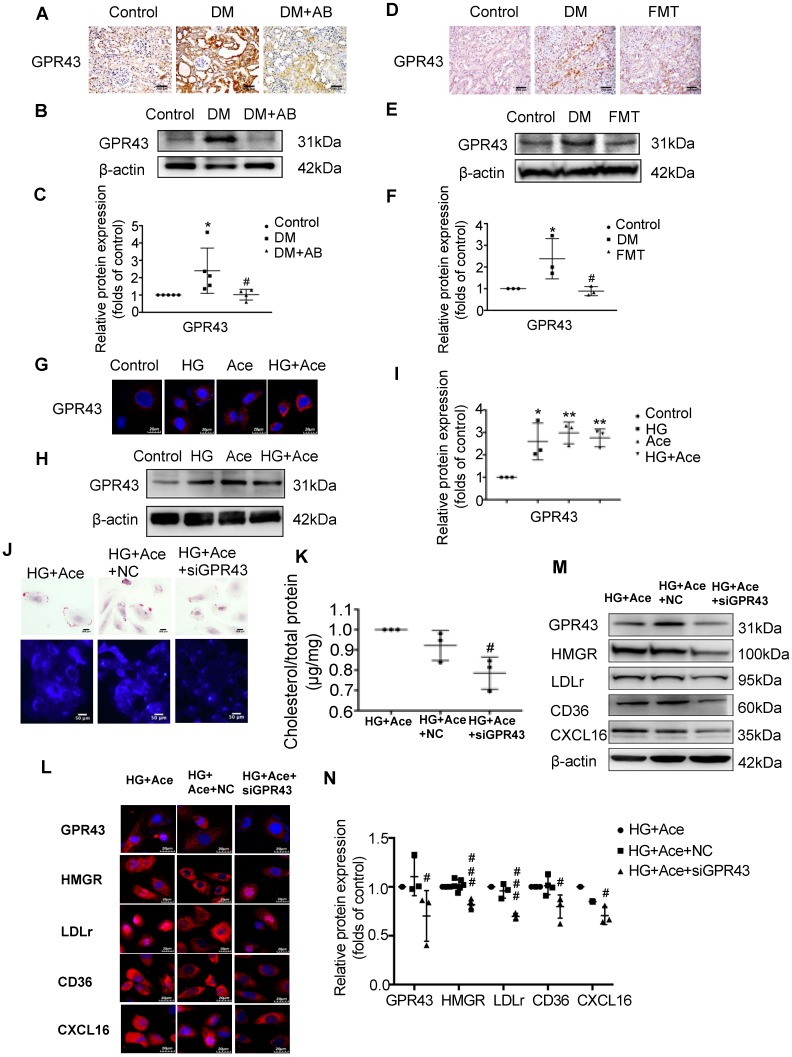
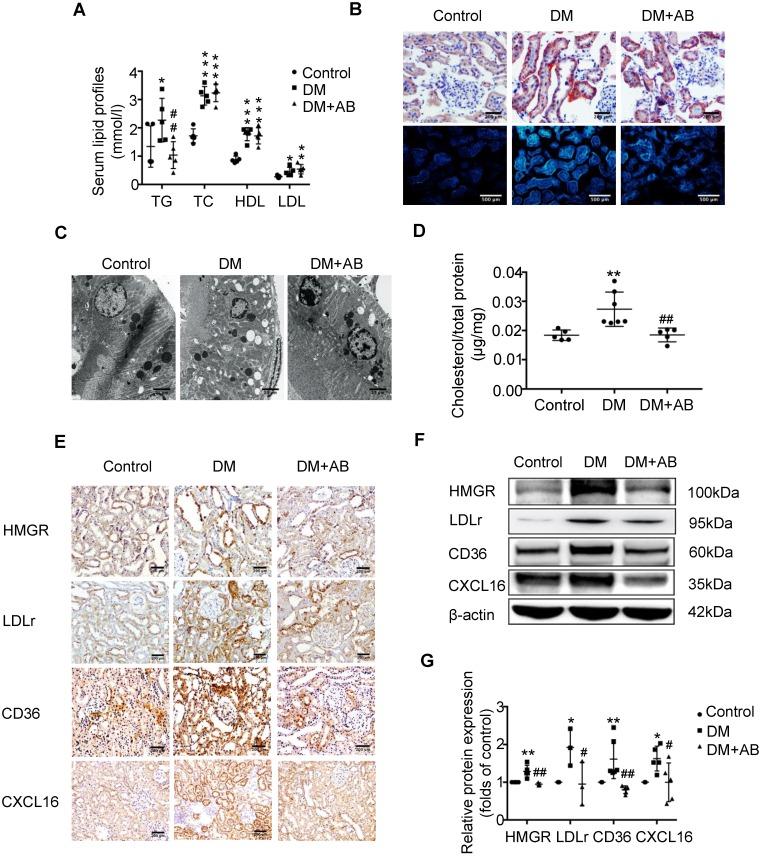
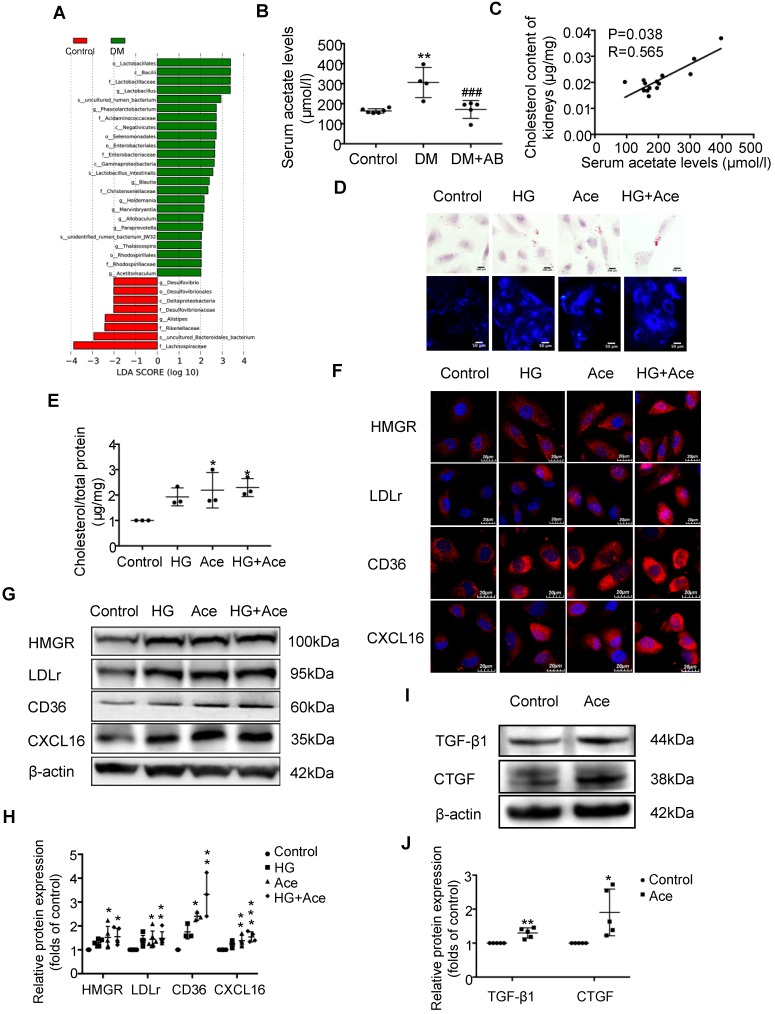
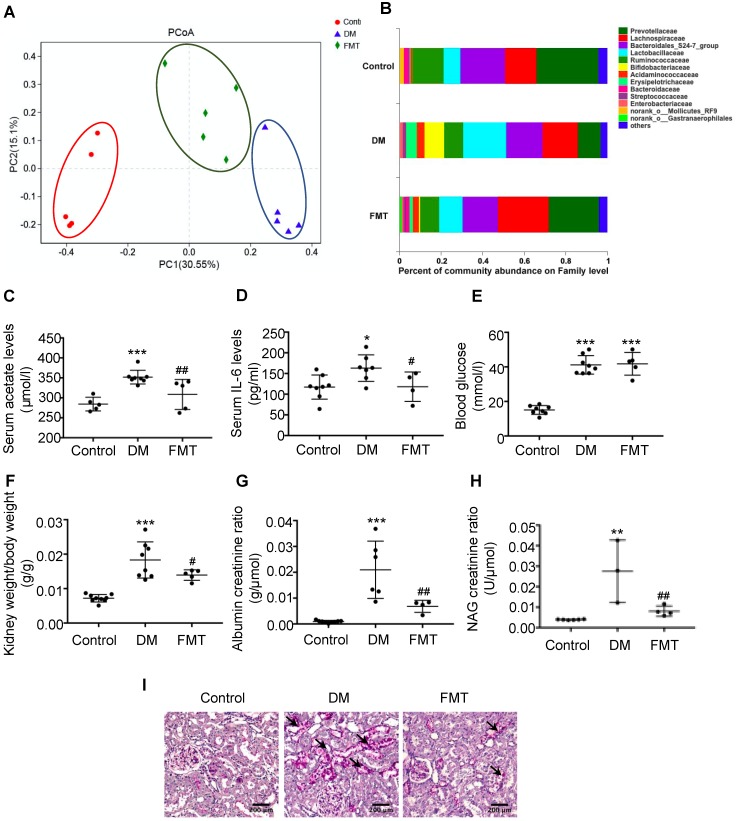
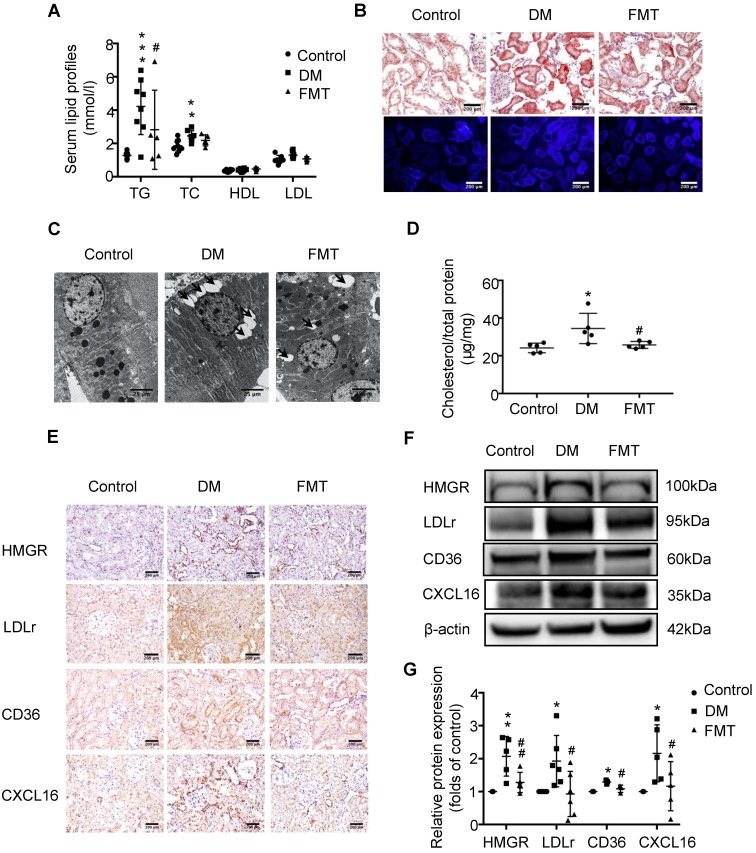
: Our previous study demonstrated that the disruption of cholesterol homeostasis promotes tubulointerstitial injury in diabetic nephropathy (DN). This study aimed to further investigate the effects of gut microbiota dysbiosis on this process and explored its potential mechanism. : Diabetic rats treated with broad-spectrum oral antibiotics or faecal microbiota transplantation (FMT) from the healthy donor group and human kidney 2 (HK-2) cells stimulated with sodium acetate were used to observe the effects of gut microbiota on cholesterol homeostasis. The gut microbiota distribution was measured by 16S rDNA sequencing with faeces. Serum acetate level was examined by gas chromatographic analysis. Protein expression of G protein coupled receptor 43 (GPR43) and molecules involved in cholesterol homeostasis were assessed by immunohistochemical staining, immunofluorescence staining, and Western Blotting. : Depletion of gut microbiota significantly attenuated albuminuria and tubulointerstitial injury. Interestingly, serum acetate levels were also markedly decreased in antibiotics-treated diabetic rats and positively correlated with the cholesterol contents in kidneys. An study demonstrated that acetate significantly increased cholesterol accumulation in HK-2 cells, which was caused by increased expression of proteins mainly modulating cholesterol synthesis and uptake. As expected, FMT effectively decreased serum acetate levels and alleviated tubulointerstitial injury in diabetic rats through overriding the disruption of cholesterol homeostasis. Furthermore, GPR43 siRNA treatment blocked acetate-mediated cholesterol homeostasis dysregulation in HK-2 cells through decreasing the expression of proteins governed cholesterol synthesis and uptake. : Our studies for the first time demonstrated that the acetate produced from gut microbiota mediated the dysregulation of cholesterol homeostasis through the activation of GPR43, thereby contributing to the tubulointerstitial injury of DN, suggesting that gut microbiota reprogramming might be a new strategy for DN prevention and therapy.
我们之前的研究表明,胆固醇稳态的破坏会促进糖尿病肾病(DN)中的肾小管间质损伤。本研究旨在进一步探究肠道微生物群失调在此过程中的作用,并探索其潜在机制。使用广谱口服抗生素治疗的糖尿病大鼠或来自健康供体组的粪便微生物群移植(FMT)以及用醋酸钠刺激的人肾2(HK-2)细胞来观察肠道微生物群对胆固醇稳态的影响。通过对粪便进行16S rDNA测序来测量肠道微生物群的分布。通过气相色谱分析检测血清醋酸盐水平。通过免疫组织化学染色、免疫荧光染色和蛋白质印迹法评估G蛋白偶联受体43(GPR43)的蛋白表达以及参与胆固醇稳态的分子。肠道微生物群的耗竭显著减轻了蛋白尿和肾小管间质损伤。有趣的是,抗生素治疗的糖尿病大鼠血清醋酸盐水平也显著降低,且与肾脏中的胆固醇含量呈正相关。一项研究表明,醋酸盐显著增加了HK-2细胞中的胆固醇积累,这是由主要调节胆固醇合成和摄取的蛋白质表达增加所致。正如预期的那样,FMT通过克服胆固醇稳态的破坏有效降低了血清醋酸盐水平,并减轻了糖尿病大鼠的肾小管间质损伤。此外,GPR43 siRNA处理通过降低控制胆固醇合成和摄取的蛋白质表达,阻断了醋酸盐介导的HK-2细胞中胆固醇稳态失调。我们的研究首次表明,肠道微生物群产生的醋酸盐通过激活GPR43介导胆固醇稳态失调,从而导致DN的肾小管间质损伤,这表明肠道微生物群重编程可能是DN预防和治疗的新策略。