Matsumura Natsuki, Nagashima Shohei, Negoro Kaho, Motomura Yoshiki, Shimoura Kanako, Tateuchi Hiroshige, Ichihashi Noriaki, Aoyama Tomoki, Nagai-Tanima Momoko
Human Health Science, Graduate School of Medicine, Kyoto University, Japan.
J Exerc Sci Fit. 2022 Jan;20(1):23-26. doi: 10.1016/j.jesf.2021.12.001. Epub 2021 Dec 4.
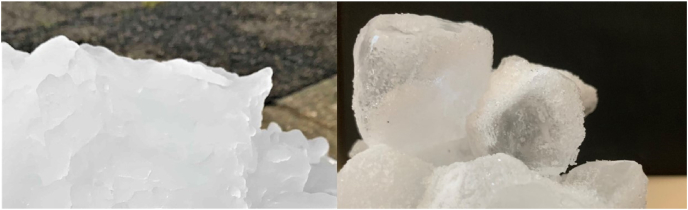
Cryotherapy is used to recover muscle damage after exercise and to treat acute sports injuries. Liquid ice (LI) can keep cold for a long time, and is assumed more effective than block ice (BI). From this, the aim of this study was to investigate the effects of LI on the change of passive stiffness (PS) as muscle function and to validate the effectiveness of LI compared to BI. We performed the experiment as part of a case series of verification of the effects of cryotherapy. 22 healthy men (target area: right leg) were randomized to two groups: LI group and BI group. PS was measured three times during experiment protocol, pre: before exercise; post; after treating each cryotherapy after exercise; 48h: 48 hours after pre. Statistical analysis compared the PS, the amount of change in PS, and the rate of change in PS between the two groups. The rate of change between pre and 48h in LI was significantly lower compared to that in BI (p = 0.03). There was no significant difference regarding other results between groups. It revealed that the difference of effect between LI and BI for PS of muscles after high-intensity exercises. These results could be helpful for the choice of intervention for reducing muscle stiffness after exercise and at sports field.
冷冻疗法用于运动后恢复肌肉损伤以及治疗急性运动损伤。液体冰(LI)能长时间保持低温,并且被认为比块状冰(BI)更有效。据此,本研究的目的是探讨液体冰对作为肌肉功能的被动僵硬度(PS)变化的影响,并验证液体冰与块状冰相比的有效性。我们将该实验作为冷冻疗法效果验证病例系列的一部分。22名健康男性(目标区域:右腿)被随机分为两组:液体冰组和块状冰组。在实验方案期间测量三次被动僵硬度,即:运动前;运动后每次冷冻疗法治疗后;运动前48小时后。统计分析比较了两组之间的被动僵硬度、被动僵硬度的变化量以及被动僵硬度的变化率。与块状冰组相比,液体冰组运动前与48小时后的变化率显著更低(p = 0.03)。两组之间其他结果无显著差异。这揭示了高强度运动后液体冰和块状冰对肌肉被动僵硬度影响的差异。这些结果可能有助于选择运动后及运动场上减轻肌肉僵硬的干预措施。