Cadegiani Flavio A, Zimerman Ricardo A, Fonseca Daniel N, Correia Michael N, Muller Marcio P, Bet Diego Leonardo, Slaviero Marcio Rafael, Zardo Ivan, Benites Paulo Roberto, Barros Renan N, Paulain Raysa W, Onety Dirce C, Israel Karla Cristina P, Gustavo Wambier Carlos, Goren Andy
Internal Medicine, Corpometria Institute, Brasilia, BRA.
Infectious Disease, Hospital da Brigada Militar de Porto Alegre, Porto Alegre, BRA.
Cureus. 2021 Dec 25;13(12):e20691. doi: 10.7759/cureus.20691. eCollection 2021 Dec.
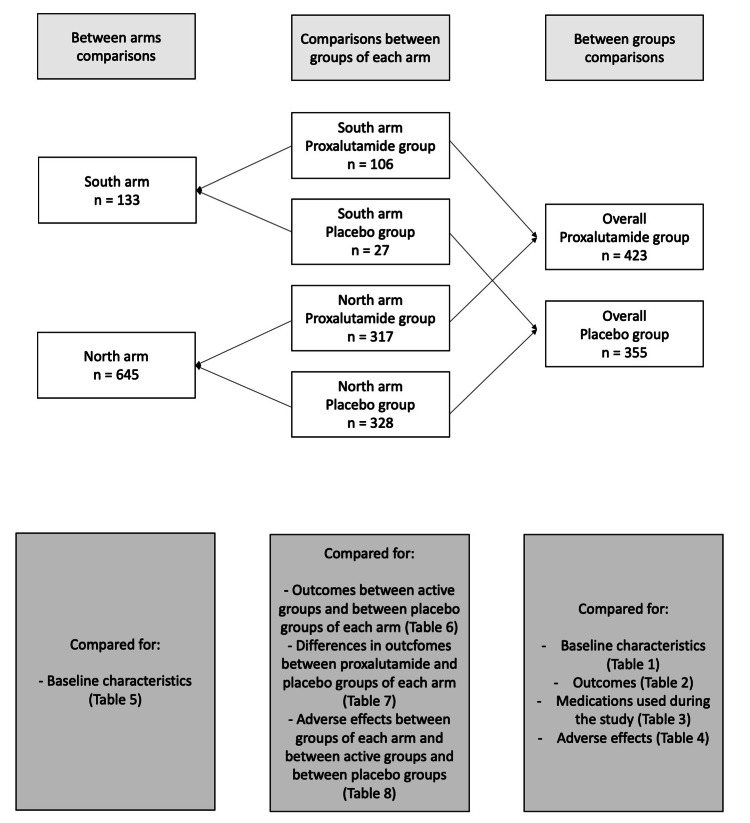
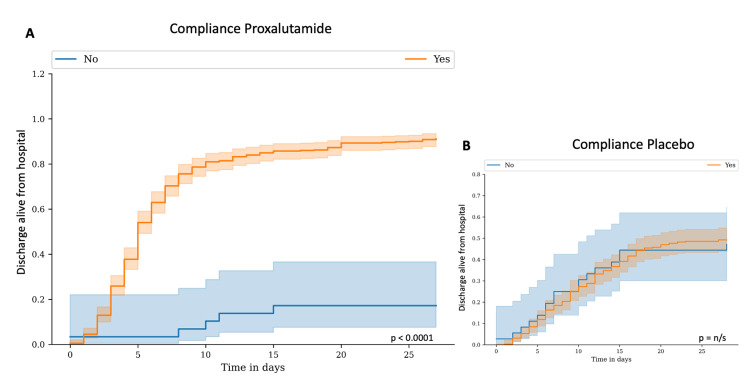
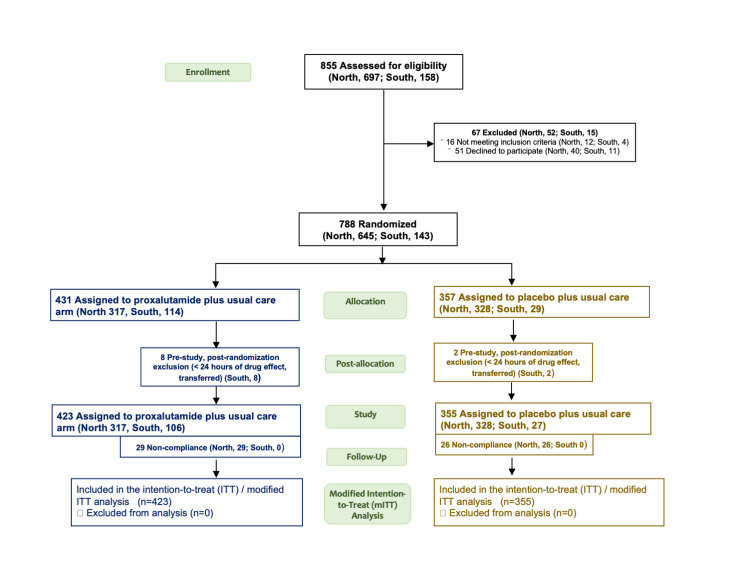
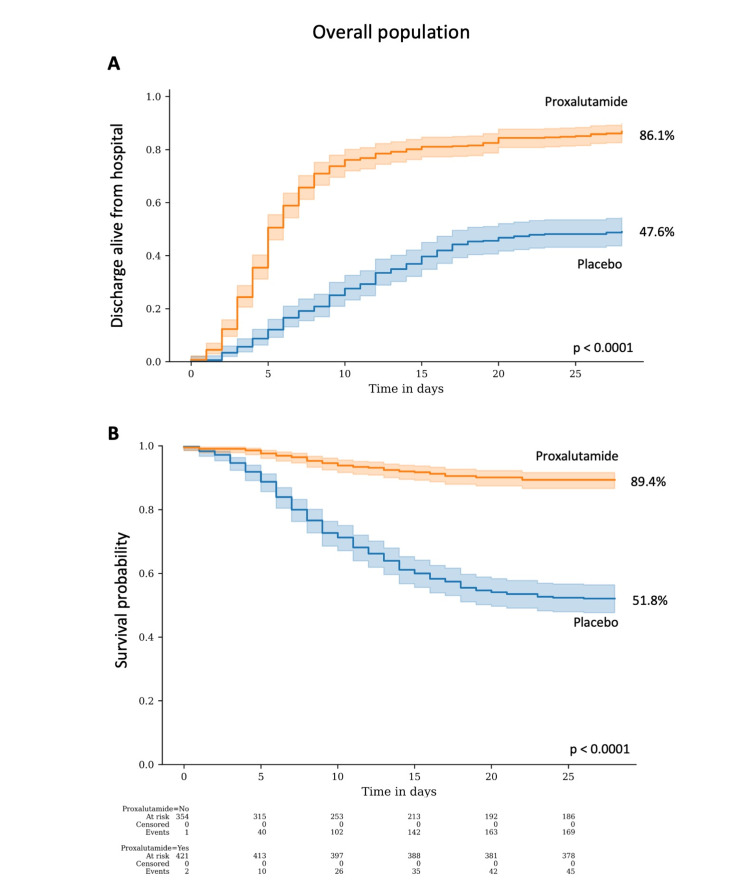
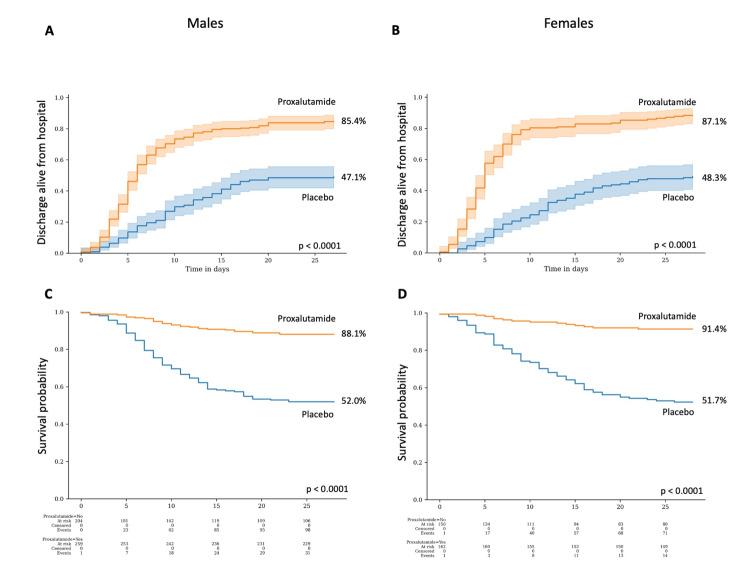
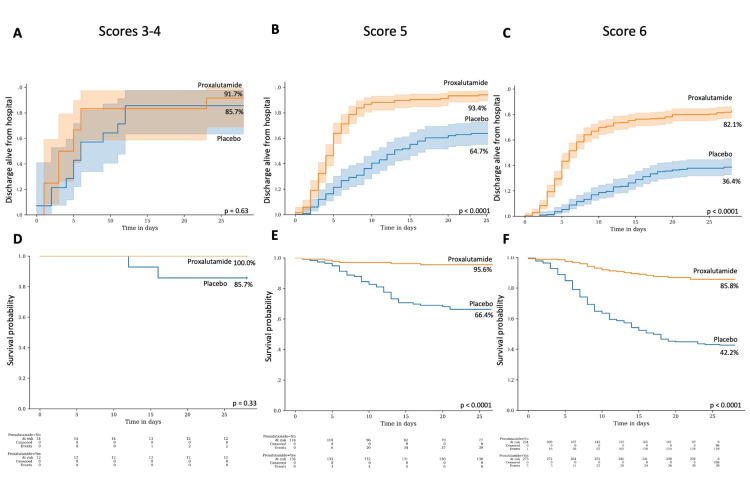
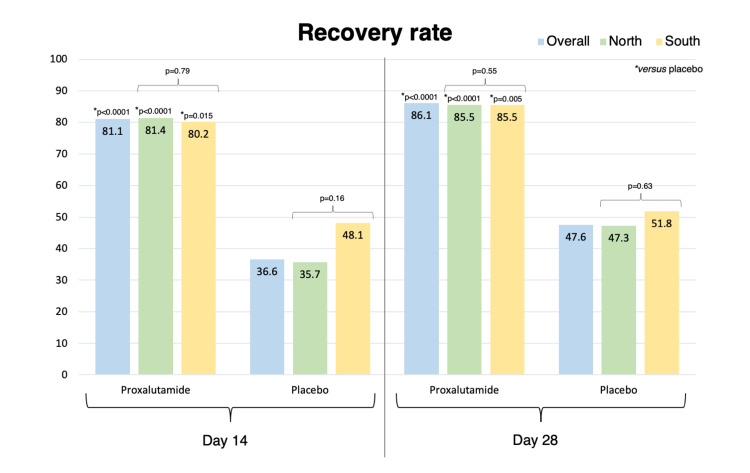
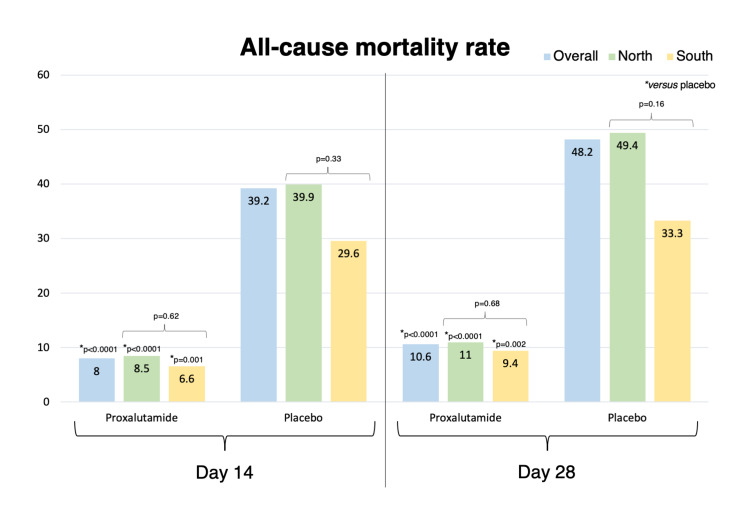
Background The role of androgens on COVID-19 is well established. Proxalutamide is a second-generation, non-steroidal antiandrogen (NSAA) with the highest antiandrogen potency among NSAAs and concurrent regulation of angiotensin-converting enzyme 2 (ACE2) expression and inflammatory response. Proxalutamide has been demonstrated to be effective to prevent hospitalizations in early COVID-19 in randomized clinical trials (RCTs). Conversely, in hospitalized COVID-19 patients, preliminary results from two different arms of an RCT (The Proxa-Rescue AndroCoV Trial) also demonstrated a reduction in all-cause mortality. This study aims to report the final, joint results of the two arms (North arm and South arm) of the Proxa-Rescue AndroCoV trial of the two arms (North and South arms) combined, and to evaluate whether COVID-19 response to proxalutamide was consistent across different regions (Northern Brazil and Southern Brazil). Materials and methods Upon randomization, hospitalized COVID-19 patients received either proxalutamide 300mg/day or placebo for 14 days, in addition to usual care, in a proxalutamide:placebo ratio of 1:1 in the North arm and 4:1 in the South arm (ratio was modified due to preliminary report of high drug efficacy). Datasets of the South and North arms were combined, and statistical analysis was performed for the overall study population. Proxalutamide was compared to placebo group for 14-day and 28-day recovery (discharge alive from the hospital) and mortality rates, and overall and post-randomization hospitalization stay. Results of proxalutamide and placebo groups were also compared between the North and South arms. Analysis was also performed stratified by sex and baseline WHO COVID Ordinary Score. Results A total of 778 subjects were included (645 from the North, 317 from the proxalutamide group and 328 from the placebo group; 133 from the South arm, 106 from the proxalutamide group and 27 from the placebo group). Recovery rate was 121% higher in proxalutamide than placebo group at day 14 [81.1% vs 36.6%; Recovery ratio (RecR) 2.21; 95% confidence interval (95% CI), 1.92-2.56; p<0.0001], and 81% higher at day 28 (98.1% vs 47.6%; RecR, 1.81; 95% CI, 1.61-2.03; p<0.0001). All-cause mortality rate was 80% lower in proxalutamide than placebo group at Day 14 [8.0% vs 39.2%; Risk ratio (RR), 0.20; 95% CI, 0.14-0.29; p<0.0001], and 78% lower at Day 28 (10.6% vs 48.2%; RR, 0.22; 95% CI 0.16-0.30). Post-randomization time-to-discharge was shorter in proxalutamide [median, 5 days; interquartile range (IQR), 3-8] than placebo group (median, 9 days; IQR, 6-14) (p<0.0001). Results were statistically similar between North and South arms for all measured outcomes. Males and females presented similar results in all outcomes. Patients that did not require oxygen use (scores 3 and 4) did not present statistically significant improvement in recovery and mortality rates, whereas scores 5 and 6 presented significant improvements in all outcomes (p<0.0001 for all). Conclusion Proxalutamide increased recovery rate, reduced mortality rate and shortened hospital stay in hospitalized COVID-19 patients. Results were similar between the two different arms, providing further consistency for the efficacy of proxalutamide when used in late-stage COVID-19.
背景 雄激素在新冠病毒疾病(COVID-19)中的作用已得到充分证实。普克鲁胺是第二代非甾体抗雄激素药物(NSAA),在NSAA中具有最高的抗雄激素效力,同时可调节血管紧张素转换酶2(ACE2)表达和炎症反应。在随机临床试验(RCT)中,已证明普克鲁胺对预防早期COVID-19患者住院有效。相反,在住院的COVID-19患者中,一项RCT(普克鲁胺救援雄激素冠状病毒试验)两个不同分组的初步结果也显示全因死亡率有所降低。本研究旨在报告普克鲁胺救援雄激素冠状病毒试验两个分组(北部分组和南部分组)合并后的最终联合结果,并评估不同地区(巴西北部和巴西南部)COVID-19患者对普克鲁胺的反应是否一致。
材料与方法 随机分组后,住院的COVID-19患者除接受常规治疗外,北部分组按1:1的比例、南部分组按4:1的比例接受每日300mg普克鲁胺或安慰剂治疗,为期14天(由于初步报告显示药物疗效高,该比例有所调整)。将南部分组和北部分组的数据集合并,对总体研究人群进行统计分析。比较普克鲁胺组和安慰剂组在14天和28天的康复(出院存活)率、死亡率以及总体和随机分组后的住院时间。还比较了北部分组和南部分组中普克鲁胺组和安慰剂组的结果。分析还按性别和基线世界卫生组织COVID普通评分进行分层。
结果 共纳入778名受试者(北部分组645名,普克鲁胺组317名,安慰剂组328名;南部分组133名,普克鲁胺组106名,安慰剂组27名)。在第14天,普克鲁胺组的康复率比安慰剂组高121%[81.1%对36.6%;康复率(RecR)2.21;95%置信区间(95%CI),1.92 - 2.56;p<0.0001],在第28天高81%(98.1%对47.6%;RecR,1.81;95%CI,1.61 - 2.03;p<0.0001)。在第14天,普克鲁胺组的全因死亡率比安慰剂组低80%[8.0%对39.2%;风险比(RR),0.20;95%CI,0.14 - 0.29;p<0.0001],在第28天低78%(10.6%对48.2%;RR,0.22;95%CI 0.16 - 0.30)。随机分组后,普克鲁胺组的出院时间更短[中位数,5天;四分位间距(IQR),3 - 8],而安慰剂组为(中位数,9天;IQR,6 - 14)(p<0.0001)。所有测量结果在北部分组和南部分组之间在统计学上相似。男性和女性在所有结果中表现相似。不需要吸氧的患者(评分3和4)在康复率和死亡率方面没有统计学上的显著改善,而评分5和6的患者在所有结果中均有显著改善(所有p<0.0001)。
结论 普克鲁胺可提高住院COVID-19患者的康复率,降低死亡率并缩短住院时间。两个不同分组的结果相似,为普克鲁胺在晚期COVID-19中的疗效提供了进一步的一致性证据。