Wijngaards Indy, Del Pozo Cruz Borja, Gebel Klaus, Ding Ding
Tilburg School of Social and Behavioral Sciences, Tilburg University, Tilburg, Netherlands.
Department of Sport Science and Clinical Biomechanics, University of Southern Denmark, Odense, Denmark.
Prev Med Rep. 2022 Feb;25:101680. doi: 10.1016/j.pmedr.2021.101680. Epub 2021 Dec 27.
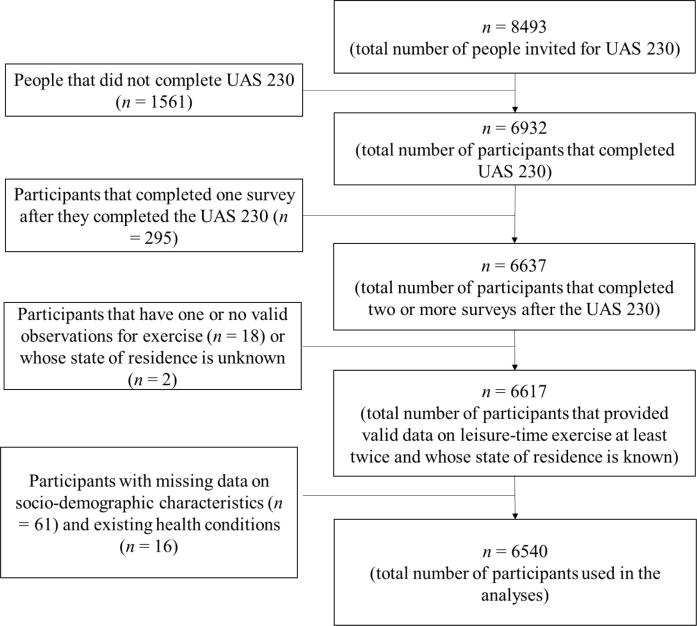
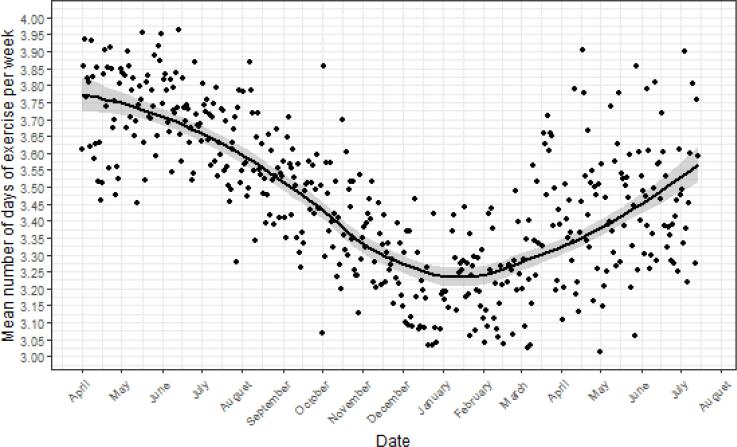
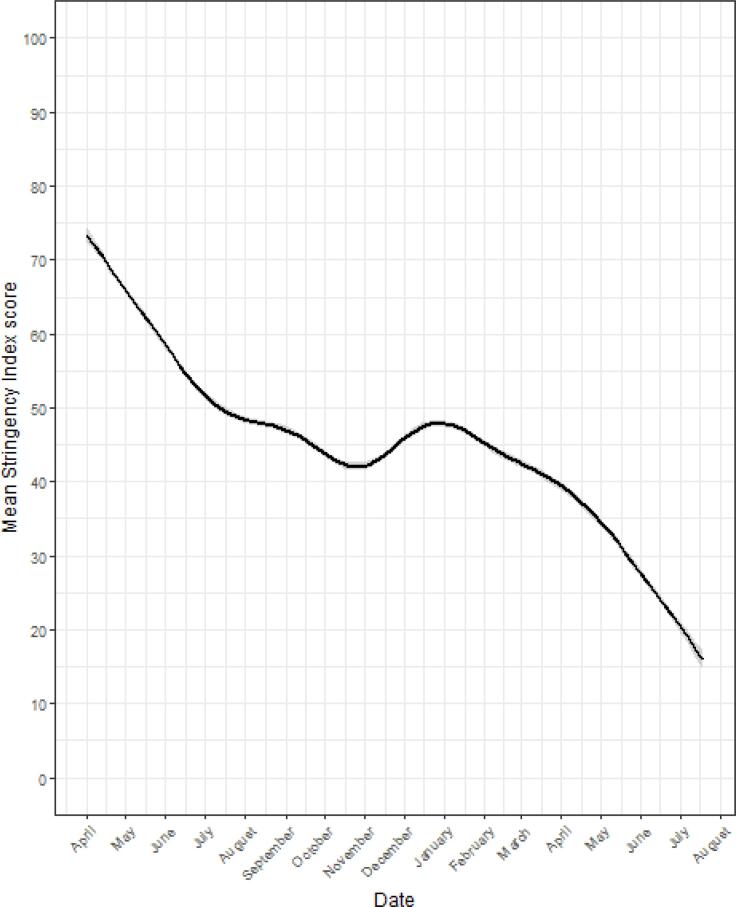
Regular physical activity is important for general health and reduces the risk for COVID-19 infections and for severe outcomes among infected people. However, measures to mitigate COVID-19 likely decrease population physical activity. This study aimed to examine 1) changes in exercise frequency in a representative sample of US adults during the pandemic (04/01/2020-07/21/2021), and 2) how sociodemographic characteristics, pre-COVID health-related behaviors and outcomes, and state-level stringency of COVID-19 containment measures predict exercise frequency. Self-reported exercise frequency and its individual-level predictors were determined based on 151,155 observations from 6,540 adult participants (aged ≥ 18 years) in all US states from the Understanding America Study. State-level stringency of COVID-19 control measures was examined from the Oxford COVID-19 Government Response Tracker. Exercise frequency varied significantly over 28 survey waves across 475 days of follow-up ( = 185.5, < 0.001, η = 0.28, 95% CI = 0.23-1.00), where exercise frequency decreased between April 2020 and January 2021, and then increased from January 2021 to July 2021. Those who were younger, living alone, non-White, had no college degree, lower household income, low pre-pandemic physical activity levels, obesity, diabetes, kidney disease and hypertension had lower exercise frequency. State-level stringency of COVID-19 control measures was inversely associated with exercise frequency (B = 0.002, SE = 0.001, < 0.01) between April and December 2020 when the overall stringency level was relatively high; but the association was non-significant (B = 0.001, SE = 0.001, > 0.05) between January and July 2021, during which the stringency index sharply declined to a low level. This longitudinal probability survey of the US population revealed significant fluctuations in exercise during COVID-19. Low exercise levels are concerning and deserve public health attention. Health inequalities from physical inactivity are likely to exacerbate because of COVID-19. Physical activity promotion in safe environments is urgently warranted, especially in at-risk population subgroups.
规律的体育锻炼对总体健康很重要,可降低感染新冠病毒的风险以及感染者出现严重后果的风险。然而,减轻新冠疫情的措施可能会减少人群的体育锻炼。本研究旨在考察:1)疫情期间(2020年4月1日至2021年7月21日)美国成年人代表性样本中锻炼频率的变化;2)社会人口学特征、新冠疫情前与健康相关的行为及结果,以及州一级新冠疫情防控措施的严格程度如何预测锻炼频率。根据美国全国家庭意见调查中6540名成年参与者(年龄≥18岁)的151,155份观察数据,确定了自我报告的锻炼频率及其个体水平的预测因素。从牛津新冠疫情政府应对追踪器中考察了州一级新冠疫情防控措施的严格程度。在475天的随访期间,跨越28次调查波次,锻炼频率有显著变化(F = 185.5,p < 0.001,η = 0.28,95% CI = 0.23 - 1.00),其中锻炼频率在2020年4月至2021年1月间下降,然后从2021年1月至2021年7月上升。年龄较小、独居、非白人、没有大学学历、家庭收入较低、疫情前身体活动水平较低、肥胖、糖尿病、肾病和高血压患者的锻炼频率较低。在2020年4月至12月期间,当总体严格程度相对较高时,州一级新冠疫情防控措施的严格程度与锻炼频率呈负相关(B = 0.002,SE = 0.001,p < 0.01);但在2021年1月至7月期间,这种关联不显著(B = 0.001,SE = 0.001,p > 0.05),在此期间严格程度指数急剧下降至较低水平。这项针对美国人群的纵向概率调查显示,新冠疫情期间锻炼情况有显著波动。低锻炼水平令人担忧,值得公共卫生关注。由于新冠疫情,缺乏身体活动导致的健康不平等可能会加剧。迫切需要在安全环境中推广体育活动,尤其是在高危人群亚组中。