Gander Joséphine, Carrard Justin, Gallart-Ayala Hector, Borreggine Rébecca, Teav Tony, Infanger Denis, Colledge Flora, Streese Lukas, Wagner Jonathan, Klenk Christopher, Nève Gilles, Knaier Raphael, Hanssen Henner, Schmidt-Trucksäss Arno, Ivanisevic Julijana
Division of Sports and Exercise Medicine, Department of Sport, Exercise and Health, University of Basel, Basel, Switzerland.
Metabolomics Platform, Faculty of Biology and Medicine, University of Lausanne, Lausanne, Switzerland.
Front Cardiovasc Med. 2021 Dec 16;8:792350. doi: 10.3389/fcvm.2021.792350. eCollection 2021.
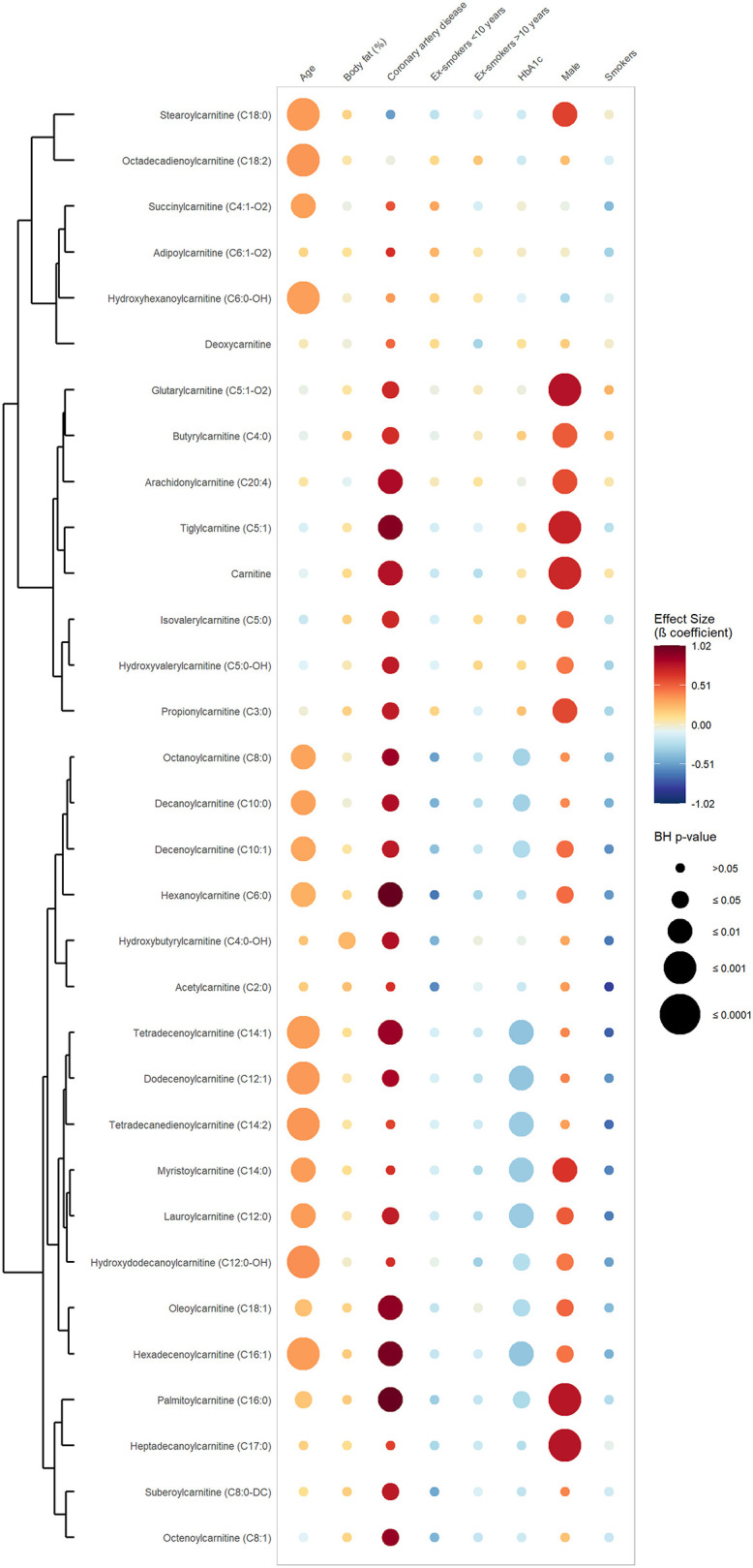
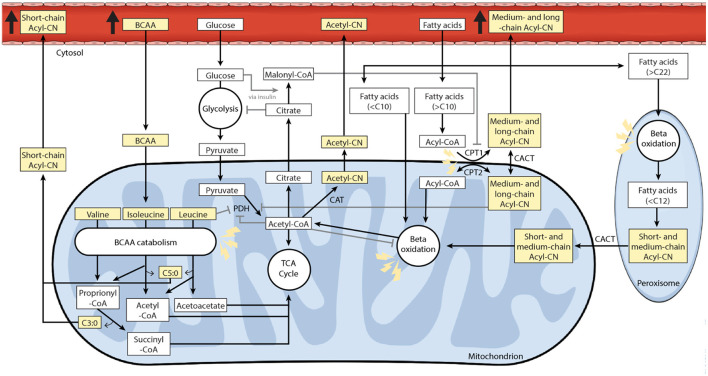
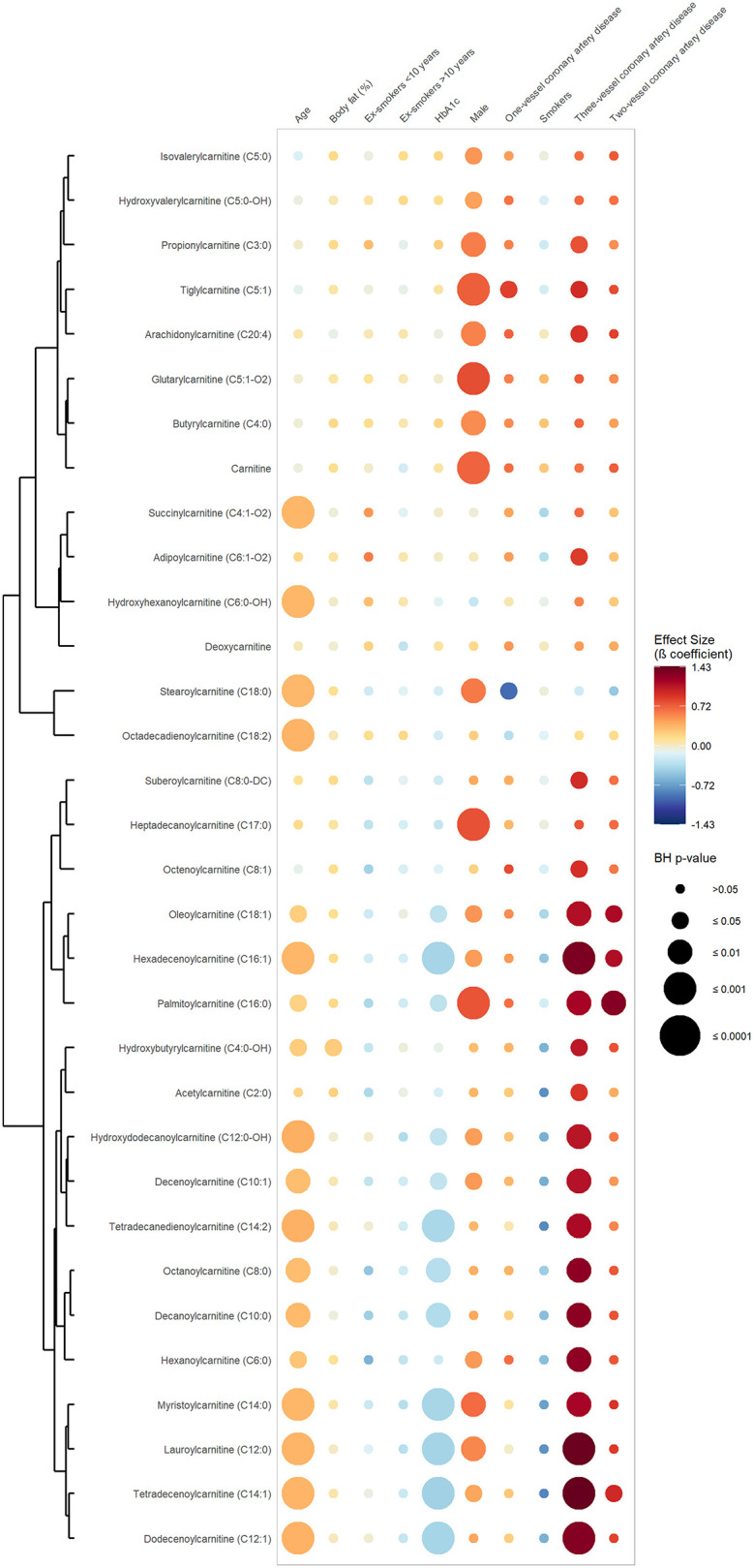
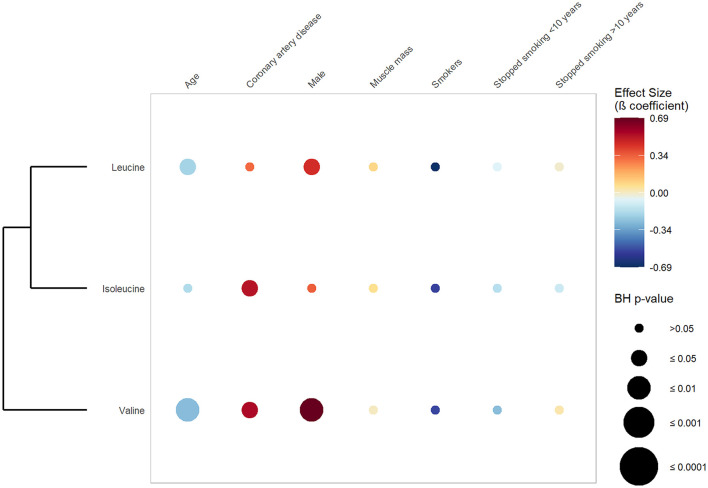
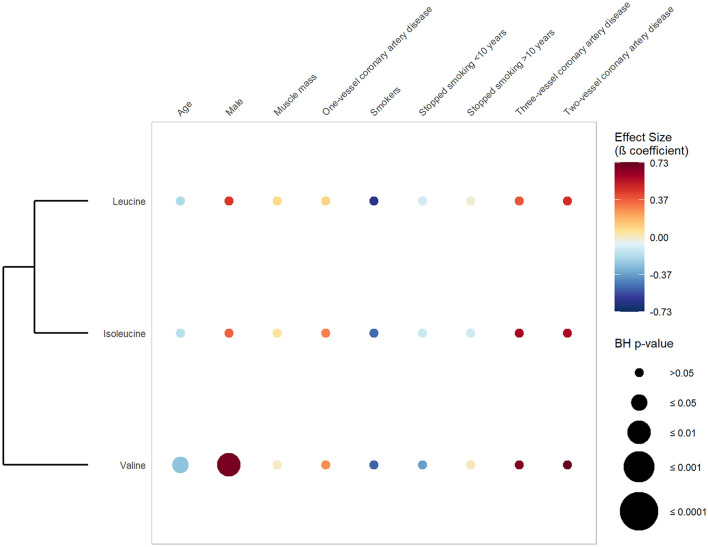
Coronary artery disease (CAD) remains the leading cause of death worldwide. Expanding patients' metabolic phenotyping beyond clinical chemistry investigations could lead to earlier recognition of disease onset and better prevention strategies. Additionally, metabolic phenotyping, at the molecular species level, contributes to unravel the roles of metabolites in disease development. In this cross-sectional study, we investigated clinically healthy individuals ( = 116, 65% male, 70.8 ± 8.7 years) and patients with CAD ( = 54, 91% male, 67.0 ± 11.5 years) of the COmPLETE study. We applied a high-coverage quantitative liquid chromatography-mass spectrometry approach to acquire a comprehensive profile of serum acylcarnitines, free carnitine and branched-chain amino acids (BCAAs), as markers of mitochondrial health and energy homeostasis. Multivariable linear regression analyses, adjusted for confounders, were conducted to assess associations between metabolites and CAD phenotype. In total, 20 short-, medium- and long-chain acylcarnitine species, along with L-carnitine, valine and isoleucine were found to be significantly (adjusted ≤ 0.05) and positively associated with CAD. For 17 acylcarnitine species, associations became stronger as the number of affected coronary arteries increased. This implies that circulating acylcarnitine levels reflect CAD severity and might play a role in future patients' stratification strategies. Altogether, CAD is characterized by elevated serum acylcarnitine and BCAA levels, which indicates mitochondrial imbalance between fatty acid and glucose oxidation.
冠状动脉疾病(CAD)仍然是全球范围内的主要死因。将患者的代谢表型分析扩展到临床化学检查之外,可能会更早地识别疾病发作并制定更好的预防策略。此外,在分子种类水平上进行代谢表型分析,有助于揭示代谢物在疾病发展中的作用。在这项横断面研究中,我们调查了COMPLETE研究中的临床健康个体(n = 116,65%为男性,70.8±8.7岁)和CAD患者(n = 54,91%为男性,67.0±11.5岁)。我们应用了一种高覆盖率的定量液相色谱-质谱方法,以获取血清酰基肉碱、游离肉碱和支链氨基酸(BCAAs)的全面概况,作为线粒体健康和能量稳态的标志物。进行了调整混杂因素的多变量线性回归分析,以评估代谢物与CAD表型之间的关联。总共发现20种短链、中链和长链酰基肉碱种类,以及左旋肉碱、缬氨酸和异亮氨酸与CAD显著正相关(调整后p≤0.05)。对于17种酰基肉碱种类,随着受影响冠状动脉数量的增加,关联变得更强。这意味着循环酰基肉碱水平反映了CAD的严重程度,可能在未来患者的分层策略中发挥作用。总之,CAD的特征是血清酰基肉碱和BCAA水平升高,这表明脂肪酸和葡萄糖氧化之间存在线粒体失衡。