Exercise Biology Group, Faculty of Sport and Health Sciences, Technical University of Munich, Munich, Germany.
German Mouse Clinic, Institute of Experimental Genetics, Helmholtz Zentrum München, Neuherberg, Germany.
Transgenic Res. 2022 Apr;31(2):227-237. doi: 10.1007/s11248-021-00293-4. Epub 2022 Jan 5.
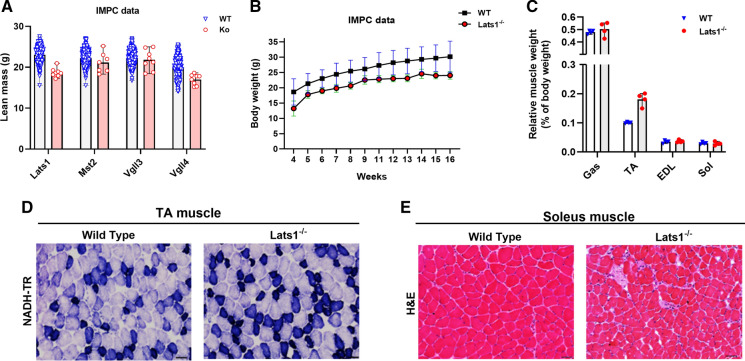
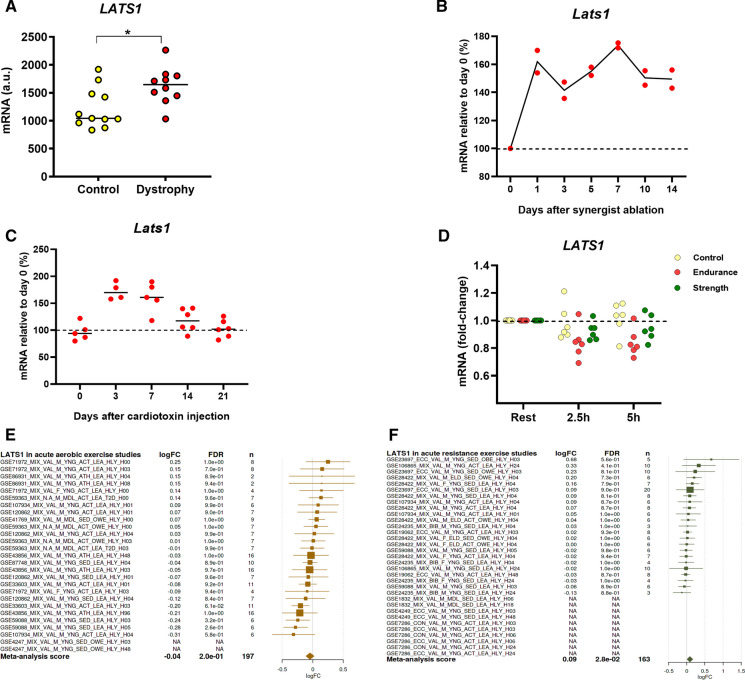
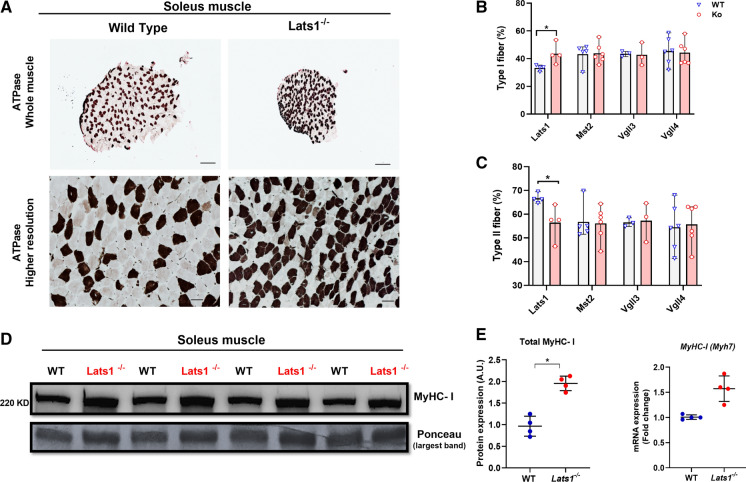
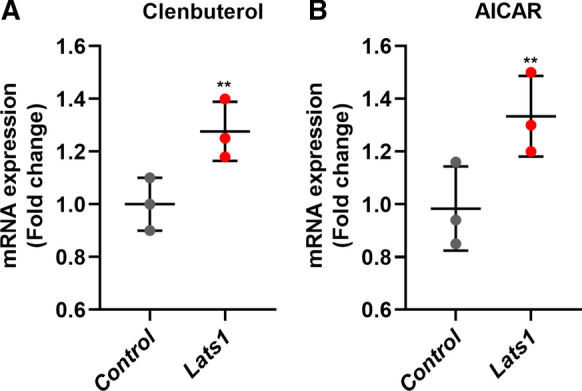
The Hippo signal transduction network regulates transcription through Yap/Taz-Tead1-4 in many tissues including skeletal muscle. Whilst transgenic mice have been generated for many Hippo genes, the resultant skeletal muscle phenotypes were not always characterized. Here, we aimed to phenotype the hindlimb muscles of Hippo gene-mutated Lats1, Mst2, Vgll3, and Vgll4 mice. This analysis revealed that Lats1 mice have 11% more slow type I fibers than age and sex-matched wild-type controls. Moreover, the mRNA expression of slow Myh7 increased by 50%, and the concentration of type I myosin heavy chain is 80% higher in Lats1 mice than in age and sex-matched wild-type controls. Second, to find out whether exercise-related stimuli affect Lats1, we stimulated C2C12 myotubes with the hypertrophy agent clenbuterol or the energy stress agent AICAR. We found that both stimulated Lats1 expression by 1.2 and 1.3 fold respectively. Third, we re-analyzed published datasets and found that Lats1 mRNA in muscle is 63% higher in muscular dystrophy, increases by 17-77% after cardiotoxin-induced muscle injury, by 41-71% in muscles during overload-induced hypertrophy, and by 19-21% after endurance exercise when compared to respective controls. To conclude, Lats1 contributes to the regulation of muscle fiber type proportions, and its expression is regulated by physiological and pathological situations in skeletal muscle.
Hippo 信号转导网络通过 Yap/Taz-Tead1-4 在包括骨骼肌在内的许多组织中调节转录。虽然已经为许多 Hippo 基因生成了转基因小鼠,但产生的骨骼肌表型并不总是具有特征。在这里,我们旨在表型 Hippo 基因突变 Lats1、Mst2、Vgll3 和 Vgll4 小鼠的后肢肌肉。这项分析表明,与年龄和性别匹配的野生型对照相比,Lats1 小鼠的慢型 I 纤维多 11%。此外,慢型 Myh7 的 mRNA 表达增加了 50%,Lats1 小鼠中 I 型肌球蛋白重链的浓度比年龄和性别匹配的野生型对照高 80%。其次,为了找出运动相关刺激是否会影响 Lats1,我们用肥大剂克仑特罗或能量应激剂 AICAR 刺激 C2C12 肌管。我们发现这两种刺激分别使 Lats1 的表达增加了 1.2 倍和 1.3 倍。第三,我们重新分析了已发表的数据集,发现肌肉中的 Lats1 mRNA 在肌肉营养不良时增加了 63%,在心脏毒素诱导的肌肉损伤后增加了 17-77%,在超负荷诱导的肥大过程中增加了 41-71%,在耐力运动后增加了 19-21%,与各自的对照相比。总之,Lats1 有助于调节肌肉纤维类型比例,其表达受骨骼肌中生理和病理情况的调节。