Department of Physiology and Pharmacology, Karolinska Institutet, Stockholm, Sweden.
Department of Molecular Medicine and Surgery, Karolinska Institutet, Stockholm, Sweden.
Nat Commun. 2020 Jan 24;11(1):470. doi: 10.1038/s41467-019-13869-w.
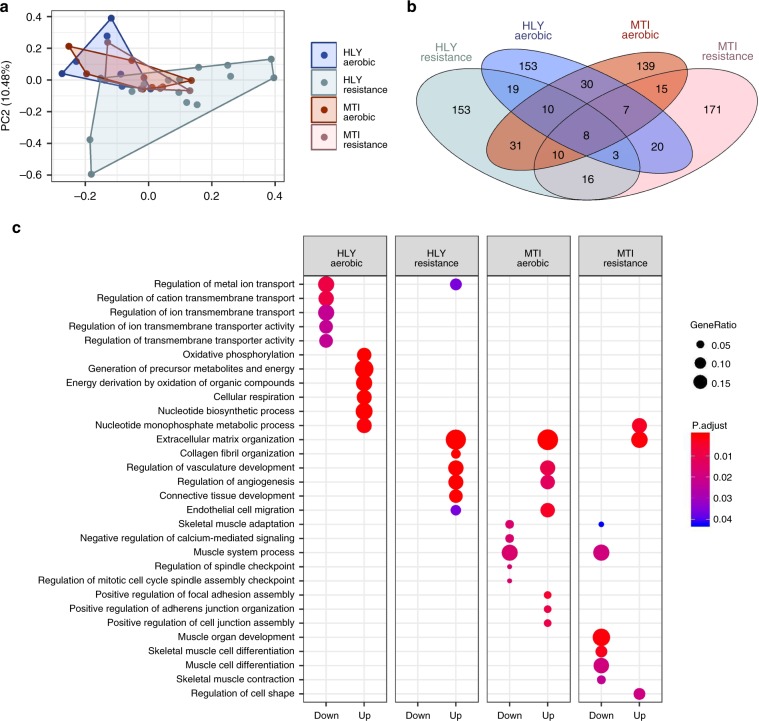
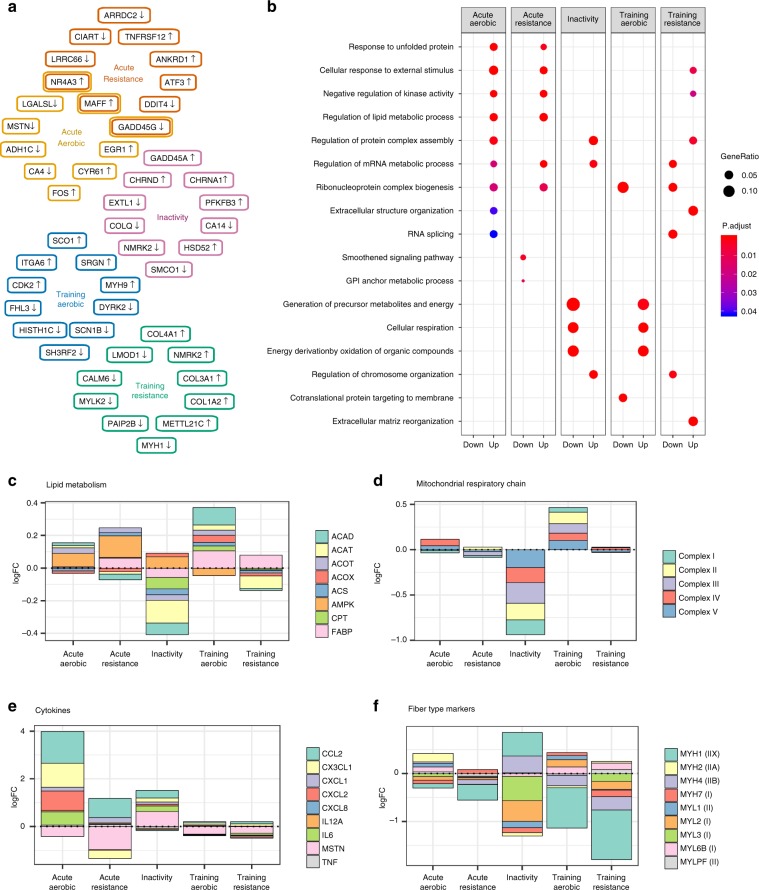
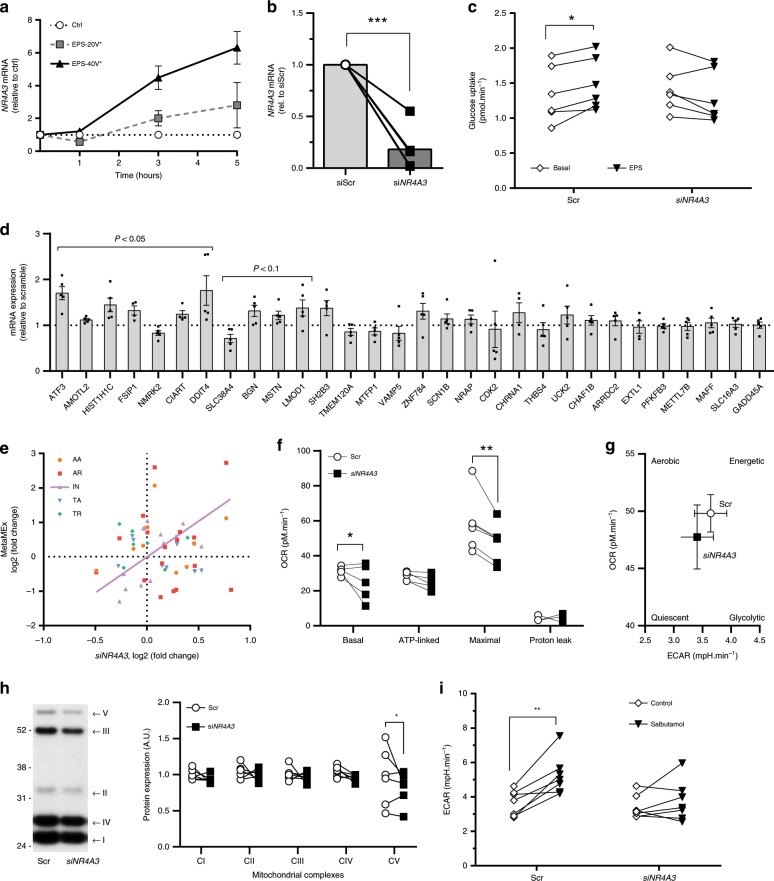
The molecular mechanisms underlying the response to exercise and inactivity are not fully understood. We propose an innovative approach to profile the skeletal muscle transcriptome to exercise and inactivity using 66 published datasets. Data collected from human studies of aerobic and resistance exercise, including acute and chronic exercise training, were integrated using meta-analysis methods (www.metamex.eu). Here we use gene ontology and pathway analyses to reveal selective pathways activated by inactivity, aerobic versus resistance and acute versus chronic exercise training. We identify NR4A3 as one of the most exercise- and inactivity-responsive genes, and establish a role for this nuclear receptor in mediating the metabolic responses to exercise-like stimuli in vitro. The meta-analysis (MetaMEx) also highlights the differential response to exercise in individuals with metabolic impairments. MetaMEx provides the most extensive dataset of skeletal muscle transcriptional responses to different modes of exercise and an online interface to readily interrogate the database.
运动和不运动对身体产生的影响的分子机制尚未完全明晰。我们提出了一种创新的方法,通过使用 66 个已发表的数据集来描绘骨骼肌转录组对运动和不运动的反应。利用荟萃分析方法(www.metamex.eu)整合了来自人类有氧运动和抗阻运动研究的数据,包括急性和慢性运动训练。在这里,我们使用基因本体论和途径分析来揭示由不运动、有氧运动与抗阻运动以及急性与慢性运动训练所激活的选择性途径。我们发现 NR4A3 是对运动和不运动反应最敏感的基因之一,并确定该核受体在体外介导代谢对类似运动刺激的反应中发挥作用。荟萃分析(MetaMEx)还突出了代谢损伤个体对运动的不同反应。MetaMEx 提供了骨骼肌对不同运动方式的转录反应的最广泛数据集,并提供了一个在线界面来方便地查询数据库。