D'Ottavio Ginevra, Reverte Ingrid, Ragozzino Davide, Meringolo Maria, Milella Michele Stanislaw, Boix Fernando, Venniro Marco, Badiani Aldo, Caprioli Daniele
Laboratory affiliated to Institute Pasteur Italia - Fondazione Cenci Bolognetti - Department of Physiology and Pharmacology, Sapienza University of Rome, Rome, Italy.
Santa Lucia Foundation (IRCCS Fondazione Santa Lucia), Rome, Italy.
Br J Pharmacol. 2023 Apr;180(7):910-926. doi: 10.1111/bph.15791. Epub 2022 Feb 9.
Studies using intermittent-access drug self-administration show increased motivation to take and seek cocaine and fentanyl, relative to continuous access. In this study, we examined the effects of intermittent- and continuous-access self-administration on heroin intake, patterns of self-administration and cue-induced heroin-seeking, after forced or voluntary abstinence, in male and female rats. We also modelled brain levels of heroin and its active metabolites.
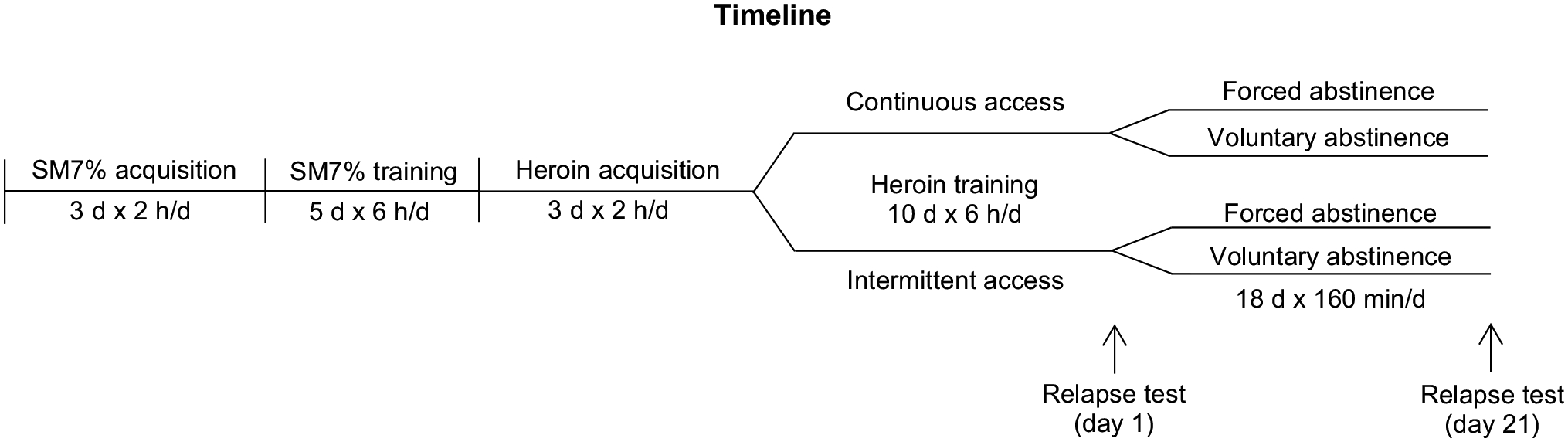
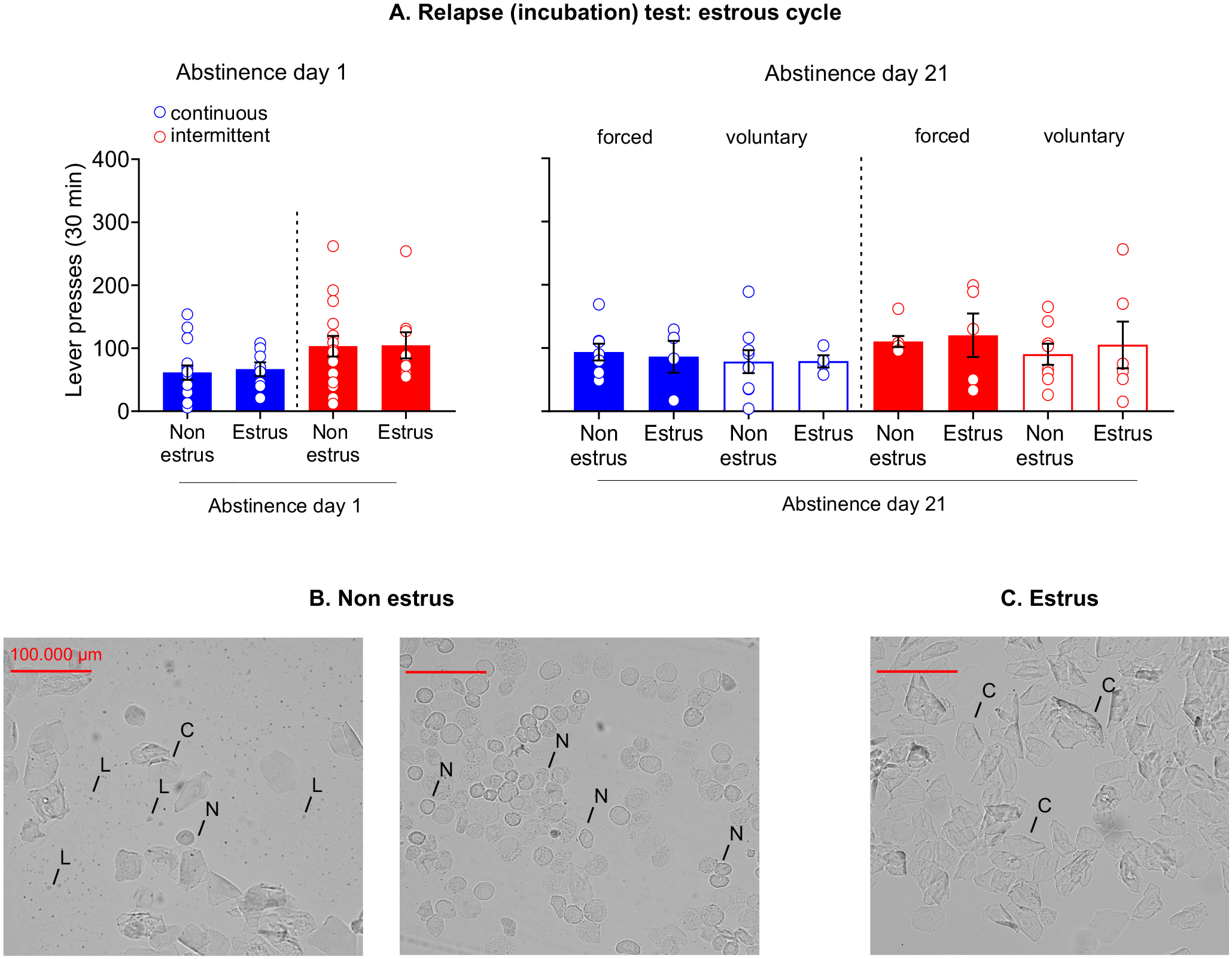
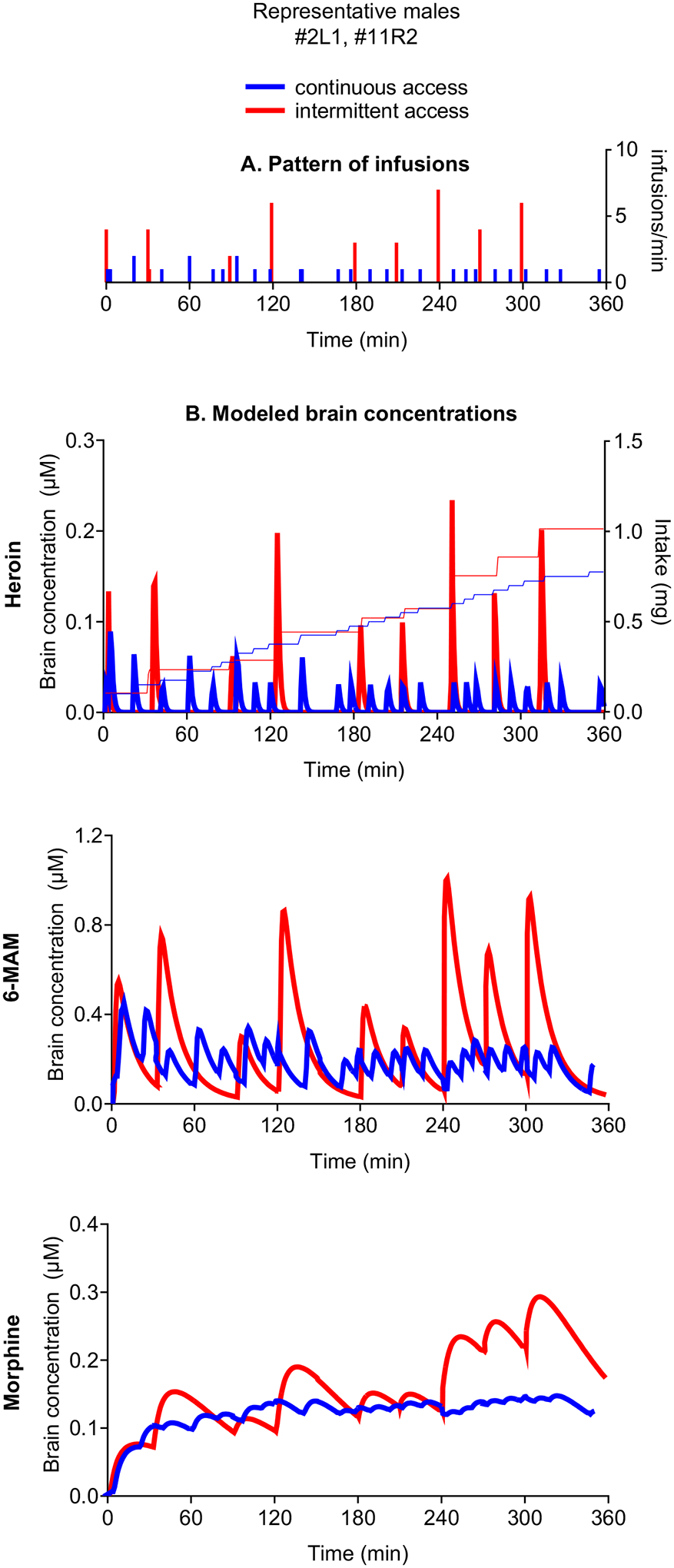
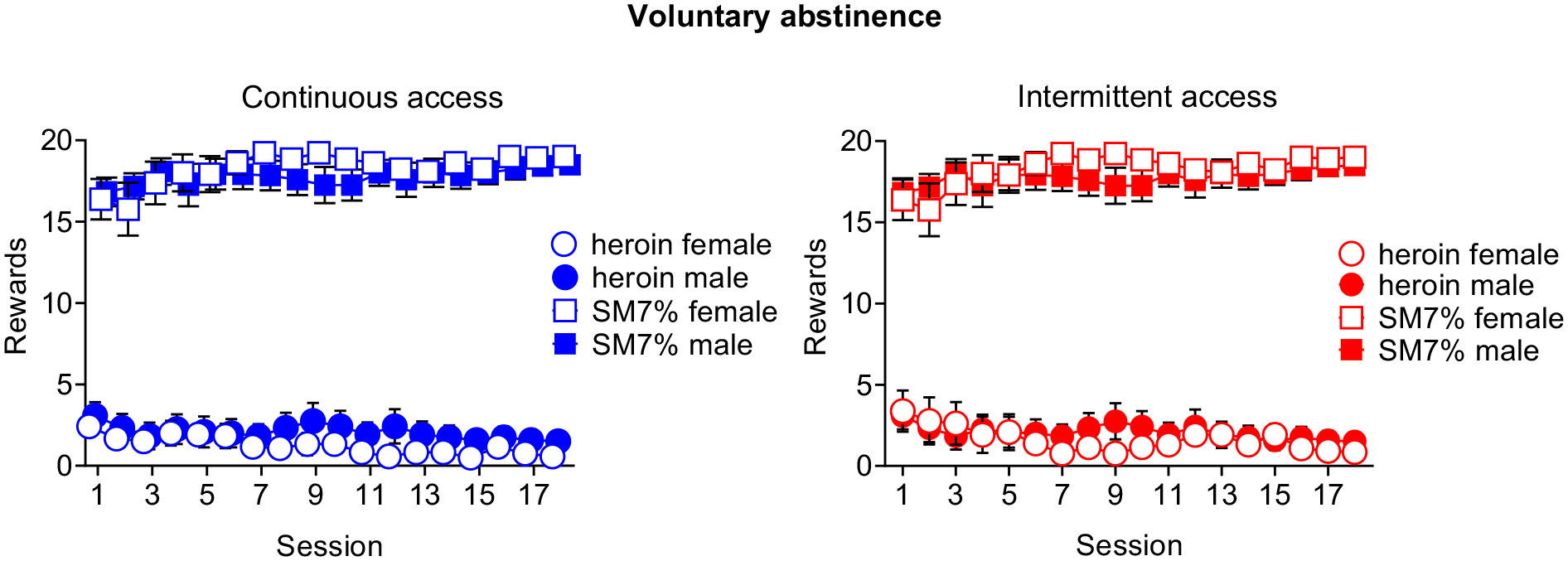
Rats were trained to self-administer a palatable solution and then heroin (0.075 mg·kg per inf) either continuously (6 h·day ; 10 days) or intermittently (6 h·day ; 5-min access every 30-min; 10 days). Brain levels of heroin and its metabolites were modelled using a pharmacokinetic software. Next, heroin-seeking was assessed after 1 or 21 abstinence days. Between tests, rats underwent either forced or voluntary abstinence. The oestrous cycle was measured using a vaginal smear test.
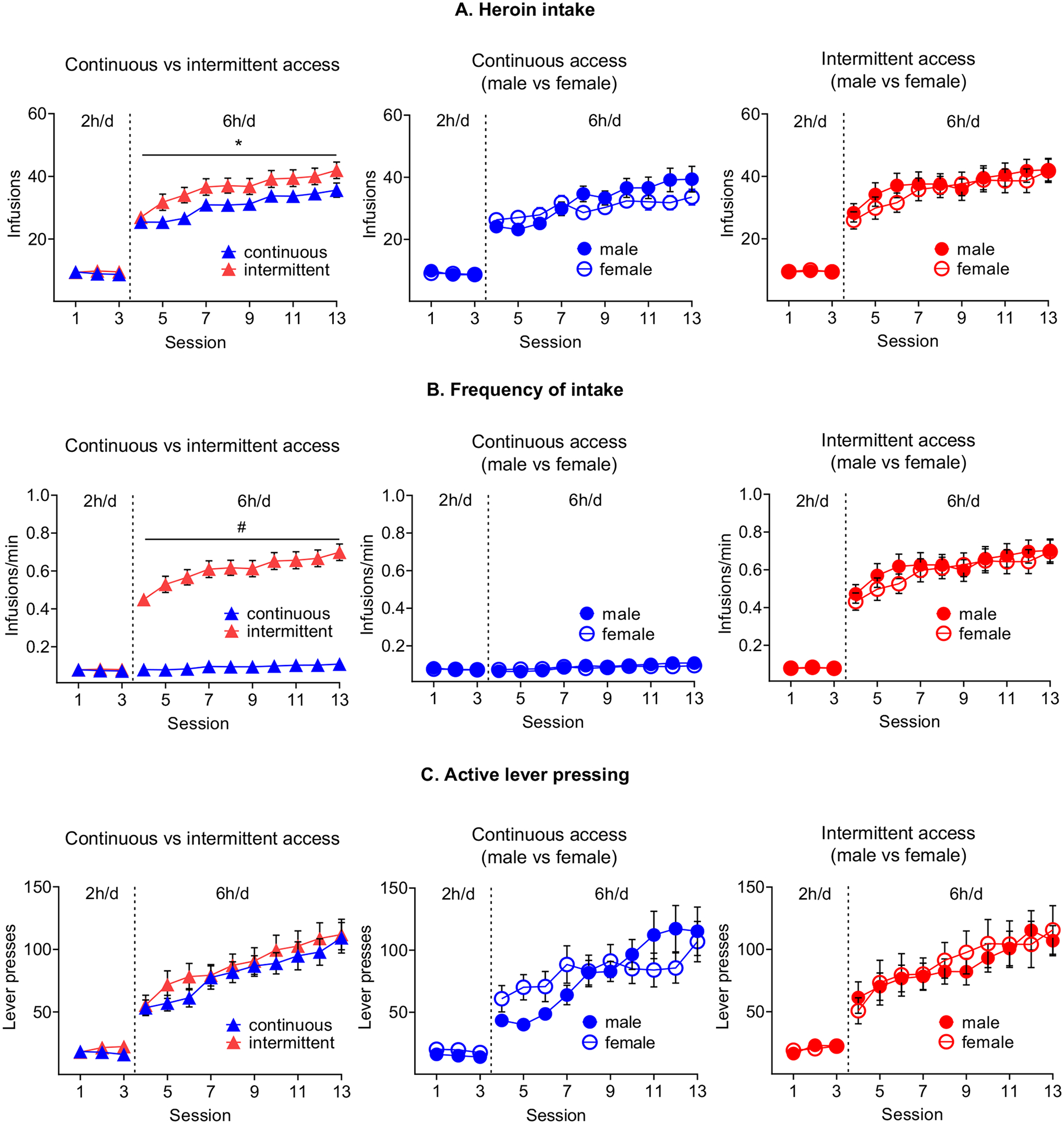
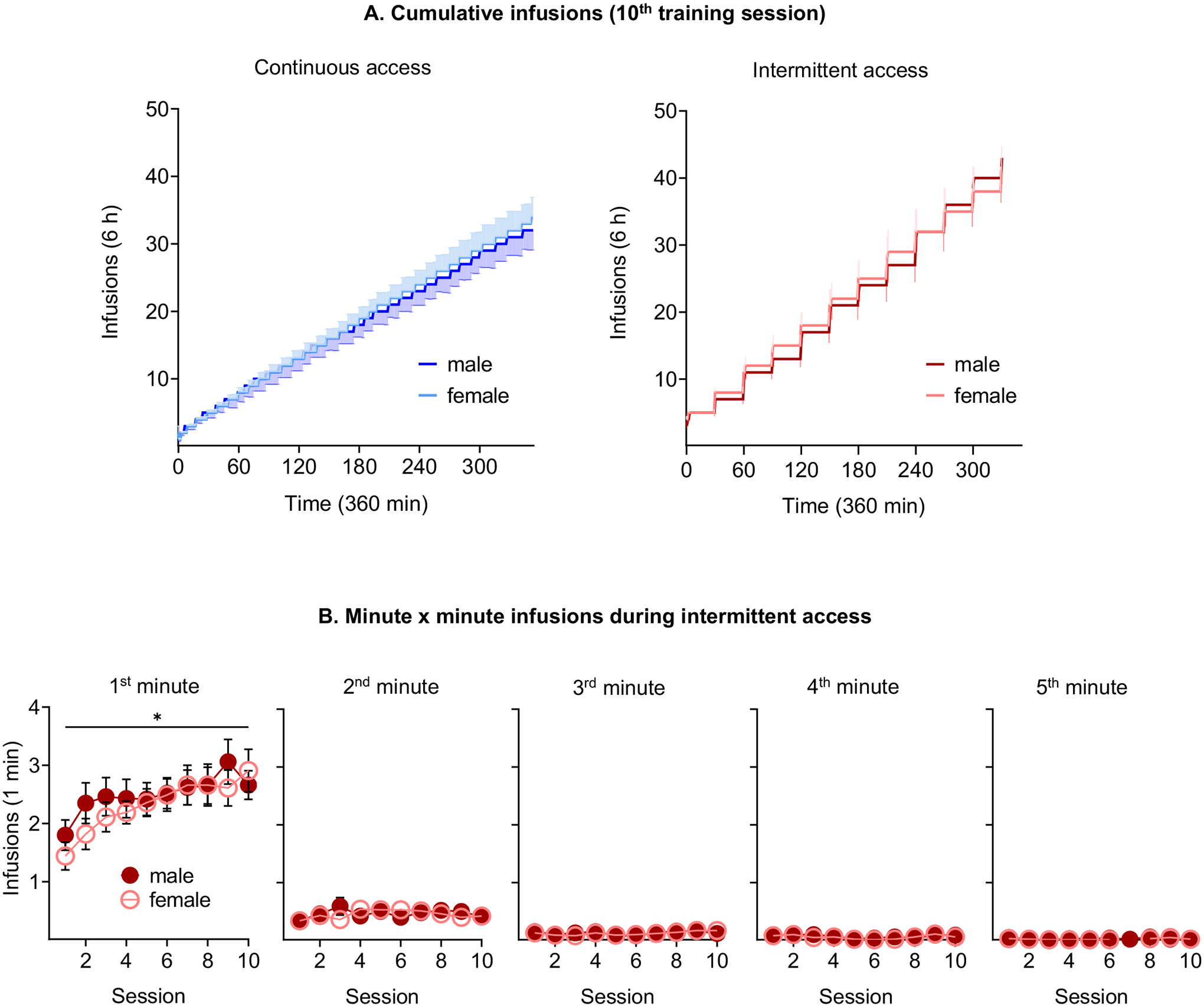
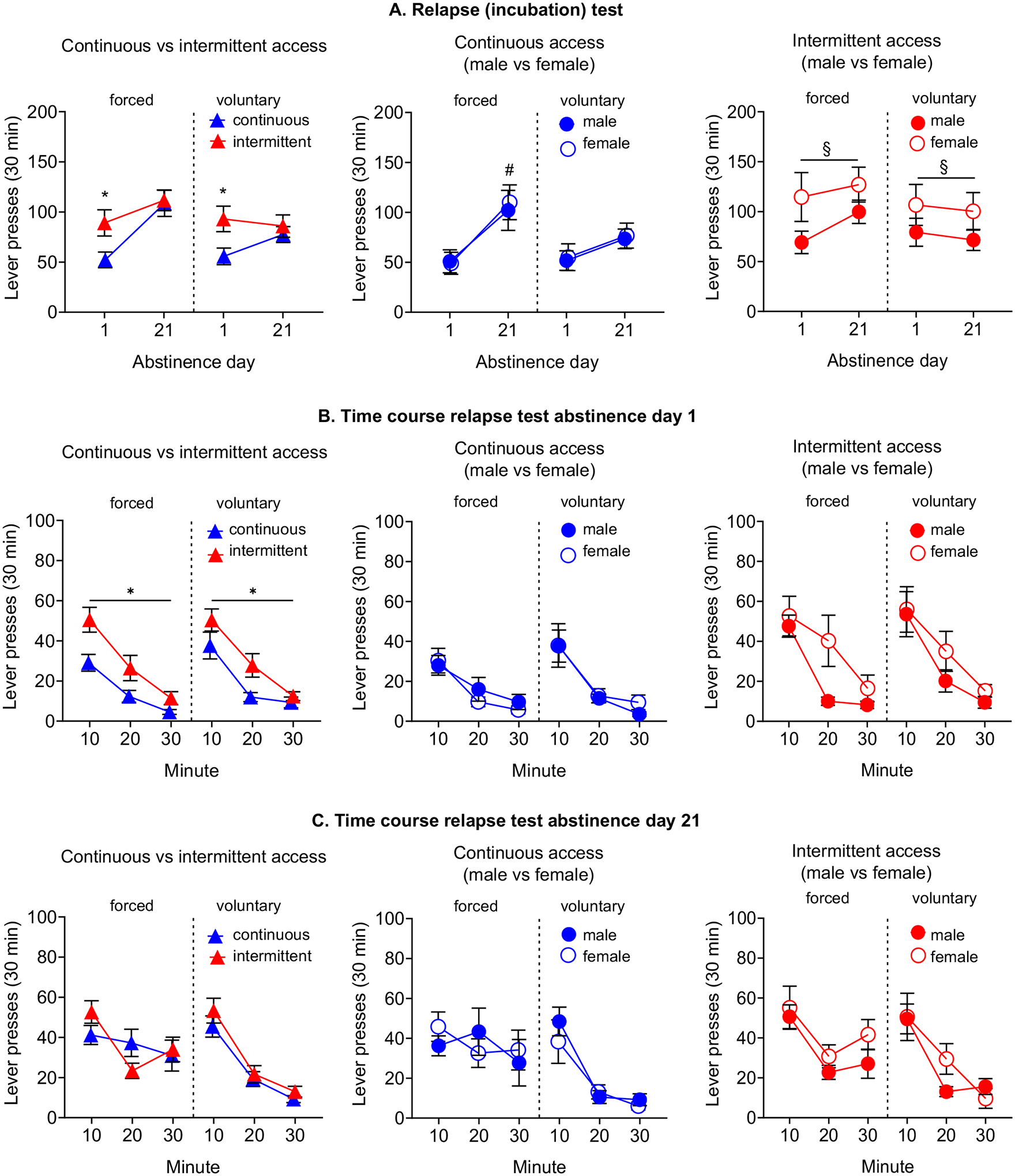
Intermittent access exacerbated heroin self-administration and was characterized by a burst-like intake, yielding higher brain peaks of heroin and 6-monoacetylmorphine concentrations. Moreover, intermittent access increased cue-induced heroin-seeking during early, but not late abstinence. Heroin-seeking was higher in females after intermittent, but not continuous access, and this effect was independent of the oestrous cycle.
Intermittent heroin access in rats resembles critical features of heroin use disorder: a self-administration pattern characterized by repeated large doses of heroin and higher relapse vulnerability during early abstinence. This has significant implications for refining animal models of substance use disorder and for better understanding of the neuroadaptations responsible for this disorder.
This article is part of a themed issue on Advances in Opioid Pharmacology at the Time of the Opioid Epidemic. To view the other articles in this section visit http://onlinelibrary.wiley.com/doi/10.1111/bph.v180.7/issuetoc.
与持续给药相比,采用间歇性获取药物自我给药的研究表明,服用和寻求可卡因及芬太尼的动机增强。在本研究中,我们考察了雄性和雌性大鼠在强制或自愿戒断后,间歇性和持续性获取药物自我给药对海洛因摄入量、自我给药模式及线索诱导的海洛因寻求行为的影响。我们还模拟了海洛因及其活性代谢物的脑内水平。
训练大鼠自我给药一种可口溶液,然后持续(每天6小时;10天)或间歇性(每天6小时;每30分钟有5分钟给药时间;10天)给予海洛因(每次注射0.075mg·kg)。使用药代动力学软件模拟海洛因及其代谢物的脑内水平。接下来,在戒断1天或21天后评估海洛因寻求行为。在测试之间,大鼠经历强制或自愿戒断。使用阴道涂片测试测量动情周期。
间歇性获取药物加剧了海洛因自我给药,其特征为爆发式摄入,导致海洛因和6-单乙酰吗啡浓度在脑内达到更高峰值。此外,间歇性获取药物增加了早期而非晚期戒断期间线索诱导的海洛因寻求行为。间歇性获取药物后,雌性大鼠的海洛因寻求行为更高,但持续性获取药物后并非如此,且这种效应与动情周期无关。
大鼠间歇性获取海洛因类似于海洛因使用障碍的关键特征:一种以反复大量服用海洛因和早期戒断期间更高复发易感性为特征的自我给药模式。这对于完善物质使用障碍的动物模型以及更好地理解导致该障碍的神经适应性具有重要意义。
本文是关于阿片类药物药理学进展的主题特刊的一部分。欲查看本节中的其他文章,请访问http://onlinelibrary.wiley.com/doi/10.1111/bph.v180.7/issuetoc。