Cho Jae-Won, Shim Hyo Sup, Lee Chang Young, Park Seong Yong, Hong Min Hee, Lee Insuk, Kim Hye Ryun
Department of Biotechnology, College of Life Science and Biotechnology, Yonsei University, Seoul, 03722, Republic of Korea.
Department of Pathology, Severance Hospital, Yonsei University College of Medicine, Seoul, 03722, Republic of Korea.
Exp Mol Med. 2022 Jan;54(1):12-22. doi: 10.1038/s12276-021-00718-4. Epub 2022 Jan 5.
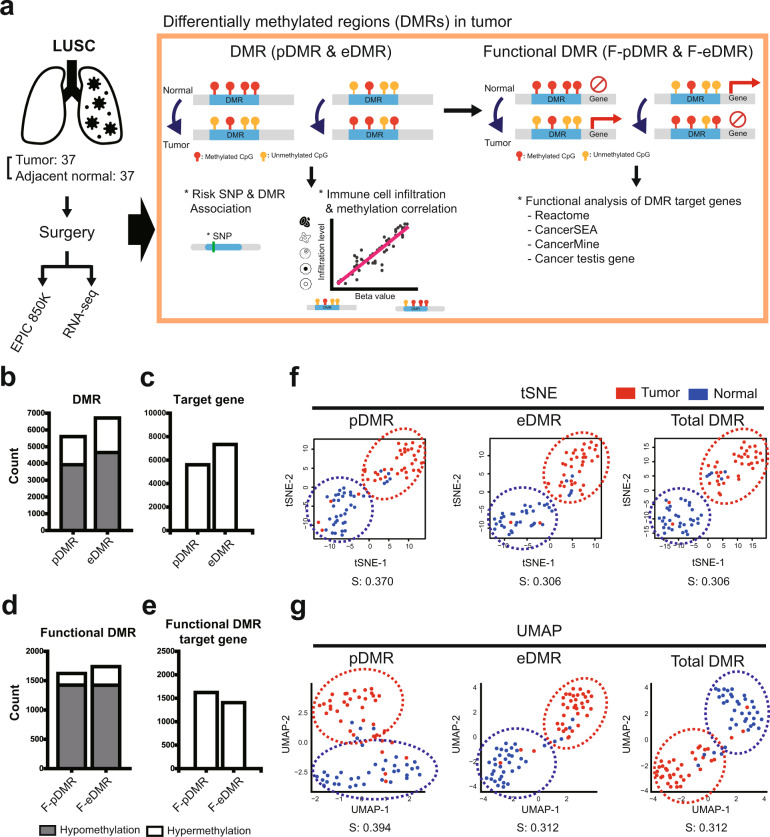
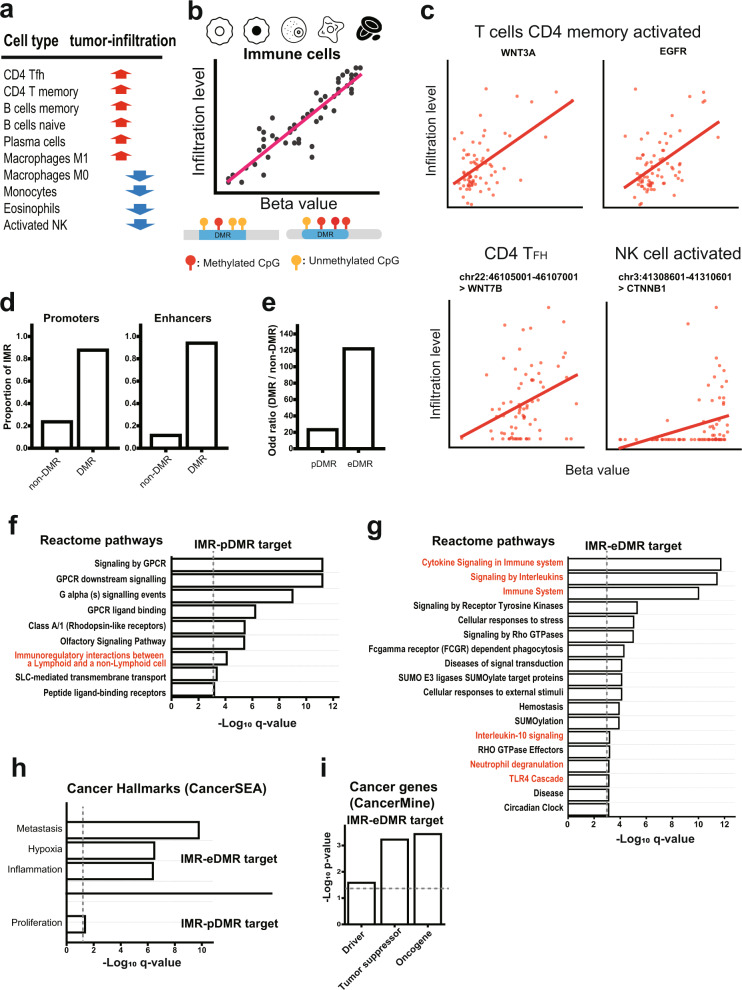
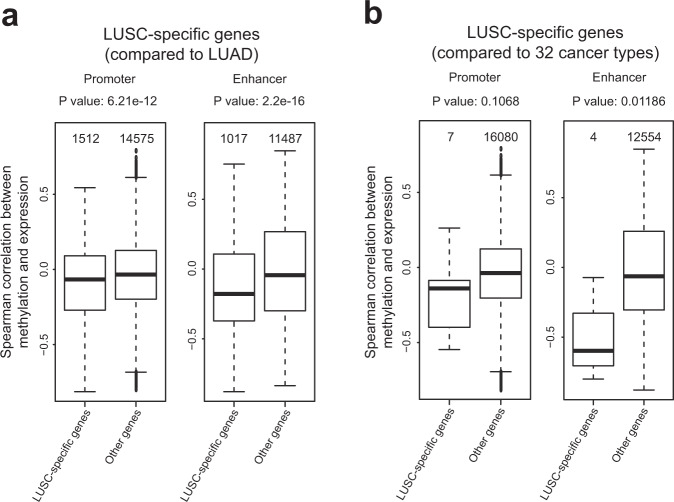
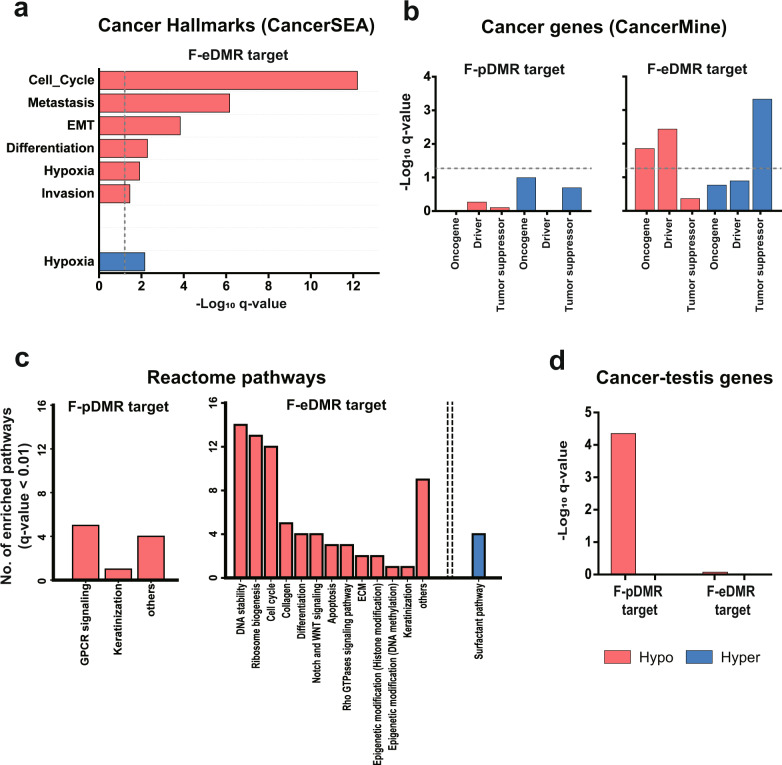
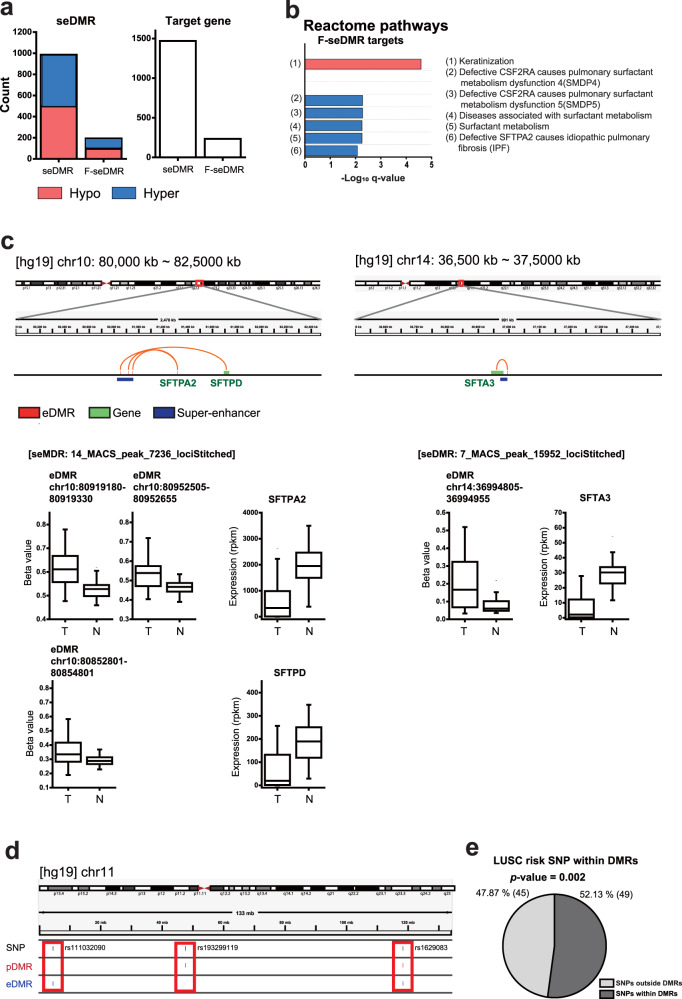
Lung squamous cell carcinoma (LUSC) is a subtype of non-small cell lung cancer (NSCLC). LUSC occurs at the bronchi, shows a squamous appearance, and often occurs in smokers. To determine the epigenetic regulatory mechanisms of tumorigenesis, we performed a genome-wide analysis of DNA methylation in tumor and adjacent normal tissues from LUSC patients. With the Infinium Methylation EPIC Array, > 850,000 CpG sites, including ~350,000 CpG sites for enhancer regions, were profiled, and the differentially methylated regions (DMRs) overlapping promoters (pDMRs) and enhancers (eDMRs) between tumor and normal tissues were identified. Dimension reduction based on DMR profiles revealed that eDMRs alone and not pDMRs alone can differentiate tumors from normal tissues with the equivalent performance of total DMRs. We observed a stronger negative correlation of LUSC-specific gene expression with methylation for enhancers than promoters. Target genes of eDMRs rather than pDMRs were found to be enriched for tumor-associated genes and pathways. Furthermore, DMR methylation associated with immune infiltration was more frequently observed among enhancers than promoters. Our results suggest that methylation of enhancer regions rather than promoters play more important roles in epigenetic regulation of tumorigenesis and immune infiltration in LUSC.
肺鳞状细胞癌(LUSC)是非小细胞肺癌(NSCLC)的一种亚型。LUSC发生于支气管,呈鳞状外观,且常发生于吸烟者。为了确定肿瘤发生的表观遗传调控机制,我们对LUSC患者的肿瘤组织和相邻正常组织进行了全基因组DNA甲基化分析。使用Infinium甲基化EPIC芯片,对超过85万个CpG位点进行了分析,其中包括约35万个增强子区域的CpG位点,并鉴定了肿瘤组织与正常组织之间重叠启动子(pDMRs)和增强子(eDMRs)的差异甲基化区域(DMRs)。基于DMR图谱的降维分析表明,单独的eDMRs而非单独的pDMRs能够以与总DMRs相当的性能区分肿瘤组织与正常组织。我们观察到,与启动子相比,LUSC特异性基因表达与增强子甲基化的负相关性更强。发现eDMRs而非pDMRs的靶基因富含肿瘤相关基因和通路。此外,与免疫浸润相关的DMR甲基化在增强子中比在启动子中更频繁地被观察到。我们的结果表明,增强子区域而非启动子区域的甲基化在LUSC肿瘤发生和免疫浸润的表观遗传调控中发挥更重要的作用。