Ganguly Esha, Kammala Ananth Kumar, Benson Meagan, Richardson Lauren S, Han Arum, Menon Ramkumar
Division of Basic and Translational Research, Department of Obstetrics and Gynecology, The University of Texas Medical Branch at Galveston, Galveston, TX, United States.
Department of Electrical and Computer Engineering, Texas A&M University, College Station, TX, United States.
Front Pharmacol. 2021 Dec 20;12:771818. doi: 10.3389/fphar.2021.771818. eCollection 2021.
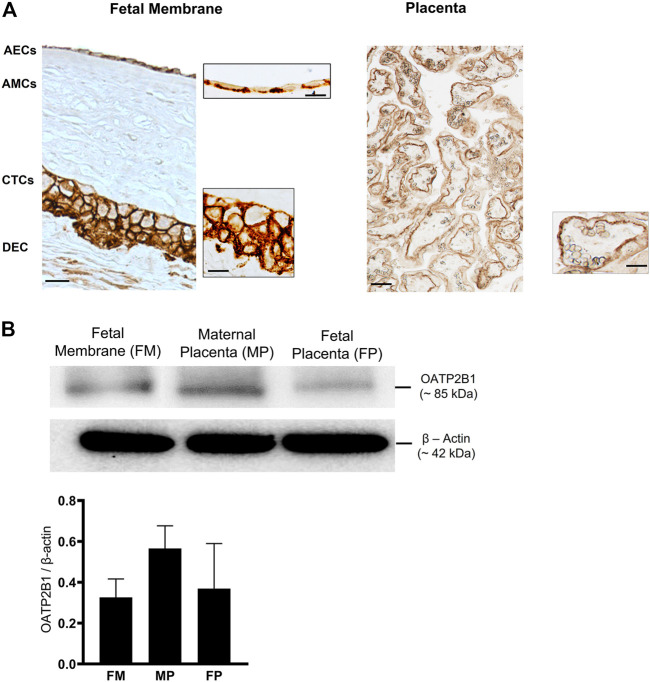
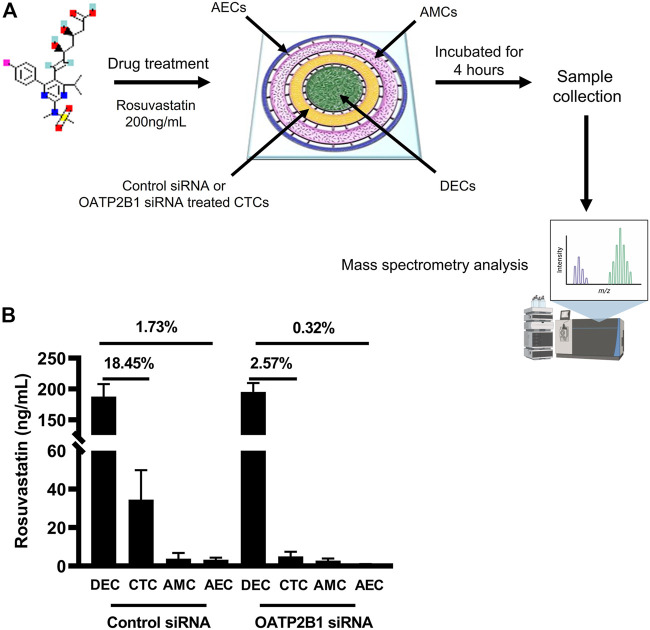
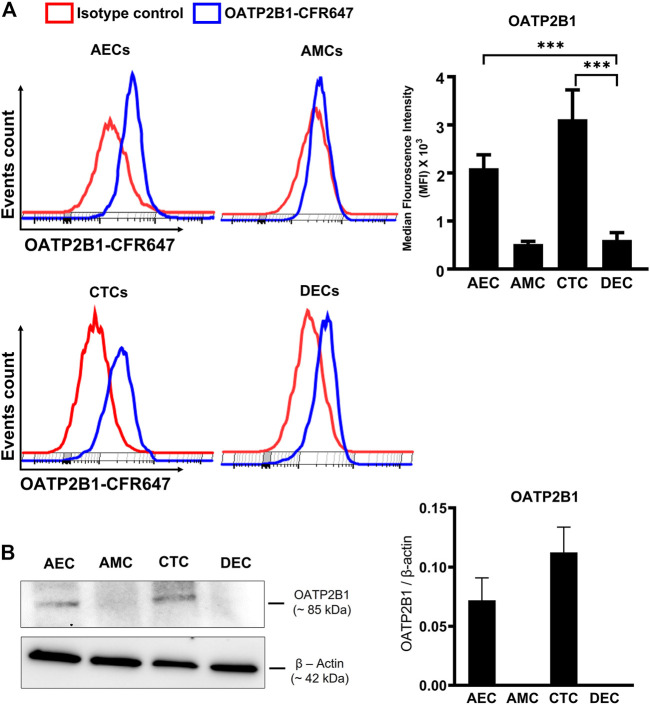
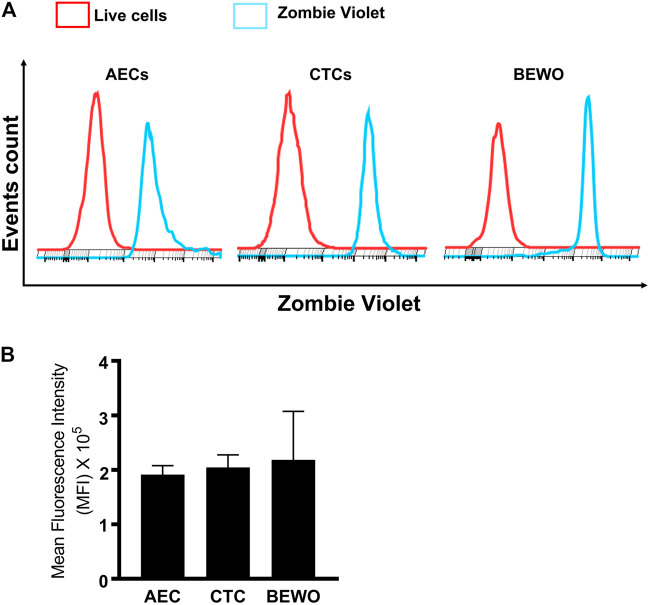
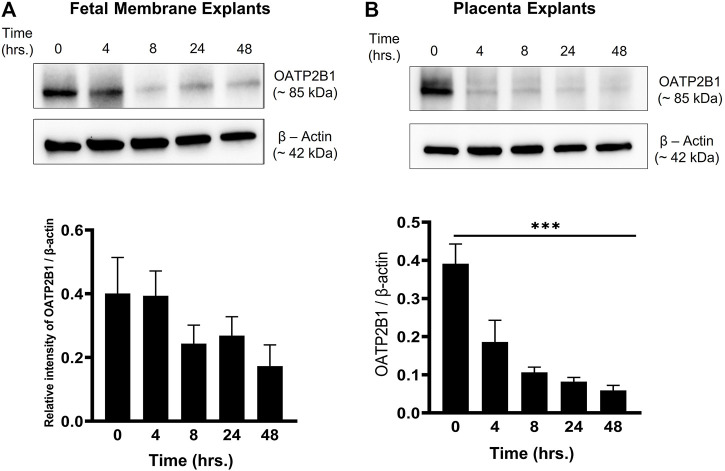
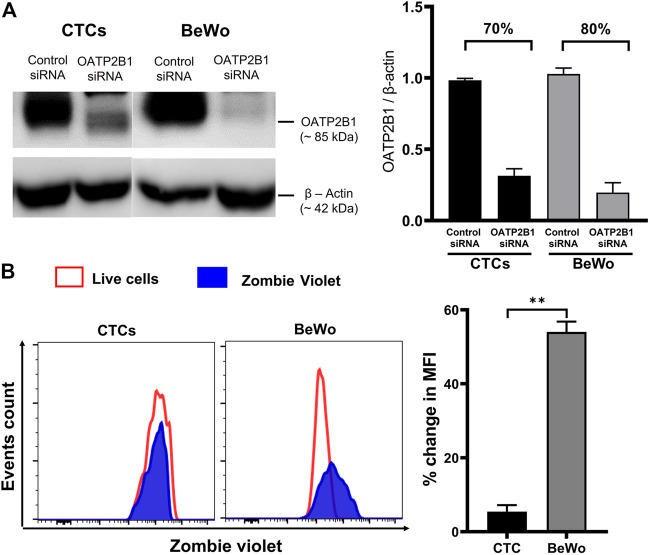
Current intervention strategies have not been successful in reducing the risks of adverse pregnancy complications nor maternal and fetal morbidities associated with pregnancy complications. Improving pregnancy and neonatal outcomes requires a better understanding of drug transport mechanisms at the feto-maternal interfaces, specifically the placenta and fetal membrane (FM). The role of several solute carrier uptake transporter proteins (TPs), such as the organic anion transporting polypeptide 2B1 (OATP2B1) in transporting drug across the placenta, is well-established. However, the mechanistic role of FMs in this drug transport has not yet been elucidated. We hypothesize that human FMs express OATP2B1 and functions as an alternate gatekeeper for drug transport at the feto-maternal interface. We determined the expression of OATP2B1 in term, not-in-labor, FM tissues and human FM cells [amnion epithelial cell (AEC), chorion trophoblast cell (CTC), and mesenchymal cells] using western blot analyses and their localization using immunohistochemistry. Changes in OATP2B1 expression was determined for up to 48 h after stimulation with cigarette smoke extract (CSE), an inducer of oxidative stress. The functional role of OATP2B1 was determined by flow cytometry using a zombie violet dye substrate assay. After OATP2B1 gene silencing, its functional relevance in drug transport through the feto-maternal interface was tested using a recently developed feto-maternal interface organ-on-a-chip (OOC) system that contained both FM and maternal decidual cells. Propagation of a drug (Rosuvastatin, that can be transported by OATP2B1) within the feto-maternal interface OOC system was determined by mass spectrometry. FMs express OATP2B1 in the CTC and AEC layers. In FM explants, OATP2B1 expression was not impacted by oxidative stress. Uptake of the zombie violet dye within AECs and CTCs showed OATP2B1 is functionally active. Silencing OATP2B1 in CTCs reduced Rosuvastatin propagation from the decidua to the fetal AEC layer within the feto-maternal interface-OOC model. Our data suggest that TPs in FMs may function as a drug transport system at the feto-maternal interface, a function that was previously thought to be performed exclusively by the placenta. This new knowledge will help improve drug delivery testing during pregnancy and contribute to designing drug delivery strategies to treat adverse pregnancy outcomes.
目前的干预策略在降低不良妊娠并发症的风险以及与妊娠并发症相关的母婴发病率方面并不成功。改善妊娠和新生儿结局需要更好地了解胎儿-母体界面(特别是胎盘和胎膜(FM))处的药物转运机制。几种溶质载体摄取转运蛋白(TPs),如有机阴离子转运多肽2B1(OATP2B1)在药物跨胎盘转运中的作用已得到充分证实。然而,FM在这种药物转运中的机制作用尚未阐明。我们假设人FM表达OATP2B1,并作为胎儿-母体界面药物转运的另一个守门人发挥作用。我们使用蛋白质印迹分析确定了足月、未临产的FM组织和人FM细胞[羊膜上皮细胞(AEC)、绒毛膜滋养层细胞(CTC)和间充质细胞]中OATP2B1的表达,并使用免疫组织化学确定了其定位。在用香烟烟雾提取物(CSE,一种氧化应激诱导剂)刺激后长达48小时,测定OATP2B1表达的变化。使用僵尸紫染料底物测定法通过流式细胞术确定OATP2B1的功能作用。在OATP2B1基因沉默后,使用最近开发的包含FM和母体蜕膜细胞的胎儿-母体界面芯片器官(OOC)系统测试其在药物通过胎儿-母体界面转运中的功能相关性。通过质谱法确定药物(瑞舒伐他汀,可被OATP2B1转运)在胎儿-母体界面OOC系统中的传播。FM在CTC和AEC层中表达OATP2B1。在FM外植体中,OATP2B1的表达不受氧化应激的影响。AEC和CTC中僵尸紫染料的摄取表明OATP2B1具有功能活性。在胎儿-母体界面-OOC模型中,CTC中OATP2B1的沉默减少了瑞舒伐他汀从蜕膜向胎儿AEC层的传播。我们的数据表明,FM中的TPs可能作为胎儿-母体界面的药物转运系统发挥作用,这一功能以前被认为仅由胎盘执行。这一新知识将有助于改善孕期药物递送测试,并有助于设计治疗不良妊娠结局的药物递送策略。